1.33:1 Fullscreen

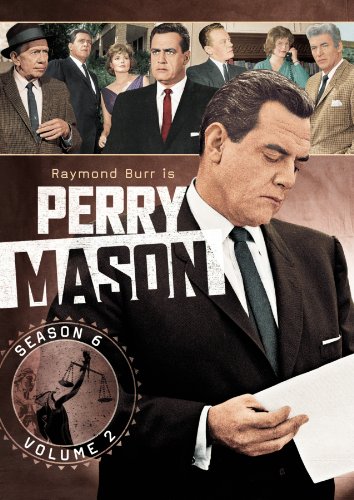
Erle Stanley Gardner wrote crime fiction, and while many of his 100 or so works are unknown to most of us, he created a character that has become as identified with criminal lawyers as any other in fiction. It was in these crime novels that Perry Mason first faced a courtroom. He developed a style where he would investigate these terrible crimes his clients were on trial for. He would find the real killer, and in what has become a Hollywood cliché, reveal his findings in a crucial moment during the trial. While we may not remember the novels, we all remember the man in the persona of Raymond Burr.  Burr had a commanding presence on our screens and enjoyed a well deserved 11-year run as the clever lawyer. What makes this run so amazing is that the show followed pretty much the same pattern the entire time. We always know what’s going to happen, but we wait eagerly for that gotcha moment when Perry faces the witness on the stand. We know when he’s got the guy squarely in his sights, and we can’t sit still waiting for him to pull the trigger. OK, so maybe that’s a little over the top, but so was Perry Mason. From the moment you heard that distinctive theme, the stage was set. To say that Perry Mason defined the lawyer show for decades would be an understatement. Folks like Matlock and shows like The Practice are strikingly similar to Perry Mason. If you haven’t checked this show out, this is your chance. See where it all began.

Raymond Burr did not carry the show on his own. There was a very fine cast of supporting characters. The most famous has to be his faithful secretary Della Street, played by Barbara Hale. The two were inseparable. Perry had the help of a good private investigator in the Raymond Chandler style. William Hopper played the tough-as-nails Paul Drake. One of Orson Welles’ famous Mercury Theater Players took on the part of Police Lt. Tragg. Ray Collins starred in Citizen Kane as the political party boss Gettys. He was a fine example of top talent working in television.  Mason was often pitted against prosecutor Hamilton Burger, whose name too often reminded me of hamburgers. There wasn’t anything funny about Burger, however. He was a worthy opponent who drew the short straw most of the time because he was up against Perry Mason. The task was accomplished with a lot of style by William Talman, a one-time evangelistic preacher.

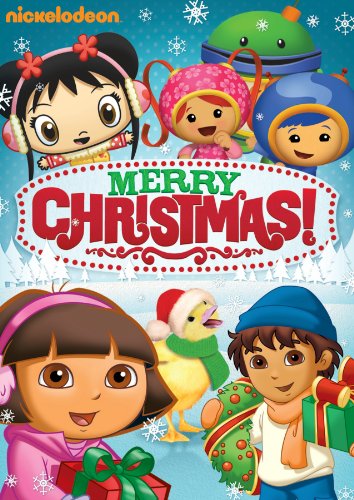
Six different Nickelodeon children's programs aimed at preschoolers each have their own Christmas (or Holiday) special episodes and are compiled together on this DVD release.

 Dora the Explorer: Using tons of repetition and visual cues, Dora and her friends teach kids while alternating between English and Spanish. This time they need to go to the North Pole.

In the 1980’s, I feasted on a bevy of animation growing up. I watched typical cartoon shows like Transformers, G.I. Joe, and Voltron. Honestly, my habits were to watch every piece of animation that came across in those days at least once. Yes, even the Care Bears. But sadly despite all of that, I completely missed some great ones. One of those truly great ones was the Robotech series. Now, with an 85 episode behemoth of a complete series set, I get a chance to rectify that grave injustice.


Robotech originally ran March of 1985 in the United States. It had started out as a Japanese series and then Harmony Gold USA came in, reworked the dialog and content so that they could sell it to stations in the US as first-run syndication. However, Harmony tried hard to include most of the complexity and drama of the source material. Producer Carl Macek supervised the proceedings and the sweeping epic was born. The show did very well and had attracted a more mature audience that was not expected.

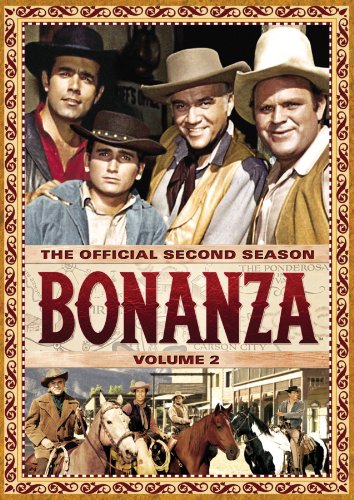
The Cartwright boys continue to do right on the Ponderosa Ranch in the state of Nevada. Having lasted 14 seasons, the series was relatively young in Season 2 but had already established Ben Cartwright and his three boys (from three different mothers) as household names on American television.

Plot wise, a good chunk of the stories revolve around the importance of having land. The Cartwrights hold the most lucrative plot in the area, and many a villain tries to find devious methods of taking it from them. Unlike fellow Old West programs like Gunsmoke, Bonanza took a sometimes comical approach to the resolving these conflicts, and guns were hardly ever drawn.

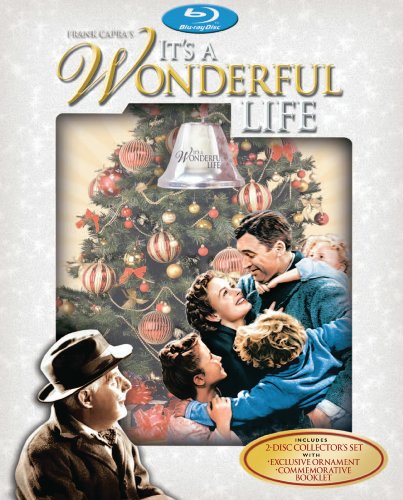
Every generation has had its Christmas classics, films that have become as much a part of the holiday family traditions as Christmas trees and candy canes. For me it has been the more modern A Christmas Story with ol’ Carl Kolchak himself, Darren McGavin. Kids today have taken more of a shine to even more recent films, but for more than one generation, Christmas wouldn’t be the same without Frank Capra’s It’s A Wonderful Life. Since 1947 the film became a seasonal fixture in neighborhood movie houses across the fruited plain. In the 1970’s the film temporarily fell into the public domain and was played relentlessly on local television stations as each holiday came and went. Unfortunately, these were usually prints in horrible condition, so that scratches and splice marks became a part of the experience, not to mention ads for department stores touting their early bird specials. It is with that experience that I as did most from my generation become acquainted with Jimmy Stewart's George Bailey. When the home video market began to bloom with VHS in the mid 1980’s a better print resurfaced, so that the experience improved dramatically, along with the loss of those commercials. Of course, this new resource of home entertainment created a fight for the rights to the film to once again be restored to a single owner. It ended up being the film’s score that would allow the rights to be enforced once again. The crappy television prints disappeared, and by the early 1990’s efforts to restore the film began.

These restoration efforts invariably turned to the controversial subject of colorization. If anyone remembers Ted Turner’s push to colorize RKO films, including King Kong, you will also remember how bad those films looked. The color was an added texture of hue covering the picture so that the subject’s textures and subtleties were obliterated. It was almost as if some child decided to finger paint all over the negative. There was nothing magical or at all realistic about the process. It’s A Wonderful Life has been colorized no less than three times. In both 1986 and 1989 the film got the colorized treatment, both failures. Now in 2007 It’s A Wonderful Life has been colorized by a new process developed by Legend Films. This new process allows films to be colorized naturally, retaining all of the detail and texture of the original print. These are the guys who are working with legendary Ray Harryhausen to colorize and restore many of his classics. The new process uses a 16-bit grayscale which offers over 64,000 shades of just gray. The process, called “Photo-Real”, can reproduce HD quality pictures with stunning life-like color. I was a very cynical skeptic of the process and was prepared to rip this color print to shreds in my review. I was blown away by how natural the color looks. You will be hard pressed to believe this wasn’t an original color print. Not only are the colors realistic, but the print retains the particular color palette of the 1940’s, so that the film still looks like one from the correct era. I know you’ve seen incredibly bad colorization before, and it likely has made you unwilling to even give this one a chance, but you owe it to yourself to check it out.

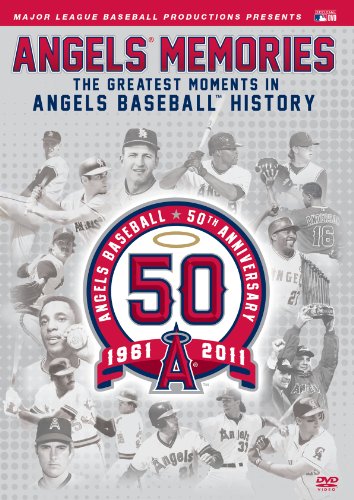
After reviewing the magical 2002 World Series of the Anaheim Angels, it was only appropriate to review a half century of highlights and lowlights from the team's history. The Angels are not a flashy team, they win with raw talent and a ton of heart. Their success in the 2000's only came after many years where they floundered and did not meet expectations. Let's explore the team the Autry's built. Here are the Los Angeles Angels, now known as the Anaheim Angels.

The Angels name was actually birthed in the late 1950’s when Walter O’Malley purchased the team from the Pacific Coast League. However, it was not until 1960 when it became the focus of a new expansion for the American League. Enter Gene Autry who in 1960 (owner of Golden West Broadcasters and the famous actor) was trying to seek broadcast rights to the team. But soon he would become persuaded by others to actually purchase the franchise. He did and named it the Los Angeles Angels.

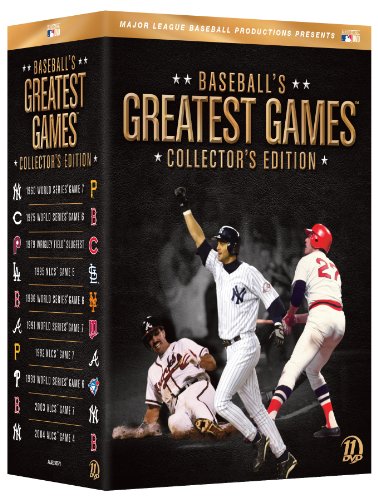
A while back we ran a contest where we gave away several discs that contained some of the most exciting games in baseball history. These games were released individually as full broadcasts on one DVD. Now A&E has decided to put the collection together in one special sweet baseball collection. Just in time for the dramatic end of this year's World Series, you now have a chance to stretch more than that seventh inning. You can keep the baseball season going for as long as you like with these classic games. You get the entire television broadcast and a special audio that contains the home team's radio broadcast. For Phillies fans that means getting to hear the late great Harry Kalas once again.

There's a game in here for everyone. Here's a rundown:

Even though I love the game, I have not watched too much baseball in the last few years. This goes double for games not involving the Philadelphia Phillies. I still keep up with it, still analyze the standings and box scores but for some reason I do not watch as many games as I wish too. The odd thing is when I get sets like the one I'm reviewing today, I am 100% excited. Perhaps it is because I have nothing vested in it. The games are already played, the result is already known, I can simply appreciate the game that way it is supposed to be. The magical game of baseball.

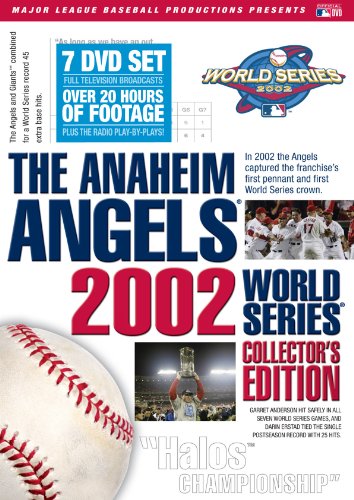
2002 was the first time in baseball history that two wildcard teams made the World Series. The Anaheim Angels had finished 99-63 (Oakland and New York won 103 games a piece that year) while the San Francisco Giants went 95-66 (The Braves were the standout in the NL winning 101 games). However, when the Angels took out the Yankees and the Giants took out the Braves in the first round of the playoffs, baseball fans knew that they were in for something special come the Series. After the League Championship series with the Angels and Giants both crushing their opponents (Twins and Cardinals), it was time to play the big one.

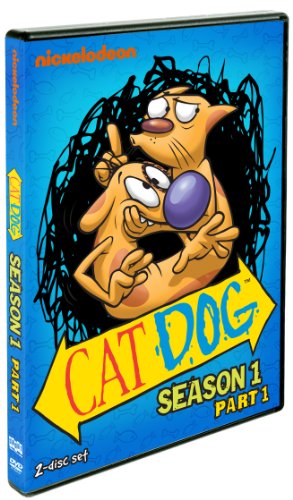
It is that time for more cartoon goodness from the people at Nickelodeon. As we have seen, I seem to attract odd cartoons to review. Let’s see, there is a dude with a football as a head, a beaver with a surfer voice or perhaps a monster who has to carry his own eyeballs. This time I lay witness to a Cat and a Dog conjoined at the stomach devoid of tails or hind legs. What sounds like a bad science experiment might be full of cartoon love.

CatDog started out as a sneak peek cartoon before the Rugrats movie. In April of 1998, forty initial episodes were ordered. When it was all said and done, it would last half a dozen years and sixty eight episodes. It was not an overly strong cartoon but it would go on to accumulate a fairly quiet fan base and some minor nominations for an Annie as well as a Kid’s Choice Award. One might think with this mediocre run that the cast of voice actors was mediocre. That would be completely wrong.

For nine seasons and several TV-movies afterwards, Raymond Burr was Los Angeles based defense attorney Perry Mason. His adventures have been well-reviewed by my compadre Gino on this very site (https://upcomingdiscs.com/?s=perry+mason) so I shall do my best to avoid redundancies while I speak of Season 6.

The formula (for lack of a better term) of each episode maintains in the sixth season. The primary suspect is profiled, caught and examined in the first half of each story. When things do to trial, the true guilty party is found out, often on the witness stand, as Perry's uncanny winning streak gets the best of those who try to hide the truth from him. Said winning streak might spoil one's enjoyment of the show since the outcomes can be predicted during the opening titles screen, but the crimes (murders) are elaborate enough to maintain interest for the most part. At the same time, I feel it should be noted that the pacing of the show can often be slow. Think of it being a closer relation to Matlock than the sexier modern Legal dramas like The Practice. Not to say that it is better to have attorneys with chiseled jaws or short skirts versus methodical investigation and character development, but you had better prepare yourself for a lot of men in suits standing in one spot speaking their thoughts aloud.