1.33:1 Fullscreen

Synopsis

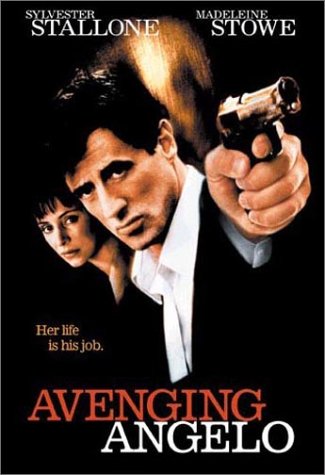
Professional hit man Christopher Lambert is given a new contract, but this one doesn’tinvolve killing. He is to travel from Europe to Cape Town (where his parents were killed whenhe was but a wee lad) and protect Dennis Hopper, a businessman with mob ties who is going totestify against psychopathic gangster Christo. Even in jail, Christo’s reach is long and deadly, andLambert has his work cut out for him protecting the very unpleasant Hopper and his daughter.So far, so conventional... if you can call the sight of Hopper in a bad black toupee and goateeconventional. Then, halfway through the film, the main characters hightail it out of Cape Towninto the countryside, and the movie turns into a stately meditation on guilt, redemption andforgiveness. I’m not entirely convinced the project works: the imbalance of heavy action in thefirst half and hardly anything happening for the second is most peculiar, and the storytelling israther disjointed all the way through. The various subplots all get tied together rather too neatlyas well. Still, the very peculiarity of the film works in its favour, and made for a much moreinteresting viewing experience than I was expecting. The final shot is unlike any you’ll see in justabout any other recent action movie.

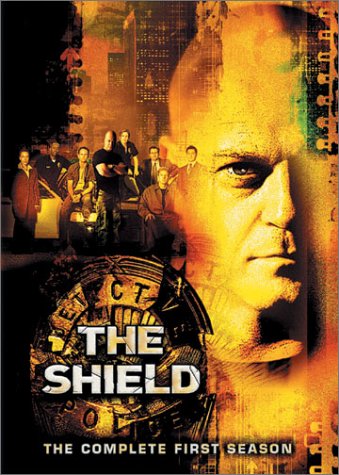
FX decided to jump on the cable bandwagon last year and come up with their very own original series, The Shield. The show stars Michael Chiklis, formerly of The Commish, as Vic Mackey, a hard-nosed Los Angeles detective that gives bad cops a good name – but in a bad way.

Mackey is head of a tactical Strike Team that is comprised of plainclothes officers working in one of the most crime-ridden areas of Los Angeles - the Farmingdale District. Mackey’s group shows impressive results however – s...fer streets, high conviction rates, and tons of arrests – and he has the trust and respect of the men who work for him to boot. He’s ten feet tall and bulletproof within the department and because of that, he roundly ignores those who disagree with his somewhat questionable methods. One of those not in Mackey’s fan club just so happens to be the new captain at his precinct, David Aceveda (Benito Martinez) - a politician at heart and one who has higher aspirations than that of police captain. Being a political animal however, he manages to look the other way when it’s politically expedient for his desires and he knows that Mackey, regardless of his methods, produces and in turn, makes him look good.

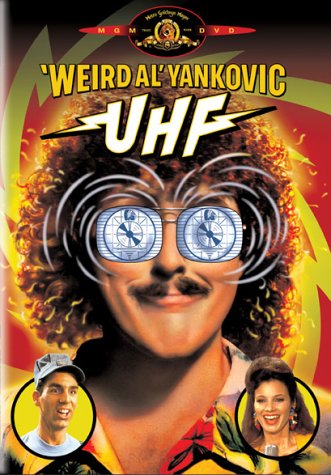
UHF is one of those cult films that has gained quite a following over the years. Fans of the film have been clamoring for a DVD release for many months now and somewhere in the hallowed halls of MGM, someone did something about it. The company is going to release a full-blown DVD of the film on June 4th that will appease the dozens and dozens of “Weird Al” Yankovic fans everywhere.

UHF is total satire and plays almost like the old Landis Kentucky Fried Movie from the 70’s. It’s target... much like Wayne’s World, is small town, local access television and in order to have fun with the premise of a loser taking over a small UHF station, Yankovic strings together parody after parody after parody to get a laugh – some work, some don’t. (What frightens me is that many of you reading this review don’t even know what a UHF station is! Whipper Snappers!) I would imagine that your all out and total enjoyment of the film depends heavily on your enjoyment of Weird Al in general.

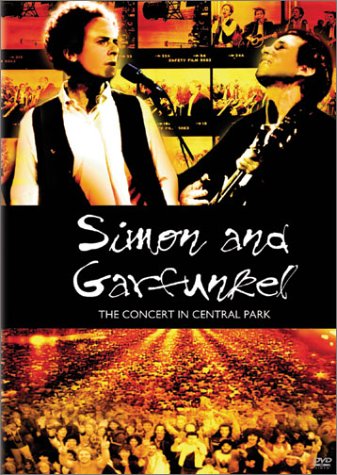
When one thinks of the “Golden Age” of rock, the middle sixties to the middle seventies, a cornucopia of big name, big time acts usually surfaces in discussion. The big three, of course: The Beatles, The Rolling Stones, and Led Zeppelin. Some impressive but undoubtedly second tier acts follow: The Who, Cream, Black Sabbath. Solo acts like Bowie, Elton John, Marvin Gaye and Jimi Hendrix stand out. One musical act that seems to get lost in the glare of these musical supernovas was a pair of soft-spoken, poetic friends ...rom Long Island, New York: Simon and Garfunkel. Though their light didn’t burn as brilliantly as The Beatles, or as long as The Stones, Simon and Garfunkel belong in the stratosphere of singer/songwriters, right alongside Lennon / McCartney and Paige / Plant. In their relatively short time together, they authored three of the top fifty songs in the history of recorded music: Bridge Over Troubled Water, The Sound of Silence, and America. That’s leaving OUT big time songs like The Boxer and Mrs. Robinson, both of which are probably in the top 100.

They were the band for the Greenwich Village crowd, the new beatniks, smoking pot in tiny jazz bars, listening to poetry and playing bongos, not quite hippies but not exactly all-Americans, either. Simon and Garfunkel had an intimate, intelligent brand of music, whose gentle melodies and striking lyrics really struck a chord with the bohemian set, and spread, grass-roots style, to liberal arts college crowds, radio stations, eventually enjoying low-key but widespread popularity. For a myriad of reasons, though, the pair decided to part ways, much to the disappointment of their fans. Paul Simon went on to a highly successful solo career for more than two decades…Garfunkel basically turned into a punchline. Ten years after they split, Simon and Garfunkel gave their fans exactly what they wanted: a reunion.

Film

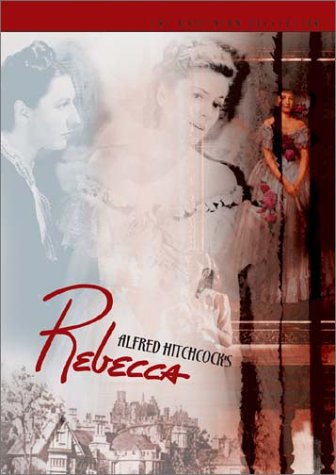
To film fans, the clause “Directed by Alfred Hitchcock” has almost become an adjective in and of itself. It has come to mean suspense created by using the viewer’s imagination and mind as a part of the film, first and foremost. These films didn’t have the freedom of CG, and consequently had to invent ways to achieve visual effects (Watch the documentary on Birds or Rear Window for example). Besides the lack of freedom of creation that digital filmmaking now provides, the filmmak...rs had to tip toe around the Hays code, not only restrictive on sex and sexual undertones, but also on content (as we learn in the featurettes here) and gore. The phrase, and the adjective that bears the director’s name, has grown to include a certain quality of characters and meticulous film crafting in every phase of the production. Rebecca, therefore, can rightfully be called “classic Hitchcock.”

Jessica Lange is a top Chicago attorney, who finds herself called on to defend her father when he is accused of having committed war crimes in Second World War Hungary. Convinced of his innocence, she launches herself into the wrenching case, but finds that maintaining her convictions becomes harder as the case moves on. Given his later career (Basic Instinct,Showgirls, etc.), it’s rather surprising in retrospect to find that the script to this intelligent drama is by Joe Esteras. Though sometimes moving a bit too slowly, the film is always interesting, the performances are superb (especially by Lange) and the story builds to a pretty powerful climax.

Audio

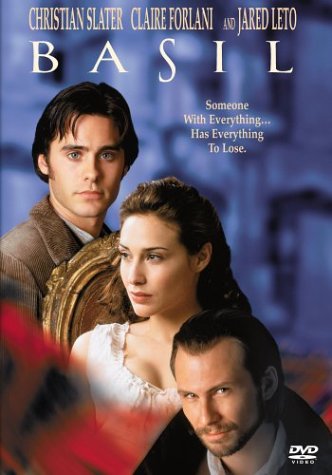
Jared Leto plays Basil, youngest son of the tyrannical Derek Jacobi. Traumatized by the death of his mother when he was young, the exile of his brother (who dallied with a young woman beneath his station), and oppressed by a father for whom class consciousness is the be-all and end-all, Basil is barely equipped to deal with the outside world. He has no friends, and only the most naive notions of romance. Into his life comes Christian Slater, whose worldly ways inspire Leto, and ...ho offers friendship, but in fact has deeply destructive motives. The movie s good fun in the vein of semi-gothic Victorian melodrama. Hearing Leto and Slater sporting British accents takes some getting used to (especially when it comes to Slater), and budgetary limitations show in dreadfully cheesy lightning effects and endlessly repeated establishing shots of Windermere mansion. But if you’re a faithful viewer of Masterpiece Theater, you’ll find much to enjoy here.

Audio

Made for TV (and showing it, what with that jarring fade-to-black exactly 20 minutes in),this film tells the story of a group of men trapped together in a coal mine when they suddenly strike water and their claustrophobic environments floods. We cut back and forth between their struggle to survive, the struggle to reach them, and the experience of their wives and families. At times, what, precisely, is happening in the mine is a bit hard to follow, though the realism is quite strong.

Audio