Posted in: Disc Reviews by Archive Authors on June 24th, 2006
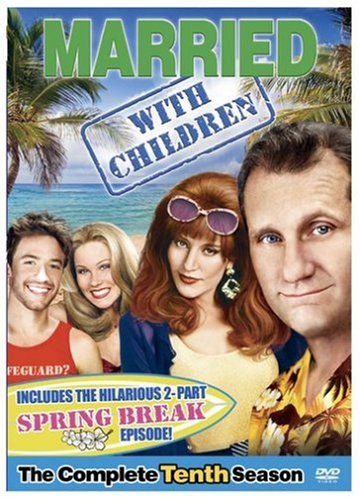
The irreverant, politically incorrect Married With Children returns to DVD, this time in its fifth season, and I first want to say, "It's about time." How long has it been? I've lost count. All I know is, I better not have to wait this long again. Al, Peg, Kelly, and Bud, return to torment the newly divorced Marcy Rhoades and any other poor sap, who gets in their way. In contrast, life dishes out enough misery to the Bundys to keep us all happy for a very long time. It's a funny dynamic, which the show plays t... the extreme... Bundys hate life, and life hates Bundys. I could watch the two struggle all day (with the Bundys always... well, nearly always... coming out on bottom), and never get tired of it. In this particular collection, we get more of the tragedy and the triumph with some of the greatest episodes heaped atop each other, one after another.

Follow a disgraced Al Bundy as he steps into the role of softball hero and gives one of the most stirring speeches of the series in "Unnatural" (Highlight: "In closing, I just want to say, 'I hate you all... and I thank only me for this accomplishment.") Join Kelly as she moves in to her first apartment and kindles Al and Peg's love in "One Down, Two to Go." Tia Carrere also finds out how painful it can be to cross a Bundy in "Kelly Bounces Back." And Al must face the demons of his football past in the classic "All Night Security Dude." We also get the first appearance of Weenie Tots and Jefferson D'Arcy. With 25 episodes of Bundy classics, being miserable has never been this fun.
Posted in: Disc Reviews by Archive Authors on June 24th, 2006
War movies, in my opinion, are one of the rarities in film, where the most recent pics are usually the best ones. I need only cite films such as Full Metal Jacket, We Were Soldiers, and Saving Private Ryan to argue my cause effectively. But that doesn't mean all of the older ones were bad. Most were because they took more of a silly ra-ra viewpoint in relation to the reality of war. They didn't show the nasty details because, in many ways, they were recruiting tools. But Decision Before Dawn> was one earlier work, which took chances with its dramatization. This 1951 film refuses to jump on any bandwagons, instead telling a captivating, and sometimes tragic, story about a strange kind of hero... one that comes not from within our own ranks, but from those of our World War II enemies. In fact, the main character of Decision Before Dawn is a captured Nazi soldier, who makes the decision to spy for the U.S. army - not for freedom, but redemption.
It's no wonder a film such as this was nominated for the 1951 Best Picture - and it's also no surprise it didn't win. This type of subject matter has never been able to avoid controversy, and the Academy hates to honor controversy. However, director Anatole Litvak's handling of the George Howe novel Call It Treason makes for an exciting and tasteful motion picture that was sure to win over audiences - even in its time - with the tale of Lieutenant Rennick, a German POW, who has agreed to go back to his home country and betray his old side to the Allies. Tension builds as Litvak plays with the possibilities of trust. Neither the Allies nor the Nazis know what to think of Rennick, and for a time, neither do we. But as the film progresses, Rennick shows there may be more to his decision of assisting the Allies than simply the proverbial "get out of jail free" card. He's one well-drawn character at the center of an important motion picture, which dared to paint an uglier face on war, and call in to question the line between treason and heroism.
Posted in: Disc Reviews by Archive Authors on June 23rd, 2006
Synopsis
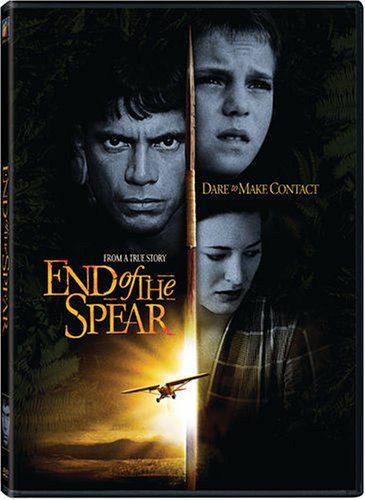
The Waodani tribe of the Amazon is, we are told, so violent that they have almost hunted each other to extinction. Oops. Anyway, in 1956 a group of missionaries and their families arrive to live with the Waodani and do the missionary thing. A misunderstanding leads to the missionaries being slaughtered, but their wives decide to stay. The film follows the journey of the son of one of the five men, and the whole thing is all about forgiveness.
Posted in: Disc Reviews by Archive Authors on June 20th, 2006
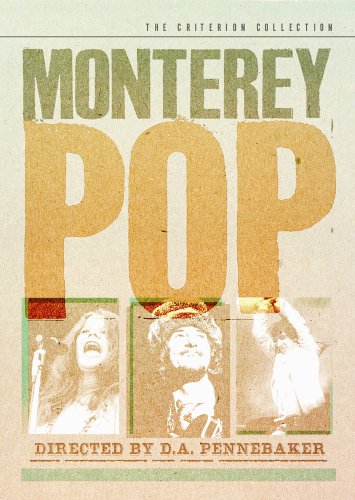
The 60's have become something of a caricature of themselves. Take a girl with straight hair and flowers, throw in a “groovy” and a “man”, add some grainy photography, and you're all ready to go. It is sometimes hard to remember that there was a time when this was not a kitchy formula, it was just the way that it was. This film is so authentically steeped in 60's hippie culture that it almost doesn't seem real when the footage starts rolling. Once the film begins to sink in, though, the viewer is completely drawn in ...o this world than many of the modern era may only know from oldies radio, of all things.
The Monterey Pop Festival was a large music festival held in Monterey California in 1967. The bill included not only some of the top acts of the day, such as the Mammas and the Papas, Simon and Garfunkel, Jefferson Airplane and The Who, but it also launched the careers of such legends as Jimi Hendrix, Janis Joplin and Otis Redding. The weekend festival was a defining moment in the history of rock and roll, as well as of the hippie movement.
Posted in: Disc Reviews by Archive Authors on June 20th, 2006
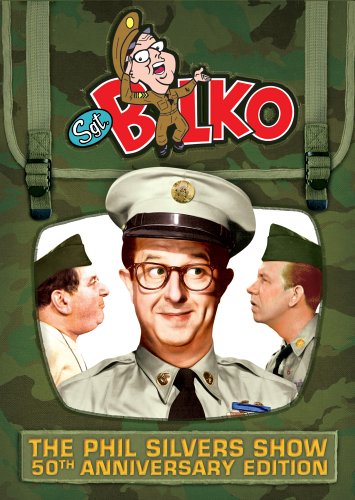
The Phil Silvers Show was groundbreaking for several reasons, but to look at the list of those who appeared on the show during its four season run is to look at a "Who's Who" of television ancestry and history. Allen Melvin played Sam the Butcher on The Brady Bunch, Harvey Lembeck previously appeared in Stalag 17 and his son Michael became an accomplished television director. Joe Ross played one half of the cop team in Car 54, Where Are You? next to a guest star of the show, a guy named Fred Gwynne, who also appeared in a show called The Munsters. Billy Sands went on to appear in McHale's Navy with a friend (and other Silvers show guest star named George Kennedy). Dick Van Dyke even showed up once in a blue moon.
Sometimes with projects like that, the stars in space seem to last longer than the television planet they orbit. But with The Phil Silvers Show and its star of the same name, there was an irreverent comic talent that not only was hilarious in his own right but helped to complement other members of the cast and giving them their chances to shine. Based around the fictional Ernie Bilko and the soldiers stationed on Fort Baxter, Bilko was sharp and a bit of a schemer, and his schemes involving other soldiers were the perfect vehicle to help Silvers offload some prime comedic moments to other actors. With Silvers and his co-creator Nat Hiken, the two managed to put together a show based on their sensibilities and wrote it the way they wanted to.
Posted in: Disc Reviews by Gino Sassani on June 16th, 2006
I’ve already had a lot to say about this show in my Season 5 review. All of it still applies. Richard Dean Anderson was fortunate enough, some would say talented enough, to have played two iconic characters in one life-time. I propose that he’s really played only one, but in two very different circumstances. I’ve already pointed out the similarities between the actor and his two roles, from their birthplaces to their hobbies and sports activities. This should in no way be interpreted as taking anything away from Anderson. The opposite is, in fact, even more the point. Anderson makes you feel at home with his characters. There’s so much of him there that we have a hard time remembering that there must also be so much that is not. It’s safe to say he has not traveled through wormholes or deactivated a nuclear device with a rubber band, paperclip, and stick of chewing gum. This is the beauty of the style he brings. By making the character very much like himself he gives us an easy-to-identify ordinary human being played against extraordinary events.
We’re sadly nearing the end of MacGyver with Season 6. Still, this was a great year. “Harry’s Will” has to be one of the most popular episodes in the show’s run. Not only is it great material for Anderson to play against, but we learn so much more about the character. This is also quite a star-studded outing with the likes of Henry Winkler, James Doohan, Rich Little, Dick Butkus, and Abe Vigoda. There’s another wonderful fantasy episode where MacGyver dreams he’s in the old West ordering mail order brides that turn out to be the various women in his life. There’s plenty of classic stuff here to more than make the set worth your time and your money.
Posted in: Disc Reviews by Gino Sassani on June 16th, 2006
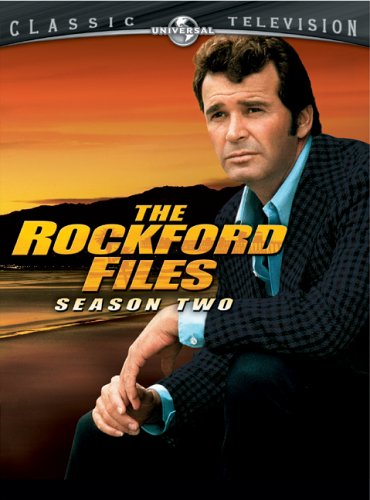
Growing up, that twangy Mike Post music provided a part of the soundtrack of my life. I remember walking around school and everywhere you turned you heard kids saying, “That’ll be $200 a day plus expenses.” We all printed up fake business cards. I can tell you firsthand that it takes more than the props. I didn’t have Jim’s natural charm and finesse. Somehow fifth grade’s Sister Margaret wasn’t buying that my NSA credentials meant my homework assignments were classified and above her clearance level. As I sat in detention wondering what could have possibly gone wrong, one theme kept going through my mind. This is gonna cost her. You guessed it. $200 a day plus expenses.
James Rockford lived in a trailer on the beach. His lovable dad was a truck driver who never did understand how his “sonny” could be mixed up in the dirty world of private investigations. While Rockford always projected a tough guy exterior, it was his soft spot for a sad story that often got him deep in trouble. He could understand the world of injustice. He had spent 5 years in prison for a crime he didn’t commit. Even after a full pardon, the cops considered him a lowlife ex-con. His one buddy, Lt. Becker, usually laid low among his fellow officers, often afraid to admit to being Rockford’s friend. Rockford was also king of the con. When normal tactics didn’t work, he could bring together a group of scam artists and con men to handle the largest of productions. He traveled with his own business card printing press. Afraid of guns, Rockford usually kept his in the cookie jar.
Posted in: Disc Reviews by Archive Authors on June 11th, 2006
Synopsis
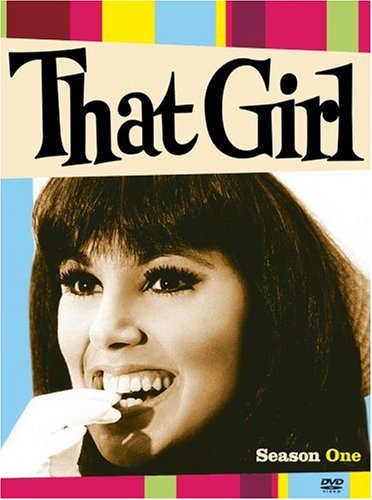
Long before she paired up with Phil Donahue and the two went on to do..who knows what, Marlo Thomas appeared in some smaller TV shows from in the early '60s, until she got a break when she was given a TV show to utilize her talents. That Girl is the story of Ann Marie, who decided to move to New York City to try to find steady work as an actress, and over the course of the show's five year run, Ann Marie's exploits are documented in situation comedy fashion.
Posted in: Disc Reviews by Archive Authors on June 11th, 2006
OK, I hope I'm not diving into a review that may fall into the "film scholar" category, and thus rule me out of being taken seriously. When there's a lull in buying new releases, sometimes my wallet gets cabin fever, and so I went out and picked up the Hitchcock set from Criterion, entitled Wrong Men and Notorious Women: Five Hitchcock Thrillers 1935-1946, and includes the previous Criterion releases from Hitchcock, namely Rebecca, Notorious, Spellbound and The Lady Vanishes. I'm tackling the earliest release of the bunch, entitled The 39 Steps. The story very much resembles another of Hitchcock's later works, North by Northwest, in the aspect that the wrong man is thrown into a spy chase. While Cary Grant is taken through New York, a cornfield, and Mount Rushmore in the later film, in The 39 Steps, Richard Hannay, played by Robert Donat, attends a Music Hall production, meets and takes home a women (Annabella Smith, played by Lucie Mannheim), who he later finds out is a spy who is being chased by two men attempting to kill her. In the middle of the night, Annabella comes into Richard's room, and falls over him, dead of a knife in the back. As the police chase him, looking to detain him for the murder, the two men, assuming that Richard has found out about the secret she held, start to pursue him in order to kill him. And whatever he does, some of Anabella's last words to him are not to trust a man missing the tip of his right pinkie (It sounds strange to write the word "pinkie" in a review of Hitchcock, so I hope it looks out of place as you're reading it).
This was one of Hitchcock's last works before coming over to America to wow us with the movies that have become legend. For all of my DVD collecting, I'm still a bit green when it comes to the older stuff. And after seeing The 39 Steps, I now realize what I've been missing. For its time, it's a pretty suspenseful film, with a lot of shots that are still used in movies today, and even the story has been used in some fashion or another over the years, though clearly not to the same effectiveness that Hitchcock has done. Despite the "Born On" date for this film, it's a very good one, and to see many of the same devices used today, both within the story and within Hitchcock's technical realm, make it an easy recommendation to those who are even casual film fans.
Posted in: Disc Reviews by Archive Authors on June 8th, 2006
Synopsis
Photographer Timothy Greenfield-Sanders decided to do a series of portraits of some 30 porn stars. Two pictures of each, one clothed, one not, the same pose in both pictures. This is his documentary of that shoot. Scenes of the studio process are intercut with interviews with the various stars and talking-head moments from the likes of Karen Finley, Gore Vidal, John Waters and Whitley Streiber (!). We are at the other end of the porn spectrum from Dag Yngvesson’s Rated X – these are t...e top-paid performers, and so the overall experience is less depressing the world shown in Yngvesson’s film. (Though there is some inevitable overlap.) Many of the stars are very articulate (and not just from the expected sources such as porn star/activist Nina Hartley), and there is quite an interesting range of personalities and views presented here. Jenna Jameson is seen, but presumably was too expensive for an actual interview. Instead, she is talked about, and so accrues the semi-divine aura of an all-powerful, all-knowing, enigmatic Mona Lisa. One is left a bit wanting: one doesn’t learn very much about Greenfield-Sanders’ photographic process, and one wishes many of the interviews were longer and more in-depth. That said, a fascinating piece.