1.78:1 Widescreen

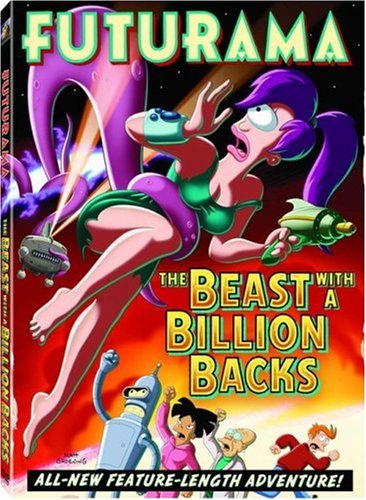
Futurama is one of my favorite cartoon shows. When it was cancelled a few years back, I went ahead and collected the four fine dvd season sets and proceeded to watch them whenever I had time. Truth is, if you are a nerd like me, Futurama is much funnier than the Simpsons and deserved much more than seventy two episodes. Somebody listened. The people at Fox decided there was more life to Futurama and ordered up four straight to dvd movies which will be cut up among sixteen episodes for a fifth season. The first one is titled: Bender's Big Score. Here is hoping that the plot isn't Bender getting involved with a larger female robot (I think he already did that in a previous episode).

The story starts out where the series kinda left off. It's been two years since the executives at the Box Network have cancelled Planet Express's contract. The executives who made the decision were fired and hence Planet Express was back in business. After a short party where Hermes is decapitated (his head is naturally placed in a jar while his body gets repaired), the crew embarks on a mission to a nude beach planet. The crew decides to take a break and participate in some sun-bathing (au natural of course). There they meet three scammer aliens who convince the crew to sign some petitions and get their email addresses.

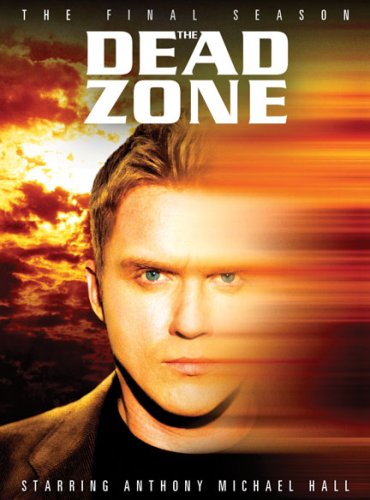
I wonder if Johnny Smith could have seen it coming. After 6 short seasons the USA Network series based on Stephen King’s The Dead Zone has finally closed up shop. The series is based very loosely on the early Stephen King novel or the film with Martin Sheen. Johnny still goes into a coma and comes out with psychic abilities. He even meets the infamous Senate candidate destined to destroy the world. The similarities between the original tale and this surprising series end there. This show is more about Johnny using his abilities for good whenever he can. We find out that it was meeting Bruce, a physical therapist who was not in the original story, that kept him from the self-destructive path King had outlined for him. What makes this increasingly compelling storyline work is twofold. Fans of the original finally have some beef to sink their canines into. The second benefit is a direct payoff of this being a series instead of a single film. While we may think we know where Johnny’s headed, we now get to see it have a profound impact on his life. We get to see the character develop, heading inevitably toward the dark future he has caught glimpses of for several years now.


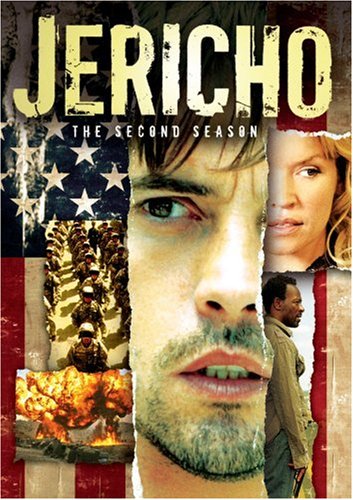
Because I was fairly certain I would be asked to review this second season of Jericho, I did not watch any of the episodes as they aired. With the writer’s strike many shows were going through problems, and I guess I wanted to see how it all shook loose. So, I watched very little of anything from the networks for fear of being stranded in the middle of a compelling story. Now, before the Jericho fans out there devise any plans to have me roasted along with their next batch of nuts, let me assure you I am not a monitored watcher and participated in no survey. They tend to shy away from us critic types. Something about the deodorant we tend to wear, I think. So I had nothing to do with the ultimate demise of your show; in fact, I’ve become a fan.


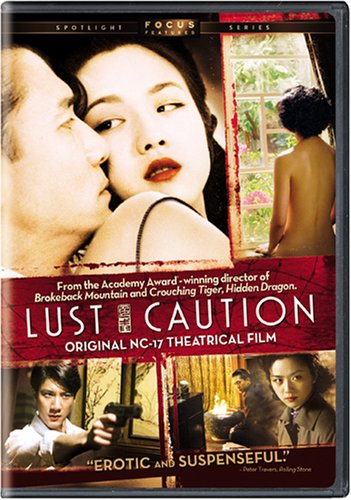
Tang Wei plays a student who is a member of a radical theatre troupe during the Sino-Japanese War. She and her cohorts determine to assassinate a prominent collaborator (Tony Leung). In order to get create the opportunity for the killing, our heroine must infiltrate Leung's household. She is on the threshold of becoming his mistress when he leaves Hong Kong for Shanghai. Three years later, now backed by the Resistance, she makes a new attempt. But she hasn't counted on the entanglements of passion in the affair she has embarked on.

Ang Lee's film was widely seen as both sumptuously beautiful but too leisurely for its own good, and there is something to that position. The story takes its sweet time, and the affair itself, along with its transgressive (by mainstream standards) sex scenes, doesn’t properly begin until over 90 minutes into the film. On the other hand, so much of the film is unspoken, left for the viewer to read between the lines (and Tony Leung is a master of conveying deeply repressed pain) that there is a lot going on, even when the images are still. And when the paroxysms of violence and sex do come, they are explosive.

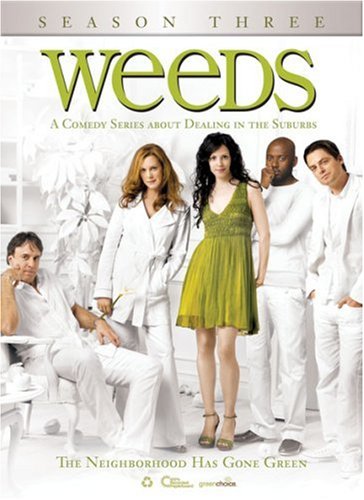
When last we left the fine folks of Weeds, Nancy Botwin (Mary-Louise Parker, Saved!) and her herb-growing buddy Conrad (Romany Malco, Blades of Glory) were being held at the mercy of two rival drug groups, both of which were very interested in Nancy’s stash and her cash, but it was taken by her son Silas (Hunter Parrish, Freedom Writers), who was arrested by Nancy’s friend Celia (Elizabeth Perkins, 28 Days). I’m not even close to discussing how things got to this point, and needless to say, the twists and turns sound a little soap operatic at times, but when you’re invested into the characters’ fates as you are, they provide for some memorable experiences.


One of the things that Weeds does is push things to the edge of the envelope, and I‘m fine with that. What I’m not fine with, and what my wife and I get into debates about from time to time, is that in Season Three, Nancy’s transformation from widowed mother in a upper/middle class suburban neighborhood to full-fledged marijuana dealer becomes full and complete. In the previous two seasons, Nancy mixed her Caucasian naivete rather well with her cold and precise drug dealing livelihood. In Season Three, she becomes much more cold and precise, particularly around people she knows and calls friends. She takes care of her feelings first, particularly in one episode where she sleeps with her boss (played by Matthew Modine of Vision Quest lore), despite Celia’s urge to be with him. Her rendezvous with Conrad, one the show had been waiting for for almost three seasons, was more for her convenience than anyone else’s. She becomes much more distasteful than in previous seasons, and all the sweetness of sucking on an iced coffee straw isn’t going to help things.

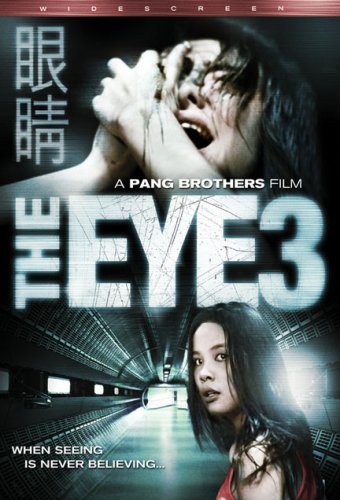
The Pang brothers return with one more instalment to their series of ghost tales. This one also goes under the title of The Eye 10 (and The Eye: Infinity), which is actually the more accurate nomenclature, given the sheer number of hauntings that are present here. A group of friends on vacation in Thailand regale each other with ghost stories. Their host then produces a book that lists the ten ways of seeing ghosts. The group, whose instinct for self-preservation could do with some strengthening, proceed to put the book to the test. They get far more than they bargained for.

In the making-of featurettes that accompany the film, the Pangs talk about how they had too many ideas to fit into the first two instalments of the franchise. So here they have a structure that allows them to pack in a cornucopia of summonings and hauntings. Some of the manifestations are undeniably effective, and there are some pretty decent jolts. On the other hand, the Pangs recycle some of their greatest hits, sometimes to deliberately humorous effect. The tone generally is much lighter than before, but the humour has a tendency to disrupt scenes that are building up a good head of terror. The film is thus a frustrating mixed bag, where flashes of the Pang brilliance are present, but there are also plenty of moments where the brothers seem to be just going through the motions, when they aren't taking the piss entirely.

Extreme sports, whether it be skateboarding, surfing or skiing have only come into popularity within the last decade or so. However, their roots often go back many more years. Take the case of extreme skiing. That kind of skiing is not usually found in the United States and forces patrons to go off to slopes like Chamonix in France. Origins of the sport suggest that we can go back almost 40 years to find a true source. The documentary Steep tells the tale of extreme skiing from the fathers of the sport and listens to the pioneers creating new and exciting challenges going forward.

Back in 1971, Bill Briggs skied Wyoming's Grand Teton and gave birth to the concept of extreme skiing. His claim, "Without risk, there is no adventure.". However, due to the United States being more partial to insurance claims and protecting themselves from being sued, the sport was forced to move to Europe and slopes like Chamonix in France during the mid 80's. Local types such as Anselme Baud or Stefano De Benedetti led the way with a great show of skill and escaping death. But the sport didn't get recognized here in the United States until Glen Planke came onto the scene. His movie, The Blizzard of AAHHH's and his foot high mohawk brought the sport into the mainstream.

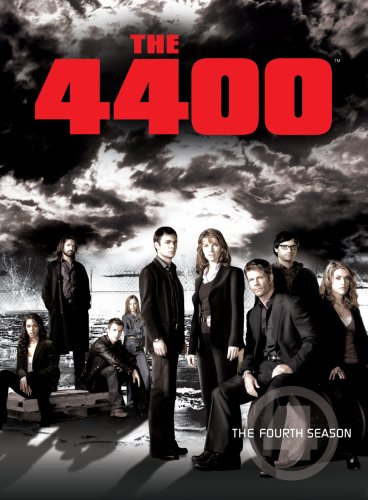
In the first season of The 4400 we are introduced to 4400 people who, we are led to believe, have recently returned from being abducted by aliens. Before you can look for Samantha Mulder among the group, we eventually discover that it was in reality the future that abducted these hundreds for nefarious reasons of their own. Some abductees have returned with mysterious powers and abilities. No, this is not Heroes or X-Men; in fact it’s a lot more like The X-Files than anything else, particularly in this the final season. Up to this point the government has developed a vaccine that inhibited these powers. Again we seem to be treading on X-Men territory here, don’t we. When the third season left us we were introduced to another drug that can reverse the effects of the inhibitor, but it carried an almost even chance of death. It is here that season four begins its likely final stories to tell.

A question to ponder before we head into this review. What do you get when you mix anime or japanese animation with a healthy dose of John Woo? Besides a ton of falling gun shell casing and cute characters performing acrobatics in the air while taking down a dozen bad guys? You get a movie that goes full speed for over a hundred minutes and makes you realize that this is truly the perfect avenue for John Woo and style of films. However, just don't expect there to be a completely solid story behind it.

In the future, the world is annihilated by itself. However, out of the dust & debris, Olympus rises as a utopian society. The new society has a group of soldiers called the ESWAT (wasn't this a game for Sega Genesis? sorry, *turns off video game knowledge*). These warriors protect the peace and serve in the utopian society's best interest. The warriors consist of cyborgs and humans. Bioroids or genetically engineered humans serve as diplomatic leaders over ESWAT due to their calm and collective nature.

Sean Patrick Flanery is Harry Balbo, an introverted nobody at a nothing job where he constantly mocked by the unfunny office clown. One night, on his way home from the convenience store, he sees a female vampire rip off a homeless man's head. No one believes him, and his feelings move from frustration to terror when, a couple of nights later, he sees her at work again, and she scratches his face, marking him. He turns to crippled vampire investigator Michael Biehn for help, and eventually captures the vampire. Unable to bring himself to kill her, he is torn between sacrificing himself or others to her bloodlust.

This is a film that finds its strengths in its incidentals. Harry's depressing work environment, the tossed away dialogue from minor characters, the little humiliations of his life and his eccentric little obsessions all work well, and are very funny. The actual vampire storyline isn't quite as fresh and witty, though nestled in such an enjoyable context, it works well enough.