1.78:1 Widescreen

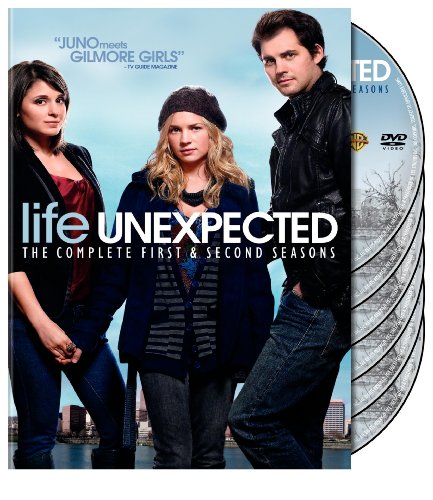
When the WB merged with the UPN to form the hybrid CW, a lot of good things happened. The new network stepped away from the twenty-something shows that began to all look the same after a while. The network began to take on cutting edge genre shows like Supernatural and Smallville. But deep down inside there was still that family drama mentality that drove at least one of the parent networks. Life Unexpected is, unfortunately, a totally expected result of that dark place.

The premise is actually pretty interesting. Lux (Robertson) is a 16-year-old girl who has spent her entire life in foster care. She has been bounced from home to shelter to home again 7 times in those 16 years. She's lived with drug addicts and abusive situations. She's had it, and so she decides to seek legal emancipation. Because her parents are still alive and somehow never gave up their rights, she needs their signatures on the court documentation. She finds her father first. Nate Bazile or Baze (Polaha) is a guy who's refused to grow up. He lives in a loft above a bar he runs primarily so he can drink for free. His father (Thomas) owns the building, and the bar is just one of many unresolved issues between them. He lives with two roommates who are only slightly more mature than he is, including English teacher Math (Basis). He's shocked when Lux shows up, because he didn't even know she existed. Together they contact her mom, Cate (Appleby), who is a popular radio talk show host with her partner and soon to be fiancée Ryan (Smith). Cate gave Lux up for adoption unaware that she had a heart condition that required her to remain in the hospital until she was three. That made her a tough adoption candidate. So, when Lux shows up she is just as surprised, believing she was happy and in a family. The emancipation doesn't happen, and Baze and Cate are given joint custody of Lux.

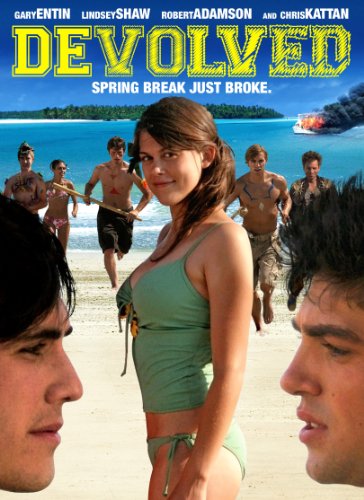
A Spring Break whale-watching cruise goes off-course and then blows up, thanks to the stupidity of the popular kids, and two groups of high schoolers find themselves washed up on a deserted island. The aforementioned populars, led by the egomaniacle The Rog (Robert Adamson) immediately establish their dominance, squandering supplies and tormenting the unpopulars. These unfortunates turn to reluctant leader Flynn (Gary Entin), who begins planning a revolution. Pulled between the two groups is Peggy (Lindsey Shaw), cheerleader and girlfriend to Rog who nonetheless has too much intelligence and self-respect to remain satisfied with either role.

The feature-length directorial debut of Severin's own John Cregan sheds new light on that company's interest in 80s teen comedies. But Cregan's touchstones go deeper than that. Obviously, the proceedings are very Lord of the Flies, but there is also a hint of Massacre at Central High (1976) with the idea that deposing one tyrant might simply lead to the rise of another. Devolved doesn't go all the way in plumbing those depths of darkness, though. It is, first and foremost, a comedic satire, and its touch is quite assured. The writing is sharp, and the action is frequently interrupted by a reality-TV-style narrator who portentously comments on the events, occasionally providing helpful animated diagrams.

Rory Gallagher was somewhat of an enigma in the British music scene. While he never did have the breakout hit or career that he worked so hard to achieve, he has managed to develop quite a cult following over his troubled career. His roots went deep into the British blues scene where he first received some notice in the band Taste. But Rory was a force of nature and couldn't be contained in the local scene. He grew up in the small town of Cork in Ireland and managed to fight his way onto a world stage by the time he reached his 20's. His music was a unique blend of blues and hard-edge rock and roll. His voice wasn't ever described as smooth. He belted his words out in screams and shrieks. He was all about the energy, connecting with the audience live far more effectively than he did through his recordings. He was the kind of guitarist that flew across a fret board like a supersonic jet flying over clear calm skies.

Rory Gallagher died of liver failure in 1995. He lived hard, and it obviously took its toll on his heath. He didn't really get into the drug scene, but he could put away the ale. He was a man forever in motion. This concert/documentary from Eagle Rock is a perfect window into the lifestyle and music that was Rory Gallagher.

Everybody loves dolphins. We marvel at their graceful rolls among the waves. We enjoy watching trained ones do tricks for Sea World audiences, and some of us even pay big bucks to swim with them at specially built facilities.  But behind these glimpses of intelligent marine life, there’s a deadly, disgraceful hypocrisy. There are mega-millions being made at the expense of innocent creatures, and the people behind the conspiracy will stop at nothing – including murder – to preserve their lucrative, dirty business.

The Cove exposes the evil, bringing the documentary format into the world of cinematic thrillers. Hidden cameras, hostile authorities and horrible slaughter are key elements in this eloquent but depressing documentary that won dozens of awards last year, including a well-deserved Oscar.

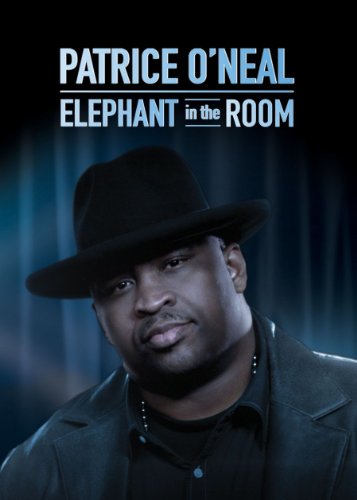
Saying there is an “elephant in the room” often means someone is ignoring some enormously obvious truth. To say that Patrice O'Neal can be ignored is foolish...and to say that he speaks the truth...well, you'd have to be pretty jaded to take this man seriously when he flips one PC view of the relationships between men and women on their heads.

The less enlightened viewers might write off O'Neal as misogynist as he explains “mooshing” and his advocacy for a “Harassment Day” (where office workers can make sexual passes at their female coworkers without fear of reprimand) but that would be like dismissing Lenny Bruce as racist for telling jokes about races. Of course, O'Neal is no Lenny Bruce, but the point stands that everything he says is done so with tongue firmly placed in his cheek, or purely as satire.

If you are old enough to have seen the original Tron back in 1982, you know how much things have changed in the digital world since then. The block graphics of the film and subsequent game might have been state-of-the-art at the time, but it looks like something very primitive to the younger generation. Like all good science fiction, many of the incredible elements of the film have become quite commonplace. The idea that a person can be scanned by a laser and transported into a virtual world might still be out of reach, but it turns out that using lasers to scan objects is exactly how we get three-dimensional images of real-world items into the virtual world. When Flynn is communicating with his program, the program is represented by an image of Flynn himself. Today we'd call Clu an avatar, and it's become quite common for people to socialize in environments like Second Life, where their avatar representatives engage in the same kinds of activities we do in the real world.

Tron wasn't quite the huge box office film you might have expected. It did pull in about $5 million on its opening weekend, which was pretty respectable in 1982. The film ended its box office run with just under $40 million from a $17 million budget. That's not where Tron found its biggest success. The film became more popular as the years went by and some of the content was getting more and more like reality. The game became a classic and is still found in the occasional arcade. That was another trend started by the film. It was one of the first films to spawn a video game, something almost every big-budget genre film does as a matter of course today. The movie was a milestone in computer-generated images combined with animation. It took nearly 30 years, but it really isn't a surprise that Tron has finally gotten a sequel. It's been a commanding presence for years at ComicCon. It's the little big movie that wouldn't die.

"They rob, kill, and terrorize, and they've left their mark on our nation's history."

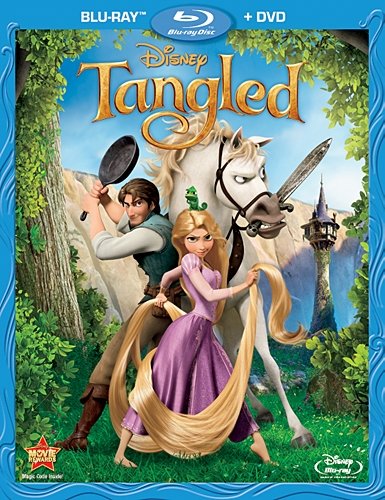
"Once upon a time, a single drop of sunlight fell from the heavens. From this small drop of Sun grew a magical golden flower. It was said that this flower held the power to heal the sick and injured. From this flower sprang a glorious kingdom, ruled by the most generous king and queen, who were soon to have a baby..."

That baby has been the subject of many tales over the years. Walt Disney himself had begun work on an animated feature based on Rapunzel back in the 1940's. Uncle Walt was fascinated with timeless fairy tales, and they became the studio's specialty over the years. For one reason or another the film was pushed back and eventually shelved for other titles. But it seems that the studio that still bears his name continues to have the same fascination with fairy tales and fables. Somehow you probably just knew that they would eventually dust off those old plans and return to the story of Rapunzel.

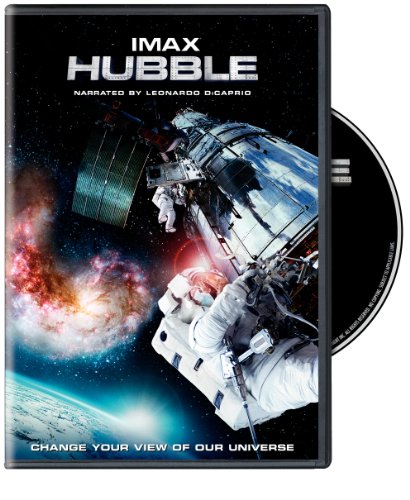
"May, 2009 - Seven brave astronauts are about to launch on the most challenging and risky missions ever flown in space. This is the last chance to save the Hubble Telescope."

You have to really go back to April of 1990 to get to the start of the story. That's when the shuttle Discovery launched from Cape Kennedy with the Hubble Telescope in its cargo bay waiting to bring the ends of the universe to our waiting eyes. I was there that day among the crowd of hopefuls as the shuttle ignited its thrusters and pierced the sky for space. I bought a commemorative coin from a roving vendor and drove the two hours home without even listening to any music. Watching a shuttle launch is an almost religious experience that, unfortunately, few will ever know. I've been lucky enough to witness seven.

Our Planet is a merging of a large handful of documentaries that originally aired on the History Channel. Here they are packaged together to thematically display the “Past, Present, and Future of Earth.”

HOW THE EARTH WAS MADE