Posted in: Disc Reviews by William O'Donnell on March 5th, 2011
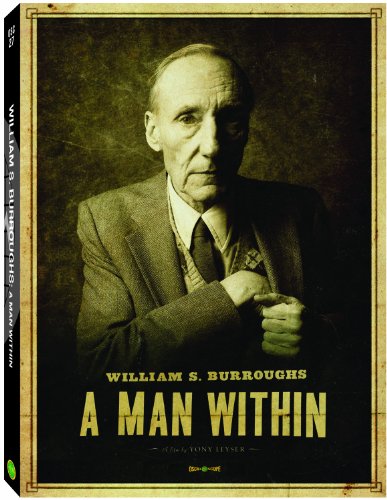
William S Burroughs was the third hit of the 1-2-3 combo of Alan Ginsberg's Howl, Jack Kerouac's On the Road, and Burroughs' Naked Lunch which closed out the 50s and defined the so-called “beat generation.” This film documents the significance of Burroughs work as a part of this scene, and the influence he had on artists, musicians, filmmakers, and countless others.
Ranging from his birth to his death, this film sets out to simultaneously ask questions and answer them with regards to the arguments about what made Burroughs who he was. It asks if he transgressed sexuality, whether we deserved the mantle of “Godfather of Punk,” would he be the sort of writer he is if he was not a drug addict or if he had not shot his wife dead? To answer, director Yony Leyser interviews his closest companions and sincerest fans.
Posted in: Disc Reviews by Gino Sassani on March 4th, 2011
Dwayne "The Rock" Johnson has made a career out of redefining himself. Of course, we all know that he started as a rather flamboyant wrestling personality. He had a pretty good run, but it was never going to be enough to really satisfy Johnson's own drive to perform. He made the natural transition into movies, faring far better than most of his fellow wrestlers have been able to do. He naturally gravitated toward the action films where his bulk and toughness more than made up for his inexperience. Then he decided to try something a bit different. He began to make family films, often surrounded by cute kids in various situations. The role suited him better than expected, and it looked like he was also having a lot of fun. He even began to drop "The Rock" from his name. It was a good run, and one I hope isn't completely over. But Johnson has found his way back to the kind of movie that gave him his start. Johnson's back in the action game once more. He's bulked up again and eating up scenery in a Clint Eastwood posture for Faster.
The story is a three-ring circus. There are three separate stories going on that play out simultaneously.
Posted in: Disc Reviews by Gino Sassani on March 4th, 2011
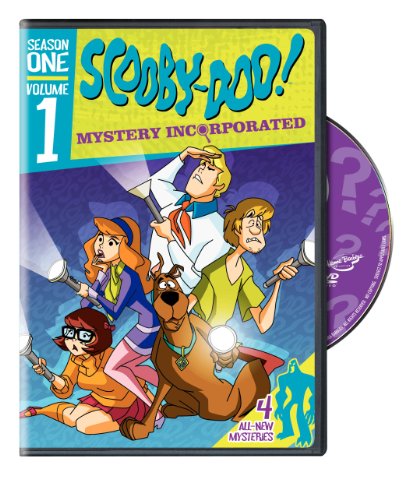
Scooby Doo has spanned generations and over 40 years. Since the 1960’s the name and conventions have become a part of the pop culture. The original cartoon series had a series of conventions. The Scooby Gang would drive around in their green Mystery Machine van and solve ghostly mysteries. Fans of the show quickly grew to learn that these spirits and goblins were usually just normal people using scare tactics to get revenge or make a profit. The cartoon classic spawned music albums, live action movies, and several new shows and animated features.
The jokes haven’t changed much, even if the voices have. Frank Welker, who voiced Freddie briefly in 1970, returns as Freddie and Scooby Doo. Unfortunately Don Messick died in 1997, and Welker has been voicing the pup since that time and before. Mindy Cohn has been voicing Velma since 2004, replacing a line of actors starting with Nicole Jaffe. What’s important is that Casey Kasem does not return as Shaggy, a part he’s played since 1969. That part now goes to Matthew Lilard. Don't get me wrong, he does a fine job, but this was the most unmistakable voice in the mix up until now. Older fans will notice the change with sadness. Part of me is very glad to see that Scooby and the gang are still out there working for Scooby Snax. The charm remains, even if the jokes don’t appear quite as funny anymore. Daphne is now voiced by Grey Delise. She's done the voice on and off since 2001. Heather North was the original voice and has come back to the role as recently as 2004.
Posted in: Disc Reviews by Gino Sassani on March 4th, 2011
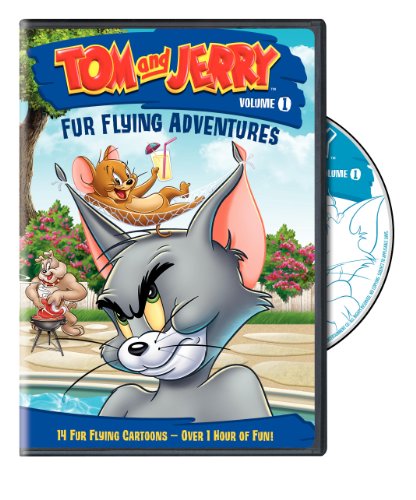
In the 1930’s and 40’s MGM was trying to get in on the lucrative animation game. The field was dominated at the time by Warner Brothers with their Loony Tunes shorts, and of course, the iconic cast of animated characters coming out of the Walt Disney Studio. For years they had failed to find the right property to take advantage of the market. It wasn’t until the team of William Hanna and Joseph Barbera approached the studio with their first project that the times did change, at least a little, for the fledgling animation department at MGM. The project was far from an original one even for the time. It was a very basic cat-and-mouse adventure featuring a cat named Tom and a mouse named Jerry. There would be almost no dialog on the shorts. It certainly didn’t look like much of a hit to the studio brass, but with no better ideas on the way, they went ahead with the new shorts of Tom And Jerry. There’s a reason why the cat-and-mouse pair is such a classic. It’s because it works. If you can make your characters entertaining and endearing enough, you can have a hit. MGM finally entered the major leagues, and the team of Hanna and Barbera would become one of the most successful animation teams in history. They would go on to create such cherished characters as The Flintstones, Yogi Bear, The Jetsons, and, of course, Scooby Doo.
These were the days of the Golden Age in Hollywood. These shorts were not being produced for television, which hadn’t been invented when they began; rather, they were intended for theatergoers. In those days going to the movies was much more of an inclusive experience. You always got a cartoon short along with an adventure serial, the likes of Buck Rogers, Flash Gordon, and The Lone Ranger. These multi-chaptered serials were the forerunners to the modern television series. It kept you coming back to the movies to see what would happen next. Each chapter ended in a cliffhanger. These early serials were the inspiration for such film franchises as Star Wars and Indiana Jones. Finally you got one, sometimes two movies, all for the price of a single admission.
Posted in: Disc Reviews by David Annandale on March 3rd, 2011
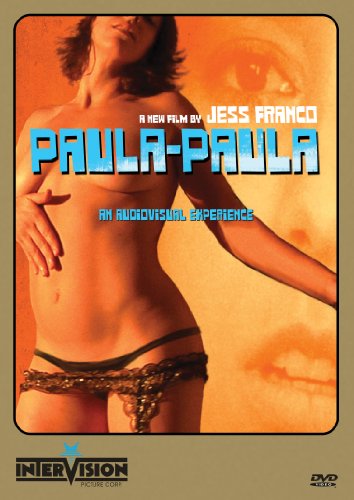
Paula (Carmen Montes), a dancer at a strip club, is arrested for the murder of Paula (Paula Davis), a fellow dancer. The arresting officer (Lina Romay) questions the near-catatonic Paula, and the rest of the film is a slow-motion, flashback of the dead Paula dancing, the two women making love, and the murder. Once the slow-mo begins, there is no further dialogue, except for a cryptic fable that Paula tells to the camera.

Jess Franco's latest effort is his most minimalist, and in some ways most personal, film to date. There is no set to speak of: the film was obviously shot in Franco and Romay's apartment, which doubles for both the home of the Paulas and, perhaps, the police station. I say “perhaps” because the notion of any definable space is a very tenuous one in this film. The only set dressing consists of a few aluminum screens, which play a role in the zero-budgeted surrealist effects. As has been pointed out elsewhere, there is nothing groundbreaking about the effects the Franco conjures here. The kaleidoscopic images, frequently involving Davis fusing and splitting from her double, would not have been out of place in the 1960s, and aren't going to break the back of even the most basic computer editing suite today.
Posted in: Disc Reviews by William O'Donnell on March 2nd, 2011
Ok...here's the pitch! A movie that's just jokes! Dirty jokes! Story? Maybe sure sure, but its all about jokes! We all love dirty jokes right? We have some actors act them out...one after the other...and that's it...the whole movie is jokes!
That is the theory behind this film, and almost verbatim the opening scene. A sleazy looking producer wants to help resurrect a Hollywood production company with his idea for a movie that is nothing but a series of dirty jokes, played out one after the other. And this is exactly what we the audience received. Chapterised with portions showing the filmmakers trying to create and ultimately punished for making this film, we see a gaggle of actors, and a LOT of topless women, act out dirty jokes. The film compares itself to The Aristocrats in the sense that it is just jokes for the duration of the film, but the main difference is The Aristocrats is a documentary whereas Dirty Movie is almost meta-cinema in how self-aware it is in its presentation.
Posted in: Disc Reviews by Gino Sassani on March 1st, 2011
Everyone knows Charlie Chaplin. For many, he is the symbol of the silent age of film. The stiff figure in trademark hat and twirling cane comes easily to mind. But that wasn't really Charlie Chaplin. That was a character he created called The Tramp, or often The Little Tramp. So, it would seem that Chaplin spent most of his career playing The Tramp, who in turn played many different characters on the silent screen. He was known for his subversive antics and charming stare. He became the champion of the common man, all the while becoming the first elite star in Hollywood. With his troubled life and numerous sex scandals, you would expect that Chaplin would have been the subject of a bio-pic before 1991.
The script is based on two books. One of them is Chaplin's own autobiography. The other is David Robinson's book Chaplin His Life And Art. You get the idea that the material is authentic enough. It doesn't attempt to gloss over the flaws in the man's character. While it obviously spends much of the time on his films and the things that went into them, we don't get an over-stylized idea of Chaplin as anything less than what he was: a flawed human being like the rest of us.
Posted in: Disc Reviews by Gino Sassani on February 23rd, 2011
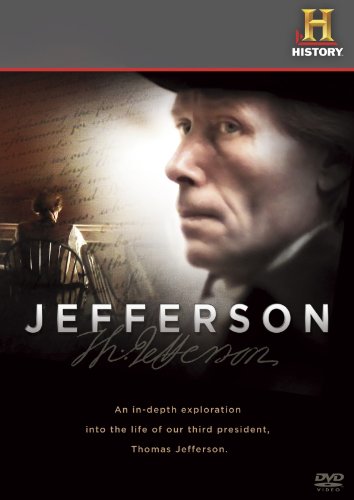
"When, in the course of human events, it becomes necessary for one people to dissolve the political bands which have connected them with another, and to assume among the powers of the earth, the separate and equal station to which the laws of nature and of nature's God entitle them, a decent respect to the opinions of mankind requires that they should declare the causes which impel them to the separation."
Of course, that declaration would be heard the world over as thirteen small British colonies began an experiment that would change the face of the world. The words came out of a Continental Congress, more specifically a committee that included Ben Franklin and John Adams. But it is neither of those men from whose pen came the liberating words of the Declaration of Independence. That honor belonged exclusively to the young wordsmith Thomas Jefferson. He would put words to the spirit of rebellion that consumed a small corner of a great continent. He would become our third president and the first to expand the country by more than double with the purchase of the Louisiana Territory from Bonaparte in France. His concept of the separation of church and state would become known as Jefferson's Wall and become one of the most abused and misunderstood rights of the Constitution. He was an inventor. He was a naturalist, cataloging hundreds of new species of plants and animals. He was a meteorologist, leaving us the first accurate records of America's climate. He would die on the Fourth of July at the 50th anniversary of his famous document.
Posted in: Disc Reviews by Gino Sassani on February 15th, 2011
"At the top of the world, there's a job only a few would dare. The Ice Road Truckers are back. Last year they chased their fortune over the frozen gauntlet of the Daulton. But this season, Alaska's most fearsome road is just the beginning...."
It was the peak of the 1970's, and CW McCall was teaching ordinary people like us about Cabover Petes with reefers on and getting by those Smokeys. The man practically started a new genre of music with the hit song Convoy. The song was so popular that the backup band used their cut to start a little project of their own. They became Mannheim Steamroller and used the cash to cut their own music. The movies started giving us things like Smokey And The Bear. Truckin' was in fashion, and a good time was had by all.
Posted in: Disc Reviews by Gino Sassani on February 15th, 2011
"Earth: a unique planet. Restless and dynamic. Continents shift and clash. Volcanoes erupt. Glaciers grow and recede. Titanic forces that are constantly at work, leaving a trail of geological mysteries behind."
I saw a bumper sticker recently that read; "Geologists dig classic rock". I should have taken it as an omen that I would be spending some quality time with a few geologists over these last couple of weeks. It started with the excellent BBC mini-series How The Earth Changed History and culminated with the 13 episodes of the second season of How The Earth Was Made. It might be easy to confuse these titles in your video store. But make no mistake about it. They are very different shows down to their core, pun intended.