1.85:1 Widescreen

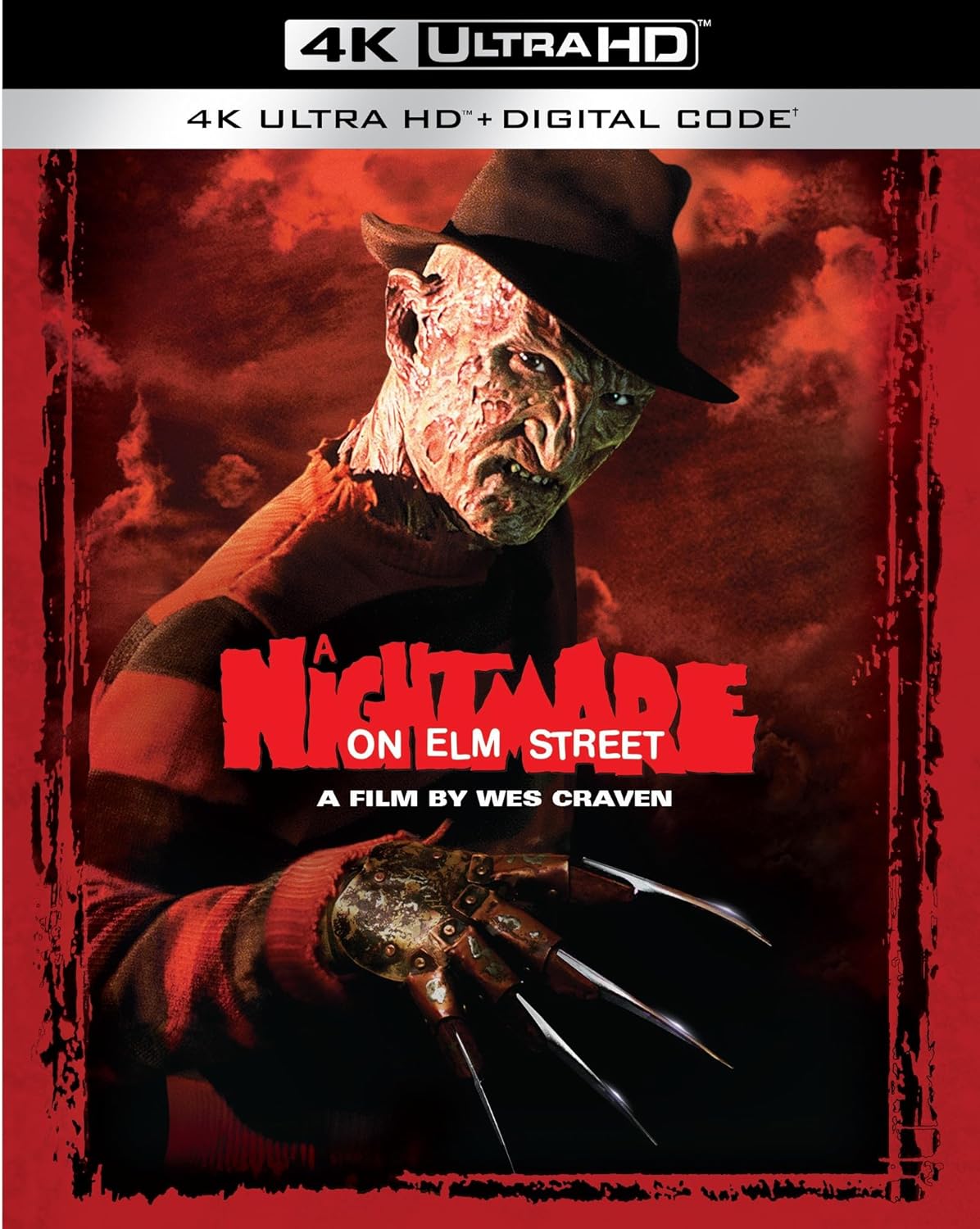
"One … two… Freddy’s coming for you, three… four… better lock the door, five… six… grab your crucifix..."

Freddy might have been born in the mind of Wes Craven, but he grew and developed in the knife-wielding hands of Robert Englund. Granted, not all of these films are equal in quality, but the first was everything you could ask for in a horror/slasher film of the era. Freddy himself is by far the most colorful and animated of the slashers. His burned face, fedora, striped sweater, and knife-blade glove were all integral parts of the wise-cracking maniac. You know the story already, so I'll stick the main idea. Freddy was a child molester and killer before the parents of Elm Street decided to burn him to the ground in a boiler room. Good homestyle justice goes wrong when Freddy reappears in the nightmares of the children of Elm Street. He has become a demon of sleep where he is able to manipulate the world into the most terrifying images possible for his victims trapped by their own slumber.

"Let's get this party started, people!"

So, I somewhat missed the boat on the Despicable Me franchise but let me see if I got the gist. So Gru, played by Steve Carrell, is a reformed clumsy master villain, (though from what I can see he maintains the clumsy part) who now works for the Anti-Villian League; essentially now helping catch villains instead of being one. Interesting premises and after watching Despicable Me 4, I can see why the studios have deemed to keep the series going. Returning to the franchise with Carrell is Kristen Wiig as Lucy, another member of the Anti-Villian League that originally hunted captured Gru before falling in love and becoming his wife and mother to his son, as well as Miranda Cosgrove, who voices Margo, Gru and Lucy's oldest adopted daughter, and Dana Gaier as Edith, Gru and Lucy's middle adopted daughter. New additions to the cast include Will Ferrell as the film’s primary antagonist and old nemesis of Gru’s, Sofia Vergara as a femme fatale and secondary antagonist, and most notably and possible my favorite character of the film, Joey King as Poppy Prescott, an aspiring super villainess who has admired Gru for a long time.

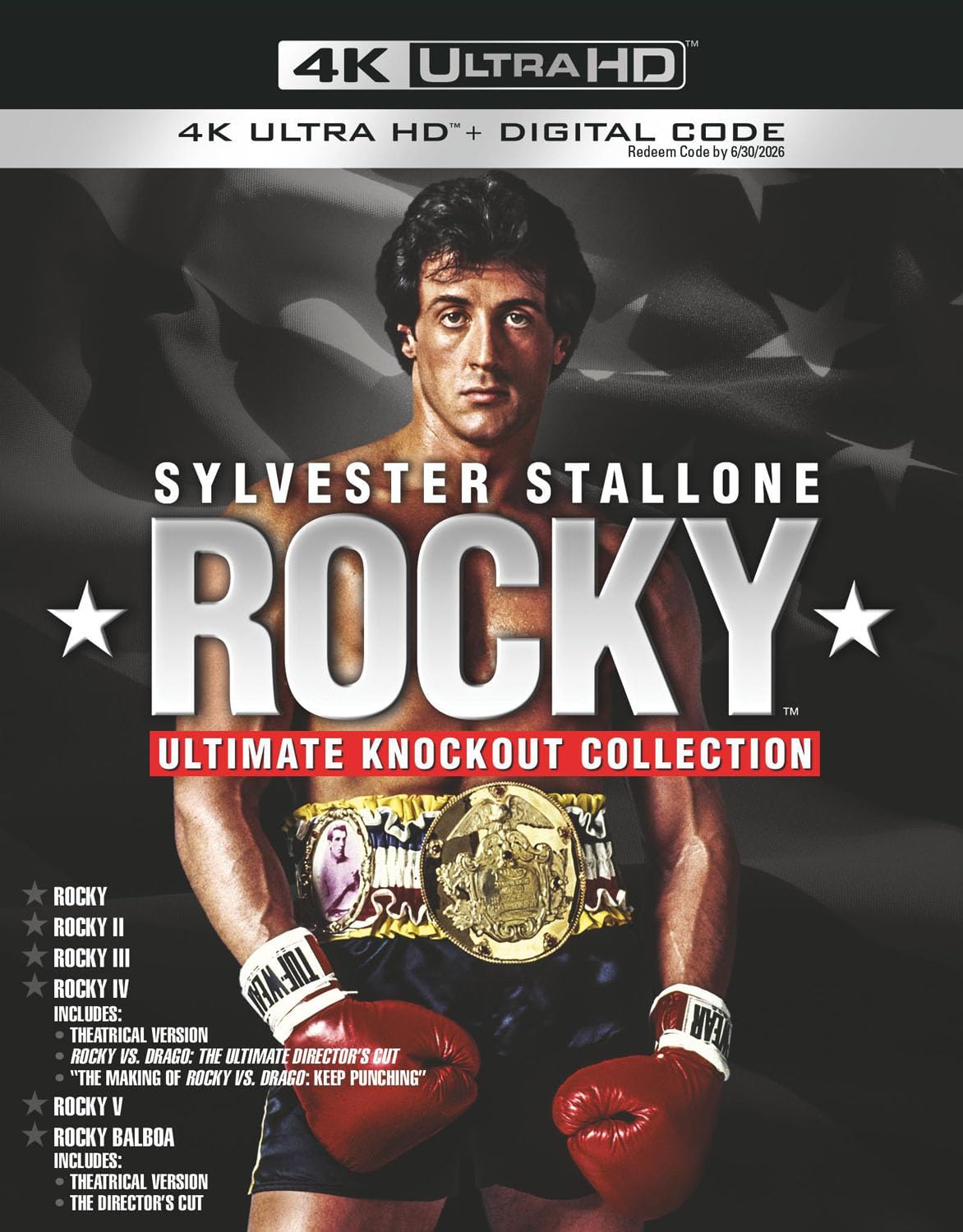
“You got everything money can buy, except what it can’t. It’s pride. Pride is what got you here. Losing is what brung you back. But people like you, they need to be tested. They need a challenge.”

There have been a ton of boxing films. They’ve been popular going back to the silent era. Most of them have many of the same themes. But there was always something about Rocky that stood out above all of the rest. That “something” can’t really be described or defined. As the Supreme Court once said about the definition of obscenity: “I can’t define it, but I know it when I see it.” That’s all you can say about Rocky. Some might call it heart. That’s about as good a word for it as anything else. Rocky himself would call it “stuff in the basement”. It almost demeans it to put a word on it at all. Whatever you call it, you don’t necessarily see it in Rocky … you feel it.

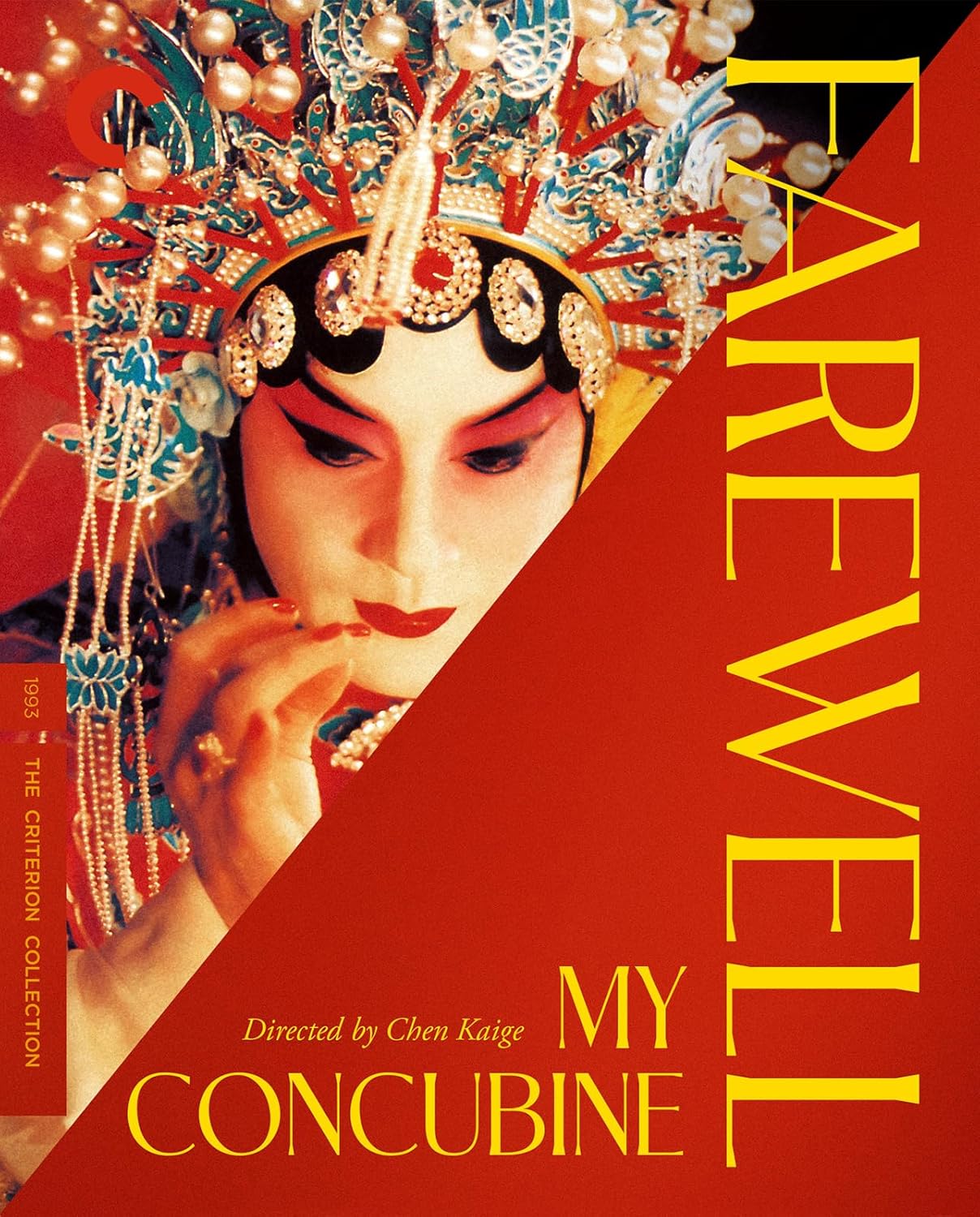
When a new 4K restoration of the 1993 Palme d’Or winner Farewell My Concubine — the first Chinese film to ever take home the top prize at the Cannes Film Festival — debuted at the 2023 Toronto International Film Festival, physical media collectors were waiting for the announcement that it would be released through the Criterion Collection. Well, fans did not have to wait long, as the Academy Award nominee for Best Foreign Language Film is being released by Criterion on both 4K and Blu-Ray, and this gorgeous restoration alone makes this edition worth picking up. That’s not even to mention the quality of the movie itself, which is considered a seminal film in Chinese cinema for both its content and form.

Based on the novel of the same name by Lilian Lee, Farewell My Concubine follows a decades-long friendship between two boys who meet at an opera training school in Peking in 1924, growing up through some of the most tumultuous times in Chinese history. Lee and Wei Lu use the story of a love triangle to frame this exploration of identity, cultural expression, and other themes that serve both as a cultural time capsule and a commentary on issues that are unfortunately still relevant today.

When you look back at 2004, it’s a little hard to imagine just how big an impact Anchorman: The Legend of Ron Burgundy would have on the film industry. I’m not trying to say the film invented anything new with this fun, satiric comedy, but what it did do was launch the careers of many and really helped make comedy fun and raunchy for a while, and more importantly, profitable at the box office. I mean, this film is stacked with stars. Sure, there’s Will Ferrell front and center, but this is had a pre-40 Year-Old Virgin Steve Carell, Paul Rudd, Christina Applegate, Kathryn Hahn, Seth Rogan, David Koechner, Fred Willard, and numerous others who are in the background or just make cameos. Seriously, this might be the best comedic cast put together of all time, and when you dive into the extras, you get a glimpse at just how talented everyone is. The film may be 20 years old, but it holds up. I’ve seen the film at least a dozen times, and it still makes me laugh. So what makes this film so special?


The film is about Ron Burgundy (Ferrell), who is San Diego’s top news anchor in the 1970’s. He’s a mixed bag of charming and is full of bravado and simply believes every woman would be honored to have him take them to bed. To Will Ferrell’s credit, if anyone else was playing this role, I feel the character would be despised, but Ferrell manages to make him seem more like a loveable buffoon. Surrounding Burgundy are his Channel 4 news team, Brian Fantana (Paul Rudd) as the suave man-on-the-street reporter, Champ Kind (David Koechner) as the sports reporter, and Brick Tamland (Steve Carell) as the weather reporter. The chemistry these four have is something special, and they play so well off one another. Seriously, I don’t know how they got through some of these scenes without constantly breaking character. The team though is in for a rude awakening when their news director, Ed Harken, wants to inject some diversity to the team and so enters Veronica Corningstone (Christina Applegate), a transfer to their news station who is vying for a reporter job. Corningstone wants to be the first female lead anchor, and, well, let's just say the rest of the news team doesn’t feel a woman belongs behind the news desk.

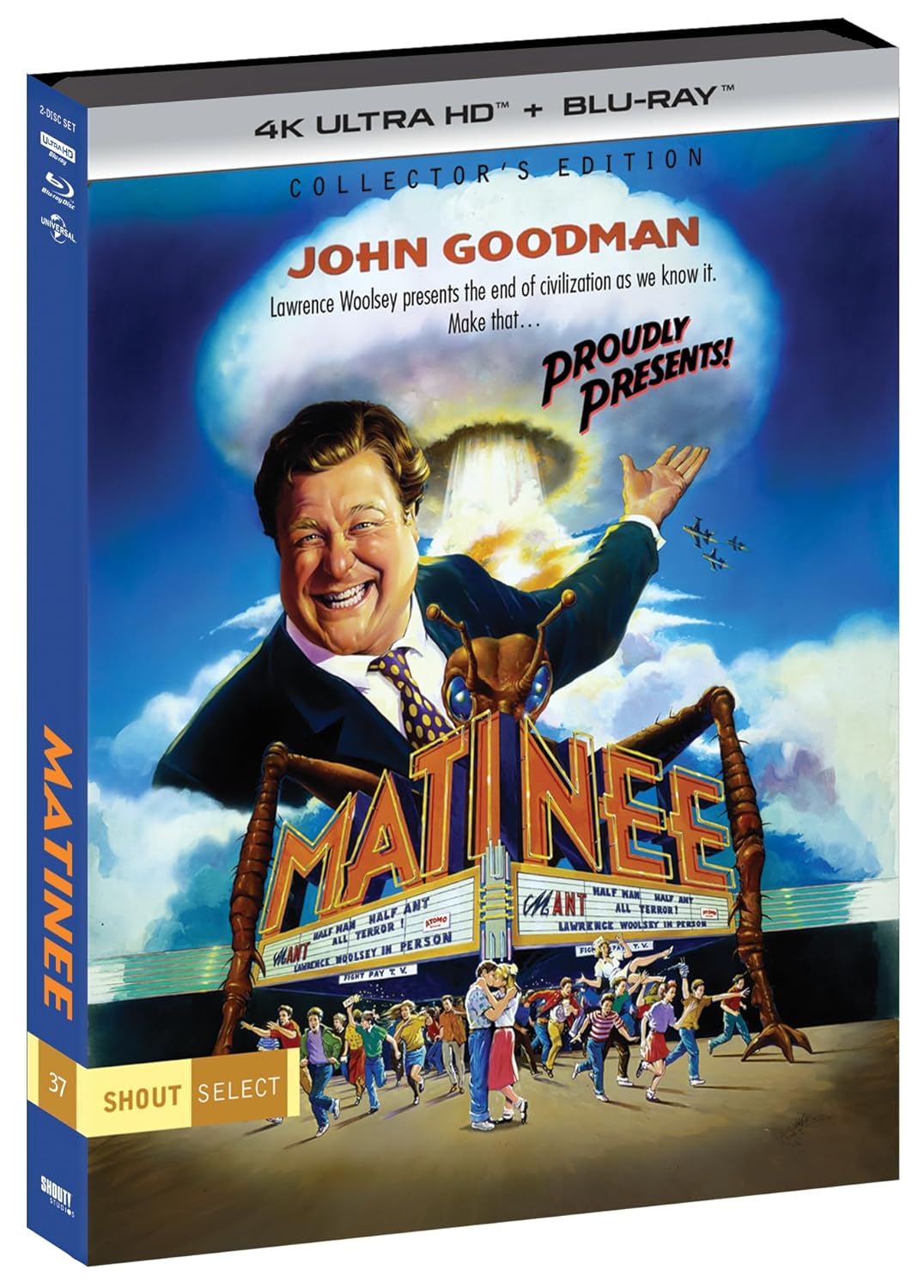
In 1993 when this film came out, 1962 just seemed like another time that as a teenager I just couldn’t wrap my head around. While the kids in Matinee were excited about these giant monster films, I could sort of relate, as I was getting into horror myself, but instead of atomic bugs, I was getting into the slasher heavy hitters like Freddy Krueger and Jason Voorhees. So a film about kids spending most of their time at a movie theater was something I could relate to easily, and as I got older I simply continued to appreciate the film more as I consumed more films from the past and grew to appreciate filmmakers like Val Lewton, William Castle, Roger Corman, and Lloyd Kaufman, the guys who knew how to turn a cheap film into an event experience through a variety of marketing gimmicks. The idea of ambulances being staged outside a theater because audience members may faint or having people in costume lunge at unsuspecting guests. These innovators make going to the movie theater an experience even if the movie wasn’t all that great … and now 30 years after the release of Matinee, I find myself bitten by the bug of nostalgia. I can’t help but miss how I used to consume movies, either spending an entire day at the multiplex sneaking into R rated films or hitting the video store and grabbing a bunch of videos to watch with friends. Now we have streaming, and it just isn’t the same. The movie theaters may not have the sticky floors that we all hated, and to be fair I do like the stadium seating, but it’s just not the way it used to be, and with ticket prices skyrocketing along with crazy rates at the concession stands, well, it isn’t too hard to understand why people want to believe the theater experience is dying.

I don’t mean to be so bleak, especially when Matinee is far from being a downer; instead it is a charming love letter to a time where as a kid things would have been so simple, but for adults the terror of an atomic missile strike kept many parents in fear. Gene Loomis (Simon Fenton) is your typical kid, but with his father being in the military his family bounces around a lot, and while his father is deployed he feels the need to be “the man of the house” and look after his mom and his little brother. This new deployment has them brought down to the Florida Keys, and at the worst time imaginable, during “he Cold War, and when the Russians are threatening to drop atomic bombs on the States. We see how the kids are prepping with bombing drills and folks around town are emptying out the store shelves (a scene oddly reminiscent to when the COVID panic recently struck and the nation was in a panic over toilet paper). Gene is eager to simply just leave the base and find his sanctuary at the local theater and just watch movies all day. It’s at the movies he happens to run into one of his idols, Lawrence Woolsey (John Goodman), who has come to town to premiere his new film, a B-monster movie called MANT, and he’s going to be presenting the film in what he calls “Atomic Vision”.

"People once believed that when someone dies, a crow carries their soul to the land of the dead. But sometimes, something so bad happens that a terrible sadness is carried with it, and the soul can't rest. Then sometimes, just sometimes, the crow can bring that soul back to put the wrong things right." 

OK, let me get this out of the way. The Crow was a vehicle for Brandon Lee, son of martial arts legend and movie star Bruce Lee. The elder Lee trained Brandon in martial arts from the day he could take his first steps. When Brandon was only eight years old, his father tragically died just before finishing production on Enter the Dragon, a movie which would go on to become an international blockbuster making Bruce Lee the greatest icon of martial arts cinema. Brandon followed in his father’s footsteps studying martial arts and drama.

"Good to be back. We knew all along that everyone back home from the President on down was behind us 100%. It was God and faith in our families that kept us going. Speaking for myself, I'd like to say that the whole experience has made a better man, a better officer, and a better American out of me. Thank you very much."

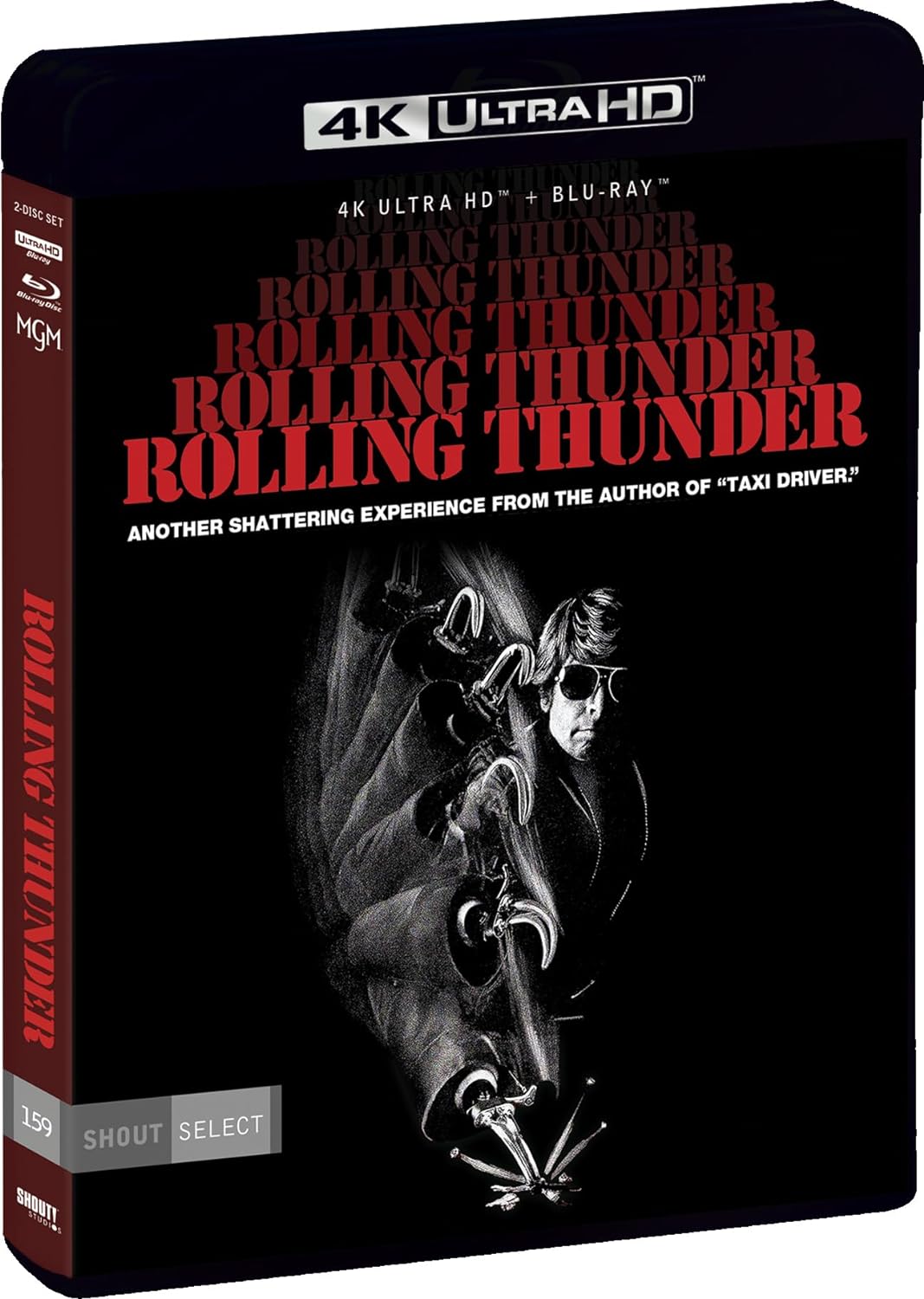
It started in the 1970's just as the long and costly war in Vietnam was finally coming to a close. The conscience of the American people shifted from trying to stop the war to the soldiers who were now coming home and mourning the ones who didn't. There was also this group that fell somewhere in between. It took a long time to get the North Vietnamese to even acknowledge the number of POW's still held in captivity and the push was to bring them home. Suddenly Hollywood was on the bandwagon, and there appeared the war sub-genre that focused on these returnees, particularly those held prisoner. Films Like Missing In Action brought the subject to the front of moviegoers' attention, and other films like The Deer Hunter gave us a look at the psychological damage many returned to be haunted by. One writer who had already reached into that dark place of the mind was Paul Schrader, who penned Taxi Driver. His followup, which was actually intended to link to Taxi Driver, was Rolling Thunder, and while not the same level of classic cinema, it's an important film that Shout Factory has allowed us a detailed look at with the release of Rolling Thunder on UHD Blu-ray in 4K.

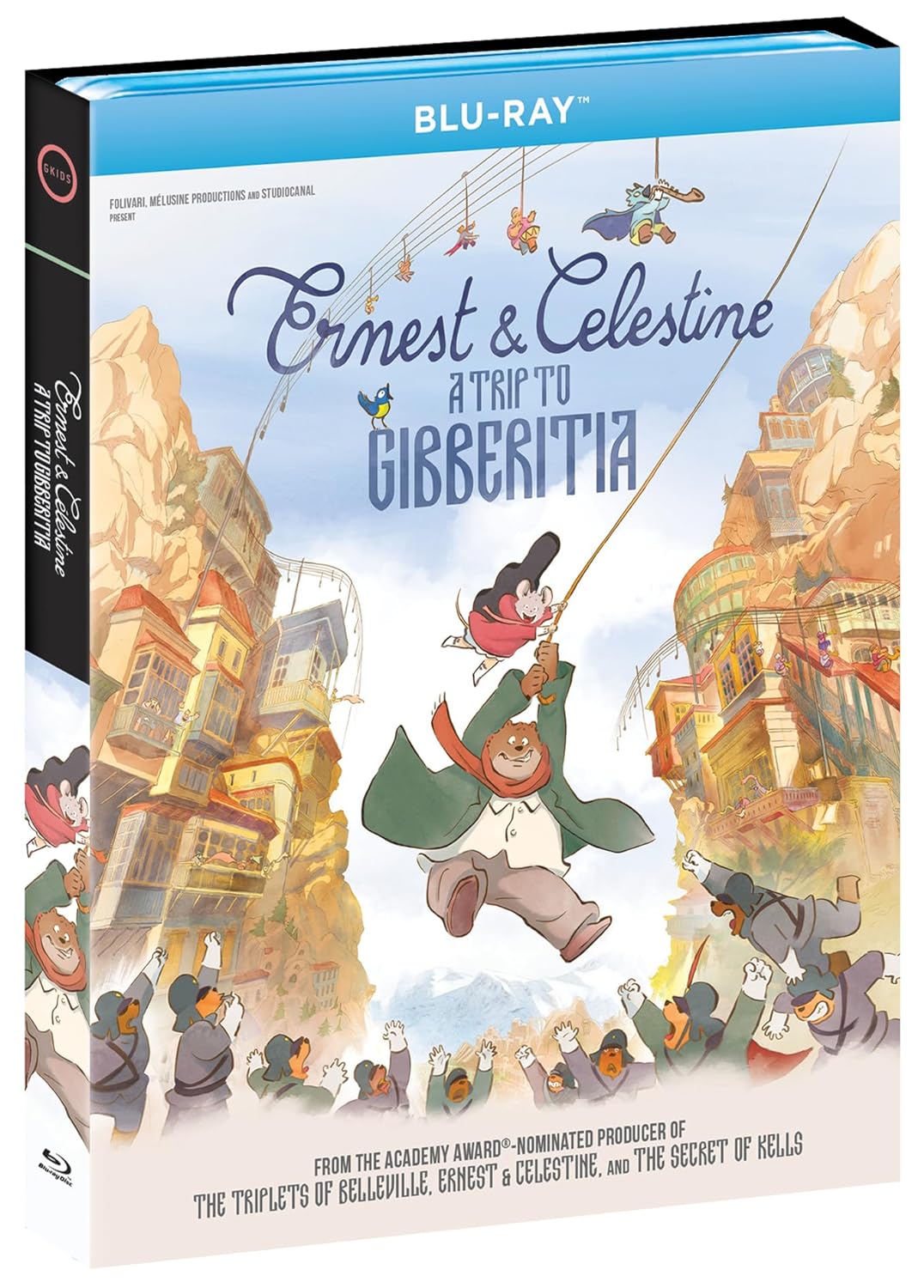
Sequels are a funny thing.  Most of the time in modern Hollywood, they come within a breath of the first film, usually after a large box office in order to capitalize on its earnings.  Sometimes, they can take years, even decades to make.  Blade Runner: 2049 came out in 2017, 35 years after the original film.  In addition, many times when a sequel takes so long to materialize, the intended audience has flown the coop, and it has dismal results.  See Basic Instinct 2 or The Two Jakes.  Other times, it inspires new waves of fans to flock to the theaters, such as Tron: Legacy or The Incredibles 2.  Today, we are taking a look at Ernest & Celestine: A Trip to Gibberitia, a sequel to the original Ernest & Celestine movie which was nominated for an Academy Award and took home many other film awards.  It's been a decade since the original film; can the sequel keep the spirit of the original and produce a quality film?  I'm happy to say, yes, it certainly did.  Let's take a look.

Since the film does not provide a quick recap from the original, I'll go ahead and provide this.  Ernest and Celestine had each won their freedom from their respective imprisonment.  Their only wish was to live together as best friends and have exciting adventures ... after Ernest gets some sleep.

Sequels are a funny thing.  Most of the time in modern Hollywood, they come within a breath of the first film, usually after a large box office in order to capitalize on its earnings.  Sometimes, they can take years, even decades to make.  Blade Runner: 2049 came out in 2017, 35 years after the original film.  In addition, many times when a sequel takes so long to materialize, the intended audience has flown the coop, and it has dismal results.  See Basic Instinct 2 or The Two Jakes.  Other times, it inspires new waves of fans to flock to the theaters, such as Tron: Legacy or The Incredibles 2.  Today, we are taking a look at Ernest & Celestine: A Trip to Gibberitia, a sequel to the original Ernest & Celestine movie which was nominated for an Academy Award and took home many other film awards.  It's been a decade since the original film; can the sequel keep the spirit of the original and produce a quality film?  I'm happy to say, yes, it certainly did.  Let's take a look.

Since the film does not provide a quick recap from the original, I'll go ahead and provide this.  Ernest and Celestine had each won their freedom from their respective imprisonment.  Their only wish was to live together as best friends and have exciting adventures ... after Ernest gets some sleep.