1.85:1 Widescreen

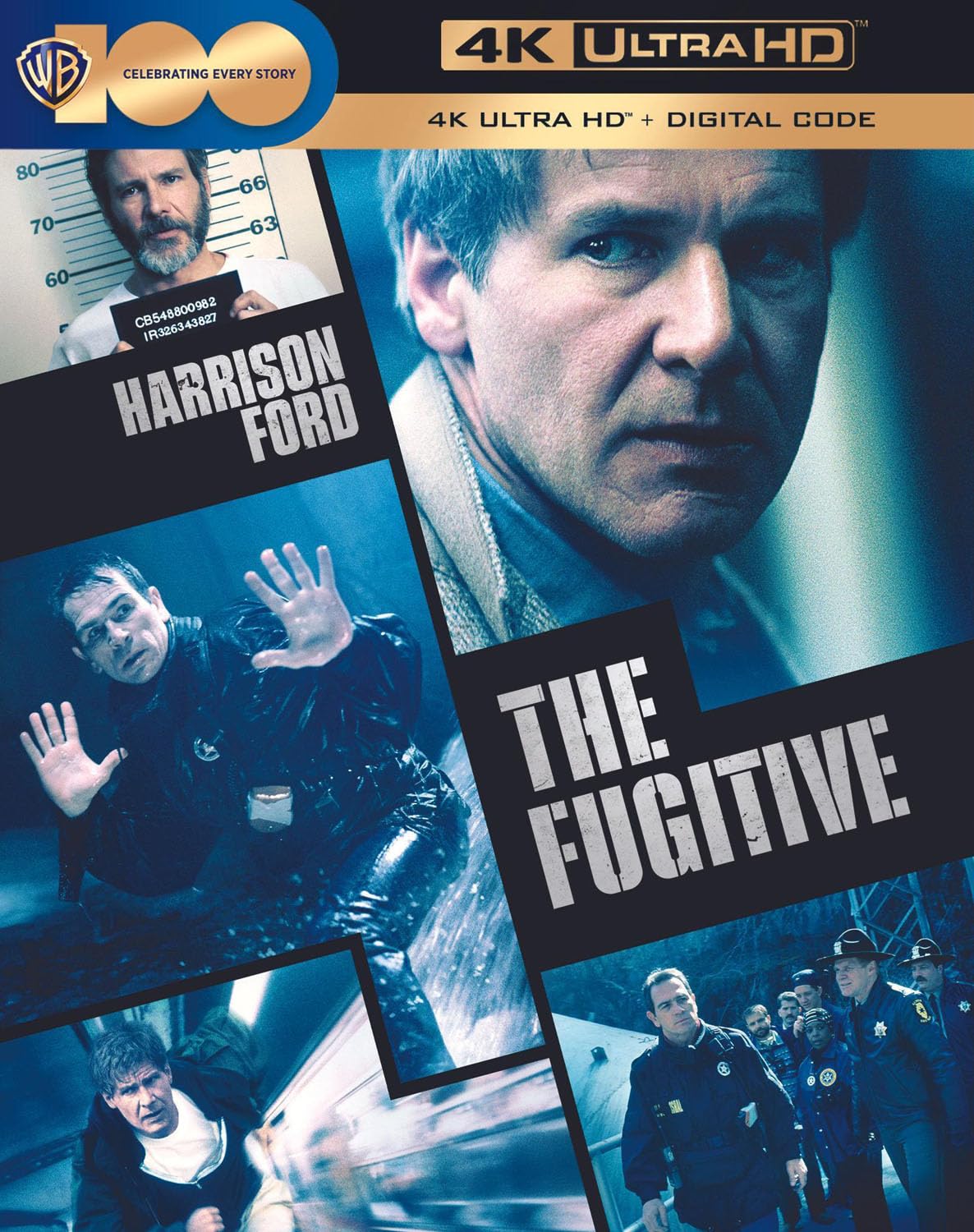
"All right, listen up, ladies and gentlemen; our fugitive has been on the run for ninety minutes. Average foot speed over uneven ground, barring injuries, is four miles per hour. That gives us a radius of six miles. What I want from each and every one of you is a hard-target search of every gas station, residence, warehouse, farmhouse, hen house, outhouse, and doghouse in that area. Checkpoints go up at fifteen miles. Your fugitive's name is Dr. Richard Kimble. Go get him."

The Fugitive, since its’ original release in 1993, has always been seen by a majority of people as the defining thriller of the 1990’s. The film stars Harrison Ford as Dr. Richard Kimble. Kimble, a very well known Chicago doctor, has just been framed for killing his wife. He claims a one-armed man killed her, which prompts nearly everyone to laugh at him. Kimble is immediately arrested and sentenced to death in a cold courtroom scene that doesn’t even give Kimble time to defend himself.

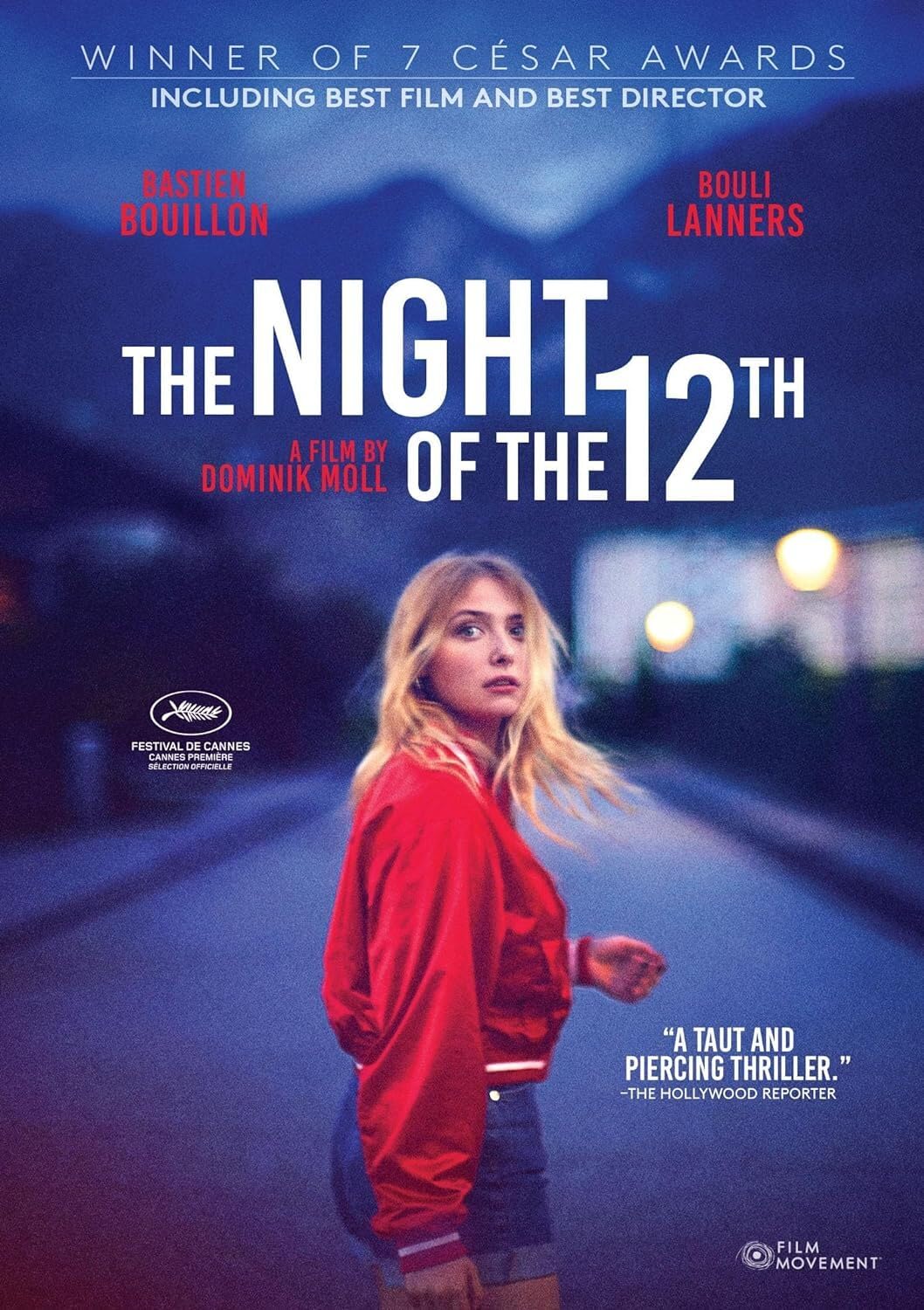
Full disclaimer: I tend to watch probably too much true crime television.  I've watched about every episode of Homicide Hunter (Joe Kenda), Forensic Files, and plenty of other detective shows based on real cases.  I find them fascinating, and my wife would seriously like to know what else is on our television. As a result, I tend to also gravitate towards real cases depicted in movies and documentaries as well.  Today's film, The Night of the 12th, deals with a real case based in France.  However, this one has a hook.  Whereas almost every case that we tend to see on television is solved and the murderer goes away to jail, this one has a very different ending.  Let's take a look and see if we can still enjoy this experience.

Yohan Vives (played by Bastien Bouillon) is cycling around a track alone lap after lap.  Since he is doing this at night, he can zone in on his thoughts as his body continues to wrap around the circle of movement.

"My Mamma told me to pick the right one."

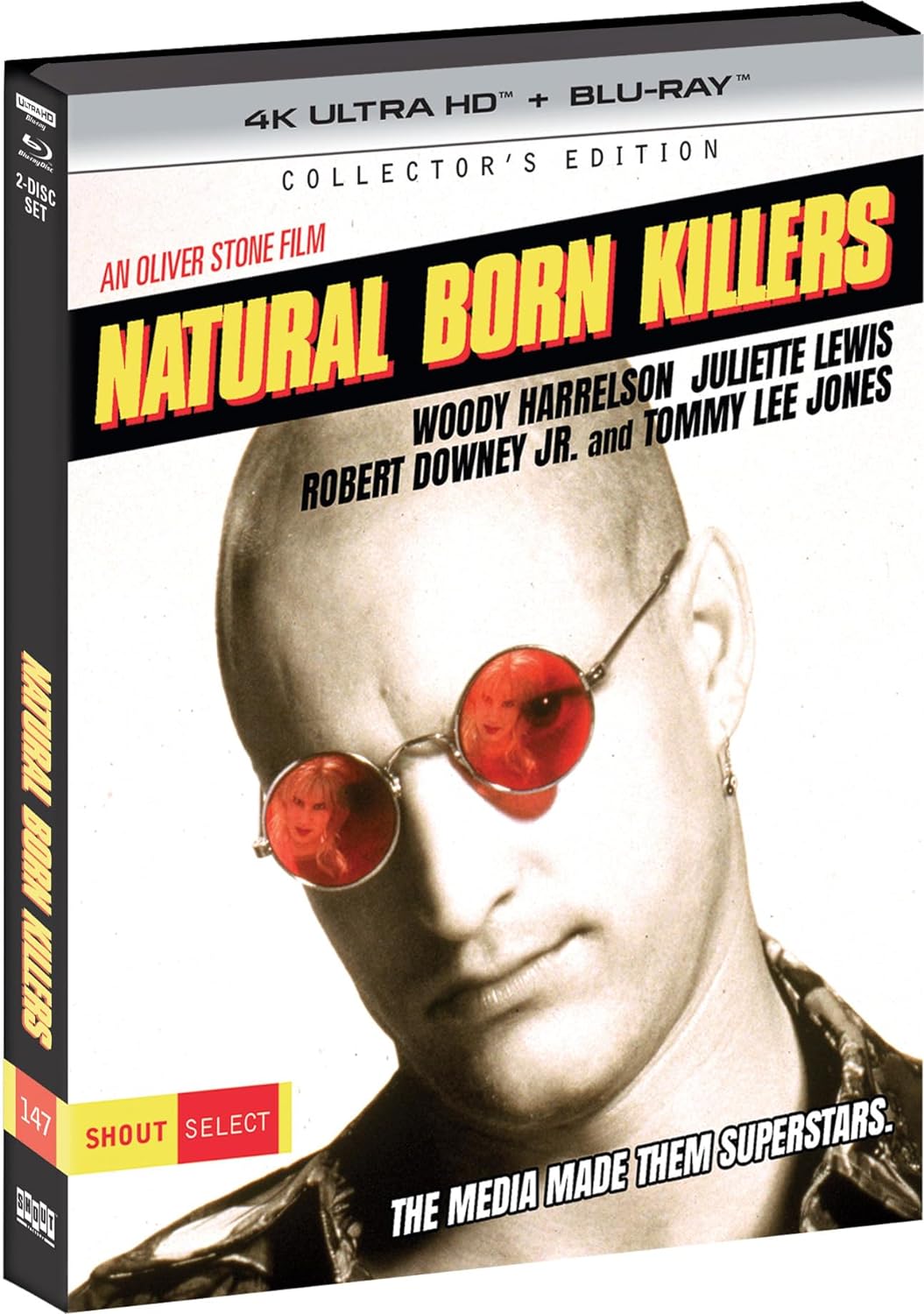
In 1982, Cheers first broke on the network sitcom circuit. It was a small Boston bar owned by a has-been baseball player living on the glory years he didn't really have. It was the bar where everyone knows your name. Behind the bar there was Woody. Woody was pretty much a kid who looked up to the owner in an almost hero-like way. He was naive and was easily and often taken for a rube. But he was kind, and no matter how out of it he might be, there wasn't an evil bone in that character's body. It was all an act. Of course, it was a television show where Woody was played by Woody Harrelson. For crying out loud, even their first names were the same. It wasn't hard for us to believe the two Woodys were one and the same. I know I did. It was an act, sure, but I didn't know it was that good an act. We all found out just how good of an actor Woody Harrelson was when he stripped away kind, innocent Woody the bartender and took on the vicious role of Mickey Knox in in Oliver Stone's brutal film Natural Born Killers. Later we found out that the actor's father was a convicted hitman for the mob and was busted trying to take out a judge. Today Harrelson has proven his awesome range over and over again in dozens of impressive performances. But in 1994, I wasn't prepared for Natural Born Killers or Mickey Knox, and so it's a film that has remained seared in my brain since that day.

"Have you ever heard of exorcism? It's a stylized ritual in which rabbis or priests try to drive out the so-called invading spirit. It's pretty much discarded these days, except by the Catholics who keep it in the closet as a sort of embarrassment. It has worked, in fact, although not for the reason they think, of course. It was purely the force of suggestion. The victim's belief in possession helped cause it. And just in the same way, this belief in the power of exorcism can make it disappear." 

By now we've all heard of The Exorcist. The film was based on a best-selling novel by William Peter Blatty. Blatty himself based the story on a real exorcism of a young boy many years earlier. And that's where the true power of the film begins. The monsters of horror movies often allow us a sense of unreality that protects our inner selves from being truly terrified. Yes, they may frighten us, but it's fun to be frightened, isn't it? It's rare that a horror film touches on something inside of us and delivers an experience that is truly terrifying. It's arguable that The Exorcist has done this in a way that has rarely, if ever, been repeated in horror movie history. Whatever your religious beliefs might be, there is that little voice deep in our minds that fears what we call evil and can't deal with the possibility that we can be taken over by such evil. Devil. Demon. Mental illness. It doesn't matter. We're all afraid of losing control of who we are to some invading force within our minds. Within our very souls.

Coming up on its 40th anniversary, Staying Alive continues to be one of the most bizarre sequels to be made by a major studio, starring John Travolta and co-written and directed by Sylvester Stallone. The film was intended to be a sequel to the massively popular Saturday Night Fever, but when Staying Alive came out, disco was pretty much dead, and really there isn’t much that connects the films but for the character Tony Manero (John Travolta) and that there is dancing in the film. When the movie came out it was a financial success, but it was pretty well hated by critics of the time to the point that even one of the film’s stars, Finola Hughes, was awarded a Razzie for her performance. Apparently the film has a loyal cult following, but now after 40 years I’m here to give this film a fair shake and decide for myself: is it as bad as people say, or is it a gem from the 80s that will make us all nostalgic for when there were several movies with the cast in leotards, headbands, and over-the-top dance numbers?

It’s been a few years since Tony Manero (John Travolta) was dancing through the disco tournament, and now he is a dance instructor who is trying to make it to the next level of his dancing career to be a part of a Broadway stage production. The biggest change I feel we’ve seen in Tony is that he’s managed to become more arrogant and has coasted by on his good looks and dancing, though he’s pretty far from living the dream. He has a causal relationship with Jackie (Cynthia Rhodes), who is also a dance instructor, and the pair struggle together with auditions for various productions. For the viewers it is easy for us to want Tony to settle down with Jackie. She’s good for him, and in many ways too good for him, but Tony just always has his eyes on something bigger. He expects greatness for himself and will settle for nothing less. His opportunity comes along with the Broadway production of “Satan’s Alley”, where he lands a part and falls for the lead in the performance, Laura (Finola Hughes). She’s out of his league and is only using him for a good time, but Tony is blissfully ignorant, and this only creates drama for the production.

"This is The Batman we're talkin' about here."

In 1992 Batman: The Animated Series hit television sets all over the country. It was perhaps the biggest comeback for the Dark Knight since Adam West went camp with the cowl in the 1960's. Yes, the Tim Burton film and its sequels went a long way to bringing the bat back into the popular culture, but the series is what took the fans by storm. Kevin Conroy became, for many, the definitive Batman when he was hired to voice the series, and Mark Hamill finally got out of the shadow of Luke Skywalker with his voice rendition of the Joker. The show was a hit, and around the early years it was decided to do a direct-to-video movie called Batman: Mask Of The Phantasm. Somewhere in the production Warner Brothers had a change of heart. They decided to roll the dice on a theatrical release of the animated feature, likely assuming the series fans would flock to their multiplexes in droves. That didn't happen, and the film lost money even on a modest budget. But in video release it did become a hit. The studio didn't understand that the generation that loved the show would appreciate it more in that setting. It also doesn't help that the mid-production change meant changes to aspect ratios and other animation work that had already begun production. The end might have been a mess at the box office, but it's a solid film that now enjoys a modest upgrade to UHD/4K. The results are admittedly mixed.

"Man gets shot that's got a gun, there's room for reasonable doubt. Man gets shot that hasn't got a gun, what would you call it? But, you knew that already; otherwise you wouldn't have set things up the way you did." 

Rio Bravo (1959) stars John Wayne as John T. Chance, a small-town sheriff facing the fight of his life. His town is infected by a gang of 30-40 men, professional bad guys on the payroll of Nathan Burdette (John Russell), whose brother, Joe, Chance has locked up for murder. Burdette is dead-set on freeing Joe, and the only help Chance has got is his former deputy, Dude (Dean Martin), who’s been drunk for two years since he got involved with the wrong kind of woman, and Stumpy (Walter Brennan), an old, trigger-happy cripple. The trio has six days until the U.S. Marshall comes to collect Joe, but that’s a long time to wait when you’re surrounded by the enemy.

"Beware of false prophets, which come to you in sheep's clothing, but inwardly they are ravening wolves. Ye shall know them by their fruits." 

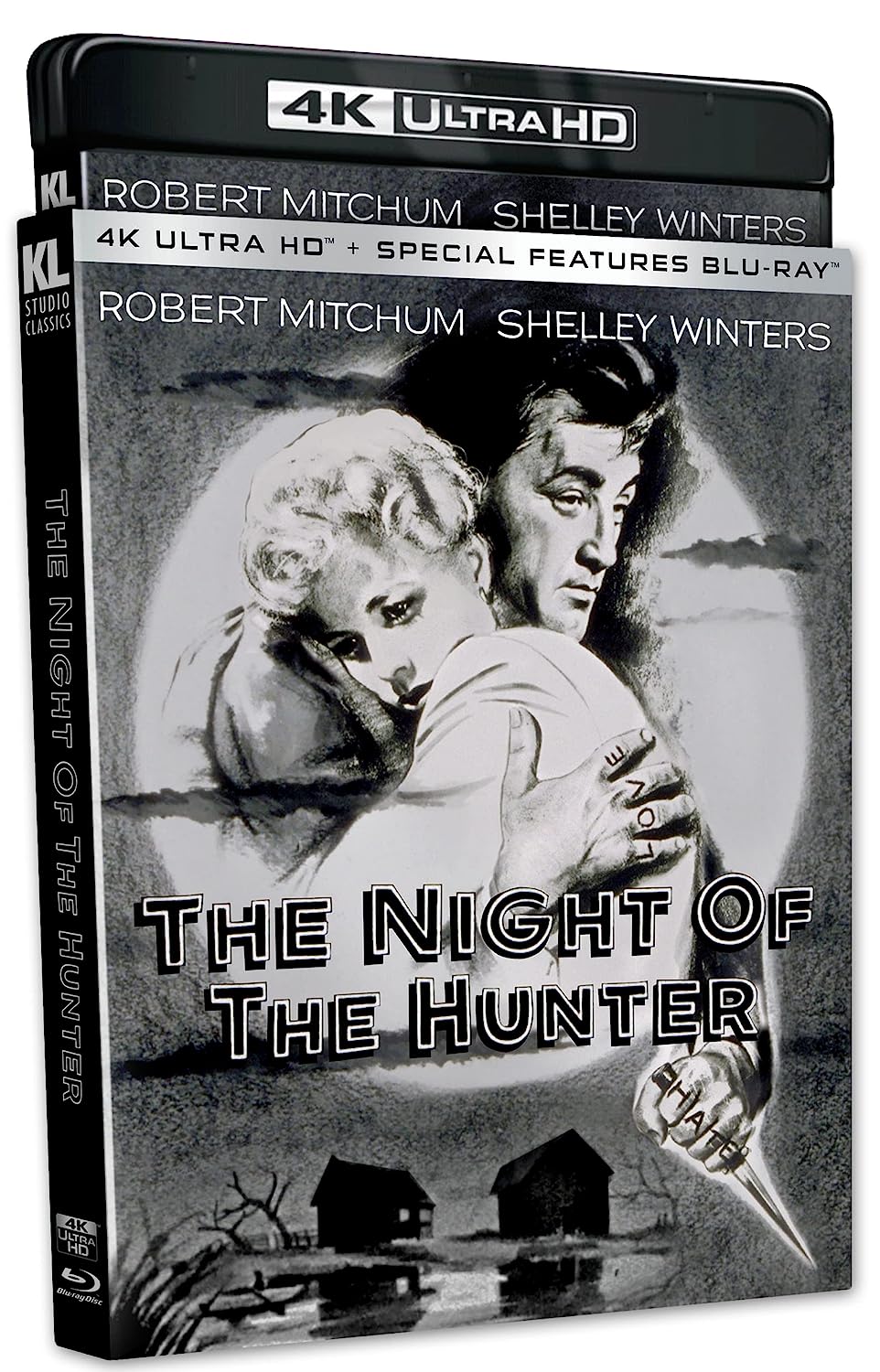
Charles  Laughton is known primarily as an actor. He starred in several classics such as Spartacus, Witness For The Prosecution, and the title role in I, Claudius. He was the titular character in a remake of Lon Chaney, Sr's The Hunchback Of Notre Dame. He was the cruel Captain Bligh in Mutiny On The Bounty and the evolutionary mad scientist in Island Of Lost Souls with Bela Lugosi which was based on the H.G. Wells novel The island Of Dr. Moreau and happens to be my favorite of his films. He married the Bride of Frankenstein herself, Elsa Lanchester, in one of those rare Hollywood pairings that lasted from 1929 until death did they part in 1962. They were a kind of royal couple for a while, giving some of the era's most iconic parties. He was quite an accomplished man when he died too soon at 63. The unfortunate story about his life has to be the fact that he directed only one film. It was a truly remarkable turn in the director's chair, but sadly in an industry that seeks instant gratification in terms of box office numbers, it was a commercial failure. But that film has stood the test of time, and is taught in film classes across the world, an appreciation that came far too late for any chance to see what else he could have done. But thanks to KL Classics, that film has been restored and delivered to our homes in glorious 4K via the UHD Blu-ray release of The Night Of The Hunter.

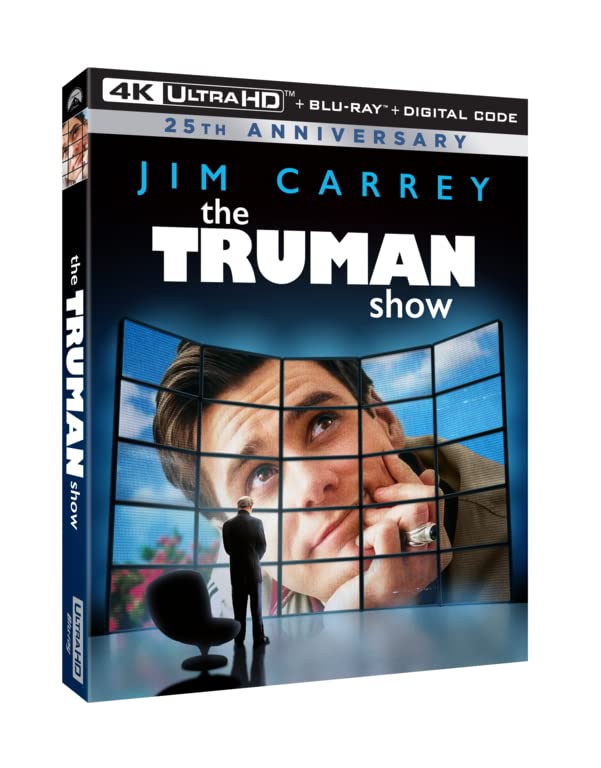
For me it’s crazy to see that The Truman Show is turning 25 years old. I was graduating high school when this had come out, and television was just an entirely different landscape back then. In 1998 when this film came out, the only reality shows were pretty much COPS and then The Real World on MTV, I really don’t believe anyone could have expected just how big reality TV would become. The same year in competition for box office dollars was Ed TV. Oddly enough, Ed TV would be a little closer to the mark on what the reality TV landscape would look like, taking a regular guy and making him a star overnight because he was on TV.  The Truman Show I always felt was the superior film in just about every aspect. In many ways it is what I had hoped reality TV could be, but unfortunately it seems what viewers wanted in their reality programming was something more scandalous and absurd, more akin to a Jerry Springer episode than someone living in an idyllic world that was out of an episode of Ozzie and Harriet or Leave It To Beaver.

Jim Carrey stars as Truman Burbank, an insurance salesman who lives in an idyllic white-picket-fence town and is just living his life. The only the problem is, the world he lives in is not real; it’s all manufactured, and he’s really living in the world’s largest television studio, and everyone around him is acting, all because the reality is Truman is unknowingly the star of the world’s biggest reality show. This was such a departure for Jim Carrey. At the time he was the biggest comedy star on the screen and was known for being over the top and playing larger-than-life characters, but the role of Truman required him to be toned and down and seem even boring. The result is perhaps his most enduring performance to date (or at least tied with his massively underappreciated film, The Majestic).

"All right, men, now here's the play we're gonna use. I don't think the guards know this formation. It's called 'incidental punishment after the ball is blown dead.' Remember, any man you tackle gets an elbow, knee, or kick in the mouth." 

In 1972 Albert S. Ruddy made motion picture history. He went from the writer of a television sit-com to landing a producer job at Paramount with almost no credentials but his nerve. Once there, this inexperienced producer delivered one of the most iconic films in history. That film was The Godfather, and it would shatter records at the Oscars and is considered one of the best films ever made. In my opinion it is the best film ever made. When the film was finished, it was a no-brainer that there would be a sequel. Sequels weren't quite so common then, but there was a lot of material in the best-selling novel to continue the story. Ruddy was offered the job of producer once again. He turned it down. He had another movie, one in which he wrote the story, that he wanted to do instead. Paramount gave him the nod, and The Godfather Part II. without Ruddy or Marlon Brando would go on to shatter records for sequels at all of the awards shows. But what happened to that passion project that Ruddy decided to do instead? That film never came close to hauling in the awards and cash that The Godfather Part II would rake in, but we do still remember that film today. You recall it, don't you? Well, in case it slipped your mind, it was a little football/prison hybrid called The Longest Yard, and while it can't compare to The Godfather in all of those mentioned metrics, it did accomplish something The Godfather never did, and never should do. It was remade twice since then. More on that later, and Kino Lorber has released it on UHD Blu-ray in 4K just in case you need a little help in remembering.