Posted in: Disc Reviews by David Annandale on July 8th, 2007
Synopsis
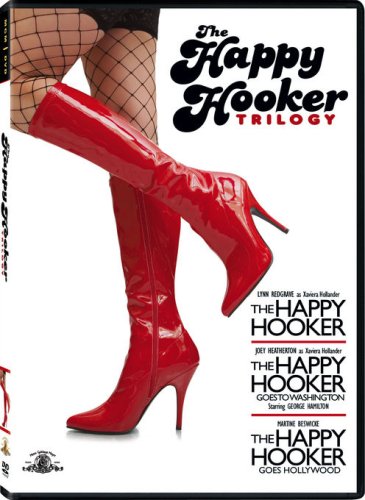
Whoah. MGM if really digging into the vaults to bring us these. Xaviera Hollander is not much more than the answer to a trivia question today, but for a while in the 70s, she had enough profile to warrant three films based first on her book, then more generally on her persona. Lynn Redgrave (!) plays her in The Happy Hooker (1975), which follows her arrival in the States and cheerful discovery of the life she was born, it seems, to lead. Mysteriously rated R, this is a film that could...have played without cuts on prime time TV twenty years ago. A film all about sex with no sex in it. Makes you long for Joe D’Amato and Laura Gemser to arrive and save the day.
Posted in: Disc Reviews by Archive Authors on July 5th, 2007
Adam Sandler plays Archie Moses, a man who works for drug lord Frank Colton (James Caan). Rock Keats (Damon Wayans) is Archie’s best friend and, secretly I might add, an undercover cop who’s trying to infiltrate Colton’s business. Archie, as per the typical earlier Sandler role, is completely oblivious to anything going on around him and doesn’t suspect Rock. Keats is ready to infiltrate Colton, but is mistakenly shot in the head by Archie. Keats, after learning to walk again, realizes Archie must testify against Col...on. Will this two meet up and work together or will fate finally come around and destroy both of them?
Ask anyone around me and they’ll tell you that I’m not the biggest fan of Sandler’s earlier work. While most seem to love his early comedic work like Billy Madison and Happy Gilmore, I find these films to be his worst. They aren’t funny and simply lack any real charm. In all honesty, I had never seen Bulletproof before this viewing. Well, the end result was kind of mixed. I found the film had a few funny, charming moments (mostly from Caan and a few from Sandler/Wayans), but too much of the film tried to be serious in a comedic tone, which rarely works.
Posted in: Disc Reviews by Archive Authors on July 2nd, 2007
I wrote a few weeks back that it’s an odd feeling when you finally see that film that everyone and their brother has been exclaiming about for years. That is the exact feeling I felt after seeing The Big Lebowski. I knew for years that this film would be great, especially after seeing Fargo before. Boy was I right as The Big Lebowski was a huge humor trip.
Jeffrey Lebowski a.k.a. “The Dude” (Jeff Bridges) is your run of the mill slacker. He doesn’t really do much with his life besides ...et constantly stoned with his buddies at the local bowling alley. Donny (Steve Buscemi), Walter (John Goodman), and Jesus (John Turturro) are his buddies. One night Jeff comes home to find a pair of thugs sitting in his home. Turns out these thugs think Jeff is some type of ultra millionaire. They soon threaten his life, demanding he pay the debt he owes. Obviously Jeff is completely lost by this situation. After consulting his buddies, Jeff and his buddies soon find themselves wrapped up in a big kidnapping plot. The rest of the film sees our main characters bumble around in a manner that was consistently entertaining and amusing.
Posted in: Disc Reviews by Gino Sassani on June 28th, 2007
Eddie Murphy has a ton of films under his belt. If you’re like most folks, his antics have long ago become tired and worn out. Come with me now to a time when Murphy was young and full of energy. Trading Places was really only Murphy’s second film after 48 hours. In Trading Places, we get vintage Eddie Murphy. You can tell he was still hungry. Today he simply calls too many performances in. Dan Aykroyd was also at a turning point in his own career. It hadn’t been too long since he lost his longtime partner Jim Belu...hi to a drug overdose. He was just learning to stand on his own. Put these two guys together today, and there’s not much chance you’d get the solid gold that was possible in 1983. Fortunately for us there is this DVD release of Trading Places, when both actors still felt they had something to prove. The cast was brilliant all the way around. Jamie Lee Curtis displayed her obvious assets for the first time in a film. Known mostly as a scream queen at that time, Curtis was a choice the studio was not at all happy with. The Wolf Man’s own Ralph Bellamy, along with fellow veteran actor Don Amechi, played the Duke brothers to perfection. Finally, Denholm Eliott added his own understated brilliance as Coleman, the butler.
Trading Places was originally written as a vehicle for Gene Wilder and Richard Pryor. That team had had great success with a few films already, and it was felt they were the only ones capable of pulling off this kind of a film. I’m not sure how that might have worked. Certainly it still might have been a funny outing, but somehow I think everything worked out for the best. Trading places broke many conventions of the time. The black and white stereotypes were a concern, as were other elements. Having a hooker play such a pivotal role was questioned. The studio even expressed some problems with the fate of Mr. Beaks. A little gorilla love went a long way toward the poetic justice these kinds of villians often require. John Landis stood his ground the entire time, refusing to budge. Remove any of these elements, and who knows what we might have ended up with.
Posted in: Disc Reviews by Archive Authors on June 25th, 2007
You know it’s an odd feeling when you finish watching a film only to think that if you loved the film, audiences must have enjoyed it on the level you did too right? Well, it’s a sad note to see that a film like Breach massively underperformed at the box office this past winter as the film is smart, intelligent and reminds me of why films were created in the first place.
Breach is a 2007 film that deftly tells the story of the greatest security breach in the history of the United States. The breach ...as due to a spy by the name of Robert Hanssen, a 25-year veteran of the intelligence branch of the FBI. The film covers the final 2 months of an investigation into Hanssen brought forth due to papers provided by a Russian defector.
Posted in: Disc Reviews by Archive Authors on June 23rd, 2007
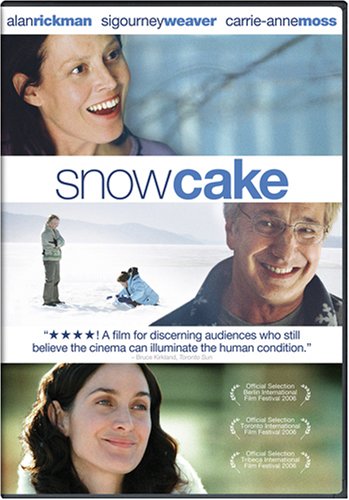
Snow Cake is a slow, quiet film that creeps up on you. You don’t realize it’s working for you until the end rolls around, and you’re left reflecting on its impact.
It’s about a lonely, middle-aged man whose life is changed by a car crash. Alex Hughes (Alan Rickman, Love Actually) is on a road trip across Canada. He reluctantly picks up a hitchhiker, a spunky teenage girl. Just as they’re developing a bit of a connection, they’re blindsided by a semi. This results in Alex making an unplanned st...p in her hometown of Wawa, Ontario, to visit the girl’s mother, Linda (Sigourney Weaver, Alien), a high-functioning autistic woman.
Posted in: Disc Reviews by Archive Authors on June 22nd, 2007
Although Trading Places is nearly twenty five years old it still manages to offer some pretty good laughs, being one of the better comedies out of the 80’s. Starring Jamie Lee Curtis, Eddie Murphy, and Dan Aykroyd the trio appeared to have some great chemistry together, as they were all at or near the peaks of their careers.
Louis Winthorpe III (Dan Aykroyd, The Blues Brothers) is a well respected member of high society, manages a commodities brokerage firm for the Duke Brothers and is recentl... engaged to the superficial Penelope. Everything is going well for Louis until Mortimer and Randolph Duke have a bet on the nature versus nurture debate. Mortimer believes that any well breed member of high society can get back on his feet even if everything was taken away from him, and a street urchin would simply fail even if the right opportunity for a bright future came along. Randolph of course believes the opposite and the two decide to wager “the usual amount” on the bet, and before you know it Louis is framed as a drug dealer and a thief. With frozen bank accounts and no house he has only a hooker with a heart of gold, Ophelia (Jamie Lee Curtis, True Lies) to count on. Meanwhile Billy Ray Valentine (Eddie Murphy, The Nutty Professor) is invited into the posh arms of high society, living in Louis’s house and even taking his old job. It appears that money is already changing Billy Ray, and the street has broken the once confident and in control Louis. Eventually the two see society for what it really is which actually leads to a pretty interesting climax.

Posted in: Disc Reviews by Gino Sassani on June 20th, 2007
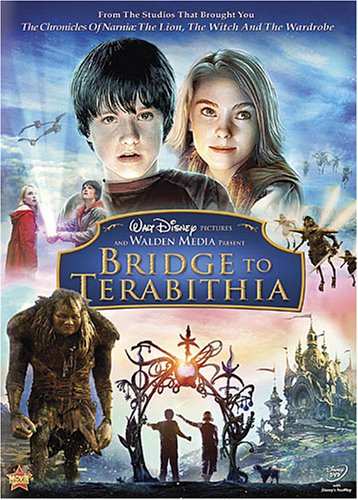
I’m not sure exactly what I expected going into this film, but whatever it was, the film I saw could not have been farther from it. What Bridge to Terabithia is, is a little hard to explain. It’s certainly a children’s fantasy, but not in the style most popular today with franchises like Harry Potter and Narnia. This film is actually wonderfully understated. It centers on two children who are misfits of a sort. Like many kids they feel alien in the world around them. They are at that awkward age where they are gett...ng too old for childishness but are still too young for the adult world. The only option left to them is to create a world where not only do they fit in but rule with confidence. Terabithia is indeed populated with the traditional fantasy elements, but here these things blend in with the real world around them. It is a place firmly imbedded in their imaginations, a world let out only in snippets at a time. The film is never overwhelmed with an f/x laden image that fails to satisfy on any complete level. They immerse themselves in the battle of good and evil in Terabithia, but everything there is strongly connected with the lives they are actually living in the mundane world of reality. The film also goes down a path that will be unexpected, and that I will not spoil for you now. Like all classic Disney, Bridge To Terabithia is loaded with the obligatory life lessons. Concepts like friendship and standing up for yourself abound. Disney understands that less can often be more, and that understanding makes this a far more rewarding film to watch. There are moments when the film does bog itself down and move somewhat slowly. If I think so, I’m sure the kiddies will be even more aware. The film dips its toe into Christianity a bit. Most of this is directly from the Katherine Paterson novel. Fantasy and reality can often be so intertwined here that you will never quite know where one ends and the other begins until you are already fully there.
Another fine Disney tradition is the performances they have consistently gotten from child actors. Bridge To Terabithia is no exception. Jess, played by Josh Hutcherson, is the understated character. Hutcherson does a fine job of portraying the changes that come over his character. When we first meet Josh, he is shy and turned well within himself. He gets picked on at school, and his Dad seems to favor his younger sister. Once he warms up to new student Leslie, he begins to open up and finally finds things to get excited about. AnnaSophia Robb is equally good as Leslie. Leslie’s character doesn’t change quite so much. Still, it is Leslie who must bring out Jess. It is her imagination that first gives birth to Terabithia. Robb plays her with a tremendous amount of energy.
Posted in: Disc Reviews by Gino Sassani on June 20th, 2007
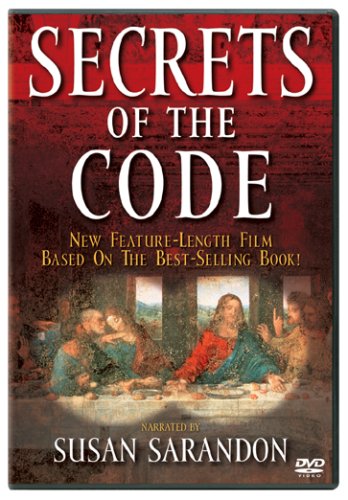
Since its release first as a Dan Brown novel and then as a less successful film, The DaVinci Code has stirred up more than its fair share of hornet’s nests. What most folks seem to be forgetting is that the stuff was fiction. Brown NEVER claims to be offering a secret look inside the workings of the Catholic Church. So why do we need this investigation? The self-professed documentary isn’t really a look at the story at all. It’s merely a lot of real wackos trying to fill our heads with their claptrap conspiracy the...ries and new definitions for Christianity. This will not appeal to fans of the film, unless you are one of those who think Brown was really on to something. I have no problem with these beliefs. If that’s what you want to believe, go ahead. I do have a problem getting sucked into this craziness in the guise of having something to do with a film I might have enjoyed. Susan Sarandon attempts to hold the whole thing together but can’t seem to save this sinking ship.
The problem, as I see it, is how thin the line is for some folks between fact and fiction. It shouldn’t really come as such a surprise when one looks at how much news time today is dedicated to the likes of Paris Hilton or Anna Nicole Smith. In recent years we’ve lost men who have been President of the United States and got far less attention than has Smith. Are we that far gone as a society? Watching this makes me wonder. With that much attention on celebrity, is it any wonder we start to believe almost anything we’re told, even in a work of fiction? Oliver Stone has made a living trotting out conspiracy theories knowing he can beat the conspiracy nuts into a frenzy. This gets good PR for his films, but does it serve us as a society? I’ve already said more than this thing deserves. Just say no.
Posted in: Disc Reviews by Archive Authors on June 14th, 2007
Recently released on HD DVD, this film is the last of the films from the famous British comedy band Monty Python. Originally released in 1983, this is by far Python’s darkest film, filled with violence and dark humor, seemingly tailored to offend everyone. I did not care for the part in the restaurant with the extremely obese man, so there we are.
The film consists of a series of short sketches about various aspects of the “Meaning of Life” or at least an observation of the quirky aspects of life, such as ...he delightful part in which John Cleese plays a sex educator or a very “British” colonel during the 2nd Zulu War near the end of the 19th century. The film actually begins with a short prelude film entitled “The Crimson Permanent Assurance”. What little plot there is seems to involve a group of oppressed accountants rising up against their corporate masters and becoming pirates, using their building as a pirate vessel none the less. It is more amusing in execution than on paper, I especially liked later on when the accountant shouts: “It’s the Crimson Permanent Assurance!!” and then something rather unexpected happens to address the presence of the supporting feature involving itself in the feature presentation.