Posted in: Disc Reviews by Archive Authors on January 31st, 2010
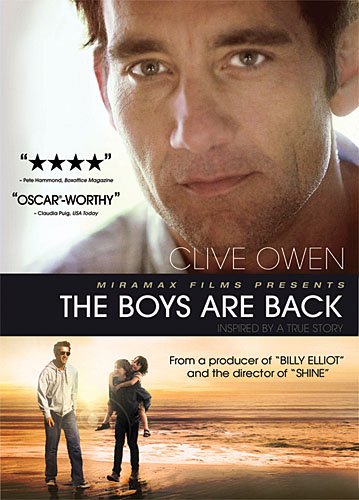
There’s a quote by author Kent Nerburn that says: “It is much easier to become a father than to be one.” The Boys Are Back, based on a memoir by Simon Carr, is the best example of that sentiment on film that I’ve personally seen in a few years. Clive Owen plays sportswriter Joe Warr. He’s good at becoming a father, but not at being one. His one-the-go job keeps him from spending any real quality time with his family, leaving his wife Katy (Laura Fraser) to raise their son Artie (Nicholas McAnulty). When Katy becomes fatally ill, Joe must step up to the plate to take care of his 6-year-old son. His mother-in-law (Julia Blake) tries to offer her advice, but Joe is determined to do it on his own.
Widower Joe must deal with Artie, a firecracker of a boy he knows nothing about, foreign events like parent-teacher conferences, and keeping on the ball with his deadlines at the newspaper. He adopts a hands-free parenting philosophy that allows Artie to have the run of the house with as few rules as possible. That plan is full of flaws from the start.
Posted in: Disc Reviews by Gino Sassani on January 29th, 2010
Metaphors are often effective tools in filmmaking. They can be used in a variety of unique and clever ways to either highlight a particular aspect of story and/or character. They can be used to add an artistic flourish to a movie. They can even be used to drive a plot, if you're careful enough to avoid becoming too abstract. Then there are films like The Burning Plain which attempt to create a film that is metaphor itself. What you often end up with, and certainly here, is something difficult to follow and more acceptable at the festival circuit than at the box office. The movie performed abysmally at the box, and that is in spite of some rather glowing reviews. The general public is never going to “get” a film like this. Honestly, I'm not sure that I even understood it. What I do know is that whatever level of understanding or entertainment I might have gotten here, I had to work too hard to get it. There's a simple equation of investment of resources and return that this film just simply fails to deliver. And if they think I'm harsh, wait until they try to sell it to the average viewer. Most people have less patience than I when it comes to movies, but director and writer Guillermo Arriaga demands far more than I was willing to give. And evidenced by the mere 200 grand at the limited run box office, it was more than most of you were willing to give as well.
The story is told from a perspective of several places and times. We learn that Gina (Basinger) and Nick (deAlmeida) were having an affair. Both had families. They used to rendezvous at a trailer out in the middle of an isolated plain. They are killed in a horrible fire and explosion that burned so hot, we are told, that their bodies melted together and had to be cut apart with a knife. In the aftermath, their families develop a severe hatred for each other, each blaming the other for taking away their parent. But in traditional Romeo and Juliet fashion, two of the children, one from each side, fall in love. The identity of these two and the things that they did would be spoilers here. Suffice it to say that you should spend some time attempting to pick up on the details and nuances here. Another story involves Santiago (Pino) who now lives in Mexico with his young daughter. He owns a crop dusting business. Of course, flying small planes can be a dangerous business. Actually flying is very safe. Crashing, on the other hand can be dangerous. When he is injured, a friend helps his daughter track down the girl's mother, Sylvia (Theron), now living in Oregon running a restaurant. Of course, we know that these stories all have common threads and even common characters.
Posted in: Disc Reviews by Gino Sassani on January 21st, 2010
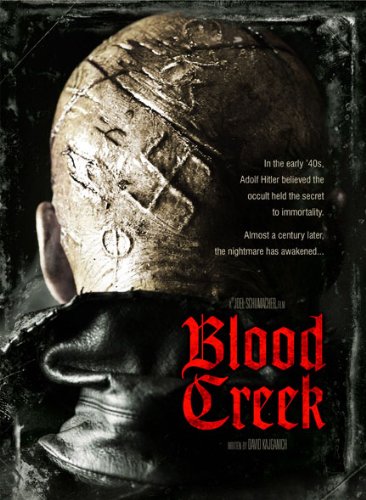
"In the early 1930's Adolph Hitler and his inner circle became obsessed with the occult, believing that the black arts were the key to their plan for world domination. Nazi agents traveled the globe in search of ancient Nordic relics known as rune stones. They believed if they harnessed the power of these stones, nothing could stop the march of the master race. The symbols inscribed in these stones were said to describe the path to immortality. Almost a century later, the nightmare has awakened."
Posted in: Disc Reviews by Gino Sassani on January 20th, 2010
Sylvester Stallone returned to his roots with 1993's Cliffhanger. No, I'm not talking about his iconic Rocky role here. I'm talking about his ancestral roots. The movie was filmed high in the Italian Alps to achieve many of these incredible vistas and the snow capped mountains. Believe it or not, this was June at the location, and several of the crew were stranded for a time because of a sudden and powerful blizzard.
However, it wasn't really the location along with its harsh weather conditions that caused this film the most trouble. The script was plagued from the beginning with several drafts and many writers. There were so many hands in the stew that lawsuits went on for some time afterwards, leading to several writers getting a paycheck they otherwise weren't getting. I've heard that as many as 12 people had a pass at the script in some form or another. Actor Christopher Walken was set to play the bad guy in the film but left the production just before shooting began. You will also notice that the film is dedicated to Wolfgang Gullich. Gullich was one of the best stunt climbers in the business. He did a lot of those climbs where you see a character without a harness or safety line. He managed to achieve all of this quite safely, only to be killed in an automobile accident in August of 1992, almost a year before the film actually opened. Finally, the film was forced to acknowledge that the harness which is seen to malfunction in the film’s opening scene was rigged to fail and that the actual harness was quite safe. All in all it was a troubled film from start to finish. It did get a lot of hype from Sony and went on to bring in a respectable $85 million at the domestic box office, but it was a much larger hit overseas pulling in almost $200 million. It's still considered much more of a hit in Europe than it has ever been in America.
Posted in: Disc Reviews by Gino Sassani on January 19th, 2010
"The price of love is to expect the pain of loss. Maybe it's some kind of divine punishment to have the ones we love pay the cost of our own sins. The real punishment is being alone the rest of our days hoping to forget and praying for change to come again."
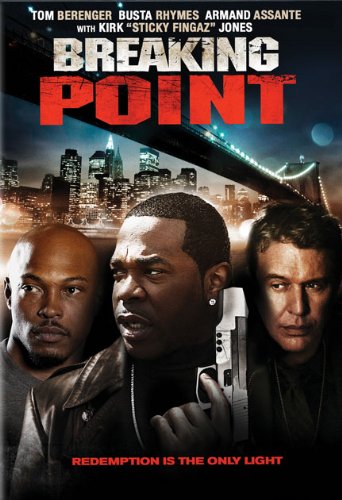
We've all seen our share of film heroes whose journeys are hard-fought paths to redemption. There's nothing particularly original in the concept. Writers from Homer to Shakespeare have explored the material. There's no shame in not being terribly original. There is shame, however, in being terribly tedious. The real punishment, as it turns out, is in having to watch Breaking Pont.
Posted in: Disc Reviews by Gino Sassani on January 13th, 2010
"Have you ever felt like you were a little bit different. Like you had something unique to offer to the world, if only you could just get people to see it? Then you know exactly how it felt to be me."
The title is taken from a very short children's book written by Judi and Ron Barrett. I say the title and not the story because this movie takes only the most basic concept from the book to create the movie. Most of the characters are brand new creations, and the plot of the entire film deals with events not covered in the book. You have to credit Phil Lord and Chris Miller for pretty much everything you see happen in this film. I have only a passing familiarity with the kiddie book, but have now had the chance to see the movie in this Blu-ray high definition release.
Posted in: Disc Reviews by Michael Durr on January 4th, 2010
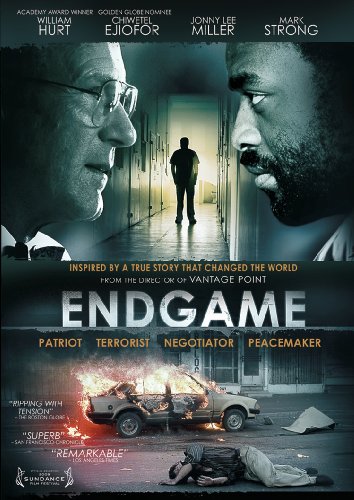
On February 11th, 1990, Nelson Mandela was released from the Victor Verster Prison is often seen as the symbolic end of apartheid in the country of South Africa. However, the apartheid was not fully removed until the elections of 1994. Furthermore, the story was way more complex than the African National Congress leader’s freedom. The story that was more focused on Willie Esterhuyse, Thabo Mbeki and Michael Young. These names might seem foreign to most of us, but they are perhaps three of the most important names to the recent history of South Africa.
Michael Young (played by Jonny Lee Miller) is a British businessman who is secretly working for Consolidated Goldfields, a firm who has particular interest in the affairs of South Africa. The film starts with him visiting a poverty stricken part of South Africa where he is trying to help with funding for the education of their youths. Unfortunately for Michael, talking with the locals puts him in danger of his life. After one particular incident, he decides to aim in a less direct but more ambitious approach.
Posted in: Disc Reviews by David Annandale on December 23rd, 2009
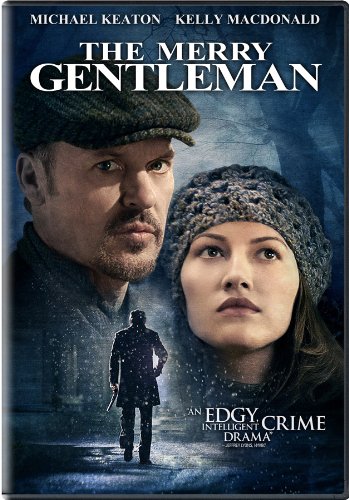
Kate Frazier (Kelly Macdonald) has fled her abusive husband and begun a new, solitary life for herself in Chicago, where she fends off the romantic interest of a number of men, and the curiosity of a great many people who all want to know how she received her black eye. One night, leaving the office, she sees a man about to jump from a building roof, and her scream startles him, breaking his suicidal trance. The man is Frank Logan (Michael Keaton), a contract killer. No longer interested in killing himself, he tracks down Kate, initially intending to kill her, since (though she doesn't realize this), she saw him moments after a hit. He collapses with pneumonia before he can carry out his plan, and she helps him to the hospital, whereupon a most unlikely relationship begins to bloom between two wounded people.

Since a bit chunk of this film takes place around Christmas, why don't we count it among the Christmas films I'm reviewing just now (the other two being A Christmas Proposal and One Christmas, since nothing says Christmas quite like a suicidal hit man. The thing is, this is far and away the best of the three movies in question. Keaton is compelling as a man who finds great difficulty in expressing emotions, and yet the strength of the those emotions are visible in every movement of his eyes, every micro-tremor of his face. In shaping the performance, he is enormously helped by the director, who is none other than Keaton himself, making his directorial debut. He and DP Chris Seager have crafted a film that is strikingly beautiful without being showy, understated yet very powerful. Here's hoping Keaton does more work behind the camera very soon.
Posted in: Disc Reviews by David Annandale on December 20th, 2009
Host Tom Cavanaugh takes us for a tour of the some of the lesser known or rarely seen corners and byways of the Smithsonian Institution. The tone is breezy and mildly irreverent, and the exhibits encountered are unfailingly interesting. The episodes this season are “Let's Eat!”, “Top Secret,” “Nature's Vault,” “Crystal Ball,” “Going, Going, Gone,” “Sex 101” and “Villains and Rogues.” The episodes are actually even less specific than the titles might suggest (and they already grant a fair bit of freedom to jump from topic to topic). Thus, “Villains and Rogues” looks at a couple of, well, rogues, and then having Cavanaugh refer to them as snakes is enough of a segue for the episode to suddenly shift its attention to – you guessed it – actual snakes.
Neat as many of the topics are, the sheer range of items covered in a single episode does tend to rob the show of focus. And I'm of two minds about Cavanaugh's hosting. Young viewers will likely enjoy the horsing around, but older ones might well find the steady stream of one-liners a bit grating. Still, if there isn't something here to make you sit up and say, “I never knew that!” then you haven't been paying attention.
Posted in: Disc Reviews by Gino Sassani on December 8th, 2009
"When the lights go off the battle is on."
Sequels are a dangerous business. They've gotten the best of some of the biggest heroes. Just ask Indiana Jones, Luke Skywalker, or Neo. Expectations are always going to be high. You've already shown us what you can do. We assume you did your best on the original film, now go and do better. Often filmmakers interpret this mandate to just make it bigger. More explosions and hard hitting action and special effects. They tend to remember everything but the story. I'm happy to say that Night At The Museum refused to fall into that trap. The film is certainly bigger. There are far more characters. The f/x have absolutely gone up a notch. But everything that made you love the first film is back ... and more.