Posted in: Disc Reviews by Gino Sassani on September 15th, 2009
“Attention: Tonight’s movie has been M*A*S*H. Follow the zany antics of our combat surgeons as they stitch their way along the front lines operating as bombs and bullets burst around them, snatching laughs and love between amputations and penicillin, as they put our boys back together again.”
M*A*S*H began life as a novel written by an actual Korean War Army surgeon under the pen name Richard Hooker. He based the character of Hawkeye on himself and most of the other characters on actual personnel that were stationed with him at a real M*A*S*H unit. The book was written for the screen by longtime blacklisted screenwriter Ring Lardner, Jr. Lardner was intrigued by the anti-authority message the book had, likely due to his own experiences with the government. He was one of a group of Hollywood talent that refused to testify before the Senate Committee on Un-American Activities. They were thrown in prison and blacklisted in the industry. This particular group became known as The Hollywood Ten. Whatever Lardner’s ideas might have been for the movie, they were enough to get a select group of producers excited about the property and got the ball rolling. We won’t ever really know what those concepts might have been exactly. In the hands of, at that time, new director Robert Altman, the script was practically discarded almost in its entirety. Altman had his own views which were inspired more by the still raging Vietnam War than what he considered an obscure historical event he believed most Americans didn’t even remember. All mention of Korea was deliberately left out of the film. When the studio caught on they forced him into providing a scroll at the film’s beginning that set the location. To Altman and pretty much everyone working on the film they were making a movie about Vietnam, not Korea. He incorporated his own anti-establishment, some might call subversive, ideas and made a film that Lardner would exclaim was nothing like his script. He encouraged rampant improvisation from the cast and little of Lardner’s dialog actually remained.
Posted in: Disc Reviews by David Annandale on August 23rd, 2009
This is a new release of the film, and its main interest, for those who already have a copy, is the meatier set of extras (even though some on the other disc are now gone). As for the film itself, what I said before still goes, so once again, I quote myself.
Posted in: Disc Reviews by Gino Sassani on August 19th, 2009
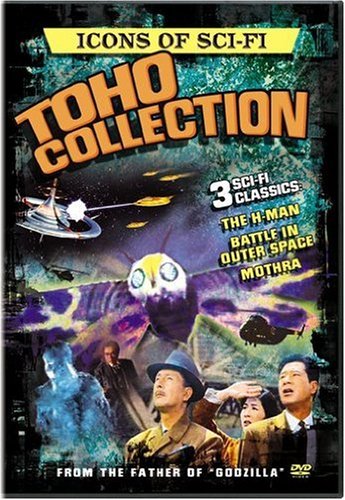
Mention Toho to anybody who has ever seen a movie and one thing universally comes to mind: Godzilla. Everybody’s favorite monster run amuck was the brainchild of Japan’s Toho Studios and has made them somewhat of an icon in the industry. It’s appropriate, then, for Toho to be featured in any series called Icons of Science Fiction. However, don’t look for the big lizard with radioactive breath in this 3 disc, 3 film collection from the legendary studio. Instead you’ll find two lesser known titles and one of Godzilla’s eventual playmates. These two films go back to the late 1950’s when Toho was still a fledging operation and Godzilla had not yet reached the cult status he was shortly to achieve.
The films in the collection are:
Posted in: Disc Reviews by Michael Durr on August 17th, 2009
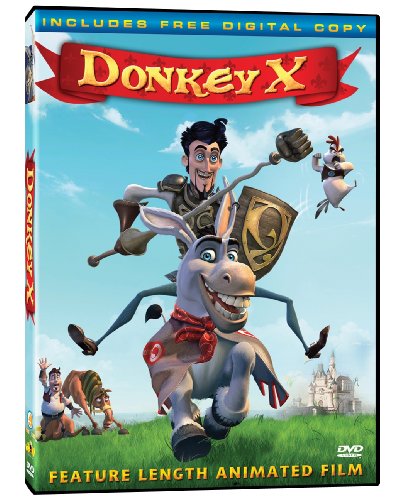
Pixar & Dreamworks have been monsters at the game of big budget film animation for quite sometime now. Many of us have enjoyed Shrek, Toy Story and countless others. Even their duds aren’t half bad. But there was bound to come a time when others need to share in the spotlight. In 2007, Filmax Animation, a Spanish company decided to release a film about a Donkey who has aspirations of being more than just another as... Sorry kids, I lost my place. It’s a film about a donkey who wants to be a horse, of course of course.
We all know the story of Don Quixote (or Quijote) and how he recruited Sancho to be his faithful squire. They traveled the land on quests in the name of chivalry and return home to find that they are indeed famous. However, Don Quixote has more important things in mind like finding Dulcinea, his long lost love & walking the countryside in search of truth and justice.
Posted in: Disc Reviews by Gino Sassani on August 13th, 2009
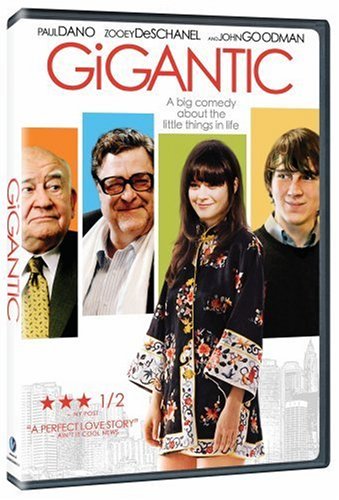
From the very beginning writer/director Matt Aselton wants to make a statement with his first film, Gigantic. The tiny title letters belying the largesse of the title itself right away appears to be telling you that the film will go against any expectations. It’s a brave independent piece of cinema that exhibits ton of promise and potential that is never fully woven together coherently enough to satisfy even the most art house of audiences. Taking his cues from such iconic directors as Woody Allen, Aselton doesn’t demonstrate the experience or maturity level to take what makes perfect sense in his own mind and translate it so that an outsider can completely understand what he’s trying to say. It’s unfortunate, really, because the film contains some rather clever ideas and certainly a top notch cast. There’s a future in this business for Matt Aselton, but that future isn’t now, and it’s not with Gigantic.
Brian (Dano) works at a high end mattress store called The Sandman. The first real incoherency can be found here in the store. They sell mattresses that are tens of thousands of dollars, but the store is a dirty brick walled loft. The merchandise is certainly not well displayed, and no one who works there seems terribly interested in selling the bedding. Brian is trying to raise money to adopt a Chinese baby. No explanation as to why the young single man wants to do this other than it’s something he’s always wanted to do. Nothing in his personality appears at all consistent with the desire, and his game plan is remarkably nonexistent. He doesn’t have the means or the emotional maturity to take on the task, yet he appears to be making great progress with the adoption procedure.
Posted in: Disc Reviews by William O'Donnell on August 13th, 2009
This is the story of two Vikings who are mistakingly left behind in Newfoundland in the year 1007. As these two find ways to survive, they encounter Irish monks and Aboriginal people, and these same encounters ultimately lead to rifts in their bond with each other. The beautiful landscapes become a backdrop for a sometimes violent look at the people who discovered North America centuries before Columbus or any other discoverer. Oh, and we also get bad translations of Old Norse, a lot of metal music and a scene of actual defecation.
Posted in: Disc Reviews by Gino Sassani on August 12th, 2009
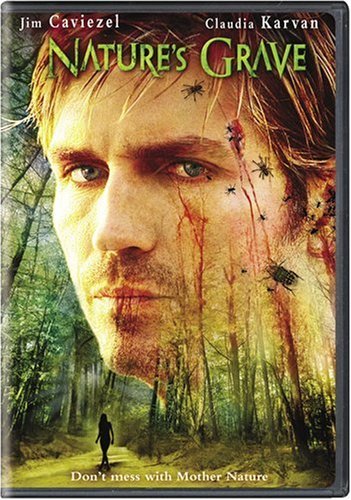
Nature’s Grave looks like it could have been a made for television movie for The Animal Planet or one of those learning channels. If they were ever thinking of branching out a bit into the nature gone mad type of show, wait a minute. They already have. This one attempts to be a thriller/horror film but doesn’t ever come close to either definition. The wild animals never amount to anything more than an attacking bird or a dead manatee. I’m not sure what a fan of this movie was looking for when he or she came here, but I suspect whatever it was, it was very hard not to be disappointed.
Peter (Caviezel) and Carla (Karvan) are married couple who get on each other’s nerves most of the time. Peter imagines that a long weekend of camping might be just the ticket to get their relationship back on solid footing. He buys about 10 grand of equipment, which only gets his unhappy wife even more angry at him. They pile into the car and head for a remote stretch of beach. In the middle of the night they have trouble finding the place, and if that shouldn’t have been enough to get them to a comfy hotel at least for the night, the sudden attacks by nature should have done the trick. The animal mishaps escalate, and before long they couple aren’t worried so much about their marriage surviving. They have to try and survive with their lives intact.
Posted in: Disc Reviews by Gino Sassani on August 11th, 2009
The Soloist is based on a book written by Los Angeles Times columnist Steve Lopez. The book was based on a series of columns the writer assembled involving his relationship with a street musician he happened upon while searching for material. Lopez was touched by the musician, Nathaniel Ayers, who was playing a violin with only two remaining strings. Still he was able to produce music that made the writer do a double take and begin to wonder what he was doing out on the street. Ayers’ ramblings made it immediately obvious that the man was suffering from mental illness. Their first contact revealed that the street performer was once a student at Juilliard. Lopez took a personal interest in the story, resulting in a series of columns that got him a bit of attention and a personal relationship with Nathaniel Ayers. When he finds out that Ayers was a classically trained cellist, his column ends up providing a nice cello for the musician to play. Lopez attempts to use the instrument as a way to coax Ayers inside and off the street. He exposes him to music instructors in the hopes of cultivating his talent more completely. Together they grow, in a way.
There really isn’t much more of a story than that. Credit director Joe Wright for not attempting to add the usual Hollywood flares in an attempt to make the film more of a commercial success. The story is very true to the real life events and never attempts the usual over the top approach that has become trendy in Hollywood today. Unfortunately, while the decision might have been an honorable one, it might not have been the right one for the film. It did rather poorly at the box office, pulling in a little over $30 million, which didn’t even cover the budgets costs. You have to look at this one strictly as a character study, because you won’t find a satisfying enough story in the film. It just kind of sits there and never really develops into any kind of cohesive form. It’s obviously the product of a series of loosely related pieces of work. We get the idea that Lopez is moved by this man and that he decides at some sacrifice to get involved, but where is the whole thing going? Again, they decide to forego the warm and fuzzy Hollywood ending that wraps things up in a nice tidy bow for everybody. Most of the story hasn’t been told; the relationship is, apparently, ongoing. Perhaps the story needed a proper ending before making its way to a movie.
Posted in: Disc Reviews by William O'Donnell on August 6th, 2009
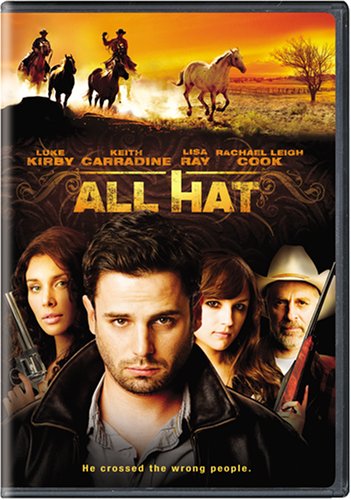
The story originally seems to set itself up to be that of redemption for a young man who is fresh out of jail. While this story is around, there seems to be parallel stories that arise as subplot but soon race alongside the original tale like proverbial track horses (and horses also just so happen to be the nexus for said plots). Just as one seems to buck into the lead, another comes along to grab the focus.
Posted in: Disc Reviews by Archive Authors on August 5th, 2009
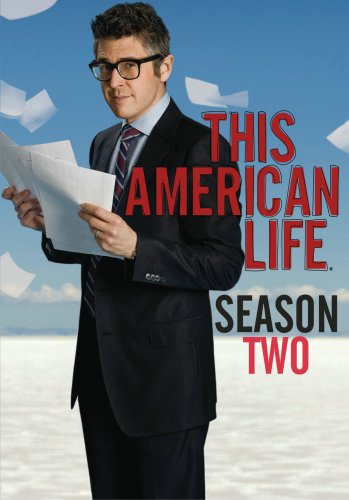
This American Life, broadcast on the Showtime network, is a half-hour show based on, or more accurately, spun off from, the award-winning Chicago Public Radio show of the same name. Each episode is loosely based on a theme, which is then explored through stories about real people. The content and style varies from week to week, with stories ranging from light-hearted to incredibly sad.

The television version, like the radio series, is hosted by Ira Glass, who Time magazine named the “Best Radio Host in America” in 2001. Not having been exposed to Glass or the show before, I was quickly won over by his intelligence, wit, and a kind of nerdy charm. He generally opens each show with a brief introduction of that week’s theme and tells the viewers a little bit about the stories that are coming up. After that he falls into the background, sometimes narrating and occasionally interviewing subjects from off-camera.