Posted in: Disc Reviews by Archive Authors on February 20th, 2007
We all know that Daniel Craig helped effectively reboot the James Bond movie franchise in 2006 with the amazing Casino Royale. But let's not forget that Pierce Brosnan was at the helm of the first Bond "rebirth" in Goldeneye. Brosnan was the darling of Bond producer Albert Broccoli in the mid '80s, but was unable to take the role because of his then-current commitment to the television show Remington Steele. Assuming he could have gotten the job back then, he would have followed Roger Moore after A View to a Kill. But alas, Timothy Dalton had to come aboard and appeared in The Living Daylights and Licence to Kill. When Brosnan finally was available, the decision was made to quickly snap him up.
Goldeneye was the first of Brosnan's four movies as the guy who likes his martinis shaken and not stirred. It covers Bond in a new way, now that the Cold War is over and Russia isn't what it used to be. He is forced to flee a Russian stronghold from the grasp of a Russian general who executed a friend and fellow agent Alec Trevelyan (Sean Bean, Ronin). Fast forward several years later, Bond is dispatched to find a Russian device called Goldeneye, which is a electromagnetic pulse that wipes out any electronic device.
Posted in: Disc Reviews by Michael Durr on February 18th, 2007
Synopsis
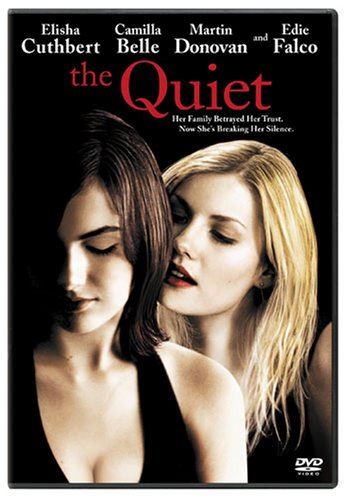
The filming world seems to be full of un-original ideas. Everything from endless sequels to the same types of films repeated and repeated until one falls into a deep dark slumber. The Quiet staring Elisha Cuthbert(24, Girl Next Door) as Nina Deer & Camilla Belle(When A Stranger Calls) as Dot from the cover and box description appears to be another teenage high school drama about some new girl and sexual tension sans Cruel Intentions. How...ver, this is not the case once you go through this brilliant movie. It really is the story of a Dot, a deaf and mute who is dealing with the pain of just losing her father in a car accident (and lost her mother to cancer many years ago). She has been sent to her god parents; Paul & Olivia Deer played by Martin Donovan (Weeds, Dead Zone ) & Edie Falco (Sopranos). However, the family is not as they seem. All of them including the daughter Nina (Cuthbert) & Dot harbor deep secrets as it comes together to a satisfying conclusion.
Posted in: Disc Reviews by Archive Authors on February 18th, 2007
The day and age were Hollywood remakes coming off as a somewhat passable effort are completely gone. Hollywood continues to feed us drivel that is devoid of anything remotely entertaining or anything that made the original entertaining in its own right. In 2006 Warner Brothers decided to remake the 1973 classic film Wicker Man. Instead of trying to adhere to the original, Warner threw everything that made Robin Hardy's original such a classic and have since replaced it with moments that were meant to scare us but instead come off as almost laughable.
In this remake actor Nicholas Cage stars as detective Edward Maius. We quickly learn that Edward's former fiancée Willow (Kate Beahan) left him a few years back without any reason why. Edward soon receives a letter from Willow stating that their daughter Rowan has gone missing. Traveling to the island of Summerisle, Edward soon learns that the island that Willow has moved to (oddly comprised entirely of woman) may have something to do with their missing child. Edward searches high and low trying to figure out who these women are, what they do and who exactly is the so-called Wicker Man.
Posted in: Disc Reviews by Archive Authors on February 16th, 2007
Before Lord of the Rings: The Fellowship of the Ring, there was another film full of warriors running through the wilderness, accompanied by a majestic score. That film was The Last of the Mohicans, director Michael Mann's remake of the 1936 film of the same name, which was a remake of the 1920 silent film. And all of these movies were based on the original novel by James Fennimore Cooper, a popular 18th Century American writer.
So there's a lot of history to this story, which is set during the French and Indian War in the mid-18th Century. Our hero is Hawkeye (Daniel Day-Lewis, Gangs of New York), the white adopted son of a Mohican father, Chingachgook (Russel Means, Natural Born Killers). Together with Chingachgook's biological son, Uncas (Eric Schweig, Tom and Huck), they do their own thing in the wilderness, hunting and trapping and uninvolved in the ongoing war.
Posted in: Disc Reviews by Archive Authors on February 15th, 2007
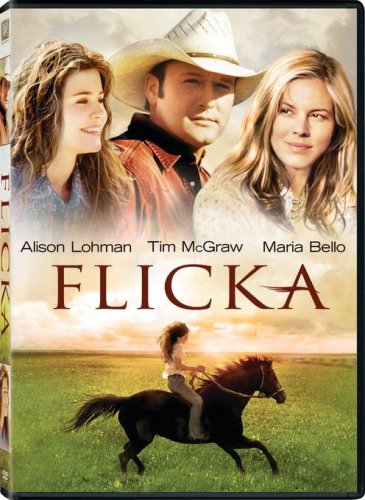
Maria Bello gives a wasted performance in the Tim McGraw vehicle Flicka, a by-the-numbers family film that is such a retread of other more competent efforts, one wonders, What is the point? Alison Lohman plays McGraw's teenage daughter and friend-to-Flicka, a role type that was much better utilized in classics, such as Old Yeller, Where the Red Fern Grows, and Summer of the Monkeys. Lohman is the precocious adolescent, who struggles through boarding school, and her relationship with gruf...-farmer daddy McGraw. McGraw is mis-cast in most everything he's in, being too hip, new-wave country sissified to qualify as a) a tough guy (in this film), and b) an ex-high school football star (see Friday Night Lights). In other words, his time would be better spent returning to Nashville for more of those inane little suck-tracks like "Don't Take the Girl." He's a poor actor with limited range, and his performance in Flicka confirms it.
An even more noteworthy problem the film suffers from is the same plot formula we've seen for over fifty years in novel and film. Teenager clashes with parent because they're just alike. Parent and teenager neither one realize, or admit to, the similarity. When they finally do, fences are mended, and the real healing begins, all so we can get that warm fuzzy the studio wants from us. End of story. Somewhere along the way, the dog or deer or buffalo or goat incurs some kind of tragedy, which may or may not result in death, depending on the sadism of the filmmakers. I won't tell you which way this ends up, but I will say Flicka follows the formula, and doesn't depart one inch from it.
Posted in: Disc Reviews by Archive Authors on February 12th, 2007
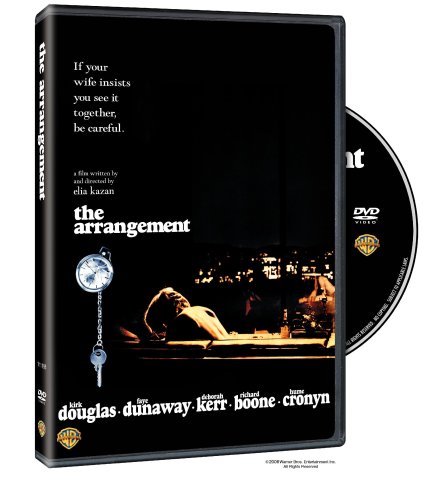
The Arrangement is a film that I had always heard the name of, but never really heard anything about. It's rare for a film to be directed by the author of the book that it is based on. In fact, I can't recall ever seeing that before. Upon watching the film, it is obvious to me how important it is for a director to have a clear understanding of the story he is trying to tell. Kazan knows this story inside and out, and even the slightest nuance of the least-important scene contributes to the story being told.
The arrangement tells the story of Eddie, a high-powered advertising executive who has a very unexpected midlife crisis within the first few minutes of the film. As viewers, we spend the rest of the movie examining his life, and slowly discovering what led him to this tumultuous point in his life. The film actually reminded me a lot of The Graduate, if Dustin Hoffman had been in this 40's. Here, Kirk Douglas plays the Benjamin Braddock role, with just a bit of Sybil thrown in for good measure.

Posted in: Disc Reviews by Archive Authors on February 11th, 2007
Portions of this review were lifted from the previous Criterion Collection edition review. Now on to the review...
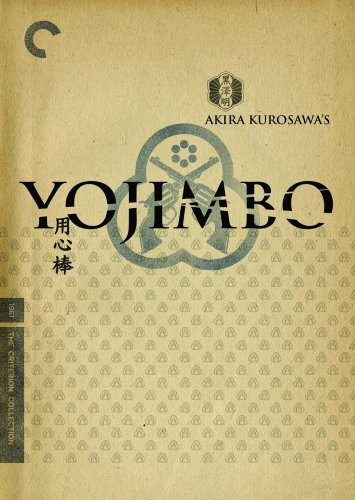
After making such internationally renowned samurai period films such as Rashomon and The Seven Samurai, Akira Kurosawa did make another film, Yojimbo, with a decidedly different tone, bordering on dark comedy. The opening shot is of Sanjuro (Toshiro Mifune, Throne of Blood), a samurai without a master, who look at a mountain, and suddenly scratches his head, as if his hair is on too tight. It's almost the breaking down of a facade, helping to show you that the film will be bit different from other Kurosawa samurai films. The introductory cards say that the film is set in the 1860s, and the samurai comes into a town ruled by rival gangs. He doesn't know this when he comes in, but the first thing he sees in town is a dog carrying a human hand. People have said that the way that this film was told reminds them a lot of the Clint Eastwood/spaghetti westerns that came out several years later, and it's easy to understand why, with the quiet main character whom you can never really tell if he's a hero or villain. He deals with some situations with a toothpick in his mouth, reminding me of Chou-Yun Fat in Hard Boiled. Kurosawa does action flicks? That's probably the best way to characterize it, but he does it well, without a lot of one-liners or lack of common sense seen within a lot of today's action films.
Posted in: Disc Reviews by Archive Authors on February 10th, 2007
Let me get this out of the way right up front; I really enjoyed Memoirs of a Geisha. Now, I am certainly smart enough to understand that the film was not entirely realistic, and there were some plot developments that pushed suspension of disbelief pretty far, but I wound it charming and entertaining. It was so charming, in fact, that it was often times easy to forget that you were essentially watching a movie about whores. You can romance it all you want, but at the end of the day a Geisha is really nothing mo...e than a high-paid escort.
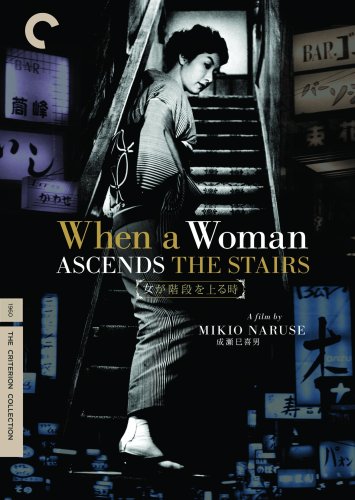
When a Woman Ascends the Stairs is sort of the realistic companion piece to Memoirs. The story here revolves around a modern-day Geisha, where the lifestyle has moved out of the Geisha-houses and into the bars. The lifestyle is still basically the same; women are “companions” to wealthy male bar patrons, making long-term relationships with one woman. The women pay a portion of their income to the owner of the bar, and keep the rest for themselves (though most of it is spent on kimonos and personal upkeep). Our heroine, Mama, is a Geisha that is well-respected amongst her peers, but she is starting to feel the pressure of age. As she is advancing in years, she is not able to rely as much on her youthful good looks. The time has come for her to either get married or open a bar of her own. As she is so well liked, it is not too long until she has suitors offering to pay for her own bar. Now she must decide how she is to proceed with the rest of her life.
Posted in: Disc Reviews by Gino Sassani on February 7th, 2007
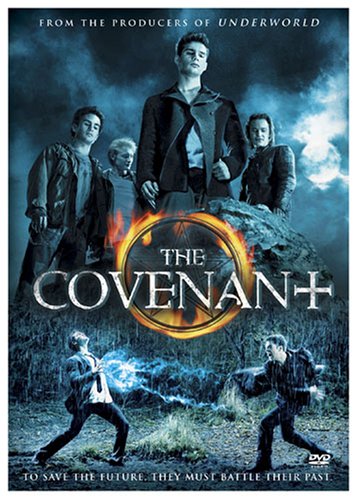
The prologue to The Covenant tells us of people with supernatural powers. We're told of how these powerful warlocks and witches were hunted throughout Europe and escaped to the New England colonies in the New World. The information is provided with the contradictions of pseudogrunge music and pages of ancient texts. It doesn't take us long to meet young men, descendants from these immigrant families. We discover them flaunting their powers by jumping off a cliff on the way to a teen party. These four special teen boys have the world, or at least their local community, by the short hairs. Soon we are alerted that something has changed. The group feels a strong presence that is disturbing their supernatural force. Newcomer Chase Collins (Stan) has a secret of his own. He is the last of a fifth family once banished from the society. His return means the usual tale of revenge and mayhem is about to unfold. Throw in a generous amount of teen sex, loud music, and fast cars, and we have a quite furious but erratic romp. We're informed in roundabout ways that the society operates under certain rules intended to keep the secret and allow them to remain safe. Unfortunately these rules appear more like suggestions, really, as the boys are usually apt to show off their powers whether being chased by police or merely to remove a girl's pants to win a bet. We also learn that using this force drains the user's life, causing premature aging, if the powers are used too frequently. Of course, there is always a potential workaround to such unfortunate effects. It seems any warlock may will his powers onto another, particularly at their 18th birthday when they come into full possession of their "gifts".
Comparisons to the superior Underworld films can't be helped. The box art invites such comparisons by telling us the film's share producers. The idea of a secret society with sinister history and secrets create a common thread. But warlocks are just not as cool as vampires and werewolves. Blue tints to the cinematography complete the comparisons. The Covenant obviously attempts to stay more grounded in reality and so is far more mundane overall. The film employs an odd combination of complex simplicity. We are treated to hints of this incredibly rich tradition and history, yet it is all cheapened by the one dimensional performance of the cast. We are always tantalizingly close to something larger that never makes its appearance on film. None of these characters exhibit the culture and sophistication that the filmmakers want so badly to convince us they possess. The film wants so much to be epic in its scope, but no power on heaven or earth, supernatural or otherwise, is going to make that happen. Add to these flaws some horrid examples of dialogue looping (dialogue replacement) and one begins to wonder if Renny Harlin was so obsessed with largesse that he simply ignored the critical details. Check out the looping at about 25 minutes into the film.
Posted in: Disc Reviews by Archive Authors on February 2nd, 2007
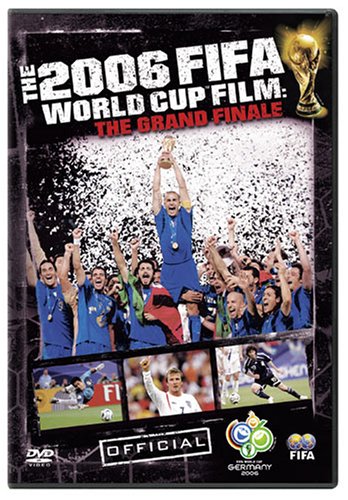
The World Cup is unquestionably the greatest sporting event in the world. No other event, sporting or otherwise, pulls nations together like the World Cup does. Once every four years, the whole of the world (save for the majority of the United States) takes a month off to focus their eyes on the efforts of a group of young men to put a white ball into a white net. This film is the story of the 1996 edition of the famed tournament.
This film does a great job of capturing the story of the tournament, while not ...etting bogged down in the details that could drag a film like this one to a standstill. The entire tournament is discussed, but not every game is shown. In fact, the group of 16 is skipped all together. While this does not make for a complete document of the tournament, it certainly helps to keep the film on task. The first half of the film showcases the road to the final, and the second half focuses on the semi-finals and the final match itself. Impressively, the film does not shy away from touchy subjects, as it discusses referee controversies and “the head-butt” openly. Much of the film showcases field-level images of the gameplay supported only by crowd noise, which brings the beautiful game to life in a very real way. This is a compelling and entertaining film even for those that are casual fans of international sport.