Posted in: Disc Reviews by Archive Authors on December 4th, 2006
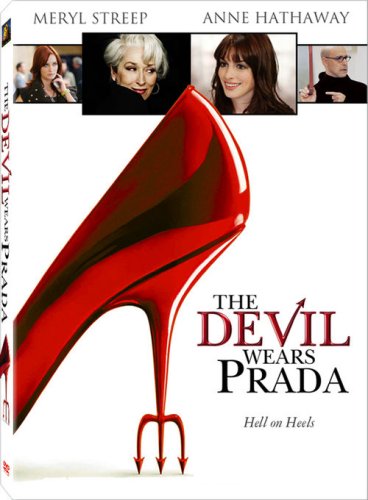
When I sat down to watch The Devil Wears Prada with my wife, who was excited to see it, I was braced for a complete chick flick. I figured it was another one of those �ugly� duckling turns beautiful to conquer her situation movies, and that prospect didn�t exactly have me jazzed up.
Well, that�s not quite how it goes, and I was surprised to find that I enjoyed the film. The story centres around Andrea (Anne Hathaway), an aspiring journalist who�s getting nowhere, who takes a job as second assistant to Miranda Priestly (Meryl Streep), the frightening editor-in-chief of a leading fashion magazine. The idea is that this job could be an influential stepping stone to her career as a serious journalist. Unfortunately, Andrea is totally out of her element in the fashion world, and at first struggles to accomplish the simplest tasks of her ridiculous new job. Everyone mocks her complete lack of style, and she mocks them right back � though much, much more timidly � for taking this fashion stuff so seriously.

Posted in: Disc Reviews by David Annandale on November 28th, 2006
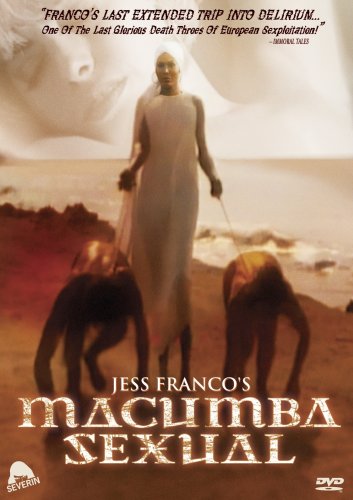
Four young women (including Lina Romay in her Candy Coster persona) arrive at beach resort. They plan to pick up plenty of men for sex, but if none are available, as they're in a Jess Franco film, they'll make do with each other. They see no one else around, except for the odd manager (Robert Foster) and the even more bizarre gardener. At first they think nothing of the town's deserted nature, but gradually they realize something is wrong, and it has to do with the nearby monastery, where undead Cathars vent their frustration with their cursed state by raping and killing our heroines.The plot is rather more confusing than I've laid out here. The inspiration for the film is pretty clearly Amando De Ossorio's Blind Dead series, though these are pretty talkative bunch of living dead. Silly sexploitation (the first half of the movie is like a depopulated sex comedy) mixes with jerky camerawork, some very nicely spooky shots in the hotel and a completely bizarre amour fou subplot involving a woman chained up in another room. This is far from Franco's best, but it is a film that still has ideas in its head, and the scene set in empty, windswept streets are quite eerie.
Audio
Posted in: Disc Reviews by David Annandale on November 27th, 2006
Alice (Lina Romay under her blonde pseudonym "Candy Coster") is haunted by erotic nightmares involving the Princess Obongo (the Amazonian Ajita Wilson). She therefore has her misgivings when she is ordered by her boss to travel to a remote island and sell some real estate to that very person. Doubts notwithstanding, off she goes (got up in an outfit I've never seen a real estate agent wear before) to play Jonathan Harker to Obongo's Dracula. On the island, she falls under the Obongo's spell, and becomes emmeshed in a web of sex, rituals and magic.Director Jess Franco here is reworking the plot from his Vampyros Lesbos, and even reuses some of that film's sun-bleached supernatural-by-daylight tricks. The zoom lens isn't quite as badly overused as in some of his other work, though it definitely makes its presence known. Some of the camera placements are decidedly odd (did he really want us to see Wilson's fillings as she writhes in orgasmic frenzy?), but there are plenty of very lovely shots, too, that manage to conjure a real sense of surreal beauty and mystery on a ridiculously small budget. The studied pace might well put off fans of either sex or horror, but then, that's typical Franco for you, but the film does have an oddly mesmeric effect.
Audio
Posted in: Disc Reviews by Archive Authors on November 25th, 2006
Synopsis
With Casino Royale now out in theaters and being shown to a mostly positive audience, let’s all take a step back and remember that James Bond just celebrated an anniversary in 2002 with the release of Die Another Day. The film was the twentieth in the Bond legacy, and Brosnan’s fifth (and last) in the role. How does it stack up?
Posted in: Disc Reviews by Archive Authors on November 25th, 2006
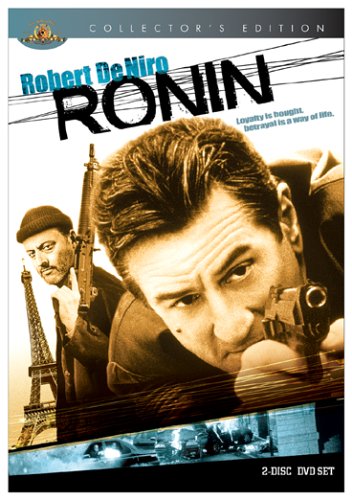
(Portions of this review have been pulled from the original one-disc version of Ronin, which can also be found in the reviews portion of the site)Synopsis
I think the only thing I remember about Ronin initially was that Robert DeNiro (Heat) was involved in some scandal involving a French "house of ill-repute" or something along those lines. But when Ronin was released, people quickly forgot about that mess, as what came from it was an action film that put a little more e...fort into the characters than other action films. But that’s not to say the action scenes were neglected; the car chase scenes that negotiate through winding French country roads, and through city sidestreets so narrow you couldn’t open either car door to get out of the car, are some of the most nail biting in recent memory. Based on J.D. Zeik’s story and rewritten by Richard Weisz, a.k.a. David Mamet, Ronin’s introduction is a title card about Japanese samurai without a master, who are mission-less assassins. As a US operative named Sam, DeNiro is introduced almost immediately to the group, who include Frenchman Vincent (Jean Reno, Leon), the Russian, Gregor (Stellan Skarsgard, Dogville) and the Brit, Spence (Sean Bean, Lord of the Rings). Their liaison between them and their employer is the Irish lass Deirdre (Natascha McElhone, Solaris), and their object is a briefcase whose contents are mysterious.
Posted in: Disc Reviews by Gino Sassani on November 24th, 2006
No monster movie is bigger than King Kong. AFI members recently considered King Kong to be the most influential film ever. The original King Kong has inspired more filmmakers, actors, and technicians than any film in Hollywood’s history. The score is considered the first modern film score. For the first time the music is timed to accent certain aspects of the action. Willis O’Brien practically invented movie special f/x with his revolutionary stop motion technique seen earlier on The Lost World. One of those filmma...ers so inspired was director Peter Jackson. It seems none of the wonderful journey that was Lord of the Rings would exist on celluloid if not for King Kong. At 12 years old, Jackson set out (unsuccessfully) to create his own version of the iconic film and has apparently dreamed of remaking it ever since. After a hopeful but aborted start in 1996, Peter Jackson finally brought his childhood fantasy to life, and was it ever worth the wait.
The first question you might ask is how does this film compare with the original or the 1976 Kong? This film simply blows away the 1976 debacle. As for the original? Obviously the 70 years of f/x progress means that Kong himself shows the greatest improvement. No question the stop motion Kong was the most spectacular thing 1933 audiences had ever seen. Today we live in a computer age where if you can imagine it someone can bring it to life. Jackson’s WETA Digital is very much like George Lucas and ILM. In New Zealand they are movie f/x. Unlike Lucas, Jackson integrates his f/x so intimately into the action that we cease to think of them as movie magic. Lucas tends to overload each scene with a “look ma what I can do” overindulgence. Andy Serkis plays the Kong character as he did with Gollum so that the other actors have something real to act against. His emotional range gives Kong a façade of realism that sucks us into the story without really thinking about the f/x. So, like the original, Kong is a real character to us, capable of feelings and deserving of our empathy When he finally slips from the tower of the Empire State Building, we share an emotional moment with Ann (Watts) that can only be possible for a real being. The film is far longer than the original. In this extended version Jackson’s Kong is about double the original’s running time. Jackson’s Skull Island, while richly detailed and far more elaborate than the original, maintains the illusion that we are in that same place. The creatures are purely magic, rivaling the best we’ve seen from Jurassic Park.
Posted in: Disc Reviews by Archive Authors on November 23rd, 2006
Synopsis
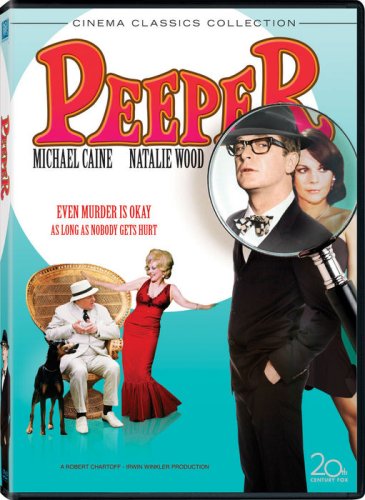
Michael Caine is a down-on-his-luck PI in LA. He’s hired to find the long-lost daughter of a man who is now wealthy, though being hunted by goons. Caine heads off to house of the presumed daughter’s adoptive parents. There are two women the right age here. Which one is he looking for? Could it be Natalie Wood?
Posted in: Disc Reviews by Gino Sassani on November 22nd, 2006
Few science fiction films of the 1950’s left as much of an impact as Forbidden Planet. Gene Roddenberry often cited the film as the birth of Star Trek. It is in this film that he took away the interactions of an interstellar craft’s bridge crew. Even the United Planets organization in Forbidden Planet heralds Trek’s United Federation of Planets. Robby the Robot would become a science fiction icon and lead to a great number of copycats, most notably the Lost In Space robot. Robby even made a cameo on that show. MGM ...ulled out all the stops on what must have appeared to be a risky proposition. Certainly science fiction films were popular, particularly as drive-in fare, but most were created on shoestring budgets. Forbidden Planet was an honest to goodness blockbuster budget film long before the steady stream of big budget genre films were popular. MGM launched one of its largest promotional campaigns. For one of the first times in Hollywood history, there were product tie-ins and cross promotion on other MGM properties. Many of the images from Forbidden Planet were already familiar to the movie-going public before the film’s actual release. If anything else, this film would provide a model that huge budget films of today still follow when they hit the market. More than just science fiction cinema changed with this milestone release.
The cast of Forbidden Planet was another trend setter. Walter Pidgeon was already quite an established name outside of science fiction circles. Until this time, most of these films featured no name actors or contract players obligated to participate in whatever was tossed their way. Some prestige was bestowed upon the genre with that kind of a cast decision. Anne Francis, of course, steals the show whenever she is present on screen. Unlike the roles for women often provided on these kinds of things, Francis was given a chance to show true acting skills instead of simply being eye candy for the male audience. That’s not to say she wasn’t quite attractive, but the part required a great deal of emoting that this young actress was able to pull off nearly perfectly. Leslie Nielsen, now more renowned for his deadpan comedy, plays the ship’s commander. It’s not hard to see where Kirk got his flair for the feminine charms while watching Commander Adams working on Altaira. Future Six Million Dollar Man’s Oscar Goldman, Richard Anderson is also a pleasant casting gem.
Posted in: Disc Reviews by Archive Authors on November 15th, 2006
Ever since making the Lord of the Rings trilogy, Director Peter Jackson has almost become a household name that seems to always guarantee success. Don’t get me wrong though, Jackson has not always been successful. Before making the Lord of the Rings trilogy, Jackson had the film The Frighteners and a few smaller films where he only produced. The idea of giving this not so successful movie director hundreds of millions of dollars to remake the Lord of the Rings trilogy, made many turn their...heads simply wondering why. After the gigantic success of the trilogy, Jackson targeted another remake, a remake to a film he says was the reason he wanted to become a film director. The film in question is the 1933 classic King Kong.
When news first arrived of this remake, many fans, including myself, were very excited to see what Jackson could come up with. However, I don’t need to spell out how many remakes, including the recent Pink Panther, are extremely horrid. With the news coming out that New Line wanted Jackson to trim the film down (from the final run time of 182 minutes to 140 for a quicker turn around audience) and that the film’s budget had sky-rocketed forcing Jackson and his partner Fran Walsh to fork over their money, a lot of fans started to worry if Peter Jackson’s King Kong was going to go down in history as simply another poorly made remake. Can a one-time nobody director, now an extremely famous director turn a black and white classic into a modern age epic? Read on to find out.
Posted in: Disc Reviews by Archive Authors on November 13th, 2006
Synopsis
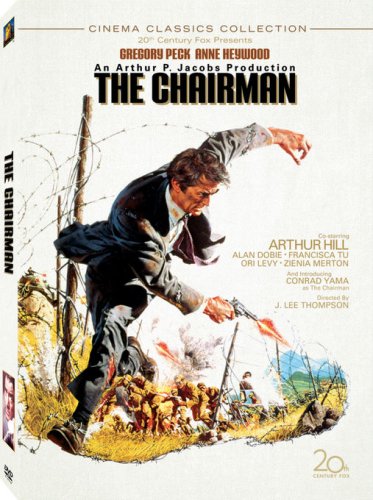
Gregory Peck is a Nobel-laureate scientist sent to China to try to recover a new enzyme that allows one to grow any crop in any climate. The operation is being conducted jointly by the Americans, the British and the Russians (!). Peck has a transmitter implanted in his head that relays his physiological conditions and his every word back to base. What he doesn’t know is that the implant is also explosive, and trigger-happy general Arthur Hill might well blow Peck’s top, as it were.