Video

Alan Rickman, in a stunningly unexpected bit of casting, plays an arrogant, womanizing SOB of a chemistry professor who has just been awarded the Nobel Prize. While he and wife Mary Steenburgen jet off to Sweden, their son (Bryan Greenberg) is kidnapped. Before long, the parents receive are sent a severed thumb as proof of the kidnapper's serious intent. But nothing is quite what it seems.

In 1951 Robert Wise made the Earth stand still. The United States, in fact the entire planet, was in the middle of a frightening cold war. If you believed the media at the time, we were standing just moments from nuclear annihilation. We were given images of a crazy man’s itching trigger-finger poised over a button. School kids were led in air raid drills that promised protection from this powerful menace by the wooden tops of your desks. The government and private sectors were engaged in witch hunts to smoke out “commie” sympathizers. The fear touched every aspect of our lives. Hollywood was no exception.

Try this plot on for size: Gordo, an ape owned by carnival sideshow barker the Great Lampini (Paul Richichi), gets loose and rampages about Long Island, raping and killing and stealing cars (!). Meanwhile, the moronic detective in charge of the murder case dismisses the idea that an ape is the culprit, and casts his racist eye on the unfortunate Duane Jones (Christopher Hoskins, whose character is named after Night of the Living Dead's lead).

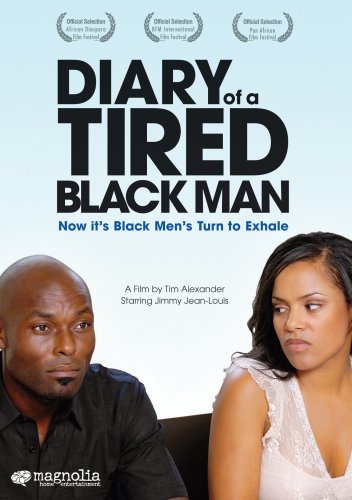
With Robert Rodriguez releasing films where he directs, writes, scores, edits and produces some people humor themselves into believing that anyone can do the same.  With Diary of a Tired Black Man, Tim Alexander attempts to accomplish a similar feat.  Jimmy Jean-Louis headlines the small cast as James who recently divorced his wife Tonya (Paula Lema)of four years. Alexander directed an internet clip that dealt with this relationship and from that 3 minute clip he adapted it into a feature film.  The story evolves into a complex investigation of relationships from the black male perspective. 

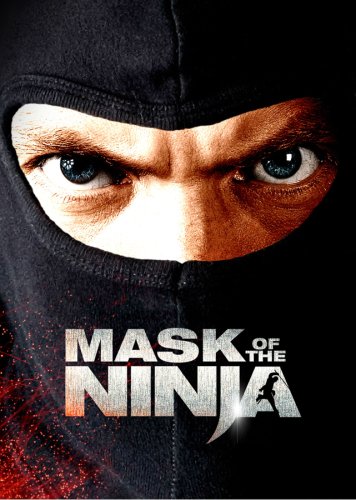
Bradford May, oh Bradford May. I have a good history of watching movies directed by Mr. May from a couple of Darkman sequels to the more recent Ring of Death. His style is pure popcorn and an attitude of leave your brain cells by the door. It is only fitting that I was interested in seeing another flick with his name on it. This one was called Mask of the Ninja. Right away, it sounded like a classic Bradford May movie. However, after watching it, I realized that Bradford had broken some laws in his production. He had broken the sacred five rules of portraying a ninja.

The sleaze of the grindhouse era inspires a special kind of love. Warped, dubious, indefensible, yet real all the same. Part of that love is a nostalgia from those bad old days. But it takes an even more special brand of that special love to seek to recreate forgotten exploitation genres, and yet that is what we have here: the first Nazisploitation flick in close to thirty years.

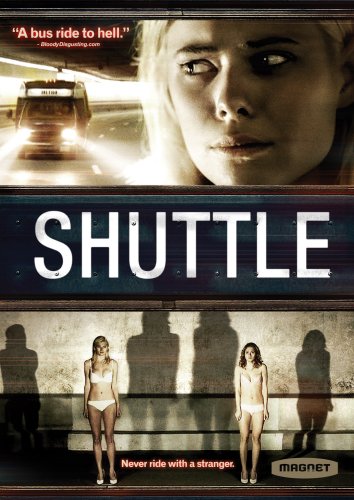
We all knew it had to happen eventually. With the success of the “torture porn” films like the Hostel and Saw series, we had to expect that there would be some lightweight twists and turns on the thriving genre. Shuttle is one of those attempts. It gingerly treads on the now familiar ground of the aforementioned films, but each time it makes the obvious moves in that direction, it pulls back and stalls. Edward Anderson is the writer and director of this mess.

Donkey Punch was partially funded by the British Lottery. That means you might have actually lost twice. Once if you bought a losing ticket, and again if you watched this movie made possible by your gambling itch. Mama always said nothing good comes out of gambling. Turns out she was right. If this is what the British Lottery Authority is doing with the money, you’re better off going to a bookie. At least Mario “The Shark” Cabliario will spend the money on something worthwhile, like women and booze.

Doubt is a case of art imitating art imitating life. John Patrick Shanley based the character of Sister James on a real sister that he knew as a child. He grew up attending Catholic school, and Sister James was one of the nuns he knew during that experience. While the character was based on something real, the events were not. He took this familiar character and developed the fictional story of Doubt around her. This story became a play. W hen it came to adapting the successful play into a movie, John Patrick Shanley took on the job nearly singlehandedly.

A middle-aged man (Jean Rochefort) recounts his youthful sexual awakening to the charms of the local hairdresser. Developing a fixation on the erotics of a women cutting men's hair, he resolves to marry a hairdresser, and decades later, he gets his wish. His wife is the lovely Anna Galiena, and once wed, they rarely leave her little shop (indeed, they also get married there).