Posted in: Disc Reviews by Gino Sassani on March 16th, 2009
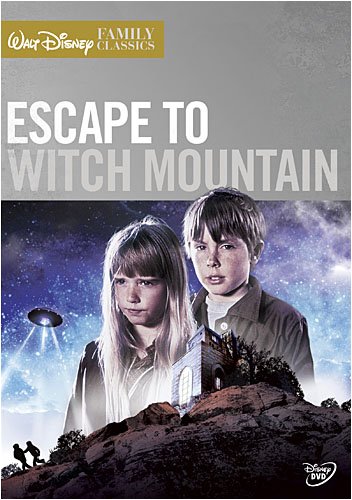
Walt Disney has always had as a main theme in its movies the idea of empowering children. It didn’t matter what circumstances the children might find themselves in, Disney always found a way to bring them out of their predicaments with an inner strength that they never really knew or believed that they had. It’s likely one of the reasons the studio has been so successful with children’s films over the decades. Escape To Witch Mountain is one such film. It’s certainly not the greatest from the Disney vaults, but you could do a lot worse. The film holds a certain element of charm that I remember from my own childhood, and it appears to still have some miles in it 30 years later.
Tony (Eisenmann) and Tia Malone (Richards) are orphans. They have no memory of their real parents or of anything that happened to them when they were much younger. Now they find themselves, yet again, transferred to a new orphanage, after their latest foster parents were killed. They may not know about their past, but they are aware they have special powers that other kids don’t have. They have the power of telepathy and molecular manipulation. Tia’s powers are a bit stronger. She can put her thoughts in Tony’s mind, and she can use her levitation powers almost limitlessly. Tony must still move his lips to send thoughts to Tia. He also relies on an external force, in this case a harmonica, to focus his powers. They make no secret of these abilities, at least to the other children. Almost at once, Tony uses his abilities to defend himself against the orphanage bully. When the kids are on a field trip, Tia exposes her ability to predict the future when she saves the life of a man about to have a tragic accident. Unfortunately, the man, Lucas Deranian (Pleasence) has been on the lookout for psychic powers. His wealthy employer and benefactor has an obsessive desire for such things. When Aristotle Bolt (Milland) hears of the encounter, he desires to possess the children. Deranian poses as their long lost uncle with forged papers in order to get the children. Once at Bolt’s mansion, they are tempted by a life of luxury and excess. But the men did not anticipate their telepathy skills. When the children learn of their plans for them, they escape with the help of an ornery horse. It appears the children can also communicate with animals telepathically. They are aided, at first unwittingly, in their escape by a kindly, but rather gruff on the outside old loner, Jason O’Day (Albert). The three bond, and eventually they work to unravel the mysteries of the children’s’ true nature, and where home really is. But to get them home, the trio must evade Bolt, Deranian, and the police.
Posted in: Disc Reviews by Michael Durr on March 16th, 2009
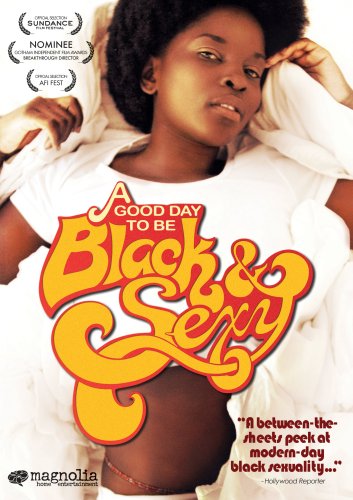
A “sexy” movie is more than a movie that just has two people performing the horizontal mambo with heavy breathing. There needs to be passion, there needs to be raw emotion and even sometimes there needs to be love. If there are words to be spoken between the two beings, they need to have strength and feeling. For me personally, I also need a good selection of lingerie. Seriously though, I wondered if those elements would be found in A Good Day to be Black & Sexy or if it would just be an excuse to stick a good looking black woman on the cover.
The movie is a collection of 5 short films (one with two parts) directed by Dennis Dortch. The short films have a range of “sexy” subjects. Reciprocity is the story of Tony (played by Brandon Valley Jones) who goes down on his girl, Jeanette (played by Kathryn Taylor). However, Jeanette does not want to return the favor. The second story is called Her Man. Helena (played by Chonte Harris) and D’Andre (played by Marcuis Harris) have just finished making love and he gets a phone call that he needs to go to work. Helena doesn’t want him to go which leads to a discussion about their “relationship”.
Posted in: Disc Reviews by Archive Authors on March 13th, 2009
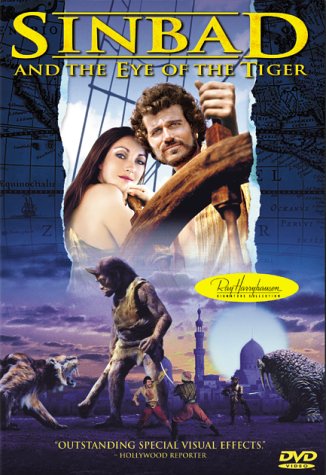
Long before the magicians of movie special effects had computers to conjure up monsters and otherworldly creatures, or even talking dogs, they relied on more physical tricks of the trade. One method, used perhaps most famously in 1933’s King Kong, is stop-motion animation. Kong inspired a young boy who would go on to master the art form and establish himself as a legend of fantasy filmmaking: Ray Harryhausen. Over a career spanning more than 40 years, Harryhausen produced some of the most delightful moments ever captured on film, wowing audiences and inspiring people to believe in movie magic.
Harryhausen’s mastery is showcased in 1977’s Sinbad and the Eye of the Tiger, the third film in a trilogy about the legendary swashbuckler. Eye of the Tiger has its flaws, but the animation is still captivating after all these years.
Posted in: No Huddle Reviews by Archive Authors on March 12th, 2009
Posted by Ken Spivey
In the film “Dark Reel,” we are treated to an adventure. In the days of Prohibition, a fledgling filmmaker gave a promising ingenue a chance at celluloid immortality. This shot at fame sadly cost the young actress her life. Years later, the curse of this murder would haunt the movie set and crew of the production of the “B” movie, “The Pirate Wench.” Meanwhile, chubby and terminally apathetic Adam Waltz (played by “Terminator 2's” Edward Fulong) won a walk-on role in the campy pirate film. He quickly develops a passionate relationship with the female lead, Cassie Blue (Tiffany Shepis), much to the chagrin and dismay of the director and rival actors. After Waltz is connected to a possible murder on the set, the film's producer decides to increase the perpetually indifferent contest winner's role from extra to co-star. Afterwards, the on-set murders continue, a ghost makes a cameo, then we find out who the killer really is. All of these amazing events and more make up the breathtakingly horrible, yet wonderful, movie that is “Dark Reel.”

Posted in: Disc Reviews by Gino Sassani on March 12th, 2009
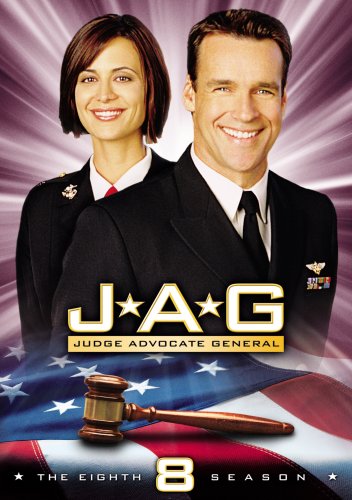
Finally, this show has really gotten to me. I don’t know what it is about this 8th season, but I was far more interested in the show than I had ever been. Maybe I’ve spent so long with these characters that they started to come alive for me. Maybe I was resistant to a slightly different way of telling stories. Maybe it was that the stories became less about who was with who that I was finally able to enjoy the great courtroom drama and investigation elements of the series. Whatever it was, I am finally a fan.
Most of each episode is dedicated to the investigation of the particular case. For action junkies, this often means flying some sweet high tech aircraft. The show’s primary character, Commander Harmon “Harm” Rabb (Elliott) does a lot of the high flying investigations. He was once an ace pilot who developed night blindness, which essentially grounded him.
Posted in: Disc Reviews by Gino Sassani on March 12th, 2009
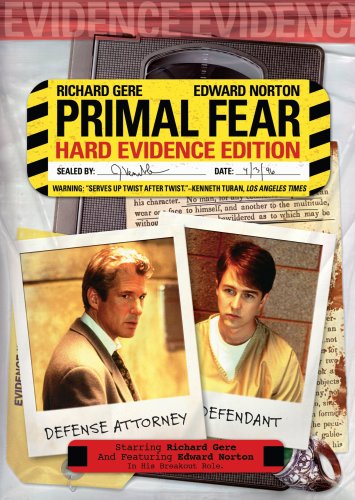
Richard Gere is Martin Vail. Vail is an egotistical hot shot lawyer who is looking more for news cameras than an innocent client. The truth is, he doesn’t give a crap if they did it or not. His only concern is what the case can do for him. He thrives on front page magazine articles and sound bites on the 6:00 news. It’s no surprise that when Vail sees a headline making case unfold live on the television, he chases the case. The entire city of Chicago witnessed police chase 19 year old altar boy Aaron through the railroad yards. He was running, soaked in blood, from the brutal murder of the local Archbishop Rushman. Vail moves in on the case like a shark attracted to blood. Unfortunately for all involved, the case will test his own patience and motives. There’s evidence of corruption leading into a who’s who of city fathers. There’s the expected church sex scandal. There might even be ties to Vail’s most recent case where he got a client a $1.5 million settlement from the city. All of this just feeds Vail’s drive and ego. He sees it as a chance to stick it to his nemesis, Schaughnessy, the district attorney who was once his boss. Schaughnessy is played quite convincingly by John Mahoney, best known as father to the Frasier boys. What a difference a role makes. The opposing attorney is his former girlfriend and coworker, Janet Venable (Linney). Vail is so focused on these huge possibilities that he’s blind to what might be right in front of his face. He navigates these dangerous waters with relish. But he never saw the truth coming.
Actor Edward Norton first came to my attention in the heist film, The Score. I hadn’t heard a lot about the bright young actor, but I remember that he impressed me quite a bit. When you consider he was playing along with the likes of Marlon Brando and Al Pacino, that’s no small achievement. Somewhere along the way I missed the 1996 release of Primal Fear. Based on the William Diehl novel, the film would be the first major feature to star Norton. It was a breakout character and a breakout performance. He deservedly was nominated for an Academy Award for the role, one he likely should have received. Norton wears the skin of this troubled teen so closely and so effectively that it can be quite chilling at times to watch. Richard Gere might have been the bankable star for this movie, but Edward Norton walked away with the whole thing in his back pocket, and has never looked back. This was also the first feature for television director/writer Gregory Hoblit. Hoblit was best known then as the Steven Bochco protégé who worked on Hill Street Blues and NYPD Blue. His gritty attention to detail made him a perfect fit for these ultra realistic cop dramas, but perhaps it was his work on Bochco’s legal drama L.A. Law that better prepared him for the legal thriller Primal Fear. The combination would be a formidable one, and it makes me rather sorry I missed out on this one at the box office back in 1996.
Posted in: Disc Reviews by Gino Sassani on March 11th, 2009
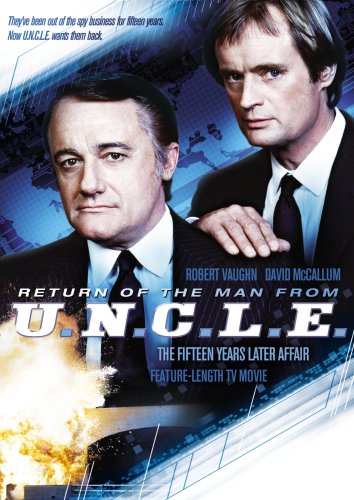
Say Uncle. That’s U.N.C.L.E., otherwise known as The United Network Command for Law and Enforcement. Starting in 1964 The Man From U.N.C.L.E. was one of a flurry of shows to take advantage of the new James Bond craze. It featured much of the same elements as the super spy films. You had sophisticated spies in tuxedos. There were plenty of gadgets. And there were constant threats of world domination, mostly from the evil counter organization, THRUSH. The two top spies for the good guys were Napoleon Solo (Vaughn) and Illya Kuryakin (McCallum). The Bond references were never subtle and always intentional. Ian Fleming himself consulted on the show and named Napoleon Solo after a Bond character. Together Solo and Kuryakin would travel around the globe saving the world from almost certain doom. The series ran for four years. In 1983 there was talk of bringing the show back. Apparently the two stars were still up to the task and both could have used the work. Thus was born the television film and potential pilot: The Return Of The Man From U.N.C.L.E.: The Fifteen Year Affair.
It’s been 15 years since Napoleon Solo and Illya Kuryakin have left U.N.C.L.E. and the spy game behind. Solo is now the owner of a computer company, and Kuryakin is designing women’s clothes. It has also been 15 years since anyone’s heard peep out of THRUSH. But now an American nuclear bomb has been intercepted, and Justin Sepheran (Zerbe), the last leader of THRUSH, has been broken out of jail. Someone’s putting the old band back together. Now the newly reformed THRUSH is blackmailing the United States. They will destroy a major part of that country if a $350 million ransom isn’t paid. And there’s a kicker. The money must be delivered by Napoleon Solo. The newest chief of U.N.C.L.E. is Sir John Raleigh (Macnee). He has to track down the former spies before time runs out. Once back in the fold, the duo are hot on the trail. They realize that only one man alive can activate the complicated device, so they set out to protect him. Before long the old cat and mouse spy game is in full throttle, and Kuryakin has a personal reason for joining back up. He wants revenge on the double agent who betrayed him on his final mission, causing the death of a young girl. There’s scores to settle and a world to save. Sounds like a fine ride. The film ends in an almost comical clichéd scene. Was it the red or the blue wire?
Posted in: Disc Reviews by Gino Sassani on March 11th, 2009
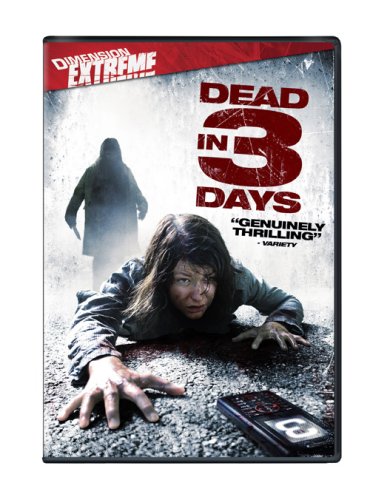
The international horror market is becoming quite the money maker. It started with the Asian Invasion. We started seeing American remakes of these mostly Japanese or Korean ghost stories. They usually had a common thread that featured some type of technology. It started with Ring, the American version of Ringu. Here it’s a videotape that demands to be reproduced or you’re dead in 7 days. Eventually we’ve seen films where ghosts inhabit everything from computers to video games to cell phones and digital cameras. It seems the dead just can’t let go of their hi-tech toys. If you want to go ghost hunting today, stay away from the creepy mansions and ancient cemeteries. I’d try Best Buy. Those guys must have a hell of a ghost problem. Who you gonna call?
The latest country to get in on the fad is Austria. Dead In 3 Days is an Austrian, German language film, which hasn’t been remade for American audiences. Instead the film, originally titled, In 3 Tagen bist du tot, provides an English dub.
Posted in: Disc Reviews by Gino Sassani on March 11th, 2009
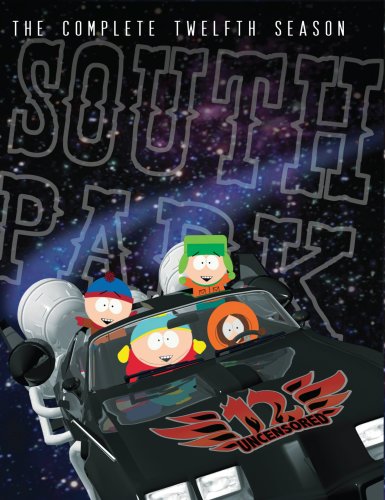
I often have trouble believing that South Park has been around for as long as it has. It’s not just the passing of 12 years, but the sheer brilliance in the face of an increasingly politically correct society. It’s like watching old episodes of All In The Family. Who believes that Archie Bunker would have any chance of survival in the 21st Century? It’s no wonder that Norman Lear has become involved in the series. It’s the last remaining vestige of a once great freedom to be ridiculous and offend. Eric Cartman’s a lot worse than Archie ever was. We always knew that, in his heart, Archie had a soul. Cartman’s a psychopath without a conscience, and in a civilized society we would be terrified of the existence of such a demon spawn…except he’s just so dang funny. Trey Parker and Matt Stone have been walking a tightrope for over 12 years now, and it just doesn’t get old. One of the reasons the show doesn’t grow stale is their ability to make such a quick turnaround on current events. Because the show takes literally days to write and produce, they are quite often always the first to address an issue. They had an election night episode on literally the next day in this season. That means the ideas stay as fresh as the headlines. Finally, you have to credit the expanding universe of good characters. The core group of Cartman, Stan, Kyle, and Kenny were great for a lot of years. But, watching this 12th season you have to admire how much Butters has infused himself into that core. We also have such great semi-regulars as Timmy, Jimmy, Token, and lately the Goth kids. These characters allow the stories to expand in ways the core group could not. I’ve honestly come to think of Butters as one of the core now.
So what about the episodes themselves? Let’s play a little game called: The Good The Bad, and The Ugly, shall we?
Posted in: Disc Reviews by Gino Sassani on March 11th, 2009
Does the name Quasimodo ring a bell? It should, and he did. The deformed cathedral tower bell ringer first appeared in the famous French language novel by Victor Hugo. The story is one of the more frequently filmed tales, going back as far as 1923 and the silent film starring Lon Chaney. Chaney created the definitive appearance from his own collection of grease paints and handmade appliances. The physical restrictions he placed upon himself then nearly crippled the actor. Charles Laughton put his own stamp on the character in 1939. This would become the defining sound film. Even the Walt Disney Studios put their own unique stamp on the tale. Their animated version brought us a romantic tale alive with music and talking statues. With such a rich history of films to its credit, one might question why a made for television film could add anything more to the story. It was with that attitude that I entered the world of this Hunchback Of Notre Dame.
It turns out that there were actually several elements to be added. The most significant is creating a faithful adaptation of the original story. To date no one has come very close to depicting the likely unfilmable Hugo narrative, at least the English translations that I’ve been exposed to. With that in mind, I must say that this film just might come closest to the original tale. Hugo’s description of Quasimodo fits this presentation rather snugly. The next element to be added was a more complicated portrayal of the man himself. While both Chaney and Laughton brought him effectively to life, I don’t feel that either instilled him with as much humanity as Anthony Hopkins does here. Even beneath plenty of prosthetics, Hopkins brings such an array of emotion that I don’t think you’ll have looked at this character in quite this manner before, nor are you likely to in the future. This is the most complete portrayal I’ve seen. Finally, the story has seldom involved this level of detail to many of the supporting characters. The cast is impressive for any film, doubly so for a made for television release with a limited budget.