Posted in: Disc Reviews by Archive Authors on February 3rd, 2009
In America, he is wanted. In France, he is desired. Worldwide, his films are praised for their ethereal, disturbing, and sometimes humorous qualities. But his life overshadows his accomplishments. He survived a concentration camp. His parents did not. He found Hollywood success with films such as Rosemary’s Baby, The Tenant, Repulsion, and The Fearless Vampire Killers. His marriage to wife Sharon Tate ended in a brutal homicide that took both her life and the life of their unborn child.The case would later introduce the world to Charles Manson, a crazy-eyed charismatic with a thirst for blood, and his murderous followers. It would also create a disdain in Polanski for the media, one that grew in the wake of an underage sex scandal several years later.
Posted in: Disc Reviews by David Annandale on February 3rd, 2009
Director Rene Daalder is best known in cult film circles as the man who gave us Massacre at Central High. But now Cult Epics has released a pair of his films (this and Here Is Always Somewhere Else) that seem more in keeping with his real interests. A long and twisting road led to this effort, starting with an abortive collaboration with Russ Meyer and the Sex Pistols, which brought Daalder into the world of punk rock. In that field he met Tomata Du Plenty, vocalist for The Screamers. After funding for their proposed collaboration Mensch collapsed and Du Plenty’s HIV-positive status became apparent, they put together the present film out of a mixture of footage from the abandoned project, plus new elements. The striking result is Du Plenty as the last survivor of nuclear holocaust, holed up in his bunker, declaming/singing poetic rants about the history of the United States, all the while surrounded by a phantasmagoria of bizarre sights. Whether the result is compelling or pretentious (or both) will depend on one’s sympathies with respect to the art scene from which it emerges, but that it is a work that rigorously works out its conceptual and artistic premises all the way to the end cannot be denied.

Audio
Posted in: Disc Reviews by David Annandale on February 3rd, 2009
This is another of Cult Epics’ entries in their new Rene Daalder Collection. His most recent film, it’s a documentary about conceptual artist Bas Jan Ader. The brief body of work he left behind is best known for using gravity as a medium (so, for instance, he did a number of filmed pieces of himself or objects falling). He was lost at sea in1975 while attempting to cross the Atlantic in a minuscule boat as part of a piece to called “In Search of the Miraculous.” Daalder’s 68-minute film retraces Ader’s life, but does so in part through the filter of Daalder’s own parallel experiences as an expatriate Dutch artist. The film is very interesting, though I would have like a bit more analysis of Ader’s work, in order to have a better understanding of exactly what it was doing, and Daalder’s speculations about what Ader’s final thoughts might have been are a little too definitive. Still, a strong documentary.
Audio
Posted in: Disc Reviews by Gino Sassani on February 3rd, 2009
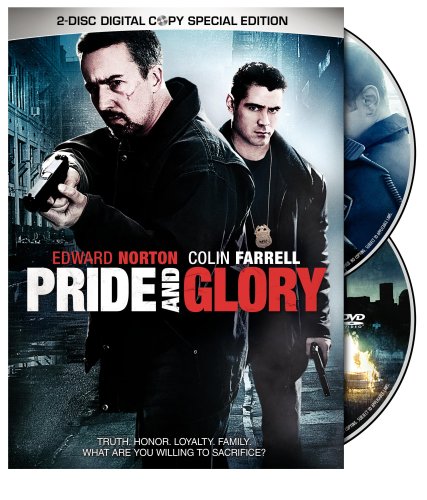
“Four cops down: two dead, two likely. An NYPD drug bust has gone horribly wrong.”
That’s how this gripping drama opens. Not since the likes of Al Pacino in Serpico has there been a movie anything at all like Pride And Glory. This film doesn’t pull punches, and it looks about as real as any police drama I’ve seen anywhere before. Filmed entirely on location in the seedy streets of New York City’s Washington Heights district, there is enough gritty realism to go around. Director Gavin O’Connor not only used these very dank and atmospheric streets, but he also employed his extras and some of the key cast members from the community. If nothing else, you can’t criticize this film for not taking us into the street and watching the action from street level.
Posted in: Disc Reviews by Gino Sassani on February 3rd, 2009
Welcome to the neighborhood here in Lakeview Terrace. See that house next door with the zillion watt security lights? Yeah, they’re pointed right at your bedroom window, but that’s just for your own protection. Well, that’s Abel’s house, right there. He’s a cop with the LAPD. Don’t worry about crime around here. Abel performs regular patrols in the neighborhood in his off hours. If you do something against the rules here, like litter, or park somewhere you shouldn’t, don’t worry, Abel will let you know what’s what around here. Abel will keep a close eye on you. Yes, indeed. Welcome to Lakeview Terrace.
When young couple Chris (Wilson) and Lisa (Washington) buy their first home and move into the community of Lakeview Terrace, they are giddy with excitement. They have that first time homeowners feeling, at least until they meet neighborhood big dog, Abel (Jackson). First of all, Jackson doesn’t believe in interracial marriage, which is what the Mattisons happen to be. They’re used to that. Lisa’s father, played by Barney Miller’s Ron Glass, isn’t real high on the idea either. But when Abel starts to meddle in their business, they begin to get concerned. They don’t help matters themselves when they decide to “christen” the pool with a make-out session while Abel’s young son and daughter watch from their bedroom window. Abel’s the self-appointed community enforcer, and he’s decided that the Mattisons have to go. The confrontations continue to escalate, leading to the predictable, because it’s inevitable, conclusion.
Posted in: Disc Reviews by Gino Sassani on February 2nd, 2009
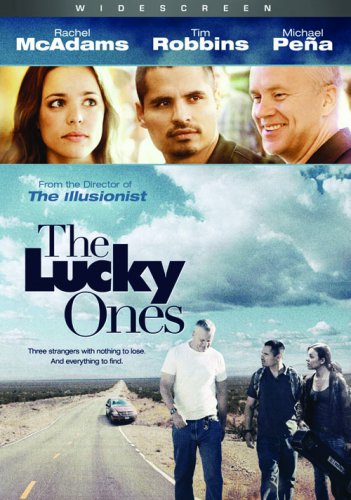
Three soldiers are on their way home from Iraq. They have each suffered injuries. Fred Cheaver (Robbins) is on his way home for good. He’s retired and looks forward to getting back to St. Louis and his wife and son. Colee Dunn (McAdams) is a young woman who was injured in her leg and now has a month leave. She’s planning on going to Las Vegas to return a guitar to the family of her boyfriend, who died in Iraq. T.K. Poole was injured in the groin and is also on his way to Las Vegas for a one month leave. He’s afraid that his fiancée won’t want him back because his injury appears to have left him impotent. He’s heard tell of sex experts in Vegas that might be able to “get him working again”. The three are strangers until a blackout cancels their flights once in the United States. They decide to carpool to St. Louis with Fred and get flights out of there for Vegas. During the trip they bond somewhat which turns out to be fortuitous for Fred. When he gets home he finds that things are not going to be the way he planned. His two new friends join him in extending the road trip, ultimately to Vegas. There no one finds what they expected.
If you’re looking for a film about the war, one side or another, you are most likely going to be disappointed. There is very little discussion on that front, and what is there is what you would expect from someone like Tim Robbins who wears his politics on his sleeve. Fortunately it is a limited scope and not really the point of the movie. What looks like a soldier film is really a very typical and unoriginal road trip film about bonding. They meet the typical odd characters and weird circumstances along the way. The acting and characters are charming to some degree. All three performers do a good job of bringing some chemistry to the film, but it all appears so pointless. The problem is that the film is ultimately claustrophobic, and while there’s tons of driving, it doesn’t end up going anywhere at all. In the end the characters are little changed by their experience, and we’re led to believe will go on with their lives. In the end it’s an innocent enough diversion, nothing more.
Posted in: No Huddle Reviews by Archive Authors on February 2nd, 2009
Posted by Ken Spivey
I am normally a fan of low budget films where the acting is sophomoric, the sets are made of cardboard, and the script could have been written by the C student in a high school creative writing class. These “so bad they're good” movies include “Recon 2020,” “Jesus Christ, Vampire Hunter,” and my former drummer's favorite, “Piñata: Survival Island.” “Redemption” is not even worthy to be listed with the aforementioned films. To quote Enid from Terry Zwigoff's “Ghost World,” this film “went past bad to good then back to bad again.”
Posted in: Disc Reviews by Archive Authors on January 31st, 2009
It’s 1980. The Reagan Years are upon you. The country is hopeful it will soon come out of the toilet bowl it was in for the last four years, and while things may seem bleak, you’re one of the lucky ones that still have a job, a girl, and a reason to live. As April becomes May and the days grow considerably hotter a little at a time, what better way to take a break from it all than driving you and your sweetie down to the local movie house for opening night of a new horror film you really haven’t heard all that much about entitled Friday the 13th?
Posted in: Disc Reviews by David Annandale on January 31st, 2009
If ever there was a release whose title told you everything you need to know, this is it. Yup, the second part of season 5. There you go. Which is in no way a condemnation. Well over four hours of prime silliness is reason enough to pick this up. Unless, of course, you have picked up any of the other recent SpongeBob releases, in which case the curse of double-dipping will likely befall you. Many of these episodes have already been released on the shorter compilation discs. If you held off until now, though, this is a wonderful fix for nautical nonsense junkies.
Audio
Posted in: Disc Reviews by Gino Sassani on January 28th, 2009
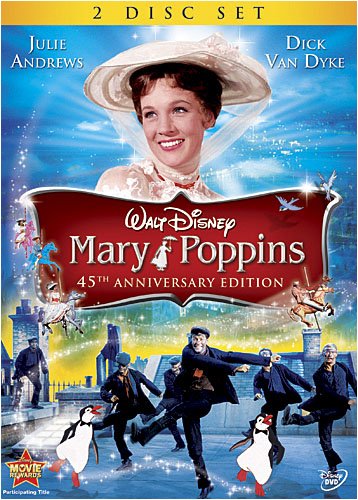
Mary Poppins was the subject of a series of books by P.L. Travers. Long before Harry Potter came on the scene, Mary was delighting children all over the world with her spectacular magical abilities. At the time Walt Disney was making a name for himself and his studio by bringing many of the children’s classics to the big screen. From fairy tales to Winnie The Pooh, the studio was providing the look and the soundtrack to the imaginative worlds already known and beloved by millions. It was a magnificent strategy, and it would pay off huge for the company. The problem with Mary Poppins was that it needed to be a live action film. Mary and her pals needed to appear as real people. The worlds themselves could be animated, of course, but Mary and Bert and the children had to be real. Walt insisted upon it. And so a painstaking effort was begun to bring the story to life on screen in a way no film had yet done before. The results were as magical as Mary herself and have captivated children of all ages ever since.
In the 1960’s Walt Disney was the center of some of the most groundbreaking f/x technology in Hollywood. Disney was that era’s Industrial Light & Magic. Even films not produced by the Mouse Factory went to their f/x wizards for their high end work. Films like Forbidden Planet made use of the Disney magic for a few of their trickier sequences. Mary Poppins is a wonderful example of the magic that Disney was capable of at the time. The film is a wonderful blend of live action and hand drawn animation work. The two worlds interface seamlessly even by today’s standards.