DVD

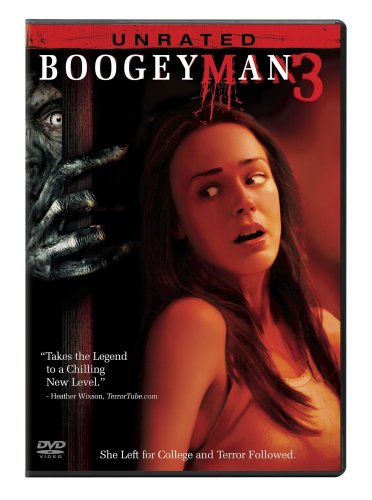
I have to admit that I’m usually very wary of direct to video sequels to films that weren’t exactly box office smash material to begin with. The original film was a typical and predictable mess of a film that didn’t even make use of a better than average cast for this kind of film. It took me by surprise when Boogeyman 2 came out, but I’m a glutton for punishment, so I rented the title mostly because it had Saw franchise star Tobin Bell in it. I ended up halfway liking the feature, and considerably more than the original film. When I saw the chance to review the third entry, I wanted to see if the DVD franchise was heading forward or backwards. Boy, was I pleased to find out that the answer is both.

Audrey (Sanderson) is the daughter of Dr. Allen (Bell) from the second film. She’s trying to deal with his death when she happens upon his journal. There she reads about the Boogeyman and his need for people to believe in him, which gives him power. So what does she do? She tries to get people to believe that it was he who killed the victims of the second film. She gets killed in an apparent suicide, but her roommate and best friend Sarah (Cahill) witnesses the event and is the only one to know it was the Boogeyman who killed her. Of course, she also comes across Dr. Allen’s journal and picks up where Audrey left off. As her friends begin disappearing and she has strange visions of the creature, she begins to understand that she is pretty much to blame. By using her spot on the campus radio station to spread the fear, she ends up feeding the beast. She attempts a noble self sacrifice in the end.

Paramount has decided to standardize their DVD releases. This goes from everything to the DVD disc art, which is now just a two tone silver on all releases, to the cases. The new cases are a mixed deal. You get 6 discs inside of a single DVD space. That’s the good news. The bad news is that the disc holders are quite brittle and end up chipping and breaking. You save space but ultimately endanger the discs themselves. I hope someone at Paramount takes a look at the packaging and comes up with something a little better. There will also be some inconsistancy with your older sets, and because the final season was already released out of order your middle sets will look out of place. If you’re even a little OCD, you are not going to like the changes.

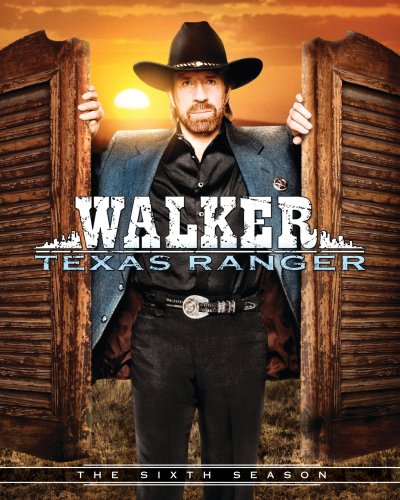
There was a new Cowboy in Dallas, and he wasn’t throwing touchdown passes. But Walker was almost gone before he could really get started. After just four episodes the show’s production company suffered financial collapse, and the show was rescued at the last minute by CBS Productions, who would continue to run the show for its nearly decade-long run. For nine years Norris brought us the ultimate Texas Ranger in a formula cops and robbers show. The show often became a parody of itself, but maintained a solid viewer ship throughout. Hell, Norris even sings the theme song. Truthfully, what started as a one man show (it was originally called Chuck Norris Is Walker, Texas Ranger) became a good working ensemble that probably kept the train going for so long. Walker (Norris) is a tough guy Texas Ranger. He is partnered with Sydney Cooke (Peebles) and Jimmy Trivetti (Gilyard) who’s an ex-jock with a brain. Walker had a love interest and eventual wife in the local assistant district attorney Alex Cahill (later Walker). Together they fight the evils that come to the high plains of Texas armed with their fists, six-shooters, and Stetsons. After starting with the final season, CBS is finally halfway through the series back from the beginning.

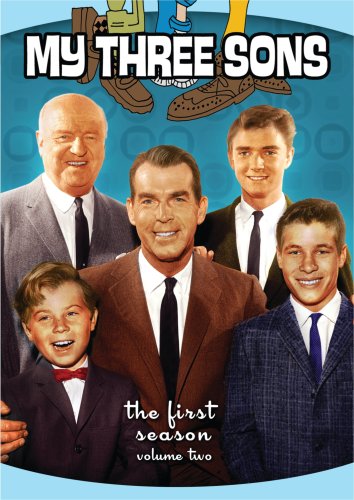
Just to look at it you would think that My 3 Sons was a Disney production. Its star Fred MacMurray had appeared in many Disney films of the 50’s and 60’s and is most likely recognizable from those appearances. Two of the three boys were also known for work with Disney. The eldest boy, Mike, was played by Tim Considine, who starred with MacMurray in Disney’s The Shaggy Dog. Middle son Robbie was played by a former Mickey Mouse Club Mouseketeer, Don Grady. The youngest son, Chip, was played by Stanley Livingston, the only non Disney alum in that group. Another reason for the confusion is the decidedly Disney-like material the series covered. Steve Douglas (MacMurray) was a widowed single parent who was trying to balance his job with that of raising his three sons. Most of the stories involved the warm and fuzzy heartwarming stuff that Disney had pretty much cornered the market on in the films. Whatever troubles arose, no problem was so bad that a heart to heart talk couldn’t fix it. The style would prosper and continue in the form of 70’s shows like The Brady Bunch. The four guys were also joined by Steve’s father-in-law, Bud, played by I Love Lucy favorite William Frawley. That was no surprise, since the show was actually produced, not by Disney, but the Desilu studios.

My 3 Sons was for some time the second longest running sit-com on television. It lasted from 1960 until 1972. The series would undergo major changes as the boys each grew older and eventually married and led their own lives. Frawley would also become very ill after 5 years and leave the show. His replacement, William Demarest as Uncle Charley, is likely better known in the show. The syndicated version of the show often ignored these early black and white versions of the series, opting for the later color ones that featured the Uncle Charley character. It’s very likely you’ve never seen these early episodes as they appeared infrequently in the syndicated markets. The theme from Frank DeVol became pretty popular in the mid 60’s and even entered the pop charts at one time. The show also originally ran on ABC, but moved to CBS in 1965, also accounting for the different syndication packages. It was during that move that many of these big changes occurred.

“It’s not about monsters, or zombies, or vampires. It’s about kids.”

One of the horror trends going around involves the isolation of a young couple who find themselves suddenly terrified. The pursuer can be a creature or undead vengeful spirit, but more often than not the attacker is very much human. The location can be a desert or even a hotel room as it was in one of the better examples of the subgenre, Vacancy with Kate Beckinsale and Luke Fox. Many of these kinds of films have become far too predictable and, dare we say, boring. They rely totally on jump scene scares and a few gallons of gore. So, when Britain got into the act, I admit I was bracing myself for more of the same. Happily, Eden Lake is a standout film. Its quality took me totally by surprise, but everything about this film was pretty well done. Of course all of the cliché moments are there, but if you check out Eden Lake you’re in for an entertaining, if not disturbing, ride.

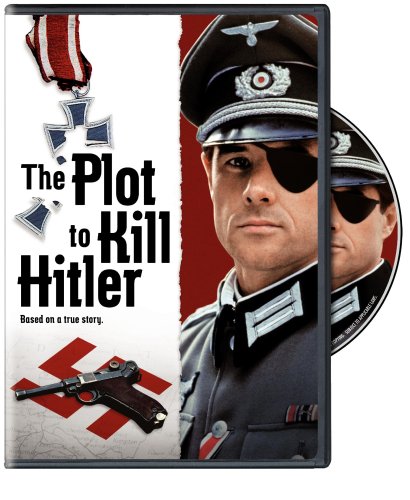
“As the end of World War II drew near, Hitler’s Germany was not only waging a war on separate fronts but from within the Third Reich. This story is based on actual events.”

If any of that sounds familiar, it should. It’s the plot and historical source for Tom Cruise’s latest big budget film, Valkyrie. One can’t help but wonder if this 1990 made for television film would ever see the light of a DVD release if not for the hype surrounding the Cruise film. Likely it would have remained in the vaults somewhere, an obscure film about a long obscure historical event.

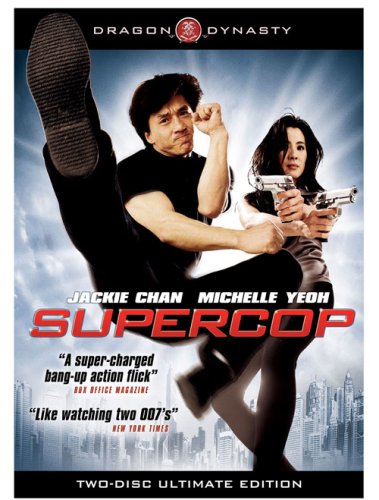
Supercop is really just the American title for the third entry in Jackie Chan’s very popular Police Story series in Hong Kong. For the first time in the franchise, Chan decided to go with an outside director, and he made a wise choice with newcomer Stanley Tong. Tong might have been a green director, but he had a natural feel for the abilities and strengths of his mega-star. The two would go on to collaborate on several more films after this rather remarkable first time pairing. It didn’t hurt that Tong not only had Jackie Chan to draw upon for the film, but he also had Chan’s Hong Kong film female equivalent with the talented Michelle Yeoh. Both stars are accomplished martial artists and perform nearly all of their stunts without the use of doubles. Tong’s task here was to allow his stars to “do their thing”, yet bring something new and fresh to the formula of Police Story, and to a certain degree all of the Jackie Chan films. He succeeded on all accounts, and Supercop is easily the best of the Chan Police Story films. The two would also team up for one of Chan’s most popular films, Rumble In The Bronx. While I’ve not seen anywhere near all of Chan’s Hong Kong outings, this is high and away the best that I’ve seen from that market.

Jackie Chan once again stars as police inspector Chan. When he overhears his superiors talking about a dangerous mission in need of a “supercop”, Chan volunteers for the task. Of course, he has to convince his girl that the month long job is going to be easy and safe, all the while giving her his life insurance policy and bank book records. Chan’s job is to pretend to break the infamous Panther (Wah) out of State custody and infiltrate the organization. He is briefed and trained by INTERPOL Inspector Jessica Yang (Yeoh). Once he’s ready the breakout commences, but the military guarding the prisoner aren’t in on the gag. After dodging bullets and missiles, Chan gets Panther safely away. Now the gang wants to meet with their contact in a local town that just so happens to be Chan’s cover story hometown. This is where his family is supposed to be. The only trouble is that Chan’s never been there before. INTERPOL sets up a fake group of family and friends, and it’s amusing to watch Chan try and fake his way about knowing these people when he’s not even sure who they are each even playing. Chan has a particular problem when he’s introduced to his “sister” played by Yang. The two follow the gang through various government operations to recapture him. Finally they’re in it for the meet and payoff, but Chan’s cover gets blown by a chance meeting with his girl, May (Cheung). Now it’s as much a matter of survival as of bringing down the bad guys.

The second season of Matlock brought some change to the series. Matlock’s daughter was written out of the series when Purl left the series after the first season. In the 2 hour opening episode of the second season Matlock meets Nancy Stafford (Thomas) in London when he goes there for a case. The episode was filmed on location and marked a spectacular return for the sophomore series. The Stafford character filled in for Matlock’s now departed daughter to become his new junior partner. CBS also tried a little gadgetry in this season. With the episode The Hucksters, callers were invited to call one of three special numbers to select who they wanted the killer to be. The ending was then used that corresponded to the callers’ request. In this release you get a choice of all three actually filmed endings. They are actually identical, with only the “big reveal” having changed.

Imagine Sheriff Andy Taylor older and now an attorney, and you pretty much have the set up for Matlock. Forget for a second that both characters were played by Andy Griffith. That’s not all they have in common. Matlock is every bit the “southern gentleman” that Taylor was. He might be a little smarter, but he walks and talks like Andy Taylor.

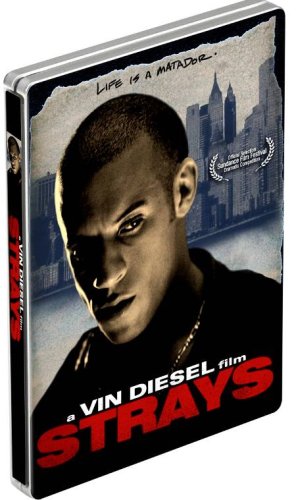
In the review business, we often get films that we find to be distasteful or just plain rubbish. This is especially true when we receive a popular star’s directorial debut. Usually it is an egotistical pompous piece with no merit outside to try to drive the idea home that the actor is a well-rounded individual. However, once in a while we get a film that was directed by an established star that actually gave birth to his career. This is a self-promotional piece that got the world to know the person’s name. The name of this person I speak of? That would be Vin Diesel. The movie is called Strays.

Rick (played by Vin Diesel) is trying to change. He is a drug dealer by day and by night he is finding his next female conquest. However, he knows that there is more out there in the world and would like to have a healthy and real relationship with a woman. He has three friends: Fred (played by Joey Dedio), Mike (played by Mike Epps), and Tony (played by F. Valentino Morales). They call themselves: ‘Strays’. They are strays because they didn’t have a father growing up and were lacking in a traditional family structure.

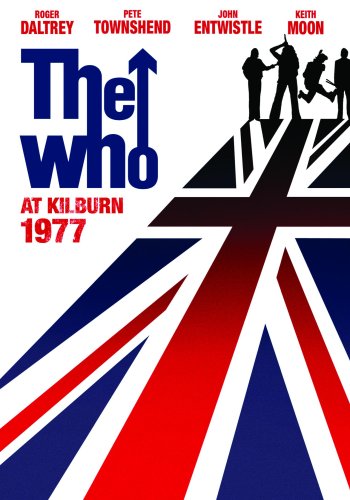
“On 15 December, 1977, after a hiatus of over a year, The Who assembled at Gaumont State Theater in Kilburn, North London, to record a concert for Jeff Stein’s documentary film, The Kids Are Alright. Shot before a select invited audience it would turn out to be Keith Moon’s last, but one live performance. Unusual for live rock at the time, it was shot on 35mm film by six cameras and professionally recorded on a 16 track recorder. Never seen before, the film rested in The Who’s vault for 30 years.”

What young 1970’s pup, learning to play a guitar for the first time, didn’t, at one time or another, attempt to imitate Pete Townsend’s windmill power chord strum? I count myself in that group. While I was not a very dedicated Who fan, I had an appreciation for the musicianship. There were still songs like Pinball Wizard and Behind Blue Eyes that I would embrace as if they were my own anthems in those days. It would be hard to deny that The Who is one of the most successful rock bands in history. Part of the original British Invasion of the 1960’s, there are few such acts that are even still around, let alone able to fill the huge stadiums and halls of Rock’s yesteryears. Their songs have become anthems, and their antics have become legend. The band wrote the soundtrack for an entire generation, and proudly touted the fact in aptly named song, My Generation. Banned from all Holiday Inns at one time for their well publicized trashing of rooms, they weren’t any easier on their own instruments. Smashing their instruments and amps on stage became a staple, for a while, of the whole Who experience. They’ve inspired a legion of superstars, and now after more than 40 years of rocking, they soldier on. Their influence goes beyond just rock music. All three of the CSI franchise shows sport Who songs for their opening credit sequences. They’ve been lampooned on South Park and The Simpsons. They were once referred to as The Band That Wouldn’t Go Away, and that was more than 30 years ago.

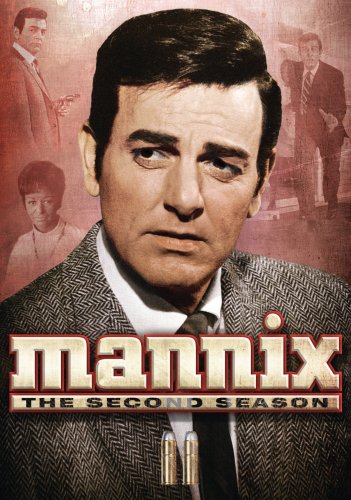
The show was created by the team of Link and Levinson, who later gave us the detective in the rumpled raincoat, Columbo. It was groundbreaking in so many areas. While it might not be remembered today as one of the top detective shows, there can be no argument about the impact Mannix had on the genre. A decade later one of my favorite television detectives, Jim Rockford, would borrow rather heavily from Mannix. Like Rockford, Mannix was getting beat up a lot. They both had the same sense of style, wearing rather ugly sports jackets. Neither was afraid to bend the rules, or the law, when necessary. Again like Rockford, Mannix often falls for the wrong girl at the wrong time. Mannix was good with a gun and equally adept with his fists. The show received a ton of controversy from the start for the amount of violence it employed. Tame by today’s standards, Mannix was quite aggressive for its time. The joke was that the show’s producers mandated a fight or car chase every 15 minutes whether it was needed or not. I’m sure that wasn’t true, but nonetheless the show opened the floodgates for the detective shows that followed. In this first season, Mannix worked for the enigmatic detective agency, Intertect. They supplied him with the latest in modern technology and with his cases. His main company contact was Lou Wickersham, played by Joseph Campanella. Now Mannix is on his own and begins to resemble more and more these detectives that would eventually follow in his tire tracks.

Season 2 sees a lot of changes for Mannix. He has left Intertect, and gone now is friend and boss played by Campanella. Papa Brady, Robert Reed, joins the show as a police contact for Mannix, Lt. Tobias. Ward Wood played another police contact, Lt. Malcolm. Gail Fisher would join the cast as his faithful secretary and confidant, Peggy Fair. There are a lot of parallels between Peggy Fair and Perry Mason’s Della. Both were completely loyal and were instrumental sounding boards. Campanella showed up a few times in this season but was eventually completely gone from the series. Mannix relied more on his fists and his gun now than he did his brains, and the show became more of an action show than it had been.