DVD

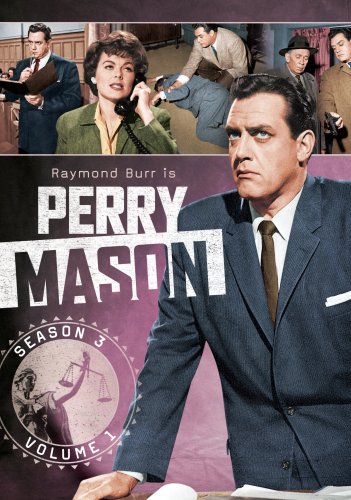
There was some speculation from folks out there, myself included, that Paramount might be backing away from future releases of the popular legal show. This was sparked by a 50th anniversary release that did included episodes from the 3rd season onward, making it look like a catch-all effort. It was loaded with extras, which these collections have not been. I’m happy to report that, at least for now, these sets appear slated to continue. With the first half of the 3rd season Perry Mason continues, unfortunately in these double grab half sets.


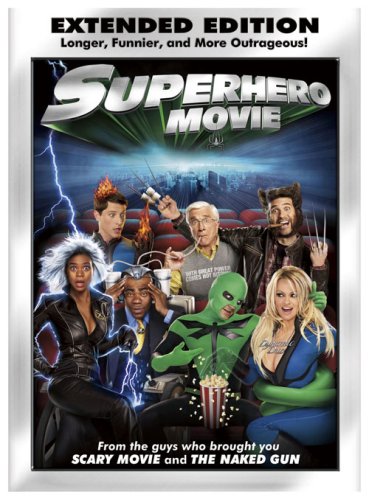
In recent years, there has been only one group of parody movies that were considered really good. The Scary Movies. Started off by the Wayans Brothers, the first two movies were very mature but also very funny. The third & fourth films were taken over by David Zucker who did a fine job of making it more family friendly while keeping the zany humor. In September of 07, production started on a spoof movie that went after Superhero movies. David Zucker took on the producer role while Craig Mazin stepped into the writer/director chair. Craig had also worked in the third & fourth installments of Scary Movie and was obviously talented. The question remained. Was this act tired or did it still have some life to produce a quality spoof film?

Rick Riker (played by Drake Bell) is just your average high school student. He has a best friend, Trey (played by Kevin Hart). He has a crush on the most popular girl in school, Jill Johnson (played by Sara Paxton). But things go wrong for Rick Riker when he is suddenly bitten on the neck by a genetically-altered dragonfly during a scientific field trip (darn that H2O9). He gains super human reflexes and armored skin (akin to Spiderman). He shows his powers to his best friend, Trey and his Uncle Albert (played by Leslie Nielsen). He then decides to use his powers for good and dawns the mask of “The Dragonfly”.

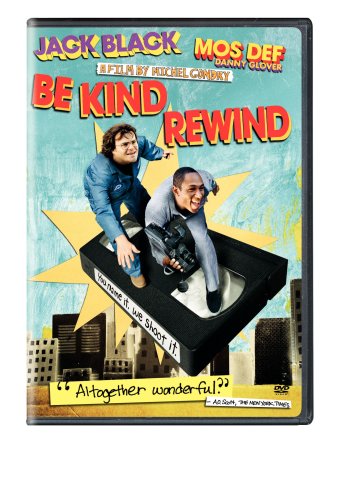
My earliest recollection of VCR’s was when I was just a little boy and my parents went down to the local TV shop and purchased a Zenith for about $600. At the time, it was a wondrous machine and I can still remember fondly my copies of Ghostbusters or Die Hard and how many times I would watch them. I didn’t care whether the tapes had a case or which edition of the tape I had. As long as it was the original movie and the tape wasn’t beat to heck I was a happy camper. Times change. I don’t think I own a single VHS tape that isn’t exercise related and my dvds, more than 400 of them are cataloged and cared for to the utmost degree. In truth, I sometimes miss the VHS days when things were simpler & films sold on the film alone, not on how many extras the dvd has or how fantastic the Dolby Digital 5.1 sound is. Be Kind Rewind goes back to that simpler time and gives a movie that is more about substance than the tiny snap case it comes contained in.

Fletcher (played by Danny Glover) owns a VHS rental store called Be Kind Rewind on a corner lot in Passaic, New Jersey. The place has history claiming that legendary jazz musician, Fats Waller was born in the very store. But business has been in decline and now town officials wish to demolish the building and replace it with a new complex. However, they give Fletcher the chance to bring the place up to code. Fletcher decides to research a more successful DVD store and see what makes it tick. He leaves the store in the hands of his best (and only) employee Mike (played by Mos Def). On the train, Fletcher leaves Mike one last note scribbled backwards on the glass that reads “Keep Jerry Out”. Mike can’t decipher the message as the train speeds away.

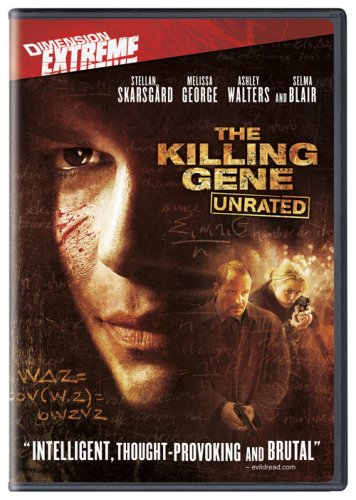
What is love worth? How much pain would you endure before you would murder someone you loved to end it? In The Killing Gene our serial killer seeks these answers, reducing it all down to an algebraic equation. The film is actually the American DVD release titles for the British film WAZ or W Δ Z depending on the source. This title refers to the killers equation which translates to roughly W Δ Z = COV. It’s a rather odd indy looking piece, filmed in Belfast (doubling for the streets of New York) with a mostly British cast and crew.


Can animals actually talk to humans? Can we understand each other enough to consider it communication? Heck. You don’t need to watch some show on television to answer that question. I can do it for you right here and now. I’m Athena. I’m Gino’s 13 year old Siberian Husky, and Gino’s letting me communicate with you so that I can tell you what I thought about When Animals Talk. I’m here to tell you that we can talk pretty good. We also understand a lot of your human words as well. My favorite are words like Belly Rub, and Want. If you have a dog of your own, you already know how to communicate. And that spells T R E A T. I don’t know so much about other kinds of animals so I watched this DVD that Gino got, and here’s what I thought:


Gary Gilmore is most known not for the people he killed so much as for the way that he died. As killers go, Gilmore wasn’t even a serial killer by definition. He was responsible for two deaths, both in the commission of a crime. We remember Gilmore mostly because he fought to be executed at a time the United States Supreme Court had stricken down our nation’s death penalty laws in a landmark decision, Furman vs. Georgia. Most people think that decision declared capital punishment as cruel and unusual. What it actually did was declare the procedures for assigning the death penalty as “fundamentally unfair”. At the time Gilmore was apprehended, death penalty laws had been rewritten to comply with the Supreme Court’s concerns and capital punishment was already well on its way to returning to the American justice landscape. States were being cautious and moving slowly. No one wanted to be that first test case so, while the penalty was back on the books, no state was yet willing to wade into the murky waters of actual executions. Then along came Gary Gilmore, who decided he wanted to be executed. His legal maneuverings and successful bid to be executed tolled an ominous sound on death rows across the country. Executions were back in form, and everybody knew who to blame: Gary Gilmore.


I often have trouble believing that South Park has been around for as long as it has. It’s not just the passing of 11 years but the sheer brilliance in the face of an increasingly politically correct society. It’s like watching old episodes of All In The Family. Who believes that Archie Bunker would have any chance of survival in the 21st Century? It’s no wonder that Norman Lear has become involved in the series. It’s the last remaining vestige of a once great freedom to be ridiculous and offend. Eric Cartman’s a lot worse than Archie ever was. We always knew that, in his heart, Archie had a soul. Cartman’s a psychopath without a conscience, and in a civilized society we would be terrified of the existence of such a demon spawn…except he’s just so dang funny. Trey Parker and Matt Stone have been walking a tightrope for over 11 years now, and it just doesn’t get old.


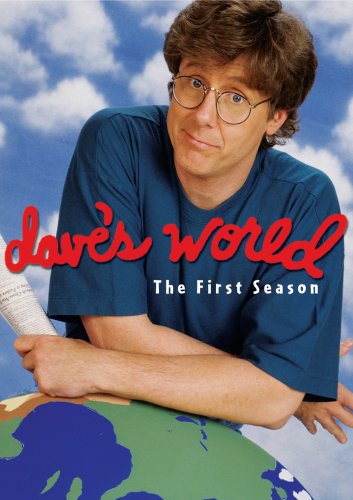
The first season release of Dave’s World is going to upset the show’s fans a bit. Paramount has decided to change the opening theme from Billy Joel’s “You May Be Right” to some jazzy piece that doesn’t come close to saying the same thing. This wasn’t even Joel’s performance of the song we’re talking about on the original. I know that the musical rights issues can be a problem. Shows like WKRP suffered from being loaded with songs and racking up a fortune in royalties for home video release. Most of these shows were aired in the days before anyone even knew there was going to be a home market for these programs. But I still don’t understand this one. It’s the show’s theme song and an important part of the show’s look and feel. We’re not simply replacing incidental music or songs that take up significant portions of the show. I think it was a bad move, and I’d be very curious as to just how much money Paramount saved by replacing the song. Average that number out over the set’s sales figures, then find out if the fans would have been willing to pay the difference.

I was first introduced into the somewhat twisted world of Dave Barry in 1986 when I moved to Florida. The Tampa paper carried his Sunday column, and all I can remember is that it had something to do with dinosaurs on the beach and that I couldn’t stop laughing. For years afterward both my wife and I made the column regular Sunday reading. As years went on other things fill one’s life, and I only occasionally read the material until he disappeared almost completely from the Central Florida scene, keeping more to himself some 250 miles to our south. He’s since spent a lot of time playing in a writer’s band with the likes of Stephen King. So, I was pretty eager when Dave’s World first came to television in 1993. To say I was disappointed wouldn’t exactly be fair. The show was pretty funny, but Harry Anderson was so ingrained in my mind from his Night Court role that I never did accept him as Dave Barry. Once I was able to separate the character from the writer, the show was a little better going for me.

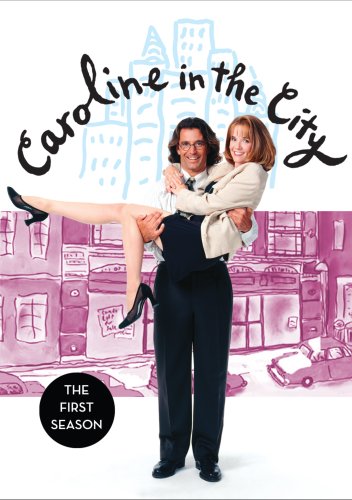
While nowhere does anyone actually say it, Caroline In The City is obviously inspired by/ripped off from the popular newspaper comic strip Cathy. Each episode, for a time anyway, would begin with an animated scene from one of the “Caroline” strips. The topic mostly deals with the pitfalls of being a single New York City girl. From these roots there was an often awkward attempt to create a warm and fuzzy romantic comedy that never seemed to find its own focus, let alone footing. It didn’t help matters that the title character was played by Lea Thompson, best known for her role as Michael J. Fox’s mom in the Back To The Future films. Here as she was there, Thompson is relatively unemoting, a tragic flaw in a romantic character. She’s a good enough actress, but she does appear to be missing charisma in the role. Caroline was joined by her comic strip colorist, Richard, played by Malcolm Gets. Here again we have a pretty reserved actor. Now we’ve got a couple of very low key actors playing a couple where sparks should be flying, and it never works. Most of the laughs, in fact, don’t even come from our leads. Instead Amy Pietz has most of the funny lines as intrusive next door neighbor Annie. Annie’s a cast member in the then huge Broadway production of Cats. She would often barge into the apartment where Caroline and Richard are working/sniping at each other and offer the comic relief in this situation comedy.


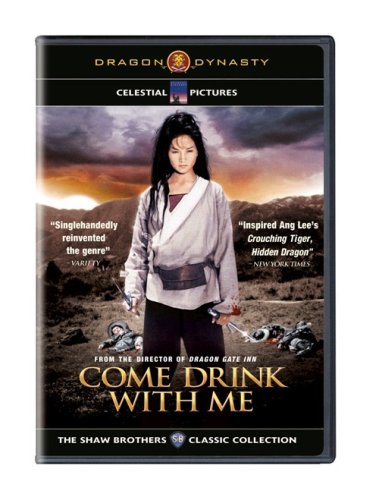
There's much ado on the case's copy that this was a major inspiration for Crouching Tiger, Hidden Dragon, and the similarities are hard to miss. Like Ang Lee's film, this 1966 effort is a lush period piece with gorgeous, rich colours and elaborate wire work. And, as in the later film, the central character is a female warrior, in this case an officer of the law sent to rescue a kidnapped victim from a clan of ruthless (but not always terribly bright) bandits. There’s a male aid here, too, in the form of an apparent drunken bum who is, of course, in reality a martial arts master.


There is a lot of pleasure to be had here, and the film has considerable charm, though some viewers might be put off by the sometimes jarring juxtaposition of silly, knockabout comedy and harsh violence. Modern viewers might also be a bit disappointed in the fight scenes, which don’t have the grace of the later movie, and they can also be very brief. Nonetheless, a good time at the flicks.