Posted in: Disc Reviews by David Annandale on July 29th, 2008
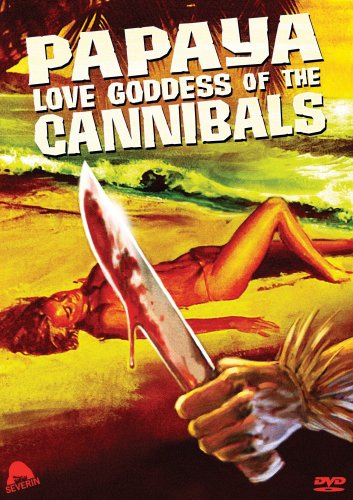
Severin continues their serious play to be the go-to company for Eurosleaze with this, one of Joe D’Amato’s better efforts. We first meet Papaya (Melissa Chimenti) as she luxuriates on the beach, makes love with a fellow in a cabana – and then orally castrates him, whereupon she walks away as two minions torch the cabana. Fantasy Island, this ain’t. The action then shifts to Sara (Sirpa Lane of The Beast fame), a journalist we first see revelling in a cock fight. She hooks up with Vincent (Maurice Poli), a nuclear power executive with whom she has had a casual fling before. The two of them are drawn into Papaya’s web of sex and blood ritual. She is, in fact, part of a political group fighting back against the power company’s expropriations and pollution by any means necessary.

Obviously, not your usual softcore romp, and a rather more interesting storyline than most of D’Amato’s Black Emanuelle series. The characters are still utterly without affect, which casts a vaguely surreal miasma over the proceedings. The sex scenes are pretty risible, but the film actually becomes quite watchable despite these scenes being its primary reason for being. D’Amato’s heightened interest turns up in the editing, in the careful creation of atmosphere, and most of all in the no-punches-pulled working out of the film’s ideas. Papaya raises, if rather clumsily, some hard questions about the nature of exoticism and the justifications for violence. Believe it or not, this is one to think about and discuss.
Posted in: Disc Reviews by Gino Sassani on July 26th, 2008
Welcome to Gino’s school of film art. Today I’m going to teach you how to make a modern art film. You know the kind. The type of film that no one really likes, but a lot of folks pretend to like because they think it makes them look cool. Just think how cool you’ll look when you can make one of those pretentious pieces of crap and watch phony critics go on and on about how brilliant it was. Meanwhile you laugh your behind off and cash in on the phony baloney. You might even grab yourself a film festival award, which along with $5 will get you a coffee at Starbucks. Follow these quick and easy steps and pretty soon you’ll be the talk of the town…
Posted in: Disc Reviews by David Annandale on July 25th, 2008
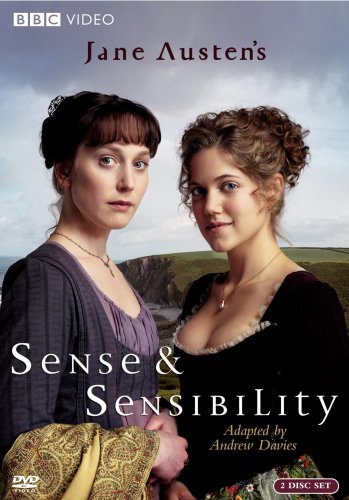
This BBC mini-series has the unenviable task of winning over audiences very likely familiar with Ang Lee and Emma Thompson’s excellent theatrical adaptation of the Jane Austen novel. And the opening scene might very alarm many a viewer: the rather steamy seduction on display does not, at first blush, seem to fit in to the comedy of manners one is expecting. The post-credit sequence is also rather more gothically melodramatic than one might anticipate (or hope for). Thereafter, however, the series settles into a tone more befitting Austen. The script is by Andrew Davies, easily one of the best scribes British television has to offer. He has graced us with contemporary pieces such as a version of Othello set amidst the members of the London Metropolitan Police and the House of Cards trilogy (an adaptation that is superior to its source material), as well as superb period adaptations (Middlemarch, for example). Here, his acid wit finds kindred spirit in Austen, and the result is very fine indeed.
Audio
Posted in: Disc Reviews by Gino Sassani on July 23rd, 2008
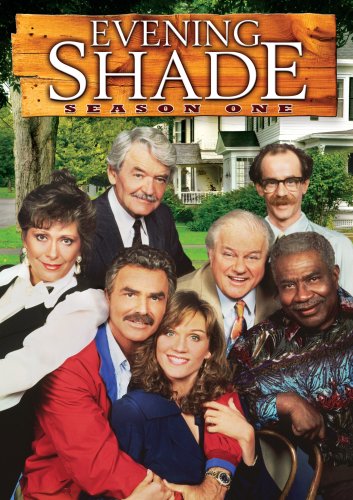
Think of it as Coach meets Newhart. That’s about the best way I know how to describe this somewhat quirky sitcom from CBS. It was mostly intended as a television project for its star, Burt Reynolds. The character would echo Reynolds’ own life somewhat. His character, Wood Newton, was a running back who had moderate success, just as Reynolds himself had. In the show he retired to his rural hometown of Evening Shade. He ends up coaching the local high school football squad which had a propensity for getting blown out in their games. The show was filled with the usual small town hick kind of characters, most notably the show’s narrator and owner of the local barbecue joint, Ponder Blue (Davis). Wood’s family consisted of his wife, Ava (Henner) who was much younger than Wood was. She was a young attorney who gets elected the town’s prosecuting attorney. There was a ton of comedic material to be found in his rather dimwitted intelligence and her more formal education. In this first season she was pregnant with their third child. Wood’s dad was played by Hal Holbrook, and he owned the local newspaper. Wood’s assistant coach was Harlan Elldridge, played by Charles Durning. Eldridge was really a math teacher and pretty much a geek, which offered plenty of comedy fodder for Reynolds. The relationship was very much like that of Craig Nelson and Jerry Van Dyke on Coach.
Posted in: Disc Reviews by Gino Sassani on July 23rd, 2008
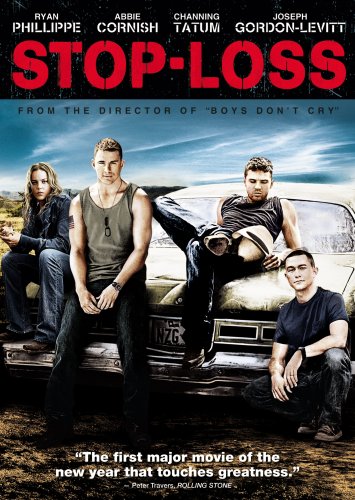
It should not have come as such a surprise to me what Stop-Loss really is. It presents itself as this generation’s Deer Hunter, but it’s actually just another mindless film that, once stripped down to its essentials, is intended only to further a blatant political agenda. I keep hearing that the film is intended to honor our troops, but it presents all of them as mentally messed up idiots who are a hair away from committing crime sprees akin to Natural Born Killers. The aforementioned Deer Hunter also offered up a bleak image of the mental health of vets returning from war, but centered on a particular case. I have no doubt that war affects everyone who participates, but I’ve known returning soldiers who did manage to cope.
Posted in: Disc Reviews by Archive Authors on July 21st, 2008
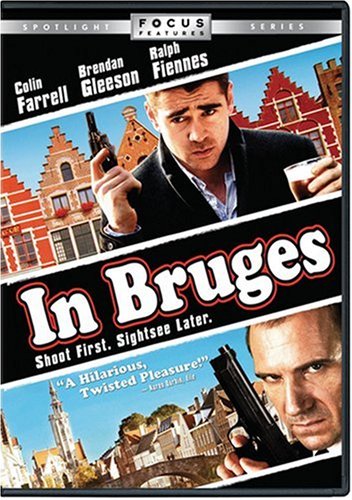
According to Wikipedia, Bruges is the capital of Belgium and home to the college of Europe. Much of the architecture from the 12th and 13th centuries is in good shape and preserved fairly well. The Church of Our Lady is one of the tallest brick buildings in the world. The Basilica of the Holy Blood purports to be a church that houses some blood from Christ. It also serves as the backdrop for a couple of hitmen who have to find comfort in the town for awhile in the film set in Bruges, called In Bruges.
The film was written and directed by Martin McDonagh, whose previous work was in the Oscar-winning short film Shooter. Ray (Colin Farrell, The Recruit) and Ken (Brendan Gleeson, Kingdom of Heaven) are forced to stay in the town for two weeks, after an assassination assignment given to Ray turns particularly brutal. The two look at this presumed exile in two different ways; Ray thinks of it as purgatory; he loves the lifestyle of London and access to anything he wishes. Ken rather enjoys it. He views it as an opportunity to enjoy a place he’s never been before. The nuances of Bruges are also memorable; aside from a little person in a movie and a drug dealing local named Chloe (Clemence Poesy, Harry Potter and the Goblet of Fire), the film is chock full of hilarity and hijinks. When Ken and Ray’s boss Harry (Ralph Fiennes, Schindler’s List) comes to meet with the boys, things take a bit of a dramatic turn.
Posted in: Disc Reviews by Michael Durr on July 19th, 2008
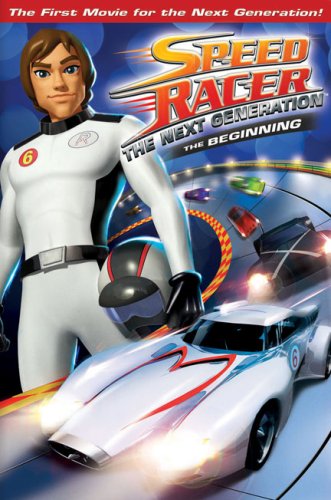
To be bloody honest, I was never a huge fan of Speed Racer. Actually I spent most half hours watching the cartoon (in college) poking fun at it and wondering how many drinking games could be compiled by just analyzing various components. It was a serious cartoon with some brief comedic relief that did not come off as funny, what was funny was all of the seriousness of driving the Mach 5 and figuring out who this Racer X character was (it was Speed's Older Brother, sorry if I spoiled it). Anyhow, it's 2008. Speed Racer has experienced a resurgence including a movie and a new cartoon series. The movie hasn't done very well but many times the cartoon can be the saving grace. It was supposed to follow a new Speed, with a mysterious past. Ooooo, well as long as no Chim-Chim or Spritle is around, we'll be okay.
In the not too distant future, a hopeful racer who goes by the name of Speed wants to attend the Racer Academy founded by the original Racer bunch. However he knows nothing of his past and finds that his name & lack of friends is a source of much teasing and criticism as he tries to ascend to the top of his class. There are other major players such as Headmaster Spritle (he grew up? I thought he would have gotten run over by the Mach 5 by now), X who is Speed Racer's son and X's girlfriend Annalise, both of which try to thwart the young Speed. Annalise's father, Zile Zazic is the main funder for the school and serves as the evil mastermind and antagonist to Speedy.
Posted in: Disc Reviews by Michael Durr on July 19th, 2008
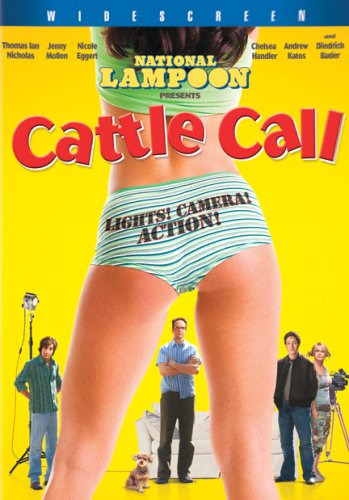
The movies of National Lampoon haven't always had the best track record. On on the good side, we have Christmas Vacation, Van Wilder or European Vacation (Chevy Chase is gold after all). On the bad side we have movies like Senior Trip, Dorm Daze, or Dorm Daze 2 (Wretchedness has sequels?) But every once in a while, you can take a bad movie and suddenly realize that you are holding something that is worse than any National Lampoon movie to date (I don't care what anybody says but Loaded Weapon wasn't half bad). A movie so bad, that even Jonathan Winters or Diedrich Bader could not save it.
Richie (played by Thomas Ian Nicholas) doesn't have the greatest luck in love. His best friend, Sherman (played by Andrew Katos) wants to bed as many chicks as possible regardless of the fallout that might occur. They hatch an idea that involves taking discarded casting call pictures and actually having their own casting call to find their perfect soulmate (or in Sherman's case, just a hot chick or several). However, they have to impersonate having a real film in place before they get any real girls to fall to their claim. They also need an office and resources. They decide to include their friend Glenn (played by Diedrich Bader) who has the office space and resources to make it happen.
Posted in: Disc Reviews by David Annandale on July 16th, 2008
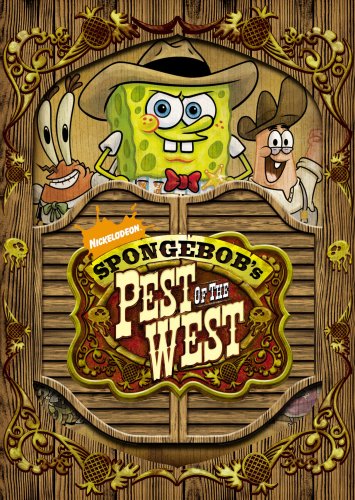
If it's Wednesday, that must mean another batch of SpongeBob cartoons. The lead-off here is the is title episode, a 22-minute piece that recounts the adventures of SpongeBuck SquarePants, our hero's 19th-Century ancestor. The rest of the episodes are an eclectic bunch, and the thematic consistency is less than that of some other collections (there is a vague adventure link that runs through several of the stories). At any rate, the silliness is just as engaging and bizarre as ever, and there are plenty of quick absurdist sight gags to keep you chuckling.
Audio
Posted in: Disc Reviews by David Annandale on July 15th, 2008
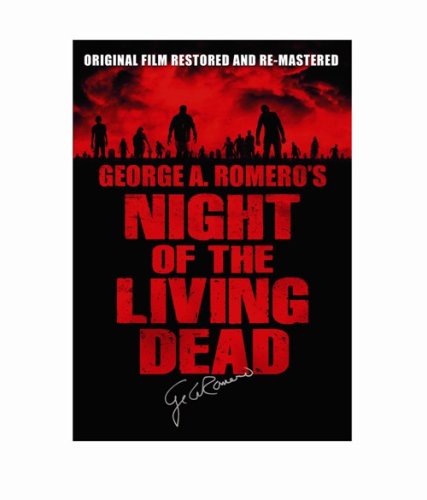
Some years back, I reviewed Elite's Millennium Edition of the NOTLD. That was certainly the most definitive edition at that time. So now we have another deluxe edition. How does it stack up? Before we get to that, a few (largely unnecessary) words about the film. There's a blurb on the box that calls this “the most influential horror film since Psycho,” and there is a great deal of truth to that. As has been pointed out before, the film single-handedly transformed the mythology of the zombie, changing the monster from mindless slave to flesh-eating ghoul. I can't think of any other instance where a mythology was changed so completely and with such finality. And there are plenty of reasons why it had such impact. Sure, there's the gore. And while the intestine-gobbling was pretty intense for 1968, H.G. Lewis had been pumping out gore films just as (if not more) excessive for half a decade. Unlike Lewis' films, George Romero's picture is extremely well made. The pace is lightning-fast (we have our heroine pursued by a zombie less than ten minutes into the film); the cinematography is imaginative, with plenty of energetic editing and lively camera work; and the lighting is dramatic exercise in stark high contrast. I haven't even mentioned the intelligence of the script. So let's just place this among the greatest horror films ever made and leave it at that.
Audio