DVD

Erle Stanley Gardner wrote crime fiction, and while many of his 100 or so works are unknown to most of us, he created a character that has become as identified with criminal lawyers as any other in fiction. It was in these crime novels that Perry Mason first faced a courtroom. He developed a style where he would investigate these terrible crimes his clients were on trial for. He would find the real killer, and in what has become a Hollywood cliché, reveal his findings in a crucial moment during the trial. While we may not remember the novels, we all remember the man in the persona of Raymond Burr.  Burr had a commanding presence on our screens and enjoyed a well deserved 11 year run as the clever lawyer. What makes this run so amazing is that the show followed pretty much the same pattern the entire time. We always know what’s going to happen, but we wait eagerly for that gotcha moment when Perry faces the witness on the stand. We know when he’s got the guy squarely in his sights, and we can’t sit still waiting for him to pull the trigger. OK. So, maybe that’s a little over the top, but so was Perry Mason. From the moment you heard that distinctive theme, the stage was set. To say that Perry Mason defined the lawyer show for decades would be an understatement. Folks like Matlock and shows like The Practice are strikingly similar to Perry Mason. If you haven’t checked this show out, this is your chance. See where it all began.


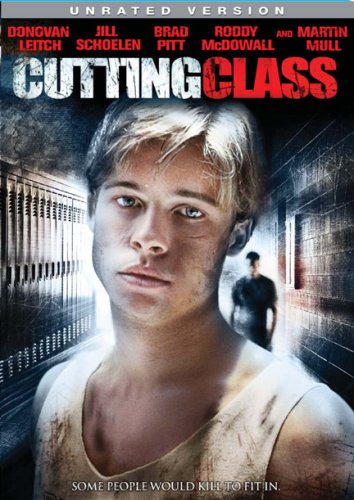
It’s probably a pretty bad sign when a film’s star makes a public apology to his fans for doing the film just when it is getting released on DVD. Brad Pitt did just that, and you know what? He should be sorry. This film is an absolute mess all the way around. I think it’s supposed to be a slasher film, but there are never any good 1980’s slasher moments to be found. It’s true that at this point in his career Pitt wasn’t exactly being offered the cream of the crop. He wasn’t paling around with George Clooney and friends just yet. So perhaps it’s not Pitt but the folks who made this film who should be apologizing. Cutting Class has no idea what it wants to be when it grows up. Is it a comedy or is it a drama? Ultimately it fails on both counts.


Wings was one of those unusual sitcoms that depended more on the characters than the situations they were in. While the setting was a small Nantucket airline owned by two brothers, most of the episodes had very little to do with flying. Rather, the writers populated this small airline with very distinctive personalities and let these interactions be fodder for the funny. The characters were played by more than competent actors, many who have proven themselves beyond this quaint sitcom. Timothy Daly played Joe Hackett, the older, more responsible brother who was often the show’s straight man. His rather adolescent sibling Brian was played by Steven Weber. I wouldn’t exactly say this was Oscar Madison and Felix Unger, but their conflicts over maturity fueled the characters. The airline’s love interest was Helen Chappel played by Crystal Bernard. She was an aspiring symphony cellist who worked the airport’s lunch counter. For much of the show’s run she had an on again off again romance with Joe. By far the most animated character was mechanic Lowell Mather played by Thomas Haden Church. It’s still amazing to me that this rather unintelligent character was played by the same guy who brought us Sandman in the latest Spider-Man film. Finally there was cabbie Antonio Scarpacci, played by the current Adrian Monk, Tony Shalhoub. Antonio is an Italian immigrant who has trouble understanding things most of the time, leading to some of the better moments in the series. Fay, played by Rebecca Shull, is the mothering member of the cast. And Roy Biggins (Schram) runs the rival airline and is often engaged in one underhanded scheme or another.


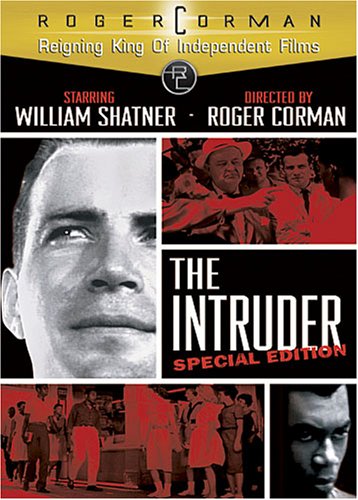
Roger Corman is fond of saying that only one of his movies ever lost money. It was this 1962 release (shot in 1961), and it is his bravest film, and still arguably his most powerful. William Shatner plays Adam Cramer, a white supremacist associated with the “Patrick Henry Society” (read: John Birch Society), who arrives in the southern town of Caxton on the eve of racial integration of the school. The demagogue whips up the hatred of the white townspeople, leading to cross-burning, church-bombing, and worse.

Corman’s film has lost none of its power to shock and appal. Nor has it lost its power to amaze. An absolutely blistering condemnation of bigotry, it makes the likes of Mississippi Burning look mealy-mouthed by comparison, and its unblinking political directness is all the more astounding for when and where it was made. As we learn from the accompanying featurette, the cast and crew operated under the constant threat of violence, and the sort of events they were depicting were actually taking place nearby. One of the first cinematic statements on the struggle for civil rights, it is still hard to find another film as raw and as uncompromised as this. And those whose only impression of William Shatner is of a shameless ham are in for a revelation. His performance is a satanic mixture of charm, smarm, self-love and seething, explosive hatred. He incarnates a textbook definition of “evil charisma.”

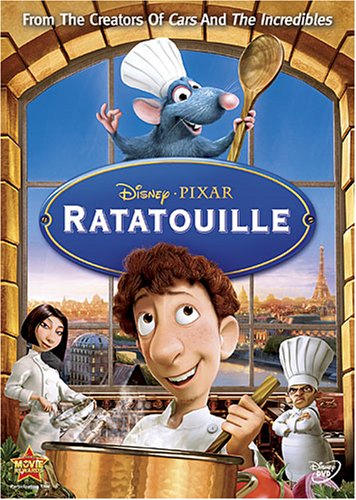
I must admit that from the moment I first heard about this Pixar film I was abnormally indifferent. I can’t explain exactly what it was that kept me from the theaters, but this is the first time I missed a Pixar film in its original release. I like rats, so it wasn’t the subject matter. Perhaps the unpronounceable title is to blame. I will admit it conjures nothing for me, so I found it hard to get excited about what I might see. This is rare, because I have eagerly awaited these outings based not only on the story idea but knowing it will be a treat in every aspect from design to technological wizardry. So finally I sat down to watching this elusive Pixar presentation for the first time on DVD. I have to say my instincts were almost right on. This is by far the least interesting entry from the Pixar folks so far. Which is not to say the film is bad or not somewhat entertaining. It doesn’t stand out. This could have been Dreamworks or Sony or a dozen other CG workshops. The only thing that stood out was the quality and detail of the work.


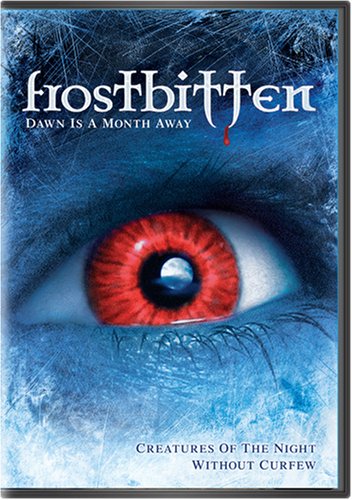
Stop me if this sounds familiar: in a far-northern community, night lasts thirty days, which makes the area highly hospitable to vampires. Yes, Frostbitten shares a very similar premise to the excellent 30 Days of Night. And while the Swedish film predates its American counterpart, it is more recent than the graphic novel. At any rate, the similarities pretty much end there, as Frostbitten is more interested in comedy than its cousin, and is also nowhere near as good.

The prologue is promising, with Scandinavian volunteers in the German army during WWII becoming lost and encountering vampires in a remote cabin. Flash forward, and the surviving member of the unit is now a respected geneticist performing experiments that only he knows the truth about on rather unusual patients. A teenager and her divorced mother arrive in the community just in time for all hell to break loose. Said hell does feature some inventive and humorous moments, but the film is hamstrung by dead clichés when it shifts its focus to the local high school and the group of characters we have seen far too many times before and never want to see again.

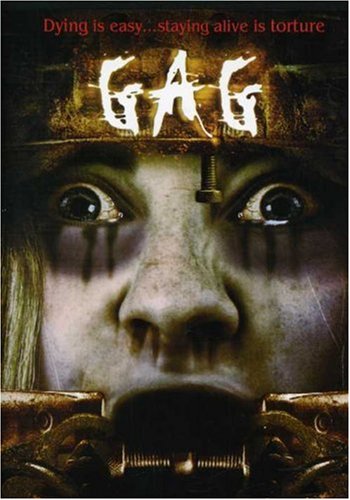
Hmm. A vision of elaborate torture in washed-out tones on the cover. A three-letter title. Gee, could Gag be inspired by Saw? Perhaps, but fortunately not in any slavish way, limiting its connections to the idea of extended torture, and that’s hardly something Saw invented. As opposed to the Saw franchise’s increasingly risible plot convolutions, Gag keeps its setup simple: a pair a burglars break into a house where they first discover a man chained to a bed, and then are captured themselves by the resident nutjob. The ensuing drama is a claustrophobic one, with the main characters trapped in the torture room at the mercy of a lunatic who has a definite, if mysterious, goal.


The film handles the grime and oppression quite nicely, and the torture scenes are genuinely disturbing. The limited budget is apparent in some of the sound design limitations, and the quality of the performances is variable, but still, this indie effort is far from dishonorable. I can’t help but feel, though, that the opening scene’s drooling voyeurism of a naked woman’s body just before she’s gruesomely killed isn’t gratuitous in the one sense that even this sort of film would do well to avoid.

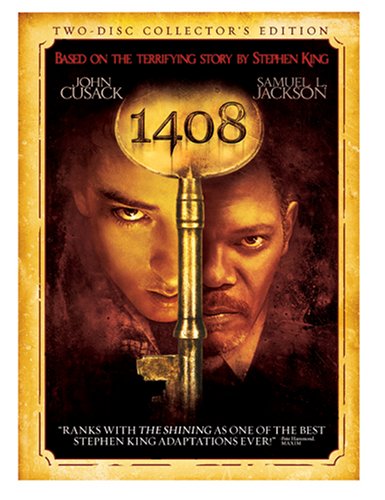
Stephen King must be solely responsible for an acre of deforestation a year in legal pads and typewriter pages alone. I have heard it said that he writes at least ten pages a day, including holidays. A quick check of IMDB shows that he is credited for writing 106 television or movie stories, at least in part, since "Carrie" in 1976. While no writer - as I well know - can hit a home run every time they put pen to paper, King's "good to crap" ratio is far superior to that of the majority of the novelists working today.

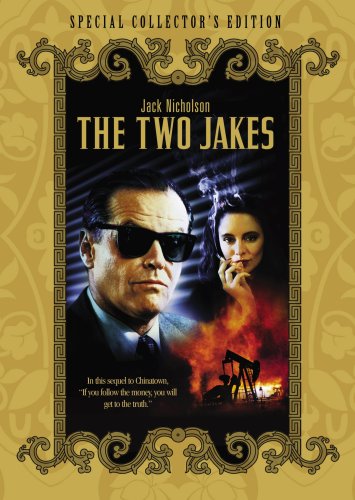
I wanted to watch these movies back to back to try and get a feel for how they work together. The box art tells us: “Much has changed since we last saw Jake.” No truer words were ever spoken. Jack Nicholson is now a household name and a fixture at the Lakers games. Many a classic character has worn Jack’s sardonic smile since Chinatown. Perhaps it was the timing that was bad. Nicholson decided to resurrect Jake Gittes as his first role following his awesome turn as The Joker in Tim Burton’s Batman. Perhaps it was the absence of Roman Polanski. Or maybe the time for Chinatown had come and gone.


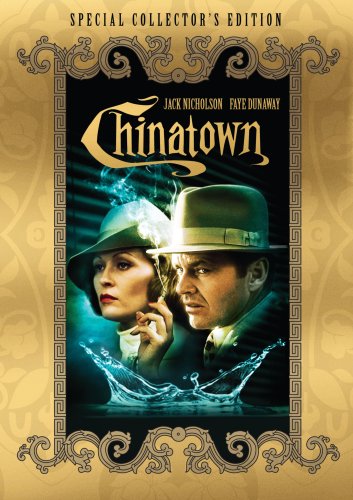
Jack Nicholson’s career has been decades of a man who is constantly redefining himself. Few actors have created as many memorable roles; among them has to be Jake Gittes. This Raymond Chandler styled character first appeared here in the Roman Polanski Film Noir Chinatown. The feel of Chinatown was far more effective in 1974 than it is today. Unfortunately the style has been done to death and often with disastrously horrid results. Still, in 1974, Polanski was able to create an effective atmosphere and use it not just for style but as a place to tell an engaging story. Chinatown takes you to a Los Angeles that simply no longer exists. He utilized many locations that were even in 1974 on the verge of disappearing forever. Perhaps one of the reasons that the style has never been reproduced quite so successfully since is that Chinatown was made at just the right time. The last dying embers of the Los Angeles between the wars are caught on film, making Chinatown a somewhat historical event in itself.