Posted in: Disc Reviews by Archive Authors on June 24th, 2006
War movies, in my opinion, are one of the rarities in film, where the most recent pics are usually the best ones. I need only cite films such as Full Metal Jacket, We Were Soldiers, and Saving Private Ryan to argue my cause effectively. But that doesn't mean all of the older ones were bad. Most were because they took more of a silly ra-ra viewpoint in relation to the reality of war. They didn't show the nasty details because, in many ways, they were recruiting tools. But Decision Before Dawn> was one earlier work, which took chances with its dramatization. This 1951 film refuses to jump on any bandwagons, instead telling a captivating, and sometimes tragic, story about a strange kind of hero... one that comes not from within our own ranks, but from those of our World War II enemies. In fact, the main character of Decision Before Dawn is a captured Nazi soldier, who makes the decision to spy for the U.S. army - not for freedom, but redemption.
It's no wonder a film such as this was nominated for the 1951 Best Picture - and it's also no surprise it didn't win. This type of subject matter has never been able to avoid controversy, and the Academy hates to honor controversy. However, director Anatole Litvak's handling of the George Howe novel Call It Treason makes for an exciting and tasteful motion picture that was sure to win over audiences - even in its time - with the tale of Lieutenant Rennick, a German POW, who has agreed to go back to his home country and betray his old side to the Allies. Tension builds as Litvak plays with the possibilities of trust. Neither the Allies nor the Nazis know what to think of Rennick, and for a time, neither do we. But as the film progresses, Rennick shows there may be more to his decision of assisting the Allies than simply the proverbial "get out of jail free" card. He's one well-drawn character at the center of an important motion picture, which dared to paint an uglier face on war, and call in to question the line between treason and heroism.
Posted in: Disc Reviews by Archive Authors on June 24th, 2006
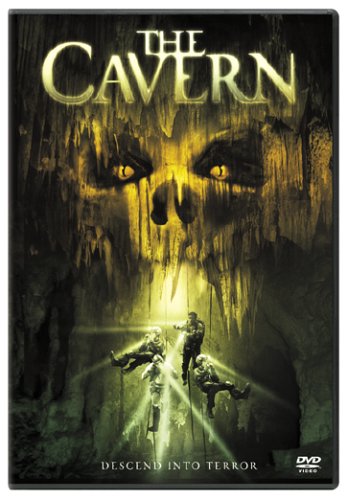
At the end of the day, The Cavern is an old-school monster movie (of sorts) with some really annoying habits. The shaky camera technique can only take one so far. When a filmmaker tries to use it in place of suspense, it grows old very fast. And when this crew of cave divers enter the mysterious crawlspace of the film's title, writer-director Olatunde Osunsanmi goes hog wild with every gimmick angle he can think of. The result of such activity is the remnant of a good horror film, which builds mood nicely with...some gritty settings, but quickly descends into shoddiness rather than terror. The plot centers on a cave in the deserts of Central Asia, where a team of explorers coping with a tragedy have reunited to explore a neglected passage deep in the earth's crust. Little do they know, someone - or something - has beaten them to the site, and is now intent on keeping the finding for itself in any violent way possible.
Some of the best films are spawned from the simplest of ideas. And The Cavern has a cast, which does its best to capitalize on such simplicity. Despite the film's budget and obscurity, these performers give it their all, and have nothing to be ashamed of; because, for all the film's failures, they keep it from turning into a laughable college film class production from some obscure midwestern university. They do so by actually knowing how to act, and taking the content seriously... even if it doesn't return the favor. Osunsanmi is the real blame for this missed opportunity. He tries so hard to flex his directorial muscles the entire 81 minutes comes across as numbing and disorienting. And while 81 minutes isn't very long in normal film terms, it seems like a lifetime when you are using every moment to try and figure out what the heck is going on.
Posted in: Disc Reviews by Archive Authors on June 23rd, 2006
Synopsis
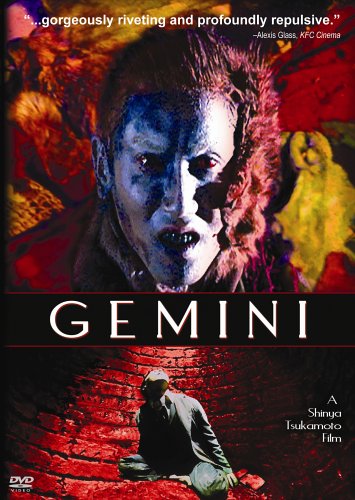
Masahiro Motoki plays a well-to-do doctor, very much concerned with class difference, eager to distance himself from slum-dwellers, whom he regards as barely human. He is deeply in love with his fiancée, a woman suffering from amnesia. His life collapses in chaos when his parents are murdered by a prowler, who then throws him down a dry well. This prowler turns out to be his twin, who proceeds to take over his identity.
Posted in: Disc Reviews by Archive Authors on June 23rd, 2006
Synopsis
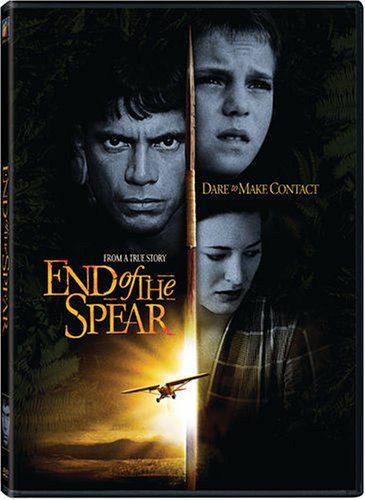
The Waodani tribe of the Amazon is, we are told, so violent that they have almost hunted each other to extinction. Oops. Anyway, in 1956 a group of missionaries and their families arrive to live with the Waodani and do the missionary thing. A misunderstanding leads to the missionaries being slaughtered, but their wives decide to stay. The film follows the journey of the son of one of the five men, and the whole thing is all about forgiveness.
Posted in: Disc Reviews by Archive Authors on June 22nd, 2006
Synopsis
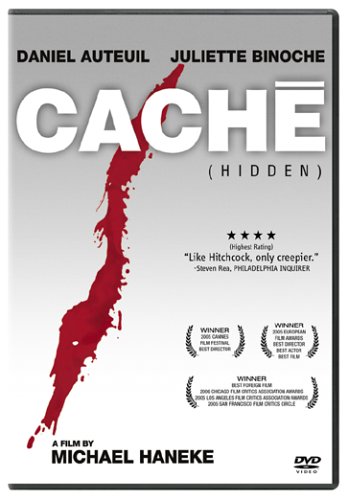
Daniel Auteuil, host of a literary TV talk show, and his wife Juliette Binoche begin receiving strange videotapes. These are hours-long recordings of the front of their house. Nothing else. No explanations. Then child-like but disturbing drawings start to accompany the tapes, and the recordings begin to be of other locations, suggesting that all of this has something to do with Auteuil’s distant past.
Posted in: Disc Reviews by Archive Authors on June 20th, 2006
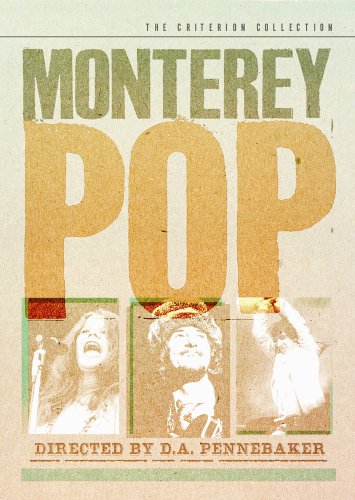
The 60's have become something of a caricature of themselves. Take a girl with straight hair and flowers, throw in a “groovy” and a “man”, add some grainy photography, and you're all ready to go. It is sometimes hard to remember that there was a time when this was not a kitchy formula, it was just the way that it was. This film is so authentically steeped in 60's hippie culture that it almost doesn't seem real when the footage starts rolling. Once the film begins to sink in, though, the viewer is completely drawn in ...o this world than many of the modern era may only know from oldies radio, of all things.
The Monterey Pop Festival was a large music festival held in Monterey California in 1967. The bill included not only some of the top acts of the day, such as the Mammas and the Papas, Simon and Garfunkel, Jefferson Airplane and The Who, but it also launched the careers of such legends as Jimi Hendrix, Janis Joplin and Otis Redding. The weekend festival was a defining moment in the history of rock and roll, as well as of the hippie movement.
Posted in: Disc Reviews by Archive Authors on June 20th, 2006
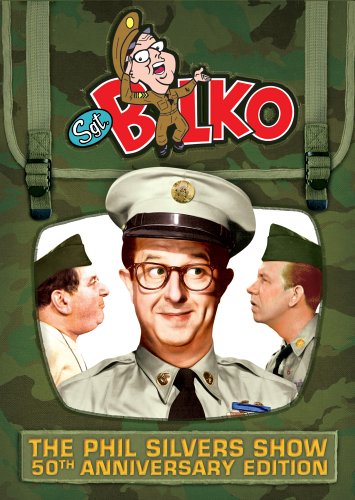
The Phil Silvers Show was groundbreaking for several reasons, but to look at the list of those who appeared on the show during its four season run is to look at a "Who's Who" of television ancestry and history. Allen Melvin played Sam the Butcher on The Brady Bunch, Harvey Lembeck previously appeared in Stalag 17 and his son Michael became an accomplished television director. Joe Ross played one half of the cop team in Car 54, Where Are You? next to a guest star of the show, a guy named Fred Gwynne, who also appeared in a show called The Munsters. Billy Sands went on to appear in McHale's Navy with a friend (and other Silvers show guest star named George Kennedy). Dick Van Dyke even showed up once in a blue moon.
Sometimes with projects like that, the stars in space seem to last longer than the television planet they orbit. But with The Phil Silvers Show and its star of the same name, there was an irreverent comic talent that not only was hilarious in his own right but helped to complement other members of the cast and giving them their chances to shine. Based around the fictional Ernie Bilko and the soldiers stationed on Fort Baxter, Bilko was sharp and a bit of a schemer, and his schemes involving other soldiers were the perfect vehicle to help Silvers offload some prime comedic moments to other actors. With Silvers and his co-creator Nat Hiken, the two managed to put together a show based on their sensibilities and wrote it the way they wanted to.
Posted in: Disc Reviews by Archive Authors on June 20th, 2006
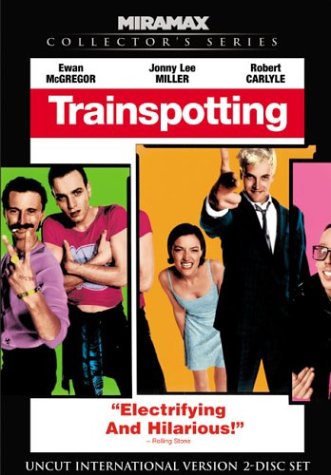
I've seen people quote this film from time to time, and I never understood the attraction because I saw it once and forgot about it. After a bit of intrigue, I finally got my hands on a copy of the US version of this 2 disc set (though the UK version, with the orange cover and silhoulette image of Ewan McGregor on the cover looks much cooler) and gave it a spin, lo and behold, I discovered a pretty good movie.
It's been talked about a lot for awhile I guess, but to sum up, McGregor plays Benton, a heroin addict in Scotland, who spends his days getting high and hanging around with his mates. Spud (Ewen Bremner, Black Hawk Down) wears Nancy Reagan-like glasses from time to time, and seems to be the closest one Renton relates to; Sick Boy (Jonny Lee Miller, Hackers) is the one that tries to make himself superior to the group, when he's not off spouting weird theories about movies that Sean Connery has starred in; Tommy (Kevin McKidd, Topsy Turvy) is against his buddies using but is curious about it, and then there's Bigbie (Robert Carlyle, The Full Monty), a beer-drinking Scot with an offensive mustache and a penchant for getting into brawls.
Posted in: Disc Reviews by Gino Sassani on June 16th, 2006
I’ve already had a lot to say about this show in my Season 5 review. All of it still applies. Richard Dean Anderson was fortunate enough, some would say talented enough, to have played two iconic characters in one life-time. I propose that he’s really played only one, but in two very different circumstances. I’ve already pointed out the similarities between the actor and his two roles, from their birthplaces to their hobbies and sports activities. This should in no way be interpreted as taking anything away from Anderson. The opposite is, in fact, even more the point. Anderson makes you feel at home with his characters. There’s so much of him there that we have a hard time remembering that there must also be so much that is not. It’s safe to say he has not traveled through wormholes or deactivated a nuclear device with a rubber band, paperclip, and stick of chewing gum. This is the beauty of the style he brings. By making the character very much like himself he gives us an easy-to-identify ordinary human being played against extraordinary events.
We’re sadly nearing the end of MacGyver with Season 6. Still, this was a great year. “Harry’s Will” has to be one of the most popular episodes in the show’s run. Not only is it great material for Anderson to play against, but we learn so much more about the character. This is also quite a star-studded outing with the likes of Henry Winkler, James Doohan, Rich Little, Dick Butkus, and Abe Vigoda. There’s another wonderful fantasy episode where MacGyver dreams he’s in the old West ordering mail order brides that turn out to be the various women in his life. There’s plenty of classic stuff here to more than make the set worth your time and your money.
Posted in: Disc Reviews by Gino Sassani on June 16th, 2006
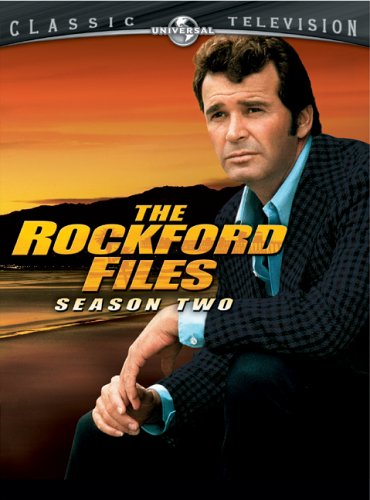
Growing up, that twangy Mike Post music provided a part of the soundtrack of my life. I remember walking around school and everywhere you turned you heard kids saying, “That’ll be $200 a day plus expenses.” We all printed up fake business cards. I can tell you firsthand that it takes more than the props. I didn’t have Jim’s natural charm and finesse. Somehow fifth grade’s Sister Margaret wasn’t buying that my NSA credentials meant my homework assignments were classified and above her clearance level. As I sat in detention wondering what could have possibly gone wrong, one theme kept going through my mind. This is gonna cost her. You guessed it. $200 a day plus expenses.
James Rockford lived in a trailer on the beach. His lovable dad was a truck driver who never did understand how his “sonny” could be mixed up in the dirty world of private investigations. While Rockford always projected a tough guy exterior, it was his soft spot for a sad story that often got him deep in trouble. He could understand the world of injustice. He had spent 5 years in prison for a crime he didn’t commit. Even after a full pardon, the cops considered him a lowlife ex-con. His one buddy, Lt. Becker, usually laid low among his fellow officers, often afraid to admit to being Rockford’s friend. Rockford was also king of the con. When normal tactics didn’t work, he could bring together a group of scam artists and con men to handle the largest of productions. He traveled with his own business card printing press. Afraid of guns, Rockford usually kept his in the cookie jar.