DVD

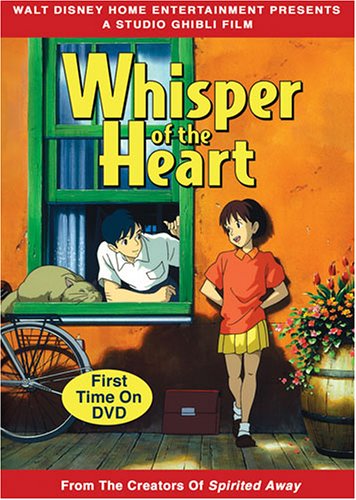
From reading the back of the box, one would think that this film was one of the true Disney animated classics. Phrases like “digitally remastered for the first time on DVD” and “the original Disney classic” would certainly lead one to believe such a thing. The fact of the matter is, however, that this “classic Disney film” was just originally released in 1997. Sure, it's remastered, but we're talking about remastering a print that is less than a decade old. Improvements were undoubtedly made, but this re...ease is not the towering accomplishment that one might be led to believe.

The plot revolves around Pooh and the gang setting out on a cross-country trip to find Christopher Robin, who has mysteriously gone missing. As the gang travels on their search, they find opportunities to conquer their fears and accomplish great things. The viewers, however, know that Christopher was just at school the whole time.

Sam: Hey, I recognize you.

Andrew: Oh, did you go to Columbia High?

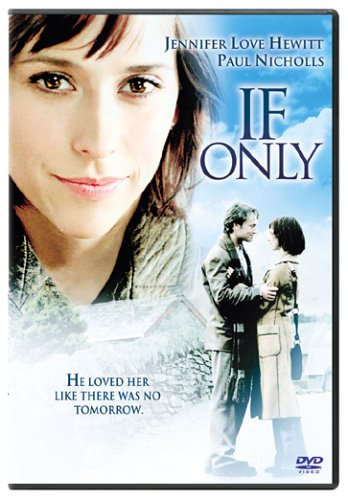
If Only is a romantic drama, which too often goes for the cheapest emotional reaction out of its viewers, without incorporating logic or common sense into such decisions. Jennifer Love-Hewitt and Paul Nicholls star as a couple of young lovers, who represent the prototypical female and male, with very little surprises in their characterizations. In the beginning, we see Nicholls is a bit invested in his work, and, while adoring his singer-songwriter girlfriend, he instinctively keeps her and the rest of the wor...d at arm’s length. This distancing is due to a somber childhood, which involved a relationship with his alcoholic father that was filled with both admiration and disappointment. His father was his hero, but is now the case study Nicholls’ character uses for how NOT to live his life… due to the alcohol, of course. But as a result, Nicholls’ character tends to run from love, when it’s staring him in the face (and I mean that both figuratively and literally). Then, something huge happens that forces him to approach life from another perspective… his girlfriend dies in a car accident. The accident makes him realize just how much she meant to him… but it all comes too late.

Or does it?

Harrison Ford stars as Jack Stanfield, an online security chief for a mid-sized baking chain. One day, he is introduced to a new possible candidate in Bill Cox (Paul Bettany). We learn this turns out to be a setup. Cox and his men are holding Stanfield's wife (Virginia Madsen) and their two children hostage. In return, Cox demands that Stanfield hack into his bank's computers to transfer a fortune into Cox's offshore accounts.

Firewall, in whole, contains a smart plot, one that makes you think. The ...asic plot, however, is nothing new. The plot has been updated with newer technology, such as an iPod containing everything Stanfield needs to get into his bank. It seems a bit odd that a small little device like an iPod could hold this much data. The bigger question is if a film like this needs events that are plausible in order to make a shred of sense. Fortunately though, mostly due to how entertaining Ford is to watch, the film holds its own and doesn't necessarily conclude in an odd manner.

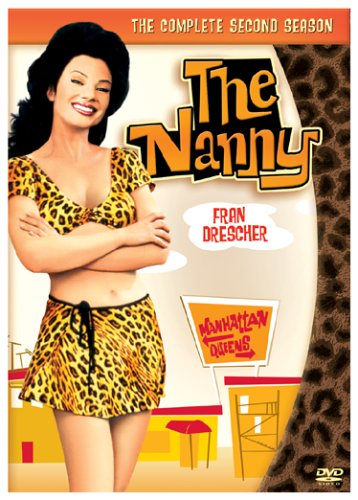
Fran Drescher, the nasally, whiny-voiced beauty we all either love or hate, returns in The Nanny – The Complete Second Season, and the show hits its stride, if you’re of the belief it ever had one. With mileage out of the mutually aloof Fran Fine-Maxwell Sheffield (played by Charles Shaughnessy) relationship, The Nanny does manage a few chuckles, even from someone such as myself. Let’s make things clear right out of the gate: I’m not a Nanny fan. If I had free reign to decide on everything that w...uld, and would not, be watched on my television, this hit show from the nineties would never make the cut. Never mind that its star is an absolute knockout. (You know she must be gorgeous if you still find her attractive in spite of that voice.) But alas, I don’t have that autonomy, for I am married. That, along with the frequent airings on Lifetime, spells out whom the show’s demographic really is – women… in particular, women, who wish to escape in the form of a fairy tale with real-world context. I can’t fault them for liking it; and the show really does succeed in reaching that demographic. I’m just not of the multitude.

Sony’s package includes all 26 of the second season episodes completely uncut. Most of the laughs are hokey and telegraphed, but a few will occasionally take you off-guard, especially during Niles the Butler (hard to believe this guy’s from my home state of Arkansas, as his British accent easily bests Shaugnessy’s – who’s actually from England!) and C.C. Babcock’s banter. Also of value is the aforementioned relationship between boss and employee, as the show, from its very first episode (“Fran Lite”), plays up the continual “they’re perfect for each other, but don’t know it” angle. I don’t hate this series, and some may really feel it’s blasphemous to make this comparison, but I honestly look at it as an I Love Lucy for the nineties. I get the same escapist feeling from both programs, and neither one invokes much laughter in accordance with my personal tastes. But neither show is fly-by-night either, and I’ve got a feeling each will hang around for some time to come.

Synopsis

Spanning 1966 through 1995, these are six short features covering David Lynch’s career from is very beginning to his current position as one of the most important voices in American cinema. The shorts are, in order: “Six Men Getting Sick,” “The Alphabet,” “The Grandmother,” “The Amputee” (two versions), “The Cowboy & The Frenchman” and “Lumière.” As one might expect from Lynch, there is a pretty heavy nightmare quotient here. The first three films have a lot of animation, and the result is n...t unlike the hallucinatory collaboration between Monty Python’s Terry Gilliam and Norman MacLaren. The most substantial piece here is “The Grandmother,” a half-hour journey through a little boy’s hell and the grandmother he grows to protect him from his horrible parents. Lynch introduces each film, contextualizing it in his life and career, and there are shots of her first camera, the receipt for it, and the like. For Lynch fans, this is essential viewing. For film historians, ditto.

Synopsis

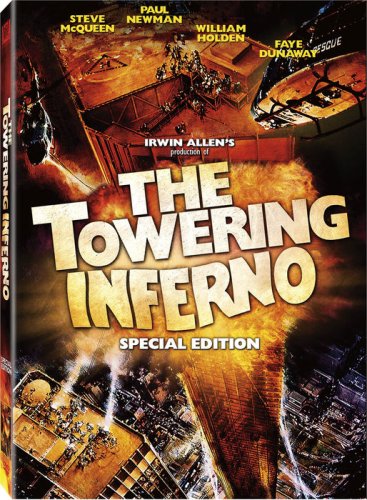
The Who’s Who of San Francisco is gathering for the grand opening of the Glass Tower, the world’s tallest building. The architect, Paul Newman, is disturbed by what appear to be corners cut in the electrical installations by Richard Chamberlain, and sure enough, a fire starts on the 81st floor. Fire Chief Steve McQueen is soon on the scene, but the situation deteriorates rapidly, and hundreds of celebrants on the top floor are at risk of fiery death.

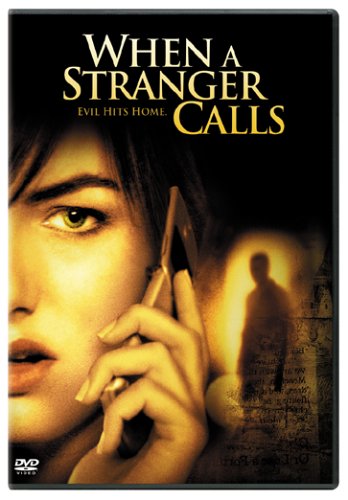
First off, let me say what a great idea it was to remake this film. The original has enjoyed elevated status far too long based only on an intense 23-minute opening sequence. And as good as that opening piece of suspense is, the same exact premise punctuates Bob Clark’s earlier 1974 masterpiece Black Christmas – so even what When a Stranger Calls does well owes a debt of gratitude to an overall better film. Still, I’ll give the Devil his due – knock-off or not, that sequence stands as an effective, inte...se short film, which carries the baggage of an additional three-quarters worth of movie, poorly executed with a wandering eye from character-to-character that spoils the memories of what was done right in the first place. With that said, let me now state what a missed opportunity this remake is. It fails to an equal extent, but does so in different ways. Director Simon West decides to set his redo in one night using a plot twist, whose shock value has had nearly thirty years to dissipate. Most know simply by watching the previews on TV what the big reveal is going to be, and that advanced knowledge causes the audience to sit through half the film twiddling thumbs. The suspense scenes at the end are well-shot, but largely uninspired… there is simply nothing visceral about this polished piece of lightweight teeny-bopper horror, and the premise itself is spread too thin across the 87-minute running time.

Now I’m going to do something unprecedented. I am going to beg Sony Pictures to remake this film again, and I am even going to give them a way they can do it, make big bucks, and a suspenseful classic (which both incarnations should have been to begin with) at the same time… and I’m going to go on record out of my love for the idea with no vain hopes they’ll see fit to compensate me for the time and trouble. This is a freebie, Sony… take note! The next time you remake this film, use the structure of the original. Act one – the “Oh no, the babysitter’s screwed” moment (also, kill the children). Act two – five-to-ten years later: only this time, instead of having the film float from character-to-character like it has ADD, stick with the girl. Set up her life elsewhere. Have her be someone the killer selected for a reason. Have her as the object of his obsession. This way, it makes sense when he comes after her upon escaping years later. Her living in another location would also provide a plausible explanation for her not knowing this guy is on the loose. Then, make the rest of the act about the killer slowly working his way back into her life, and perhaps even whittling away on the people close to her. Act three – he comes after her. This is where the heroine can really be seen for her strength. Give her something to lose (as the first one did) – perhaps even children, so the killer can break out his famous line one last time. Put her through hell and high water to reach the inevitable happy ending, continue to keep the killer a mystery (NOT like the original interpretation), go for the throat with an R-rating, and release to box office records. I say all this to prove a point: there’s a good film – no, a great film – hiding in the original idea for this story. But while both versions currently out there have strong points, neither puts in the hard work to cultivate the material into something truly special. If you’re in the mood for something similar (that has more punch to it), stick with Black Christmas and the far superior sequel to the original When a Stranger Calls Back.

Synopsis

Game tester Allen Covert is evicted from his apartment, and winds up rooming with his grandmother (Doris Roberts) and her two friends, the stone-on-meds Shirley Knight and the sexually predatory Shirley Jones. He attempts to keep this rather humiliating set-up secret from co-workers and sexy new boss/potential love interest Linda Cardinelli.

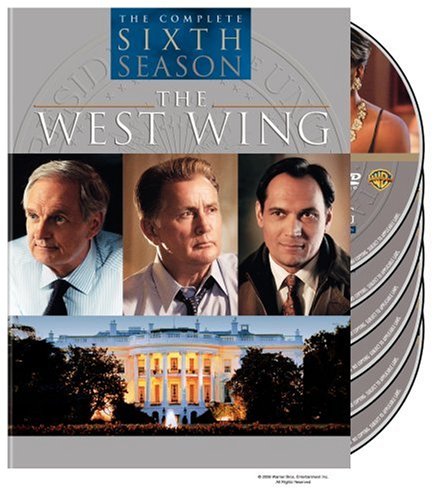
I have been rambling on and on about the merits of this outstanding series to friends, family and innocent bystanders for years. I will continue to do so until the final disc of the final season has hit Amazon.com; and probably for quite some time after that. It is a show that is important, culturally relevant, and surprisingly political without becoming annoyingly partisan.

Season Six is something of a bounceback season for the show. In Season Five, the show floundered a bit. While it was still easily one of...the best things on television, the ship lots its way. Issues were explored, but no one issue really solidified itself as a strong story point. By the time Season Six came around, the show had a natural theme to run with; re-elections. As Bartlet begins to struggle with complicated issues in the Middle East, Presidential hopefuls emerge in the form of Alan Alda and Jimmy Smits. Instead of winding down and fading away, this show picked up steam as it headed toward the end of its seven season run. I, for one, am enjoying every minute of it.