Posted in: Disc Reviews by David Annandale on January 15th, 2011
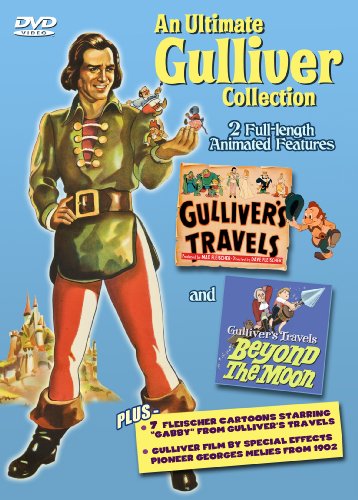
Johnathan Swift's Gulliver's Travels was never meant to be a children's tale. It is one of the most corrosive satires in the English language, one that has lost none of its brilliant venom over the passage of centuries. But endless bowdlerizations have given its first two sections (the voyages to Lilliput and Brobdingag) the reputation for being children's classics. Obviously, references to people being “the most pernicious race of little odious vermin that nature ever suffered to crawl upon the surface of the earth” are usually left out. At any rate, said bowdlerizations inevitably resulted in various anodyne film adaptations. And so, as Jack Black galumphs across the screen to box office disaster, here is a collection of animated takes on Swift's work.
Gulliver's Travels: (76 mins.) This 1939 effort is the main attraction here, the second feature-length animated film ever made. It limits itself to Gulliver's journey to Lilliput, where, in this version, he must bring about the end of a war between Lilliput and Blefuscu so that bland princess and prince of the respective nations can marry. The Fleischer brothers are best remembered for Betty Boop and their excellent Superman cartoons. Gulliver's Travels, on the other hand, is far from their best work. The animation is fluid, though the backgrounds are lifeless and still, a far cry from what Disney had just done with Snow White. The pace is slack, meandering along through rather tired slapstick. The cartoonish Lilliputians are charming enough, but the more realistic characters are expressionless waxworks, or, in the case of the rotoscoped Gulliver, dip alarmingly toward the uncanny valley. The piece is a historical curiosity, but is no classic. Still, it's much, much better than...
Posted in: Disc Reviews by David Annandale on January 14th, 2011
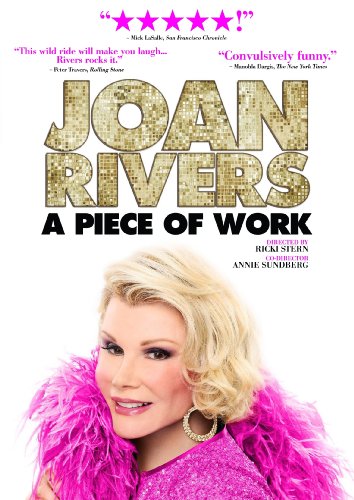
This documentary tracks a year in the life of Joan Rivers. We begin at a relatively low ebb in her career, with her finding it difficult to land desirable gigs. She throws herself into the production of an autobiographical play that debuts in Edinburgh, and her hope is that the London reception will be glowing enough to provide enough momentum for a Stateside production. Meanwhile, she and daughter Melissa are contestants on Celebrity Apprentice. As the film follows the ups and downs of these efforts (concentrating particularly on the play), Rivers opens up about her life and career.
This is a very smart, enormously entertaining, and very funny documentary. There is plenty of footage of Rivers in performance from all stages of her career. For those whose exposure to her has been limited to snippets of red carpet interviews and jokes about her plastic surgery (and I am one of those benighted souls), this film will be a revelation. There's a reason why this woman became famous in the first place – she is one ferocious stand-up comic, and as good as the footage here is, it leaves the viewer hoping for more. That's a good thing. There are, though, one or two less felicitous gaps in an otherwise very revealing doc, most notably what, precisely, was behind the erratic behavior and unexplained disappearances by Rivers' long-term manager. But this is a trivial quibble. The film is a piece of work indeed: sterling work by directors Ricki Stern and Anni Sunderberg, and brave work by Rivers.
Posted in: Disc Reviews by Archive Authors on January 12th, 2011
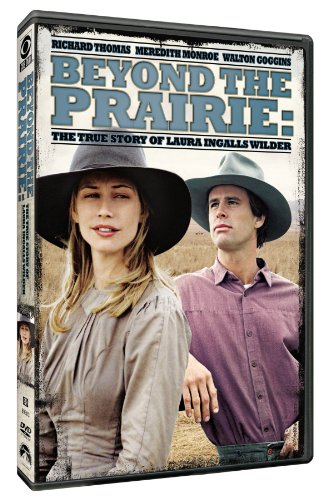
I have never watched Little House on the Prairie, so I admit to having no frame of reference when I approached this set, which actually contains two separate made for television movies: Beyond The Prairie: The True Story of Laura Ingalls Wilder, and Beyond The Prairie: The True Story of Laura Ingalls Wilder Continues. Now, since I’ve used up a large portion of my review space just mentioning the titles of these two films, I will try to be as succinct as possible. Suffice to say that, while I was aware of the show, all I really know about the lady is that she grew up on the prairies in a small house of some kind, and that she is beloved by a certain portion of the population. Also, if memory serves, she may or may not have been friends with NFL Hall of Famer Merlin Olsen.
The two films chronicle the life of Ingalls Wilder, from her days as a teenager growing into womanhood on the 19th century Dakota frontier to her eventual marriage to Almanzo Wilder and their emigration to Missouri. The films are quite authentic in their depiction of the harsh realities of frontier life, particularly the Dakota winters, and show death and loss as a constant danger, even when the focus is on wholesome family drama. Blizzards, hail storms, starvation, and disease are among the constant threats that loom over these characters, and the films do a pretty good job making these things real.
Posted in: Disc Reviews by Gino Sassani on January 11th, 2011
"The Giants who formed this world and now seem to live in it in chains are actually the cause of its life and the source of all activity. But the chains are the cunning of the weak and tame minds..."
Confused yet? That's how Bitter Feast opens, and while it does have a witty premise, the film continues to confound and confuse throughout. The opening poem is the backdrop for a game that turns violent between two brothers in a wooded area. I have to be honest. It made my brain literally hurt trying to figure out what director Joe Maggio was trying to say.

Posted in: Disc Reviews by Archive Authors on January 11th, 2011
Written by Diane Tillis
24 is a political-thriller television series that spans eight seasons. The show focuses on Jack Bauer, a prominent and controversial agent within the Counter Terrorist Unit in Los Angeles. Each 24-episode season covers 24 hours in the life of Jack Bauer using the real-time method of narration. The episodes are marked by the hour with onscreen digital clocks. For instance, episode one of Season 8 relates to 4:00 P.M. through 5:00 P.M. of that day. The show also uses the split-screen technique. The screen will display multiple images that coordinate with the different story lines that occur throughout the season. This technique is used when the opening credits are rolling, before-and-after cuts for commercial breaks, or before the concluding scene. At the conclusion of its eighth and final season, 24 became the longest-running espionage-themed television drama ever.
Posted in: Disc Reviews by Archive Authors on January 11th, 2011
Written by Diane Tillis
24 is a political-thriller television series that spans eight seasons. The show focuses on Jack Bauer, a prominent and controversial agent within the Counter Terrorist Unit in Los Angeles. Each 24-episode season covers 24 hours in the life of Jack Bauer using the real-time method of narration. The episodes are marked by the hour with onscreen digital clocks. For instance, episode one of Season 8 relates to 4:00 P.M. through 5:00 P.M. of that day. The show also uses the split-screen technique. The screen will display multiple images that coordinate with the different story lines that occur throughout the season. This technique is used when the opening credits are rolling, before-and-after cuts for commercial breaks, or before the concluding scene. At the conclusion of its eighth and final season, 24 became the longest-running espionage-themed television drama ever.
Posted in: Disc Reviews by Gino Sassani on January 6th, 2011
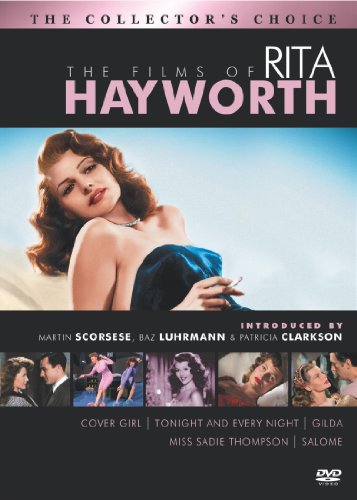
In one of Stephen King's most popular stories, at least of those translated into films, a prison inmate sits in his cell and dreams of escape. His fantasy is to escape into the welcoming arms of Rita Hayworth. While that particular element wasn't to be found in the film, it was important enough in the original story to warrant mention in the original title, which was Rita Hayworth And The Shawshank Redemption. It was a nod to the pin-up status that the actress had in early younger days. In my generation it was Farrah, but for most adolescent boys and World War II soldiers it was the red-headed come-hither smile of Rita Hayworth.
Hayworth first trained as a dancer. The instruction would certainly pay off in her film career where she would trade steps with some of the great dancers in cinema history including Fred Astaire. She was just a young teenager when she managed to be cast in Dante's Inferno and five other films that year. She left films at the peak of her popularity in a Grace Kelly-like marriage to foreign royalty. She wedded the Prince Aly Kahn, who would also die in a car accident, much as Kelly did. Fortunately for the movie-going public, Hayworth had divorced the prince 7 years earlier in 1953 and returned to the silver screen.
Posted in: Disc Reviews by Archive Authors on January 6th, 2011
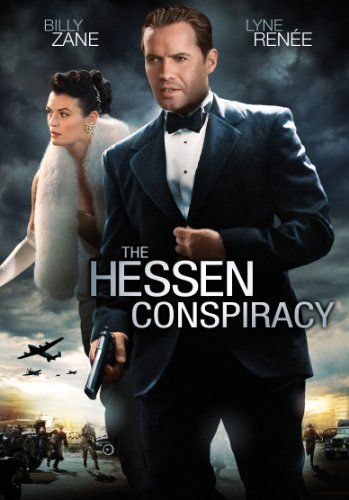
Written by Dave Younger
Set in 1945 Germany, WWII is winding down, and The Japanese have just surrendered. A bunch of American officers have commandeered a castle outside of Frankfurt, Germany, and the discovery of a wine stash leads Colonel Jack Durant (Billy Zane) to thinking: What else could Princess Sophie have hidden before she fled? Jack is first seen flirting with Lt. Kathleen Nash (Lyne Renee), but she’s not buying. Then they discover a mother lode of jewels, enough to make them rich for the rest of their lives, and suddenly she’s hooked. Is it love, or money? There’s no time to wonder as many other, more vexing problems crop up: Princess Sophie discovers the theft of her jewels, a military investigation ensues, and how do they get the jewels to New York and fence them?
Posted in: Disc Reviews by Gino Sassani on January 4th, 2011
I’ve seen some dysfunctional families on television over the years. Haven’t we all? It’s fun to laugh at someone else’s flaws. Along comes Showtime, and it’s rather hard to classify the series The United States Of Tara. This one takes dysfunction to a whole new level. Tara (Collette) suffers from multiple-personality disorder. Laughing yet? She has managed to control the problem by using medications and attending frequent therapy sessions. But the medication is sapping her creative ability. You see, Tara was once a gifted artist. She painted murals and was somewhat critically acclaimed. The meds put an end to all of that. With the blessings of her family, Tara goes off the meds, and the family grows by 7. Yes, there are 7 “alters” as she calls them inside of Tara’s body. Now they are all coming out to play.
The first thing you have to understand about this show is who the alters happen to be. We learn over time that they were constructed by Tara’s mind to protect her from a traumatic moment in her life. Tara can’t remember the event, but from time to time, the alters offer up little clues to what might have taken place. She is totally aware of the alters and their personalities. The family has developed some protection techniques of their own. Husband Max (Corbett) is not allowed to have sex with the alters. They’ve decided that would be cheating. How about just f***ed up? The kids are to treat the alters as they are, not as Mom. I’ll introduce you to the “real” people later. Here are Tara’s alters:
Posted in: Disc Reviews by Gino Sassani on January 3rd, 2011
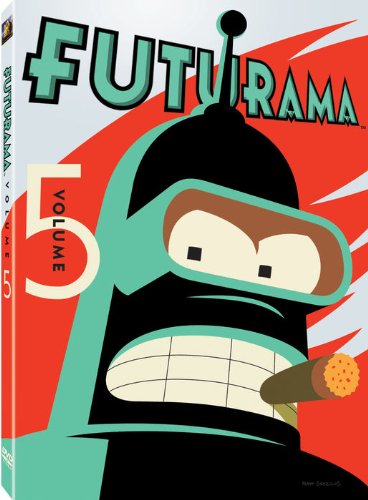
Futurama was the brainchild of Simpson veterans Matt Groening and David X Cohen. With the growing popularity of their iconic cartoon, it was no surprise that Fox would tap the team to bring another show to the network. When Futurama premiered in 1999, it was a combination of The Jetsons and The Simpsons. That would be ironic for those of us who think the Simpsons theme is a direct knock off of The Jetsons. It was 1000 years in the future, and the joke was that no matter how much things changed, they hadn’t really changed at all. The space-age series would use many of the writing and art team from The Simpsons. That meant the character designs, at least the humans, would look exactly like the people in the other show. The writing would include that same subtle wit that implanted tons of references for the adults who were watching. The show never seemed to click with the kids, but it was not really meant to. The subject matter was considerably more adult in nature, and there really weren’t any cuddly characters. All of this likely led to Fox’s decision to cancel the show after four years. It wasn’t a quick and painless demise, either. The show suffered through months of purgatory. It was on, then off again. The final episodes were moved around and often rescheduled. In the end it was an uphill battle, and Futurama lost.
But the cancellation was not to be permanent. The show found new legs on cable and finally with a handful of home video movies. Interest was once again high, and Futurama was back from the grave. Now the episodes can also continue on home video. Here you'll find a collection of 13 episodes on 2 discs.