DVD

From beginning to end, the emotional impact of Prayers for Bobby will leave you reaching for a tissue.

The screenplay for Prayers for Bobby is from the biographical novel by Leroy Aarons about the Griffith family. Sigourney Weaver plays her role as the matriarch Mary Griffith perfectly. Mary Griffith (Sigourney Weaver) is a devout Christian who believes that by the power of God and of prayer, all problems have a solution. Mary and her husband, Robert Griffith (Henry Czerny), raise their children under a conservative religious perspective. Their young son, Bobby (Ryan Kelley), believes he is gay. For years, Bobby has dealt with confusion, inner turmoil, and shame. Naturally, he is terrified to tell his family. Bobby knows his secret will change the way his parents and siblings look at him forever.

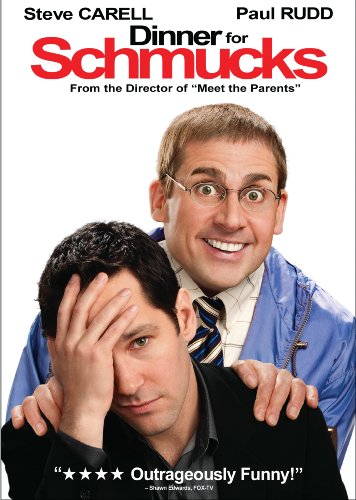
Paul Rudd is desperate for a promotion. Moving from the drudgery of the sixth floor to the executive seventh will, he feels, cement his financial status and convince his girlfriend (Stephanie Szostak) to marry him. Opportunity knocks, but also has a price: he must find an idiot to bring to boss Bruce Greenwood's dinner party, where these unfortunates will be ridiculed. Rudd doesn't like the idea, but then he (literally) runs into Steve Carrell, a man of such transcendent idiocy that Rudd can't resist the siren call he represents. But before they can make it to the dinner, Carrell's well-meaning stupidity threatens to completely derail Rudd's life.

This is a remake of 1998's The Dinner Game (Le diner des cons). Francis Veber's farce clocked in at 80 minutes. Jay Roach's bloated retread is half again as long, and only half as funny. The Paul Rudd character in the original, played by Thierry Lhermitte, was a superior, cruel SOB who deserved to have his life taken apart. Furthermore, the characters never actually make it to the dinner of the title. The remake, of course, finds it necessary to stick literally to its title, and gives us the dinner, thus inviting us to engage in precisely the form of cruel laughter it pretends to condemn. It also tries to make Rudd sympathetic, and having his character be a nice guy runs counter to the very premise of the film. End result: a film that tries much too hard to be funny, laboriously working every last predictable gag until those horses are fit for nothing more than the glue factory. There are some amusing moments, but this is, by and large, a gigantic, time-consuming waste of the talent involved.

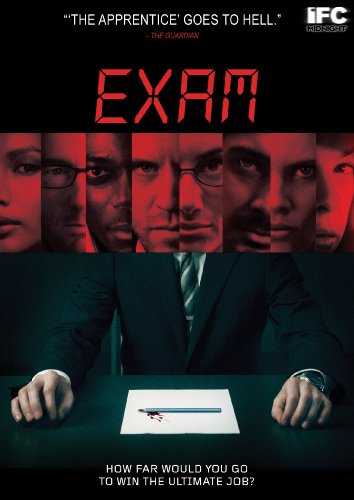
8 corporate hopefuls gather at a mysterious location and are instructed to take one final exam as a final test to see which one will walk away with a prestigious job at a major company. The trouble is their exam papers are blank, and it would seem that there is not even a question to answer. For 80 minutes each must solve the puzzle without being disqualified by breaking one of the few rules, all of which double as a riddle/clue to solving the exam question and answer.

There are no set changes, no flashbacks to see more about the character's past, not a single thing that takes us outside of the tiny exam room. As our young hopefuls are slowly eliminated from the competition, the story becomes all the more engaging. The cryptic, “think WAY outside the box” puzzle solving (along with an interesting science fiction angle to the story that is revealed about midway through) makes this film resemble a film like Cube more than 12 Angry Men. Normally a film like this would hinge on the characters, but the riddles and their manner of deducing then trying to solve them is ample for maintaining the audience's interest. Like how the setting was far more interesting than the characters in Cube, the riddles are more interesting than who is trying to solve them.

Written by Dave Younger

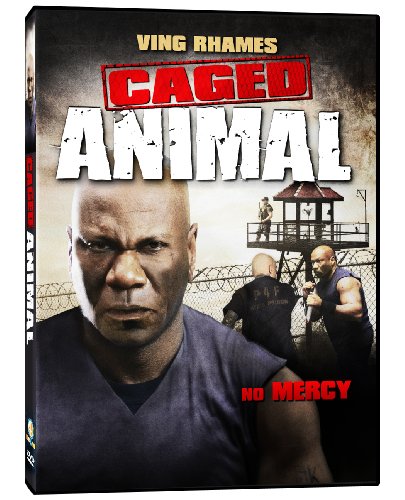
This is a prison drama, where the most feared criminal in Combs State Prison is born-to- be-bad Miles “Cain” Skinner (Ving Rhames).  His nemesis Redfoot (Robert LaSardo) has just been caught doing his last drug deal and is transferred there.  Which tough guy will prevail?  Cain is so dangerous he’s in solitary confinement, so that makes it harder to take him out.  But he is allowed out one hour a day.  He’s handcuffed – sometimes – and security is increased, so it seems like Redfoot has an advantage.  But those handcuffs could be nasty weapons…

Written by Dave Younger

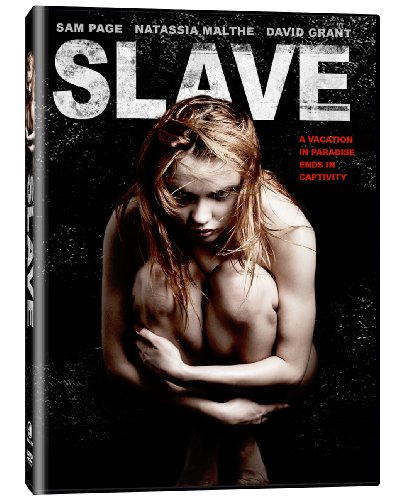
David (Sam Page) and Georgie (Natassia Malthe) are engaged.  They go overseas, to Spain, to get the blessing of David’s father, Robert (Michael Maxwell).  Georgie is abducted from a nightclub and becomes a sex slave for a twisted psycho known as the White Arab (David Gant, but because this is an ultra-cheap straight-to-DVD Hostel knockoff, his name is misspelled as Grant on the cover).  Georgie’s fiancée discovers a guy whose sister was also kidnapped, and they make plans for a rescue.  But there are lots of crazies, drug dealers, and corrupt officials they have to deal with first.

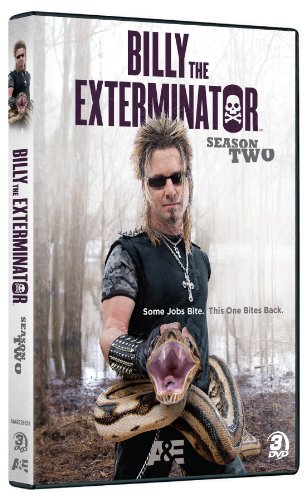
“As an exterminator I'm called upon to curb the destruction by beasts both great and small, be it eliminating a deadly menace or safeguarding a lake from ruin. But sometimes one wrong turn on the job can become a question of life or death."

Billy Bretherton is the owner of Vex Con Pest Control in Shreveport, Louisiana. It's a family run business. Mom is the office manager and takes all of the service calls and then dispatches the technicians to their various jobs. Dad is the office mascot. He's had a heart attack along with a few other medical scares, so he's not really very hands-on. You might say his main job is to worry and complain. Mary is Billy's wife. She quits halfway through the first season, appearing only a couple of brief moments in the second season. Still, she's a part of the opening credits. Ricky is Billy's brother and often his partner on many of his two-man jobs. It's interesting that we're constantly told that Ricky is deathly allergic to wasp stings. One sting and it's an airlift ride to the ER, Billy is always reminding us. But when a wasp call comes in, who do you think Billy takes along to help? Of course, it's Ricky. Mom always reminds us of the allergy and admonishes Billy to be sure his brother doesn't get stung. It's things like this that make this the most frustrating A&E series I've ever watched.

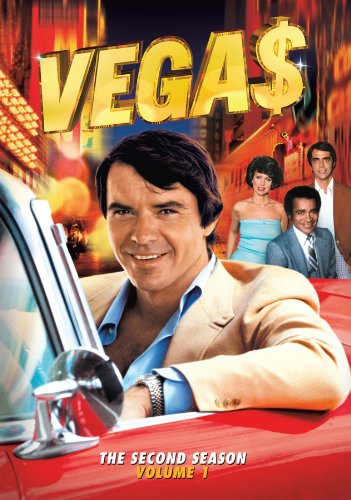
By 1978 the television detective model had been nearly complete and possibly already a cliché. Dan Tanna might have well been the complete model as far as the formula goes. It was almost as if you could go down a checklist and, like Dr. Frankenstein creating a monster, check off the necessary elements. The scripts could then almost write themselves, and you let the show fly on autopilot for three seasons or so until someone decides to look behind the curtain.

So let’s go down that checklist, shall we?

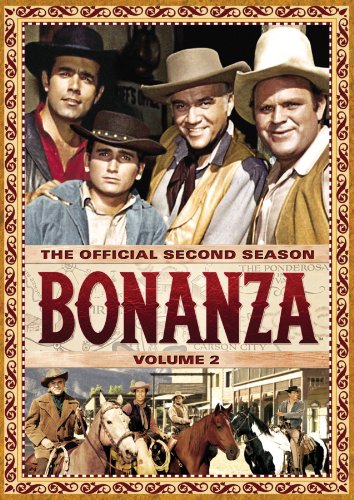
Three-time widower Ben Cartwright  (Greene) runs his famous Ponderosa Ranch with the aid of his three grown sons from three different mothers. There’s Little Joe (Landon), Adam (Roberts) and Hoss (Blocker). Set some time in the mid 1800’s, this long-running series followed the family’s many exploits. In the late 1950’s westerns accounted for six of the top ten programs on TV. Only Gunsmoke had a longer run than Bonanza. From 1959 to 1973, Ben Cartwright and his boys rode across the small screen. Years later in syndication the series re-emerged as Ponderosa, and a handful of TV movies continued the tale into the 90’s.We never have grown tired of the genre that gave us such heroes as John Wayne and Clint Eastwood.

You get the first half of the second season in this 5-disc release complete with 18 episodes. The set is highlighted by some great guest appearances. Jack Lambert, Ben Cooper, The Werewolf Of London himself Henry Hull, James Hong, Dan Duryea, Claude Atkins, Khan himself Ricardo Montalban, Bob Hopkins, Star Trek's Spock Leonard Nimoy, The Creature's favorite babe Julie Adams, and even Holy Guest Star Batman Adam West.

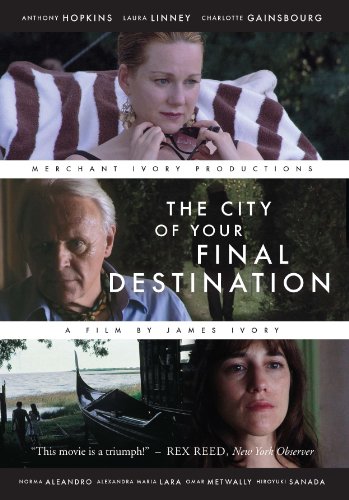
Omar (Omar Metwally)desperately needs to write the biography of author Jules Gund if he wants to hang on to his academic post. In order to do this, he will have to secure the cooperation of the reclusive author's surviving family: his wife (Laura Linney), his mistress (Charlotte Gainsbourg) and his brother (Anthony Hopkins). Pressured by his girlfriend to make something of himself, Omar heads off to Uruguay and essentially invites himself into the Gund residence, an isolated mansion in a state of genteel decay. Hopkins and Gansbourg are quick to agree to the project, but Linney resists, and Omar is gradually entangled in the family's complicated web of relationships, while drifting into an affair with Gainsbourg.

I haven't read Peter Cameron's novel which which the film is based, so I can't say whether this story's vision of academic life is the same as the book's, but I will say that what we have here is rather bizarre. Yes, there is some truth to the old “publish or perish” saw, but Omar's desperate career straights are ludicrous. So the film starts off with a shaky premise, and is further saddled with a distinctly callow protagonist. Though he is clearly supposed to be a rather weak figure, he is so difficult to care for that the film has a void at its centre. As for Linney, Hopkins and Gainsbourg, these are people who could make a recital of the phone book interesting, and their time on the screen is compelling, even if the film itself isn't quite.

Written by Diane Tillis

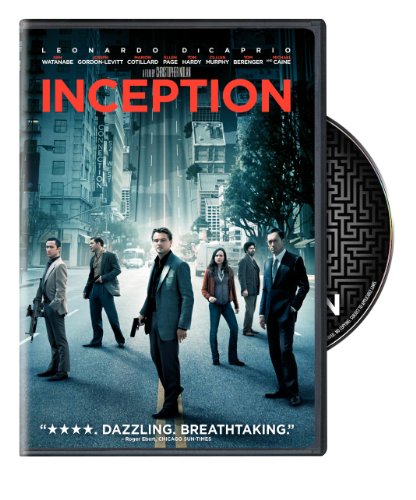
It is hard to talk about Inception without spoiling something. It is also hard to read any review and get a full feel for the film. Inception truly needs to be seen to understand why it is so amazing. On one level, it is an incredible action film that revolves around the heist scenario set in exotic locations such as France and Japan. On another level, the core purpose of the film is a complex discovery into dreams and the subconscious, and the consequences that come with manipulating the mind of another person. Inception is packed with inventive action, high drama, ideas and emotion. It is a masterpiece; whether it makes a billion dollars or not, it is a triumph for mainstream cinema. As the complexities of the film unravel themselves on the screen, Inception stands as a reminder that there is more to mainstream cinema than mindless entertainment. It forces the audience to think and question everything they are experiencing. If you give Inception the opportunity, I promise you will not be disappointed. In fact, you will want to talk more and more about the film once the credits roll to figure out what it all means. This is a sign of great cinema! Just for precaution, possible spoilers ahead!!