DVD

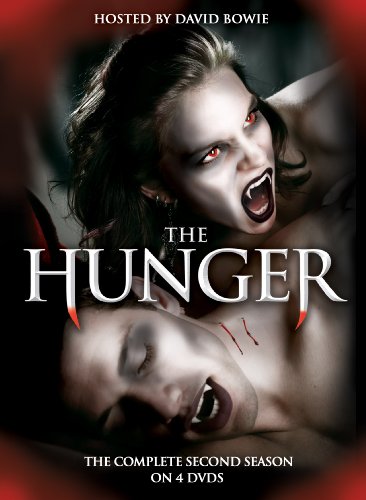
The second (and final) season of this erotic horror anthology series follows the pattern set down by the first. David Bowie replaces Terence Stamp as host, and takes up the job of briefly uttering portentous statements before each story rolls. These stories star such luminaries as Giovanni Ribisi, Eric Roberts, Jennifer Beals and Lori Petty, and are based on tales by a pretty impressive line-up of line-up of writers: Poppy Z. Brite, Kim Newman, David J. Schow, Gemma Files and Ramsey Campbell, to name but a few.

As before, the erotic fixations give the series a clear identity, but also narrow its focus so that a marathon viewing of episodes would be a bit tiresome. But again, as before, the talent involved means horror fans would be remiss to pass the series up without giving it a serious look.

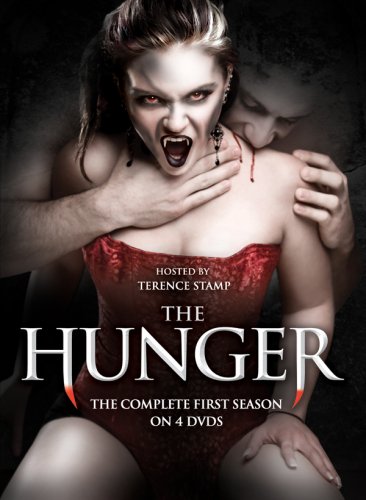
In 1983, director Tony Scott wasn't quite as prone to self-caricature as he is today, but he was already enamored of glossy, pretty surfaces, and if nothing else, his vampire movie The Hunger was glossy and pretty. The film arguably remains the most high-profile mixture of eroticism and horror, its place in libidinal history cemented by the love scene between Susan Sarandon, Catherine Deneuve, and Deneuve's body double. The film's lasting cult appeal resulted in a short-lived TV horror anthology series, presented by brothers Tony and Ridley Scott, and running two seasons (1997-8 and 1999-2000). Here we have Season 1, hosted by Terence Stamp.

The series' mandate was to present glossy sex-and-horror tales in a half-hour format. In this respect, it follows in the footsteps of The Hitchhiker (1983-91), but the intervening years mean generally better production values for The Hunger. An annoyingly long opening credit sequence leads to an enigmatic 30-second intro from Stamp (everything set to the sort of flashy cutting and visual excess that sure feels like it was directed by Tony Scott, even if it wasn't). The actual stories are notable for their talent on both sides of the camera – directors such as Russell Mulcahy, Patricia Rozema, and Tony Scott; actors like Daniel Craig, Karen Black, and Jason Flemyng. Even more interesting is the fact that just about every story is either adapted from a short story by a notable writer (Robert Aickman, F. Paul Wilson, Brian Lumley, Edgar Allen Poe) or scripted by one (Harlan Ellison, David Schow). The limitations of TV and budget are still present (beware some extremely ill-advised CGI), and the centrality of sex to the narratives mean that things can feel repetitious if you watch many episodes back to back. On the other hand, there is also some genuinely disturbing imagery here (check out the climax to “Necros”). In small doses, then, worth watching.

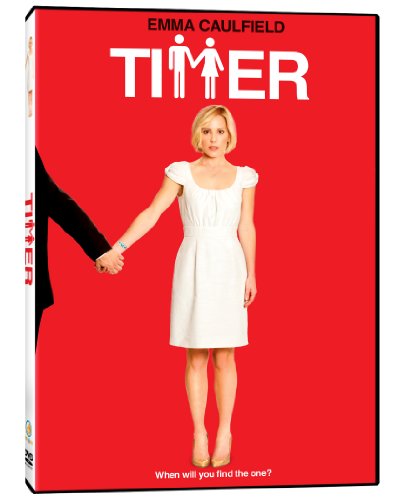
Timer is an innovative concept.  In the film, people can choose to be fitted with a timer which counts down until that person meets their soul mate.  The timer will tell you precisely how long you will have to wait to find true love.  Oona (Emma Caulfield) is in the rare situation of having a blank timer.  Her soul mate has not had one implanted yet and the suspense is getting to her.  Oona decides to go out of her comfort zone and begin dating a considerably younger man named Mikey (John Patrick Amedori).  The only problem is that Mikey is not slated to meet his soul mate for another four months. 

This film has a strong and imaginative concept. The writer/director Jac Schaeffer takes an ambitious approach at the romantic comedy genre and the result is a muddled film. The performances are mediocre and the characters are not fleshed out enough. I found myself struggling to identify with any of the characters.  The concept needed to be further examined with more confrontation and a grittier approach. When attempting to make profound statements about our culture in the happy-go-lucky genre of romantic comedy it becomes difficult.  By viewing this film as a critique of the popularization of internet matchmaking and dating, it asks the audience to enjoy more of the present and worry less of the future.  The statement is sound, but the vision is never fully realized.           

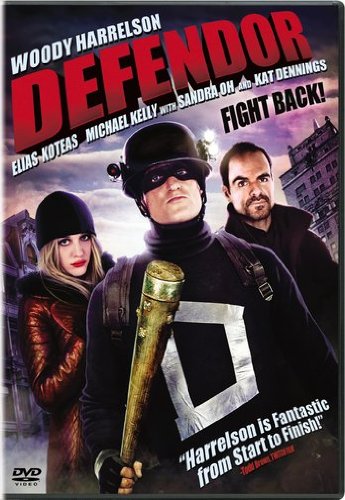
Woody Harrelson is Arthur Poppington, a child-like adult who fights crime by night in the guise of Defendor. His costume and weapons are DIY: a helmet that records his adventures on VHS, a duct tape “D” on his black turtleneck, a trench club, a slingshot, marbles, lime juice. He is obsessed with tracking down “Captain Industry,” a mythical figure whom he blames for the death of his drug-addicted mother. He runs afoul of corrupt cop Dooney (Elias Koteas at his scuzziest best), beating him and “rescuing” prostitute Kat (Kat Dennings), and the latter convinces him that the crime boss Dooney works for is, in fact, Captain Industry. Arthur sets out on his crusade, and the question is whether his naiveté will triumph, or get him killed.


A quirky, charming take on the super-hero genre, Defendor deftly mixes pathos and laughs. There is enormous fun in seeing Koteas taking one improbable beating after another, but there is also real sadness and drama in Arthur and Kat's stories. For all its “real world” patina, Defendor is ultimately no more realistic than The Dark Knight, but that in no way detracts from the deeply human, deeply moving, character-driven tale that unfolds. Quite the wonderful little movie.

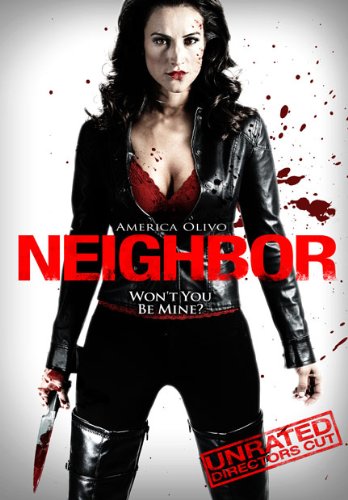
I'm reminded of my innocent childhood days when Mr. Rogers would come on my black & white television to change his shoes and put on a sweater. I have to say that I always found the guy a little creepy. He would sing to us in a soft hypnotic voice: "It's a wonderful day in the neighborhood, a wonderful day in the neighborhood. Could you be mine. Would you be my neighbor." Mr. Rogers had quite a fanciful neighborhood indeed. The place was mostly populated with puppets and strange creatures of all sizes. And while today he'd look and sound like a pedophile, Mr. Rogers welcomed everyone to his neighborhood. So, I can't help thinking how he'd feel about "The Girl".

"The Girl" is played by America Olivo, and while her name may sound like a country and a margarine substitute, she's actually pretty wickedly phenomenal in the new direct to video horror film Neighbor.

In 2007, nineteen years after a similar uprising was crushed by Burma’s military junta, frustrated citizens once again took to the streets. Led by troops of monks in peaceful demonstrations, they made their voices heard by the generals, demanding freedom and democracy. The reaction was swift and violent. Men with riot gear and guns descended on the demonstrators and after many clouds of tear gas, numerous beatings, and even some shootings, the government quickly broke the spirit of its people again.

These incidents, and the actions that led to them, were chronicled by a courageous group of video journalists called Democratic Voice of Burma. These men and women captured hours of footage, risking imprisonment and worse, and got that footage out to the world over the internet and through trusted couriers. The images they captured allowed the people of the world and, even more importantly, the people of Burma (to whom the footage was also broadcast), to see the truth behind the lies of the Burmese government.

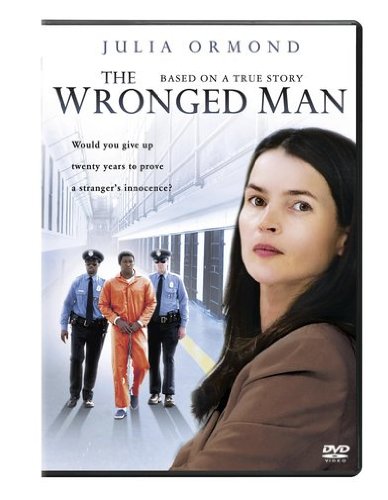
"Would you give up 20 years to prove a stranger's innocence?"

That's the question that is asked and answered, at least for one person, in the docudrama The Wronged Man. The film is a made-for-television movie that appeared originally, and still does from time to time, on Lifetime.

The Cartoon Network Hall of Fame seems to be expanding. Some of you might remember my review of Johnny Bravo Season One which was one of the first titles under this distinction. Courage the Cowardly Dog seems to be the most recent entry in this series and we can only hope that it is as good as ole JB, the king of people who sound like Elvis and excessive machoism.

Courage is a very special dog. He was abandoned as a puppy after his parents were sent into outer space. He was later found by Muriel Bagge, an elderly woman and taken into her home in Nowhere, Kansas. Courage’s personality is totally unlike his namesake. He is unfortunately a coward in every sense of the word. However, this lack of “courage” is what probably keeps him alive.

As the name suggests, this is a collection of ten movies on LGBT themes. In chronological order, here's what we have:

The Children's Hour (1961): Shirley MacLaine and Audrey Hepburn are the headmistresses of a girl's school, and their lives are turned upside down when one ghastly little child accuses them of being romantically involved. It is clear, though, the MacLaine would very much like to be. This was director William Wyler's second stab at adapting Lilllian Hellman's play, and this time was able actually to deal with the play's central issue, rather than disguise it as he had to

Several years ago comedian Doug Benson made a joke about wanting to parody the film Super Size Me, after watching it while high, by smoking pot continuously for 30 days. A filmmaker heard that joke and decided to make it a reality. Upon making the film, there was an added catch to Benson's plan of 30 days being “Super High,” as he would have to be stone sober for the 30 days leading up to it.