DVD

Jody Balaban (Leelee Sobieski) is a newly minted film school grad who, heady with the success her student film has brought her (an award presented by Garry Marshall!), heads off to Hollywood to find fame and fortune. Instead, she finds doors shut to the newcomer, the closest she can get to a major studio job being a stint directing traffic. But then she is offered a job as an editor. The only problem is, the studio in question is a porn outfit. Her dismay is all the greater since she has been put off sex due to the enormous childhood traumas of having been spanked for asking what a blow job was, and not being able to kiss the boy she had a crush on while playing Spin the Bottle. She takes the job, though, her plan being to shoot her own dream film, a romantic comedy called “On the Virge” (ouch!) on the sly, using the company's resources at night. Romance, meanwhile, might bloom in her real life, as she finds herself working with porn-director-who-once-aspired-to-something-more-and-is-devastatingly-handsome Jeff Drake (Matt Davis).

Writer/director Julie Davis's film is, apparently, rather autobiographical, drawing on her own early experiences in the industry. One hopes that she has maintained a healthy artistic distance from her protagonist, because Jody is hard to like. Her naiveté approaches a diagnosable condition, and it is coupled with a prodigious sense of entitlement, artistic self-regard, and snobbery. Though we see her learn to see the porn stars she works with as people and friends, she is so off-putting that it is hard to care enough to be interested in her emotional education. As well, the film itself presents the porn stars as lovable idiots, and so its own point of view doesn't seem far removed from Jody's. Furthermore, the look of Finding Bliss is simply not that interesting, making it hard to believe that Jody and Jeff are themselves unsung cinematic geniuses. On the other hand, Kristen Johnston as the porn studio's upbeat executive is good fun, and brings some snap to every scene she's in. Overall, though, the piece is simply too smug for its own good.

After watching plenty of terrible horror movies in my life, I start to wonder if this is easiest thing in Hollywood to produce. Work with a small budget, come up with a scare and hire some shapely actors to play the ones in peril. Oh, and make sure you have plenty of fake blood. Our example today is Open House, a recent horror movie directed by Andrew Paquin.

We open to a couple being shown a house by Carl (played by Gabriel Olds). During the showing, a stranger comes into the house and then hides in the basement. When Carl leaves, he has a strange feeling that somebody is there. However after looking in the basement and garage, he doesn’t find anything. EXCEPT DEATH. Okay, not really just we know what’s coming. We are soon introduced to Alice (played by Rachel Blanchard) who owns the house.

"There is a place, a mystical nexus, where this unholy relic can be destroyed. I only hope we can get there before Vellich."

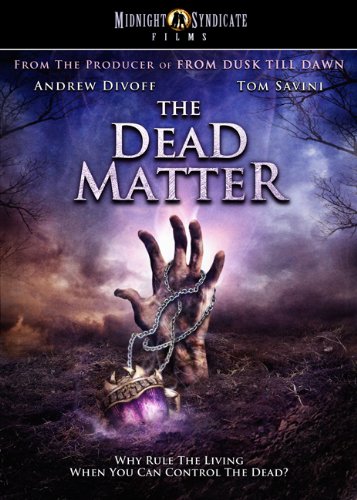
When you think of Edward Douglas, you really do not think about him as a film director or writer. He's made a name for himself mostly in the music business. No, you aren't going to see his videos on MTV, and it's not likely that you'll find his name on the charts. He's become somewhat the poster child for specialized Halloween music. So, I guess it isn't that large a leap to find him writing and helming his first film, obviously a horror film. In case you're not familiar with his music or band, Midnight Syndicate, Douglas won't let you forget them in his first film. Their music and name can be found splattered, if you'll excuse the pun, all over The Dead Matter.

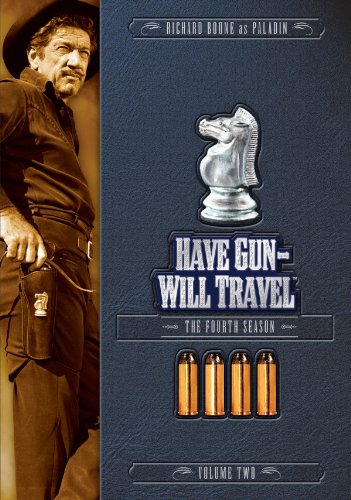
“Have gun, will travel reads the card of a man. A knight without armor in a savage land…”. Those words ended every episode of Have Gun Will Travel, sung by Johnny Western in a time that such words could be sung without irony. Outside of Richard Boone’s black-clad, craggy Rhett Butler gone-to-seed gunfighter, that song was all I could really recall about this venerable Western from television’s golden age. Would it, like so many revisited shows from my youth, ultimately disappoint? Or would it hold up fifty years after it was originally broadcast, viewed as it would be by the far more jaded, cynical man I’ve grown into?

The verdict? It’s pretty darn good.

NOVA is one of the longest-running series of documentaries in television history. It has been a mainstay on public television since 1974 when the first episode took us behind the scenes of the filming of a nature biography. Since then the series has explored everything from space to mathematics. Episodes have focused on people, places, and things. Classroom curricula have been built around the series. In case you're keeping track, that's 37 years that the show has been on television. Technology has gone through incredible changes, as have the subjects of episodes, later updated in later episodes. You'd be hard- pressed to find anyone who has not seen at least one episode. The release of Mount St. Helens: Back From The Dead marks the most recent episode to air, finishing the 37th season.

Mount St. Helens, located in Washington state, is responsible for the most powerful volcanic eruption in the continental United States in the last 150 years. It was not a typical eruption. There was very little of the lava flow that most of us think about when we think of volcanoes. But it blasted a plume of ash and toxic gas miles into the air and destroyed an area of about 200 square miles in the blink of an eye. It was the first time a volcano erupted sideways. The eruption caused nearly 50 deaths and untold damage.

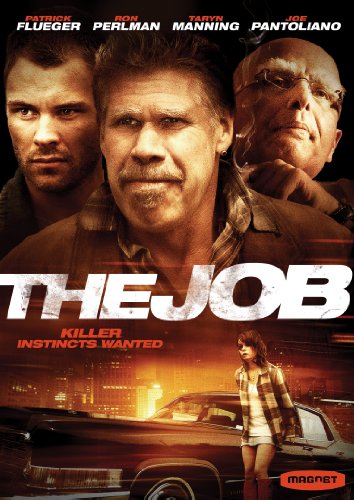
One of the most difficult types of films to pull off is the black comedy. By its very nature the film has to be somewhat morbid and exist in a world of the absurd. As much as I am often drawn to this kind of movie, I haven't found more than a handful that were able to pull it off. The black comedy usually involves someone's death, often by some bizarre means, and almost always in a world of moral ambiguity, where such things fail to affect the emotions or consciences of those involved. The death has to appear almost matter-of-fact. Probably the best example of a good black comedy is Michael Caine's A Shock To The System. Bad examples include the Weekend At Bernie's films. Now you can add The Job to one of the better examples of the genre.

Meet Bubba (Flueger). He's a typical down-on-his-luck kind of guy. He can't hold a job and has been in these dire straits for over a decade. He spends most of his time hanging out at the diner where his girlfriend Joy (Manning) works the counter. Usually all he can afford is a cup of coffee. He whiles away the time listening to Joy talk about her acting career. As a child she was in a popular show, but hasn't found a part since that time. It doesn't help that she possesses an exaggerated limp, dragging one of her legs as she walks. Apparently, it's a lifetime disability. When we see footage of her as a child on her series, the kid is dragging the same leg. Enter Jim (Perlman). He's dressed in an urban cowboy outfit and sits next to Bubba and asks what's good. Bubba recommends the trucker's special, which Jim quickly orders. But suddenly Jim doesn't feel so hungry and offers the food to the obviously very hungry Bubba. The two talk a spell, and eventually Bubba offers to let Jim park his car to sleep in at his spot next to his apartment. Feeling obliged for the favor, Jim offers him a sheet of paper given to him by a man he helped in Baltimore. The slip is for a job interview at someplace called Be Your Own Boss. Bubba figures “why not”, and goes to the office.

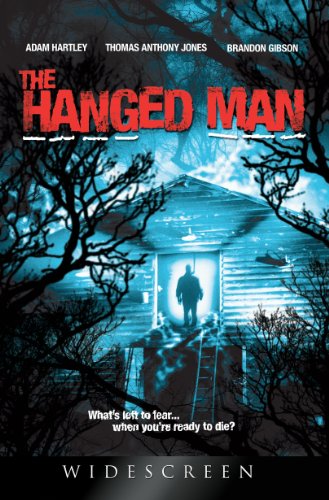
Everybody is always looking to find a new angle or a fresh way of looking at the typical horror film. That is, when they're not trying to recycle/reboot/remake/reimagine something that's already been done, often more than once. Credit writer Glenn B Hopper III and director Neil H. Weiss for at least coming up with a new spin on some old ideas. The Hanged Man doesn't venture very far from its traditional horror roots, but it does offer you a little more thoughtful motivations and insights into its characters and situations. I have to admit that while I didn't exactly see the end coming, it wasn't a terrible surprise or shock either. These guys didn't exactly telegraph their punches. In fact you could say that they took the long way around to their conclusion ... maybe too long.

A group of depressed folks who have become chat room buddies meet on an isolated farm, once the homestead of one of them. They've come here to carry out a very simple plan. Life, for one reason or another, has gotten out of control for each of them. They've reached the conclusion, perhaps with the help of their leader Dwarfstar, that the only option left to them is to end it all. So they've gathered to kill themselves in this lonely place. Each of them arrives one at a time. They bring their real-life baggage with them, often in sharp contrast to the internet side of them, which is all they have, until now, known of each other. SoCo (Hatley) has a lot of aggression and is the most eager to get done with their business there. Miles (Jones) is a bit of a yuppie throwback in his pink Izod shirt and faux calmness. Flash (Gibson) is an urban cowboy full of booze and totin' a six-gun. He's as loud as his clothes. X-Factor (Hampton) is the quiet one. LT56 (Weissman) is a middle-aged loser who claims to be a rich stockbroker but arrives in a stolen Porsche. Finally, there is Spaceshot (Leigh) who grew up on this now abandoned farm. They are all waiting for Dwarfstar to arrive with his "magic potion" that will release them from their miserable lives.

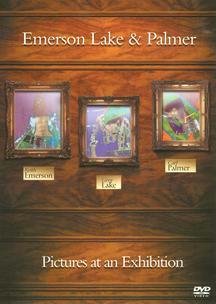
The rock gods must have been smiling when Keith Emerson, Greg Lake, and Carl Palmer journeyed from their perspective corners of the music world and combined to form the band Emerson, Lake & Palmer, or merely ELP to the fans. Keith Emerson had made quite a name for himself with his manic organ riffs in working in the band The Nice. Greg Lake was busy with the band King Crimson where he worked with long-time ELP collaborator Peter Sinfield. Carl Palmer was the youngest member of the group and had played for several bands before meeting up with his eventual ELP bandmates. Together they would help to define an entire genre of music. This new progressive rock era would be recognized not by hit singles and AM radio play; instead this music would be enjoyed for its virtuosity and complexity. In all of the years the band enjoyed success, they've released less than a handful of what the industry defines as a single. Yet, anyone who has ever seriously picked up an instrument in the last 40 years knows exactly who they are.

The band formed in 1970, and by the end of that year they were already doing some quite ambitious things. One of the most ambitious and most memorable was their modernization of Mussorky's wonderful Pictures At An Exhibition. The piece was actually originally written by the classical composer as just a piano piece. It was one of the first classical works I had ever fallen in love with. Unfortunately, that original arrangement is rare. I find that most people are unaware of the composer's original intent.  It strikes me as odd that there are people who call themselves purists who have ranted about the reinvention of this music by ELP. It's a bit hypocritical when you consider that the version that they likely enjoy was also tampered with and not what the composer intended for the work. When Emerson Lake & Palmer took on the collection of works, they added a modern spin that included MOOG synthesizer solos and even lyrics written and performed by Greg Lake. The beauty is that these new elements were quite faithful to the subject and fit as if they had always belonged. It's no less sacrilegious than the orchestrated version you've likely heard, which is enjoyed by the elitists.

Since I get to review a lot of sitcoms, I tend to see the gambit of shows designed for only purpose. That purpose is for me to laugh. But there is another word in sitcom which can restrict how funny the comedy will be to a given person. Situational. The situation I present here involves a female sports columnist and her male friends. One can only wonder if this formula created by Betsy Thomas will be what I'm looking for.

P.J. Franklin (played by Jordana Spiro is a sports-writer for the Chicago Sun-Times and she works and lives with a whole lot of males. She rooms with a radio DJ named Brendan Dorff (played by Reid Scott). They have two close friends named Mike Callahan and Kenny Moritorri (played by Jamie Kaler and Michael Bunin) who run a sports memorabilia store. Mike and Kenny are also single and spend their times trying to get the ladies.

Extraordinary Measures is a moving story about family and a father’s perseverance to find a cure for his children.  John Crowley (Brendan Fraser) seeks out the help of an irritable medical researcher (Harrison Ford) whose theory cannot be fully developed without extensive funding. As the time ticks away, so does the probability of finding a cure.  This film requires an emotional investment and audiences will be surprised at how invested they become. 

Coming from emotionally charged source material, the filmmaker (Tom Vaughn) was given the difficult task of conveying personal emotion to a mass audience. Too often stories similar to this are made into low budget made for TV films which are downtrodden for their ineptitude. It is difficult for audiences to shed that stigma from the marketing of this film. However, on a positive note, Extraordinary Measures is executed quite well.  The momentum of the film is driven from the story and less on aesthetics.  The shot selection, editing and score of the film are all pedestrian at best.  However, there is something to be said for a film that has an arbitrary execution and still manages to maintain the audience’s attention.