Posted in: Disc Reviews by Archive Authors on September 27th, 2010
The Plot: The Order, disappointingly, turned out to be not much more than a Heath Ledger vehicle, apparently targeted at Goth teenage girls with vaguely Euro pretensions. Without letting out any spoilers, trust me when I say that you’ll be disappointed if you expect anything like what the trailer portrays. The trailer says implies that the Vatican is “using a killer with supernatural powers to absolute control of an empire” and paints the movie as a fast-paced action/thriller church conspiracy film – which it isn’t. What is it? Part drama, part horror, very “moody,” totally boring.
The movie’s story line is atrocious and disconnected, with little to suggest that one scene even belongs in the same film as another. OK – here’s an example, spoiler warning given: those two little kids. What purpose do they serve, other than to look briefly CGI-scary and then disappear? None. They are hell-spawn, but we’ve got no idea why they’re around, where they came from, why they look like kids, what they want, or anything. Completely pointless and unrelated to everything. Bah.
Posted in: Disc Reviews by David Annandale on September 24th, 2010
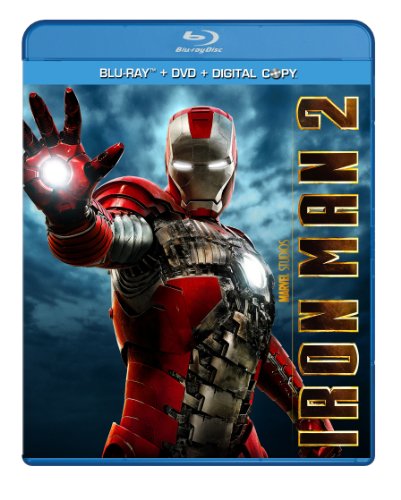
Jon Favreau's Iron Man was one of the happy events of 2008. It was a superb piece of super-hero entertainment, one that handled lightning-quick shifts in tone (grimness in Afghanistan, hilarity in Malibu) with a deftness that made the very hard work look very easy. It also reassured comic fans and mainstream audiences alike that there were still terrific movies to be made based on Marvel characters, reassurance that was sorely needed in the wake of the dire Spider-Man 3. So, the question with Iron Man 2 is, given the returning director and cast, was that same magic recaptured? The answer is a delighted yes.
The story picks up with Tony Stark (Robert Downey Jr) basking in his fame as Iron Man. He puts on a showy entrance at the opening of the Stark Expo, thumbs his nose at a Congressional committee that wants to appropriate his suit's technology, and races fast cars. But beneath the levity is a dying man: he is being poisoned by the very element that is keeping his heart ticking. Other problems arise in the form of Ivan Vanko (Mickey Rourke), the embittered son of a former research partner of Howard Stark (Tony's father), and Justin Hammer (a hysterically funny Sam Rockwell), Tony's self-regarding business competitor, who is a devious and corrupt as he is incompetent. Unlike Hammer, Vanko is dangerous, harnessing the same energy source as Stark to power his own super-suit. They join forces to destroy Iron Man. He, meanwhile, seems bent on destroying himself before they can get around to it. His behaviour becomes erratic, forcing best friend James Rhodes (Don Cheadle) to abscond with the War Machine suit, and he turns over his company to Pepper Potts (Gwyneth Paltrow). Into this mix comes SHIELD, embodied by leader Nick Fury (Samuel L. Jackson) and agent Natasha Romanoff, AKA the Black Widow (Scarlett Johnansson). Fury sees Stark as a potential asset, but only if he can both sort his life out, and save it. The question is whether he will do so before Hammer and Vanko's plans come to fruition.
Posted in: Disc Reviews by Gino Sassani on September 23rd, 2010
Ever wonder what the kids of South Park might be like if they ever made it to adulthood? While I’ve not seen that many episodes of the FX series It’s Always Sunny In Philadelphia, that was the first observation that came to mind. These are the South Park kids all grown up. They’re crude, raunchy, mean, and most importantly, they are as politically incorrect as ever. If you need an example, I can offer one right from this episode. The guys have a Christmas tradition that dates back to their childhood of throwing rocks at moving trains. An episode I caught a while back had two of the guys going to an abortion rally because they suspected that pro-choice chicks gotta be easy. Sound like anyone we know? If you love irreverent humor that’s not afraid to cross over the line, this F/X series has everything you’re looking for, and without those silly construction paper animation limitations. These are real dudes.
The best way to introduce you to the world here is through the characters. The Philadelphia setting and all of the other trappings really don’t matter. You could put these characters any place, doing almost any jobs, and the series would pretty much be the same. The actors and some cleverly written dialog really make the show.
Posted in: Disc Reviews by Gino Sassani on September 22nd, 2010
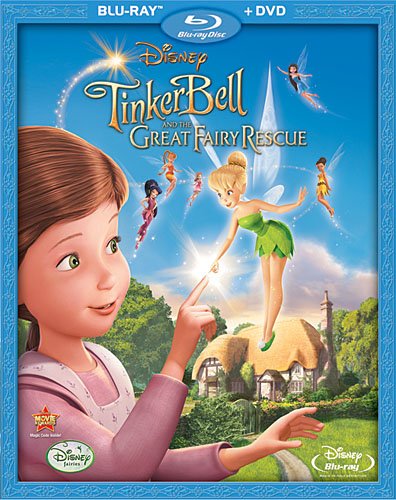
“Some people say that fairies are the stuff of fantasy. They think the world is just what you can touch and hear and see, while others say the tales and legends cannot be dismissed. They believe with all their hearts that fairies truly do exist. Through all of time, human beings and fairies never met, till one special summer that we shall not soon forget.”
Tinker Bell has been a Walt Disney icon almost since its inception. The character has gone way beyond her appearance in Peter Pan. In the decades since, she has come to represent the magic of Walt Disney and its many incarnations. Seen at the beginning of every Disney title, Tinkerbell is likely as recognizable as Mickey Mouse and his many friends. John Lassiter and the animators of Disney’s new CG animation studios take on this monumental character in the third of at least five announced films to feature the little fairy. Lassiter brings his best magic, learned developing Pixar over the years, to create a feature that rivals the Pixar brand in quality and technological presentation. The animation is incredible. The CG environments are absolutely beautiful. With the help of Pixar, Disney has made the same strides in computer animation that it once made in traditional hand drawn animation. This picture is light years ahead of almost anything else I’ve seen outside of Pixar itself. Understand that this is a direct-to-video production with far less of a budget than a theatrical release, and the look of this world is even more incredible. Characters interpret with effortless smoothness, and the result is a nearly 3D presentation. The result is a quite amazing to look at.

Posted in: Disc Reviews by Gino Sassani on September 21st, 2010
Alan Ball was pretty much an unknown to anyone but a few Hollywood insiders and fans of such television shows as Grace Under Fire and Cybill, where he wrote a mere total 10 episodes combined. When he began to shop the idea for American Beauty, he had originally conceived it as a stage production. Truth be told, he wasn't sure that there was a studio out there that would touch the awkward dark idea. But Dreamworks was still a young company with big ideas. If there was a studio out there that was going to take a flyer on a young talent with an oddball script, it was Dreamworks. Of course, they weren't going to take a very large flyer. The budget for the film was set at about $15 million. Not much even for 1999. The guys were willing to gamble. The gamble paid off.
The film didn't attract any of the established directors in the industry. I'm sure the budget had as much to do with that than anything else. Sam Mendes hadn't directed a feature film to this point. Actually, he hasn't directed all that many films in the decade since. With the small money and young, inexperienced director, this was looking more and more like an independent or festival film. But then something began to happen.
Posted in: Disc Reviews by Gino Sassani on September 21st, 2010
"We are pioneers and trailblazers. We fight for freedom. We transform our dreams into the truth. Our struggles will become a nation."
I was really looking forward to this release. From the moment I was made aware that it was going to be arriving here for review, I made a mental note to put it at the top of my viewing list. Fact is, I'm a history junkie, particularly American history. I taught the subject in AP and honors classes along with American Government and Law for over seven years. The History Channel is also one of my favorite places on the dial. There are many thought-provoking and informative shows to be found there to help you explore almost every aspect of history. I truly expected this to be one of those milestone releases. Unfortunately, it isn't.
Posted in: Disc Reviews by Gino Sassani on September 16th, 2010
Tennessee Williams was both a prolific writer and celebrated personality in his day. His plays are still making the rounds of community theaters and even more than a few higher- end performance halls around the country. Songs have been written about the guy, and he's quite honestly become a bit of a mythic legend over the years. A lot of that owes, in no small part, to his huge hit A Streetcar Named Desire. The 1947 play was a huge hit on its own. The thing even snagged a Pulitzer. There hadn't been a bigger play before it, and few have reached the popularity and classic status since. Then director Elia Kazan got his hands on the material. And while another writer worked on the screen adaptation, Kazan was smart enough to have Williams himself write the screenplay. A couple of things happened with that 1951 film. While this was actually his second screenplay, it would catapult him into the film and television side of life. His career ... and our screens … would never be the same.
A Streetcar Named Desire is still huge today. But is it the material from Williams or the amazing performances of Marlon Brando, Karl Malden, Kim Hunter, and Vivian Leigh that stand out after all of those years? Isn't it Kazan's inspired direction and his unique eye for cinematography that make the film so memorable? I guess the argument could be made for any of those things. Likely, it was the fortunate combination of these elements that made that film what it remains today. There's been a kind of rediscovery of Williams of late. There's also Hollywood's penchant for "lost" material. All of these things combined to bring actress and first-time feature director Jodie Markell and one of Williams' "lost" screenplays together for the 2010 Loss Of A Teardrop Diamond.
Posted in: Disc Reviews by Gino Sassani on September 15th, 2010
"There is a fifth dimension beyond that which is known to man. It is a dimension as vast as space and as timeless as infinity. It is the middle ground between light and shadow, between science and superstition, and it lies between the pit of man's fears and the summit of his knowledge. This is the dimension of imagination. It is an area which we call the Twilight Zone."
Posted in: Disc Reviews by Gino Sassani on September 15th, 2010
"It is said some lives are linked across time. Connected by an ancient calling that echoes through the ages. Destiny."
The Prince Of Persia is not some new phenomenon sweeping the country. The original video game goes back quite some time to the pre-high-definition consoles of the late 1980's. Over the years the title has had some major staying power and has continued to flourish across several platforms and generations of graphics and game play. Today video games are more and more like movies themselves. Many of these games carry budgets as high as blockbuster effects-laden tent-pole films. It's big business. The technology has nearly merged between film and video game. And while Prince Of Persia is not the first game to be turned into one of these mega-movies, it just might be the closest thing to bridging that gap yet.
Posted in: Disc Reviews by Gino Sassani on September 15th, 2010
I did not see Tyler Perry's moderately successful 2007 film, Why Did I Get Married. I never thought that would present much of a problem with his recent Why Did I Get Married, Too. I've seen plenty of Perry's films and think that I have a pretty good grasp of where he's coming from. Early this year I watched and reviewed I Can Do Bad All By Myself. It was a new direction for Perry and, while he did include his famous Madea character, the film wasn't really about her usual antics. I guess I expected this film to follow in the footsteps of that rather impressive effort. Unfortunately, I may have misjudged my ability to follow this film without having seen the first. Either that, or Perry has gone terribly wrong somewhere along the way.
This is the story of four couples who have obviously been friends for a long time. As the film opens they are about to attend a marriage retreat, at least that's what the dialog leads us to believe. What they are really doing is gathering at a time-share condo in the Bahamas for a week of hanging out together. The only resemblance to a retreat is a tradition they share on their final night together. They gather on the beach around a campfire and take turns telling the story of why they got married. I suspect they should all know these stories by now, but this year the trip certainly threw in a few surprises. The most stalwart marriage is apparently ending.