Posted in: Disc Reviews by Gino Sassani on May 25th, 2010
"On Robben Island, in Pollsmoor Prison, all of my jailers were Afrikaners. For 27 years I studied them. I learned their language. Read their books, their poetry. I had to know my enemy before I could prevail against them. And we did prevail, did we not?"
Leave it to Clint Eastwood to make even rugby look interesting. Of course, Eastwood himself would correct me and observe that Invictus isn't really about rugby. As the words of Nelson Mandela above suggest, this movie wasn't really about rugby at all.
Posted in: Disc Reviews by Gino Sassani on May 17th, 2010
For most of this last decade Mel Gibson might as well have vanished from the face of the planet. The once extremely popular actor had charmed the world. Women found his childish grin to be irresistibly sexy, and men bought into the “kick ass and crack a joke” style that made the Lethal Weapon films such a romp of fun. But lately, you expect him to be the subject of a “Where Are They Now” segment from a late show on television. It's no secret why Gibson climbed so quickly out of the public eye. I'm sure everyone still remembers the drunk-driving arrest where Gibson compounded his already serious case of bad judgment with even worse judgment. He tussles with the police officers who stop him and lets loose one of the worst anti-Jewish rants since Pharaoh unloaded on Moses. He apologized, of course, but some things just can never be put back into the box. There's an old Latin phrase that roughly translates to "In wine there is truth". The idea is that Gibson's true feelings were revealed by the reduced inhibitions of alcohol. Whatever his real feelings might be, none of us will ever know, and I don't really have an opinion, or care for that matter, except for the fact that it has removed Mel Gibson from the front of the camera pretty much ever since. His only projects have been as director, producer, and even writer. Even those efforts have been controversial. It's hard to watch The Passion Of The Christ without a visceral reaction to what you've seen. It's been a rough decade for Mel Gibson.
For those who have seen the British mini-series, and I reviewed it in these pages some time ago, you'll find that while the story doesn't really change, the dynamics of the story certainly change, and for the better. This wasn't a good story to drag out over six hours. The British version went into some fantasy elements that this version absolutely avoids. While Craven still appears to be seeing the "ghost" of his dead daughter, it appears to be more in his mind and a product of the grief. In the British series it got rather silly with her teaching him how to do laundry. It was quite absurd, after a time. The basic story elements do remain:
Posted in: Disc Reviews by Gino Sassani on May 10th, 2010
A short time ago I had the unexpected pleasure of watching and then reviewing Tyler Perry's I Can Do Bad All By Myself. I say unexpected, because I was looking for the typical Madea antics and ended up drawn into a compelling gospel musical that was inspirational and entertaining without ever feeling like I was sitting in mass listening to a long homily. Now I've just had the opportunity to see Stan Foster's The Preacher's Kid. There's no doubt that Foster has been inspired by the Black Theater productions of guys like Perry. There appear to be a couple of inside swipes at Perry in the film. I call them swipes, but it's more likely they are loving jabs. I get the impression that Foster is a fan of Perry's and, unfortunately, has tried hard to imitate his style. The result is certainly not a terrible film at all. It's just not a very good one, either.
The plot is based on the biblical parable of The Prodigal Son. In this case it's the Prodigal Daughter. Bishop King (Williams) is a hard taskmaster for the Lord. He has a thriving community congregation that features one of the nation's best gospel choirs. Of course, the choir stars his own daughter Angie (Luckett) as the soloist. They are on their way to a huge competition in New York City, and everyone expects that Angie's going to lead them to the promised land, so to speak. But Angie is getting restless. She has dreams of a recording contract and fame and fortune. She's tired of giving up so much for the Lord and longs for a little Angie time. Her rigorous schedule doesn't even allow time to catch a movie from time to time. She and close friend Marcia (Kelly) sneak away to a club where a has-been recording artist Devlin (Tank) is partying. The girls make his acquaintance, and he is taken with Angie. He invites them to attend a performance of his gospel play called Daddy, Can I Come Home. Angie loves the production and is invited to a diner to eat with the cast and crew, where she loudly declares that she absolutely must be a part of the production. An impromptu audition wins her the part of understudy to the lead. It's her father, the Bishop, who she can't convince. She leaves even after he warns her that he wants nothing to do with her, should she go. Not very Christian, for a Bishop that constantly asks everyone around him: What would Jesus do? Certainly, he wouldn't disown his kin. So Angie goes on the road with the production. She is seduced by player Devlin and quickly falls into the temptations of the road. Before very long, she's drinking, taking drugs, and sleeping with the abusive star. Meanwhile, her church must prepare for the competition without their star singer. Angie soon discovers that the life she coveted isn't all that she hoped it would be. She must endure betrayal and abuse from Devlin while finding her dream of one day singing the lead doesn't look very promising at all. And, like The Prodigal Son of the Bible, Angie wants to go back home.
Posted in: Disc Reviews by Gino Sassani on May 4th, 2010
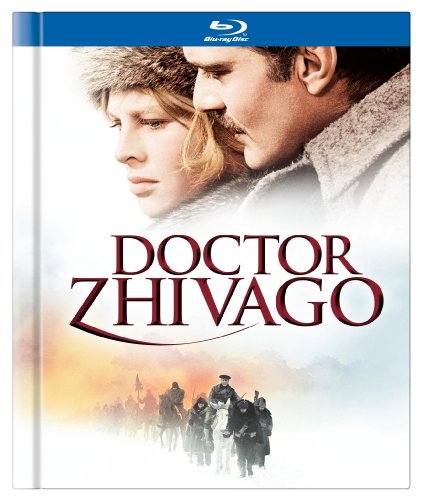
In many ways the epic story and film Doctor Zhivago echoes the real-life story of Boris Pasternak, who penned the original novel. Pasternak was a firsthand witness to the events that led to and became the Russian Revolution. He collected 50 years of memories that began with the early days before the revolution and ended with his own confrontations with the USSR government. Like Zhivago in the story, Pasternak's work was banned in his own country. The manuscript had to be smuggled out of Russia and found its way first to Italy, where it was finally published for the first time. But it didn't stop there. The book quickly found its way to countries all over the globe. It was translated into several languages in a very short time. In 1957 Pasternak was honored with the Nobel Peace Prize for literature. Alas, that was not meant to be. He was confronted with the Party Government and warned he would not be permitted to return home should he go to Sweden to accept the prestigious award. And while that might not have appeared to have been much of a threat when you consider Pasternak's harsh observations, this was his homeland, and he did have family there who would have most assuredly paid a price for his actions. He declined the award, begging the committee to not "judge him too harshly". It would be Pasternak's last stand. He would never see the complete success of the novel or the impact it made on the world stage. He died just three years after turning down the award. He was never to see David Lean's epic interpretation of his work. He never saw the film Doctor Zhivago.
I must confess that I too had never seen the movie. I had certainly seen many clips of the film. It was impossible to follow films, in general and not be aware of the film and its impact. Of course, I had heard much of the music. The Love Theme, also called Lara's Theme, has become one of the most recognizable movie themes in the history of the industry. The movie was quite popular, but circumstances just never presented themselves for me to have the opportunity to see this movie, at least in a manner worthy of its reputation. Certainly, there were television showings, but I could never bring myself to experience such an iconic film in a cut-up fashion with likely an inferior print. Even DVD kept me at a distance. Did I really want to watch this movie with a 3-4 mbps bit rate? Certainly not. I suspect there is perhaps an entire generation of film fans out there that found themselves in the same situation. We've been asking ourselves: will there ever be any chance of seeing the movie in a format that preserves its splendor? I guess I was holding out for a nostalgic screening at a local at house theatre. And then came Blu-ray, with its limitless possibilities, and finally a copy of Doctor Zhivago would arrive on my doorstop. My dog barked ceaselessly at the UPS man who delivers these goodies on an almost daily basis. This time there was an extra snarl in that growl, I was sure of it. Could she have known that this particular delivery was going to find me and my wife locked away for nearly 4 hours (in my case more like 6) in our, closed to dogs, little theater? She knew. She knew.
Posted in: Disc Reviews by Gino Sassani on April 14th, 2010
"Imagine a world of incredible color and beauty. Of crabs wearing jellyfish for hats. Of fish disguised as frogs, stones, and shag carpets. Of a kaleidoscope of underwater life. Now go explore it."
Jim Carrey narrates this IMAX experience that takes you deep under the ocean. The film focuses on five particular locations: New Britain and Milne Bay (both in New Guinea), South Australia, the Great Barrier Reef, and Indonesia. Because this was filmed with IMAX equipment and presented here in high definition, you can expect a pretty spectacular ride on this one. Most of the animals shown here are obscure and rare, including plenty of cuttlefish segments and some really bizarre but striking sea dragons. The coral reef settings are extremely beautiful. It was originally presented in 3D during its IMAX run, but that version is not included here.
Posted in: Disc Reviews by Archive Authors on April 6th, 2010
"It's New Year's Eve on the Poseidon. Partying voyagers toast the future. The future comes in a rush; a 150 foot rogue wave flips the cruise ship over. And a struggle to survive begins."
Poseidon doesn’t waste any time getting to the action, so I won’t waste any time with an introduction to this review. Yes, it’s a remake of the 1972 film, The Poseidon Adventure. Yes, it is chock full of convenient cardboard characters (a former Navy man, a fireman, a nurse, etc…). But we don’t watch movies like Poseidon for character exposition, do we?
Posted in: Disc Reviews by Gino Sassani on March 31st, 2010
"The year is 208 AD. After 30 years of civil war, a deathly calm has fallen over northern China. One by one the rebel warlords have met their end under the sword of Prime Minister Cao Cao. Now even the Emperor bows before his power. Yet, from the south a challenge is heard. Two leaders rise against Cao Cao's tyranny. The aging Liu Bei and the inexperienced Sun Quam. So Cao Cao petitions the Emperor to brand these men as traitors and declare a new war against the peaceful southlands."
And so the stage is set for John Woo's enormous epic Red Cliff. The scale of this film is simply one that must been experienced to quite understand. It has the grandeur of any of the largest films in Hollywood's history. But this film is not a product of Hollywood. Woo filmed his massive triumph in his native China. You won't find a bigger story told with more elaborate sets or with such a legion of actors, required to bring these historic battles to life. Gladiator. Kingdom Of Heaven. The Ten Commandments. Red Cliff deserves to stand with the best of them, and it will.
Posted in: Disc Reviews by Gino Sassani on March 12th, 2010
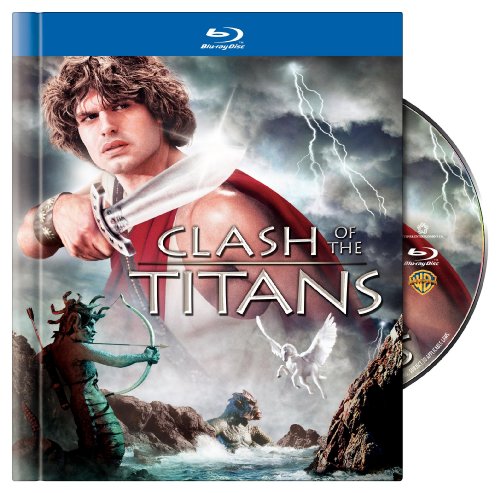
"Perseus and Andromeda will be happy together. Have fine sons... rule wisely... And to perpetuate the story of his courage, I command that from henceforth, he will be set among the stars and constellations. He, Perseus, the lovely Andromeda, the noble Pegasus, and even the vain Cassiopeia. Let the stars be named after then forever. As long as man shall walk the Earth and search the night sky in wonder, they will remember the courage of Perseus forever. Even if we, the gods, are abandoned or forgotten, the stars will never fade. Never. They will burn till the end of the time."
Talk about your perfect storm. You take the master of stop motion technology, Ray Harryhausen, and you combine those creature animation talents with one of the oldest stories surviving today in Perseus and Andromeda. How can the combination not be magical? The story has always been a favorite of mine, likely because I was born on the Summer Solstice, the critical moment of this story. I was preordained to love this film. The truth is that this film never got quite the recognition it so richly deserved. Now, on the cusp of a computer generated remake, it was my unmitigated privilege and joy to watch the original 1981 film in the glory of high definition.

Posted in: Disc Reviews by Gino Sassani on February 4th, 2010
"There are many among us who in the past closed their eyes to the events of war, because they believed that what was taking place in Europe was none of our business. That we could maintain our physical safety by retiring within our continental boundaries. Obviously, a defense policy based on that is merely to invite future attacks. For those who would not admit the possibility of the approaching storm, the past weeks have meant a shattering of past illusions."
No, that quote wasn't George W. Bush. It was Franklin D. Roosevelt on May 26th, 1941. And yes, it was over 6 months before the bombing of Pearl Harbor and America's unceremonious personal invitation to World War II.
Posted in: Disc Reviews by Gino Sassani on February 4th, 2010
"There are stories a river can tell. And truths it cannot hide. There are ways it brings us together that we may never see, connecting us with places never suspected. Places like fear, like betrayal, like murder."
One thing you have to say for Clint Eastwood. In his later years as a director and producer of films, maybe from Unforgiven onward, he has selected some of the most compelling stories for his film projects. You get the sense that he hasn't been in this for the money in a long time. You easily believe that he doesn't make a film unless it reaches him completely and deeply. Think about his most recent films: Letters From Iwo Jima, Flags Of Our Fathers, Gran Torino, Unforgiven, and yes, Mystic River. He's turning 80 now, and so he's not what you would call prolific anymore. It's as if he understands there are only a finite number of films left that will bear his name, so he has decided to make every last one of them count. Someone once joked that when Clint Eastwood asked him to be in a movie, the actor asked how much money for the part. When Clint said, "Only $100,000." The actor quickly replied, "Who do I make the check out to?" There's a level of respect and reverence that goes beyond his steely look and terse one-liners. Getting a part in a Clint Eastwood movie seems to make everyone "feel lucky", and it always "makes their day". I'll never get to play a part in an Eastwood film, of course, but those same remarks apply to me or anyone who is about to sit down to an Eastwood film, whether he's actually in the movie or not. Mystic River is no exception.