"We watched as the bombs shattered the second comet into a million pieces of ice and rock that burned harmlessly in our atmosphere and lit up the sky for an hour. Still, we were left with the devastation of the first. The waters reached as far inland as the Ohio and Tennessee Valleys. It washed away farms and towns, forests and skyscrapers. But the waters receded. The wave hit Europe and Africa too. Millions were lost, and countless more left homeless. But the waters receded. Cities fall, but they are rebuilt. And heroes die, but they are remembered. We honor them with every brick we lay, with every field we sow, with every child we comfort, and then teach to rejoice in what we have been re-given. Our planet. Our home. So now, let us begin."

It all started when Steven King wanted to remake the sci-fi cult classic When Worlds Collide. These films must have been favorites to him, as he would indeed go on to remake George Pal's better known film War Of The Worlds and the Robert Wise classic The Day The Earth Stood Still. But it just never really happened for When Worlds Collide, at least not directly. At the same time Spielberg had optioned The Hammer Of God by Arthur C Clarke of 2001 fame. That book dealt with the deflection of an asteroid on a collision course with Earth using thermonuclear rockets. Somewhere in that time he decided to put the plots together, and the result was Deep Impact, with an "original" screenplay by Michael Tolkin and Bruce Joel Rubin. By then Spielberg wasn't interesting in directing the feature, but acted as one of the film's producers with Mimi Leder in the director's chair. She was somewhat of a risk. Leder had never directed a big-budget film before. In fact, all but one of her previous credits were for television, directing shows like China Beach and L.A. Law. The risk paid off, and she did quite a good job with the film for the most part. There are certainly some pacing issues, but the film was well received as it raced to beat another film with pretty much the same plot to the box office. That other film was Bruce Willis's Armageddon, and Deep Impact beat it by two months.

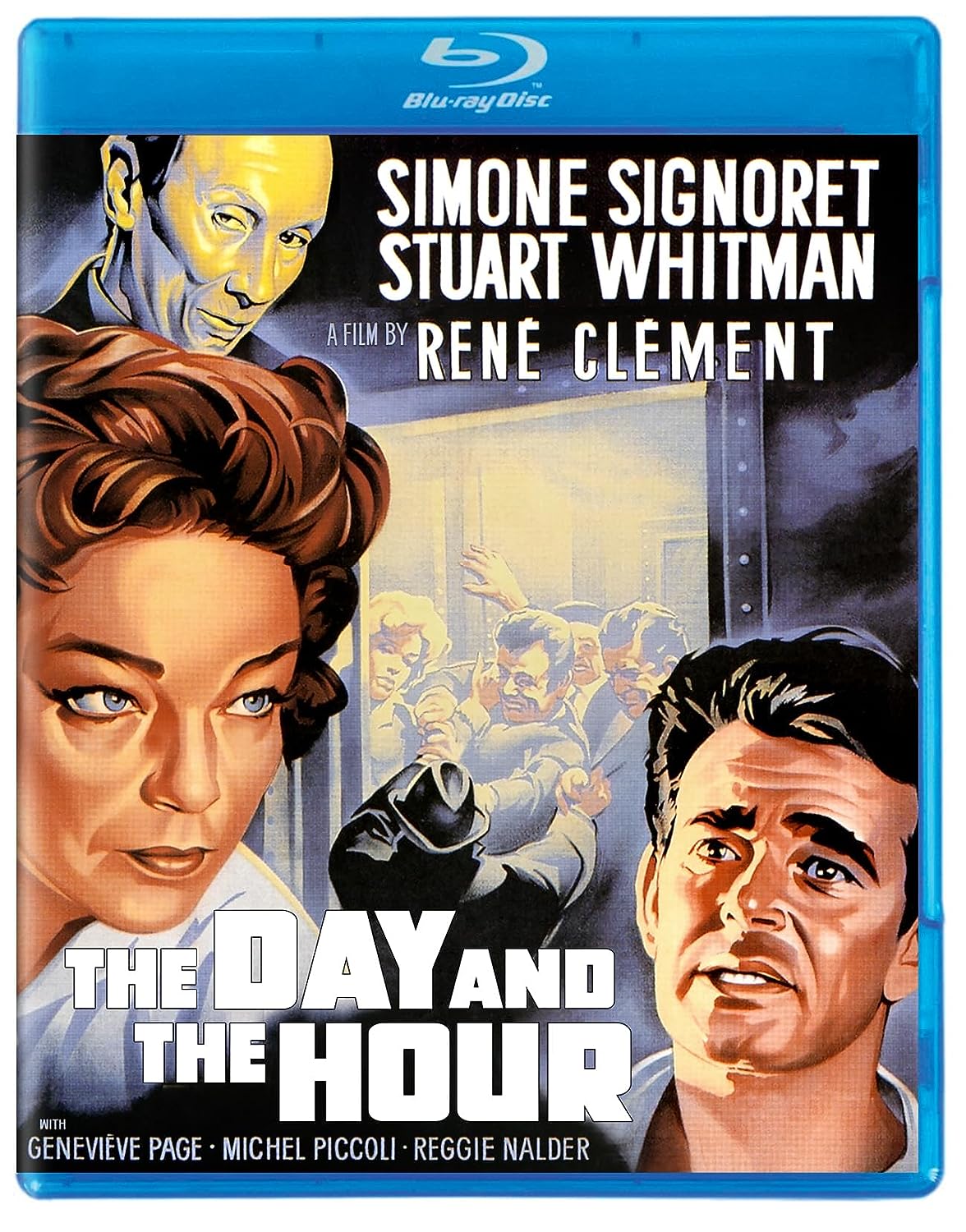
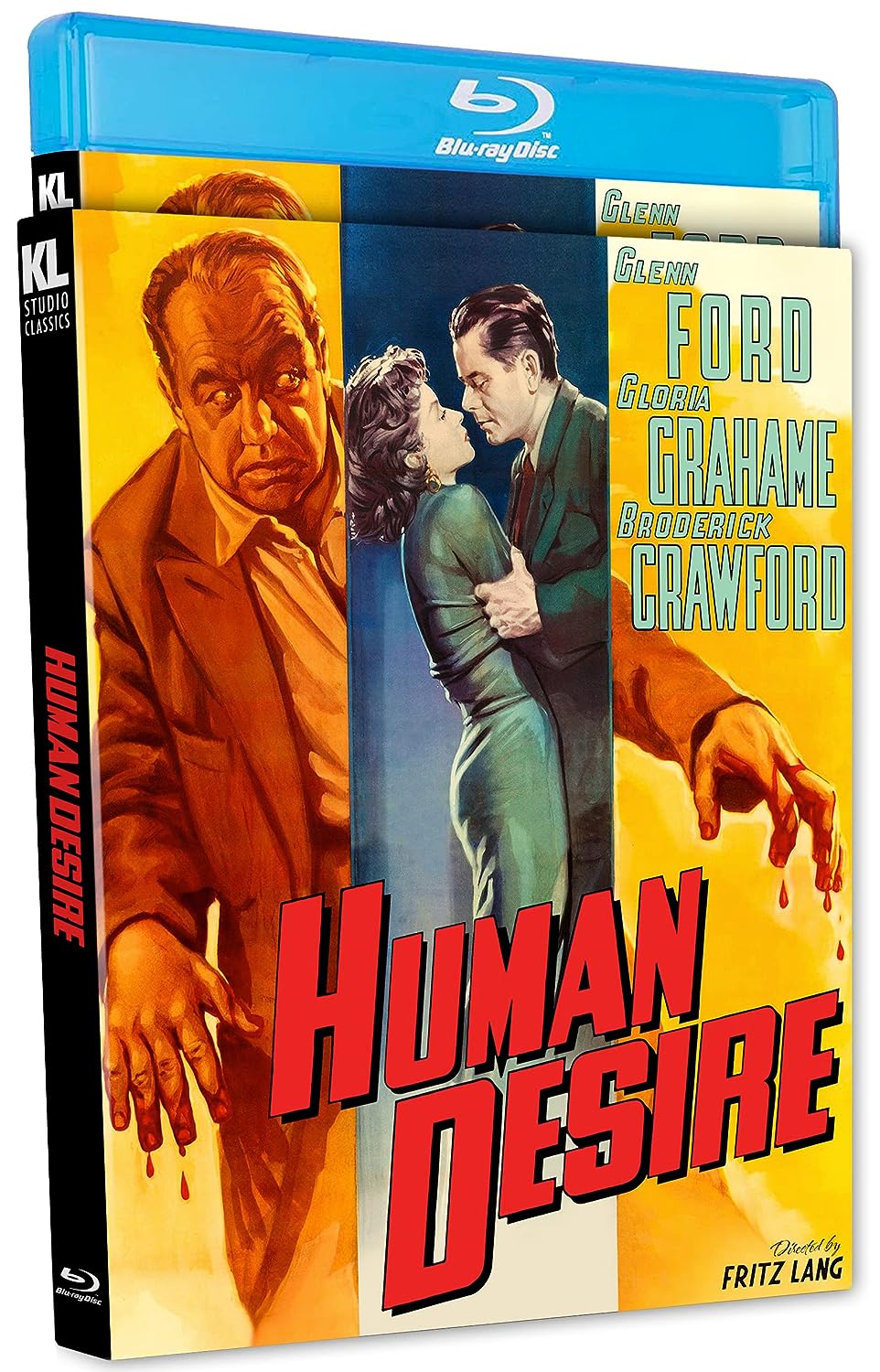
“In the 1940’s, a new genre – film noir – emerged from the world of hard-boiled pulp magazines, paperback thrillers, and sensational crime movies. These films, tough and unsentimental, depicted a black and white universe at once brutal, erotic, and morally ambiguous.”

Film Noir officially started in the 40’s, but the movement was well underway by the early 30’s. You can trace its roots to the Great Depression and the arrival of the dime pulp magazines. These were highly stylized, mostly mystery stories that provided cheap escapism for the masses who were not having a good time of it. Writers like Raymond Chandler crafted the mold that was easily transferred to the silver screen. These were low-budget films that were intended to be second billing with the more mainstream releases. They were shot quickly. Many have a very flat look, created intentionally. The lighting was often minimal, crafting odd shadows and unusual textures. The dialog wasn’t intended to be natural or realistic. These characters usually spoke in clichés and had names like Mac, Griff, or Dollface. There was often a shade of gray to these characters. Good and evil were not always so clear-cut. Gangsters became common themes of the genre. And while the dialog might have been cheesy, the cinematography was often gritty and almost ultra-realistic. At times the films played out like documentaries, often including narration. The narrator would always be a voice of authority; often film-reel stars were used. The films were heavily influenced by German Expressionism, perfected by the likes of Fritz Lang in the silent era and carried over to more modern themes. The films always contained a steady supply of stock characters and actors. It was smoky rooms and neon lights. It was a reflection on the times. It was Film Noir.

"All my life I wanted to be a cop, you know. It's like I can remember nothing else. I remember this one time  somethin' happened. A domestic argument or somethin'. Somebody stabbed somebody or somethin'. And -- there was this crowd around this tenement. I must have been nine, ten years old. I was this big. I went over to see what was going on. I noticed the red light -- goin' around and around, all these people, and I couldn't see. And I kept saying, ‘Do you know what's goin' on? Do you know?’ Nobody knew. It was like a big mystery behind that -- that crowd there. All of a sudden, the crowd just parted. Like the Red Sea, you see? And there were these guys in blue, and I said, ‘They know.’ What do they know? What do they know?” 

Frank Serpico was a New York City cop in the 1960's and early 1970's. Thanks to the film, everyone knows who he is, and they also know about his struggle as an honest man in a hornet's nest of corruption. His honest stand saw him a pariah and almost killed when his fellow officers stood by as he was shot in the face. He would eventually recover and testify before the famous Knapp Commission that investigated the systemic corruption inside the NYPD. If you know his story, it's because of this film, because that's the plot, pure and simple. What isn't so pure and simple is the inspired performance by Al Pacino, still a relative unknown, who had just finished The Godfather but hadn't really had a lead role up to this point. Serpico changed all of that. Pacino was on a rocket ship to stardom, and this film as much as The Godfather started the whole thing going.

"I wonder if you ever stop on the way home and watch the children playing. In the street, or in the yard. And when the time comes and their mothers call them in, they're often reluctant. They … they get a little contrary. But that's as it should be. Far better than to be the child you occasionally see, he's sitting by himself in the corner not taking part, not happy, not unhappy. Merely waiting for his mother to call him in. I've become afraid that I might end up like that child. And I so very much do not wish to do so."

I love Bill Nighy. It doesn't matter if he's doing roles covered in makeup like Underworld and Pirates Of The Caribbean, or he's doing heartfelt characters like About Time. There is something quite authentic about any role he plays. He manages to suppress Bill Nighy and deliver a fully formed character. He's always compelling, and that hasn't changed with his latest film, Living. The film was adapted from a 1952 Japanese film Ikiru written and directed by Akira Kurosawa. The English-language screenplay was adapted by Kazuo Ishiguro, who had long wanted to adapt the film for English audiences. The result is quite the character study.

One of my favorite movies of all time is Se7en.  Morgan Freeman, Brad Pitt, and Kevin Spacey star in this amazing film about a senior and rookie pair of cops on the hunt for a serial killer who is murdering victims depicting the seven deadly sins.  It's so breathtaking, and so long overdue for a 4K release, it's ridiculous.  It has also led me when I receive packages to blurt out, "What's in the box?" in the deadpan tone that Brad Pitt uses in the movie.  So naturally, whenever I hear of a film that draws comparisons to this fine film, my head certainly does a double take.  Enter Hinterland. In this film, Peter Perg who just came home after World War I, is searching for a serial killer who is taking out former soldiers in a very ritualistic pattern.  Let's check it out.

The film opens with some background.  World War (I) is lost.  Austria, once a proud major power, is turning into a small and insignificant state.  The emperor has stepped down, and now Austria is regarded as a republic.  The soldiers who have come home realize that nothing is as it was before.  What's worse is that some of those soldiers did not return until years later (prisoners of war).

I remember when The Golden Compass came to theaters. I know I saw it because I was a projectionist and had to screen the print, but for the life of me I couldn’t remember anything about the film. Perhaps that’s why that when I first heard about HBO doing a TV series adaption of the beloved book series His Dark Materials I wasn’t all that thrilled.  I’d never read the -adult series, and considering the amount of awful YA film and TV adaptations that have bombarded us for nearly two decades, it played a role in squashing any excitement I may have had in different circumstances.  I was definitely pessimistic about watching the show, but when I finished Season 1, I was excited about where the next season would take us. I loved the characters, the daemons and the worlds that the show took us to. Not since Stranger Things had I been more excited about a new series.  Season 2 was a step up from the first season, and I absolutely loved what the show was delivering.  There has been a bit of a wait for this third season; after all COVID did get in the way of the show’s production, and the delay can dampen the excitement for others. But with sSeason 3 now here, would the final eight episodes be enough to wrap up this pretty great storyline about the multi-verse and the war set to be waged between man and the Authority?

Season 3 opens up with a bit of a time jump with Lyra (Dafine Keen) being held captive by her mother, Mrs. Coulter (Ruth Wilson). We want to believe that Lyra is being held for her own protection and that her mother has finally seen the evil of her ways in the past, but we’ve seen in the past she simply can’t be trusted. The Magisterium continues to establish themselves as the big bad of the show as they are wanting to hunt down Lyra because they believe she is the girl in the prophecies who will bring ruin to all the worlds. Then there is Will (Amir Wilson), who is trying to find Lyra, though to help him in his search he teams up with an angel and Iorek (Joe Tandberg), our favorite polar bear. Then we also have Mary Malone (Simone Kirby), who continues her journey to better understand dust, though to be fair, considering all the peril we see just about every other character experience, her journey seems more like a simple vision quest that leads her to strange elephant-like creatures with wheels on their feet … yeah, this show can get weird. Then of course there is Lord Asriel (James McAvoy), who seems to be hell-bent on waging war against the Authority, and he doesn’t seem to care who he loses or may die because of his actions.

Backtrack, AKA Catchfire, is one of those films where you look at the stacked cast and you’d think this would have to be a great film, or how have I not heard of this film? Dennis Hopper and Jodie Foster, just one year before starring in The Silence of the Lambs; just this pair alone makes this film worth checking out. What also makes this film a bit unique is that it directed by Dennis Hopper as well.  Easy Rider is pretty much a classic in its own right, and in 1988 he had also done this film Colors, which starred Sean Penn and Robert Duvall. It is a pretty solid film and worth checking out, but right now the focus is on Backtrack. Really, it is at its core a simple crime/mobster movie, but it is sort of a cautionary tale of what happens when you try to inject too much “art” into a film that really is just a basic (yet strange)  neo-noir story.

Anne Benton (Jodie Foster) is a fairly successful artist and has a relatively normal life, but that all changes when she gets a flat tire and as a results stumbles across a mob hit. She narrowly gets away, and when her boyfriend, played by Charlie Sheen, is killed by some mobsters, she goes to the police. Well, they are no big help; they want her to change her name and go into witness protection, which is something she’s not interested in. Fearing for her safety, she goes on the run and into hiding.

Films about World War II and Nazism are hard for me to watch.  No matter how well-intentioned they may be, I can barely make it through Schindler's List or Dunkirk or even something like Inglorious Bastards (I do, however, find The Producers to be hilarious).  Most of the time, it hits a little too close to home.  For you see, my Polish grandfather (may he rest in peace), his parents were taken away to a concentration camp.  So anytime I watch a film set in that time period, I think, well, what if he had been taken away.  It's not like those horrible people showed any sort of restraint on children, and then where would my grandfather be?  Or my mother?  Or myself?  Anyway, I got lured into Chess Story by the promise of a thriller with the game of chess as the backdrop.  Unfortunately, by the end I was reminded of the horror, but also that there is still great modern moviemaking even with Nazis.  Let's take a look.

We hear whispers all around from every direction, and there is a light crackling overheard.  It continues until it fades to black.

Most people who know me know that I adore Scooby Doo.  Some of my favorite episodes of Scooby Doo are those where they have famous guest stars solving mysteries.  Addams Family, Harlem Globetrotters, Batman, etc.  Classic Scooby goodness with characters that I enjoy and always wondered how they would work in another universe.  Today, I have the benefit of seeing how Superman, Batman, Wonder Woman, and other Justice League members will look and react in the RWBY world of Remnant.  Let's take a look.

Superman (voiced by Chandler Riggs) is breathing heavy and struggles to open his eyes.  When he does, he sees a strange world, and he's suddenly become a teenager.  In front of him are two young teenage girls named Ruby (voiced by Lindsay Jones) and Yang (voiced by Barbara Dunkleman), who are taking on demons simply known as the Grimm.  However, these Grimm are strange to Ruby and Yang as well, since they can shoot lasers.  Superman gets up to help the two ladies when he realizes that his powers are completely different from what they were.

Most people who know me know that I adore Scooby Doo.  Some of my favorite episodes of Scooby Doo are those where they have famous guest stars solving mysteries.  Addams Family, Harlem Globetrotters, Batman, etc.  Classic Scooby goodness with characters that I enjoy and always wondered how they would work in another universe.  Today, I have the benefit of seeing how Superman, Batman, Wonder Woman, and other Justice League members will look and react in the RWBY world of Remnant.  Let's take a look.

Superman (voiced by Chandler Riggs) is breathing heavy and struggles to open his eyes.  When he does, he sees a strange world, and he's suddenly become a teenager.  In front of him are two young teenage girls named Ruby (voiced by Lindsay Jones) and Yang (voiced by Barbara Dunkleman), who are taking on demons simply known as the Grimm.  However, these Grimm are strange to Ruby and Yang as well, since they can shoot lasers.  Superman gets up to help the two ladies when he realizes that his powers are completely different from what they were.