What is it with horror films today? They just seemingly lack all original wit and style. And let’s not even mention the remakes that Hollywood forces on us. Having just finally watched John Carpenter’s Halloween (yes I know!!), forcing myself to watch the drab Black Christmas almost made me cringe.

A group of sorority sisters, after getting snowed in after the holiday break, try desperately to survive the night. Surviving from the intense cold isn’t the game plan of the film, but rather trying to survive from a relentless killer. The killer, for some reason, wants to kill all the girls. We never quite learn why exactly that is, but apparently the killer use to live in that sorority house. I guess that’s just a fine reason to start killing people on Christmas Eve.

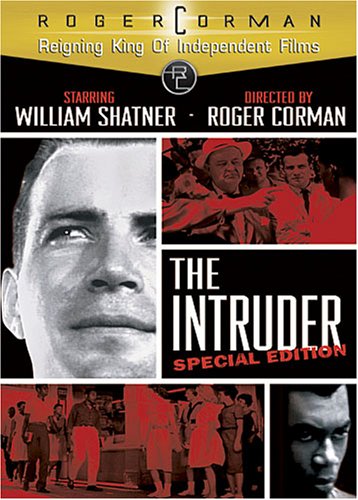
One of the great oddities of film from the 1960s (or, indeed, ever) is a modest little horror film by the name of Incubus. Emerging in 1965, it was shot in Big Sur, and tells the mythic tale of a young soldier returning home to become the target of a female demon. His innate goodness, however, winds up seducing the demon instead, and the titular male demon vows revenge, specifically targeting the soldier’s blind sister. This is already a somewhat odd tale for a mid-sixties American horror film, and the fairy-tale setting is even more unusual. But the real oddities are yet to come. The lead is played by a William Shatner (in his last film before Star Trek). And all of the dialogue is in the artificial language Esperanto.

Why Esperanto? Why indeed. Phil Hardy cites director Leslie Stevens (the creator of The Outer Limits) as describing the language as “at once imaginary and universal, out of time and space.” There is no doubt that film’s effect is precisely that. The world the viewer moves through is completely alien, even if the settings themselves (forests, seasides) are very familiar. When I called the film a fairy tale, I did so advisedly. This is one of the most fairy tale-like horror films ever made (and horror partakes of that form of storytelling more than just about any other genre). This is thus a tale of no place and every place, of no time and every time. It takes very little time for the viewer to get past the strange spectacle of Shatner spouting Esperanto (doing so very naturally, I might add) and be swallowed up by this strange world.

So here we have another double feature of episodes from Movie Macabre, with Elvira this time taking on Maneater of Hydra (1966) and The House That Screamed (1969). The former has the disconcerting spectacle of Cameron Mitchell appearing not only as a baron (ookaaayyy) but being dubbed. He’s experimenting with plants on his remote Greek island, and a group of tourists run afoul of one of his results. Given how long it takes for the titular plant to show up and relieve the dullness, one starts to wonder if the title doesn’t refer instead to one of the hot-to-trot tourists.

The House That Screamed, meanwhile, is a Spanish effort that is something of a period giallo. The setting is a private girls’ school where a series of brutal murders take place. The production is handsome enough, though its concept is no less sleazy for all that.

On January 23, 2002 Daniel Pearl, a reporter for the Wall Street Journal, was kidnapped and eventually killed by terrorists while working in Pakistan. A Mighty Heart is based on this true story. The narrative comes from the book of his wife Marianne Pearl. While this is certainly the tragic tale of a murdered reporter, this film is more the story of Marianne and her struggle to locate Pearl in the 10 days from his capture until a video tape surfaced depicting his beheading.

I grew up on a steady diet of horror hosts. In the Philadelphia area where I grew up we had Dr. Shock. Every Saturday night my Dad and I would watch his bad puns and silly magic tricks; all the while I was being introduced to a world I was destined to fall in love with. And so I was exposed to Frankenstein, The Wolfman, and The Creature From The Black Lagoon. The friendship with those early year monsters continues today. But the 70’s are gone, and since the 1980’s it is Elvira who has inherited the lost art of the horror host. Unfortunately for us, the art should have stayed lost. Elvira is simply terrible as she cracks jokes only she laughs at. It’s obvious she goes out of her way to flash the only assets she has in order to mesmerize the adolescent boys who are being introduced to something radically different from what I was in the 70’s. What makes this set even worse is that the two films are as bad as Elvira. At least you can view the film with or without Elvira. I took the hit for you guys and kept her on so you don’t have to.


Box Sets that compile older titles usually just make me cringe. Think about it. Recycled discs, tired old movies, and a fancy somewhat new box cover. In other words, I get to sleep for 4-5 hours and then wake up in a cold sweat wondering what happened. Alright; so that just sounds like my first honeymoon. Anyway, I happened to get the Partying 101 Boxset (because I am a wild and crazy guy) which featured Bio-Dome, Back to School and PCU. These are the old MGM discs from 8 to 10 years ago. Be afraid.

Bio-Dome is the story of two losers ala Bud (played by Pauly Shore) and Doyle (played by Stephen Baldwin) who are wasting away in their life and not being very eco-friendly. Their girlfriends who are more than eco-conscious try to convince them to turn over a new leaf. Soon, Bud and Doyle find themselves trapped in the new and ecological utopian Bio-Dome after one of them has to find somewhere to take a piss (I'm not making this up). For the next year they are trapped in this bubble with other scientists studying the effects. Well actually Bud and Doyle just cause mayhem and the scientists pick up after them. Of course they have a moment and a happy ending. Of course, I also have a gag reflex.

HD DVD players are back on top, at least for now. Several news sites are reporting Toshiba's announcement that HD DVD players have out-sold Blu-ray in 2007, according to the latest NPD Group sales figures. NPD shows HD DVD units at 53%, while Blu-ray is nine points down at 44%. Combo players account for the other 3%.

While Sony has seen good pick-up on their $499 units, released in August, Toshiba's $299 player is beginning to hit store shelves. The big T is also touting big expectations for sales of HD DVD PC drives. They're estimating 5 million units will be sold in 2008, which should help address Sony's PS3 advantage. Still, with studio support pretty much split 50/50, the format war has no end in sight. Have you jumped in, or are you holding out for a victor?

Apparently, someone out there really wanted to see another entry in the Species franchise, surely one of the most poorly conceived series ever. But here we go: Miranda (Helen Mattsson) is a college professor (yeah, right) who suddenly experiences a mysterious blackout, during which she transforms into monster in a rubber suit and slaughters the hospital staff. Her uncle, Ben Cross (no doubt dreaming sadly of the days when he starred in the likes of Chariots of Fire), reveals to her that the is in fact an alien/human hybrid, and the two set off to Mexico to find an ex-colleague of Cross’ who might be able to help. This unsavory sort has been making even more hybrids, which leads, in a roundabout way, to all kinds of trouble.

I say “roundabout” because this flick has one of the most infuriatingly meandering plots I’ve encountered in a quite some time. If you’re going to be a DTV B-picture, the least you could do is get to the point and stick with it, seeing things out in 90 minutes or less. But Species: The Awakening plods along for 103, first appearing to go in one direction, then another, but never mounting anything that resembles a head of steam. The inherent misogyny of the concept hasn’t been improved on, either. Colour this effort dismal, dated, depressing and dull.

For decades it was the doomsday scenario. Cold War Americans lived in almost constant fear that the Soviets might drop a nuke on us and begin Armageddon. It was unthinkable that a conventional invasion could reach our shores instead. Red Dawn stirred its own mushroom cloud of controversy when it reached theaters in August of 1984. While the Cold War was actually closer to its end than any of us might have suspected, Red Dawn entered our collective consciousness as a shock to a system that had for some time moved beyond the culture of fear those older than myself knew growing up. By the 1970’s the air raid sirens and classroom drills were no longer commonplace in American cities. Growing up in Eastern Pennsylvania, it was Three Mile Island that caused a greater panic than a Soviet threat. We were all drilled to head to the school’s roof where we were told choppers would evacuate us to a safe zone in case of a meltdown. And like the silly duck and cover drills of the 50’s, we bought into it, ignoring the cold hard fact that we simply didn’t have the resources to evacuate every school in Pennsylvania at a moment’s notice. Deep inside I knew that should the emergency arrive, there would be several million school kid skeletons on the top of a lot of schools for the media to put on the rest of the country’s television screens. So along comes Red Dawn and, for a moment, brings the Cold War front and center all over again.

Medium was based on a real person with alleged psychic powers who apparently has helped out various law enforcement agencies in some actual cases. If you’ve seen the series, you might find that hard to believe, and the episodes are obviously fictional adventures and not based on the real Alison Dubois’s experiences. At first glance it might be easy to lump Medium in with Ghost Whisperer or The Dead Zone. Actually there are almost no similarities to any of those shows. Allison does not gain any understanding through touching and while she does see ghosts at times, that aspect of the show has been made to play in only a small percentage of the episodes. Allison accesses her powers through dreams. These nightmares are usually vague and often provide additional clues with each recurring dream. The formula for the show is that she must interpret these images and signs in time to do whatever it is she needs to do.She works as an assistant for the Phoenix District Attorney’s Office, but only the DA and one cop know how she comes across her tips.