Posted in: Disc Reviews by Archive Authors on July 2nd, 2007
I wrote a few weeks back that it’s an odd feeling when you finally see that film that everyone and their brother has been exclaiming about for years. That is the exact feeling I felt after seeing The Big Lebowski. I knew for years that this film would be great, especially after seeing Fargo before. Boy was I right as The Big Lebowski was a huge humor trip.
Jeffrey Lebowski a.k.a. “The Dude” (Jeff Bridges) is your run of the mill slacker. He doesn’t really do much with his life besides ...et constantly stoned with his buddies at the local bowling alley. Donny (Steve Buscemi), Walter (John Goodman), and Jesus (John Turturro) are his buddies. One night Jeff comes home to find a pair of thugs sitting in his home. Turns out these thugs think Jeff is some type of ultra millionaire. They soon threaten his life, demanding he pay the debt he owes. Obviously Jeff is completely lost by this situation. After consulting his buddies, Jeff and his buddies soon find themselves wrapped up in a big kidnapping plot. The rest of the film sees our main characters bumble around in a manner that was consistently entertaining and amusing.
Posted in: Disc Reviews by Archive Authors on July 1st, 2007
Synopsis
Timothy Dalton might have endured a bit of grief for his short tenure as James Bond, enduring comments equating him to Connery and Moore plagued his two film run, with this one being the last. However, this one was quite the doozy, and almost in the area of “forgotten gem” status.
Posted in: Brain Blasters, News and Opinions by David Annandale on June 29th, 2007
Okay, kaiju fans, there’s another real treat that recently hit DVD. While Classic Media has been releasing one definitive edition after another of the initial Godzilla movies, Tokyo Shock has stepped up with a non-Godzilla Toho effort: 1965's Frankenstein Conquers the World. Present in the 2-disc set are the US release (so if you want to hear Nick Adams speak English, that’s the one to watch), the Japanese version, and the international release. These versions feature a rather different, and utterly bizarre, e...ding, and I’ll be talking about it, so be warned that there are spoilers ahead.
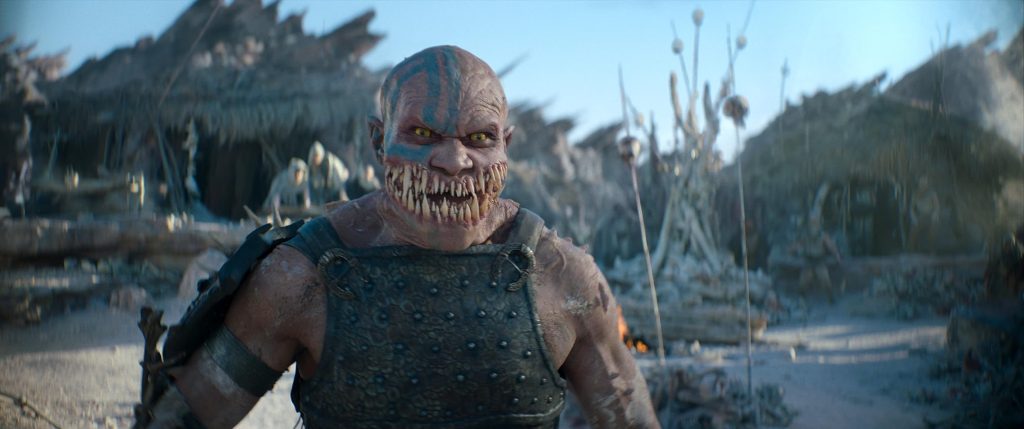
Godzilla’s daddy Ishiro Honda is at the directorial helm again, and it is interesting that, just as the Godzilla films were becoming more and more comical, this effort is, relatively speaking, quite dark. Its opening doesn’t look like a Toho effort at all: as beakers bubble in a gothic lab, we might as well be watching a product of Hammer Studios. The year is 1945. German soldiers burst in on a scientist, grab a box and ship it by sub to Japan. The box contains the beating heart of Frankenstein’s monster (and yes, the name “Frankenstein” is used indiscriminately to refer to both monster and scientist here, *sigh*). The Japanese plan to use the heart to design unkillable soldiers is rudely interrupted, however, as the lab is located in Hiroshima. Wrong place, wrong time. Years later, in a rebuilt Hiroshima, scientist Nick Adams and his team run into a feral child, who turns out to be the regenerating monster. Being radioactive, he also gets really big and escapes. Meanwhile, the monster Baragon (a dinosaur with big, floppy, puppy dog ears) is rampaging about, and Frankenstein (I’ll give in and call him that, since the movie does) initially gets the blame. He eventually confronts Baragon in a dramatic mountaintop finale backdropped by a raging forest fire.
Posted in: Disc Reviews by Gino Sassani on June 29th, 2007
As you might imagine, I am often asked for my opinion on the films I see. Inevitably I’m called upon to compare the film with some other work, which is at best quite unfair and at worst simply impossible to do. But I’ve gotten good at the game. So let us play it now. We’ll call Neverwas One Flew Over The Cuckoo’s Nest meets Alice In Wonderland. Unfair, some might say, for they are actually the very same story. When you look at it carefully enough, they really are, although important differences do exist. My point i... all of this nonsense is this: There really is a razor fine line between insanity and fantasy. Neverwas blurs this distinction to an almost indefinable difference.
When Dr. Zack Riley (Eckhart) arrived at Millford Mental Health Institute, which once housed his father, he had no idea that his journey would take him full circle to a childhood he had been running from. Zack’s father (Nolte) was the author of a famous children’s story titled Neverwas. Zack has been running from Neverwas ever since. He changed his name and refused his inheritance of the book’s royalties. Here at Millford, Zack discovers a rather remarkable patient. Gabriel (McKellen) is not only intimately familiar with Neverwas and Zack himself, but claims to be her King. Zack finds himself confronted by a place he always believed came from his father’s imagination. It’s a wonderful story with an almost magical potential. Unfortunately this film takes too long to develop and never quite hits its stride. The film travels a trail of breadcrumbs laid out in such painstakingly slow motion that it is our patience and not our imagination that is finally put to the test. Writer/directors often commit the fatal sin of overcomplicating what often plays best in simpler terms. Joshua Michael Stern is guilty of it here. The film becomes too muddled, trying to show too much history and never trusting its audience enough to find their own way. You should know this IS NOT a children’s film.
Posted in: Disc Reviews by David Annandale on June 28th, 2007
Synopsis
This is an eclectic mix of SpongeBob shorts, with no real common theme. So there’s a humorous safety bit about boating with SpongeBob wreaking havoc on the streets, SpongeBob and Patrick trying to find the nerve to ride a terrifying roller coaster (this is a highlight), Squidward undergoing a personality shift, and so on. All good fun, but not as many hysterical home runs as on some other collections. There are seven pieces altogether, totalling 83 minutes.
Posted in: Disc Reviews by Gino Sassani on June 28th, 2007
I’ll admit it. I was taken in by The Life and Hard Times of Guy Terrifico, for about five minutes. I’m not a follower of the country music scene, so it didn’t really bother me that I had never heard of Guy Terrifico before. The box art explained he came and went in the early 70’s, when I was just a kid myself, so none of this was the least bit suspicious to me at all. The film opens believably enough with Kris Kristofferson on stage dedicating his next song to this Guy Terrifico. When we get to that first interview... however, I was getting mighty suspicious. Now I might not be no Jim Rockford, but I am as Italian as Columbo, so I started to sense that something was not quite right here. I instantly paused the film and began to research Guy Terrifico. You know what I came up with? You guessed it. There never was a Guy Terrifico. I was watching This Is Spinal Tap country style. I guess that just got me off on the wrong start with this film. And I’ll freely admit now I might have enjoyed this a whole lot more if I had known going in what I was watching. That’s why I loved Spinal Tap but have a bit of a cold feeling for Guy. You might consider I just wrecked the film for you, but trust me, I might just have saved you some frustration.
The story of Guy Terrifico is too bizarre to be true, which of course it isn’t. It seems that good ol’ guy was an outlaw and heavy drug addict for most of his short life. His big break came when he hit the Canadian lotto for $8 million Canadian (That’s about $2.36 in American). As his widow tells us: “It took care of our drug problem. Getting drugs just wasn’t any problem at all after that”. Through interviews and “archive” footage we are given the ridicules story of Guy all the way to his mysterious death. But did Guy actually die that night on stage? The film leads us to believe not. Most of the folks being interviewed look like they’re making this stuff up as they go along. Where Spinal Tap looked real enough to work, Guy Terrifico always appears to be just one step beyond the realm of reality. Even such stars as Kristofferson and Merle Haggard couldn’t carry the weight of this farce. While the jokes are long on telling and short on laughs, the film actually does sport a few really good musical performances.
Posted in: Disc Reviews by Gino Sassani on June 28th, 2007
Eddie Murphy has a ton of films under his belt. If you’re like most folks, his antics have long ago become tired and worn out. Come with me now to a time when Murphy was young and full of energy. Trading Places was really only Murphy’s second film after 48 hours. In Trading Places, we get vintage Eddie Murphy. You can tell he was still hungry. Today he simply calls too many performances in. Dan Aykroyd was also at a turning point in his own career. It hadn’t been too long since he lost his longtime partner Jim Belu...hi to a drug overdose. He was just learning to stand on his own. Put these two guys together today, and there’s not much chance you’d get the solid gold that was possible in 1983. Fortunately for us there is this DVD release of Trading Places, when both actors still felt they had something to prove. The cast was brilliant all the way around. Jamie Lee Curtis displayed her obvious assets for the first time in a film. Known mostly as a scream queen at that time, Curtis was a choice the studio was not at all happy with. The Wolf Man’s own Ralph Bellamy, along with fellow veteran actor Don Amechi, played the Duke brothers to perfection. Finally, Denholm Eliott added his own understated brilliance as Coleman, the butler.
Trading Places was originally written as a vehicle for Gene Wilder and Richard Pryor. That team had had great success with a few films already, and it was felt they were the only ones capable of pulling off this kind of a film. I’m not sure how that might have worked. Certainly it still might have been a funny outing, but somehow I think everything worked out for the best. Trading places broke many conventions of the time. The black and white stereotypes were a concern, as were other elements. Having a hooker play such a pivotal role was questioned. The studio even expressed some problems with the fate of Mr. Beaks. A little gorilla love went a long way toward the poetic justice these kinds of villians often require. John Landis stood his ground the entire time, refusing to budge. Remove any of these elements, and who knows what we might have ended up with.
Posted in: Dare to Play the Game, News and Opinions by Michael Durr on June 27th, 2007
PSP Games Not Creative, Video Games not Addictive & Shaq not too Bright - Welcome to the column that wishes it was addictive as crack is to plumbers and their ex-girlfriends known as Dare to Play the Game.
Posted in: Disc Reviews by David Annandale on June 27th, 2007
Synopsis
There isn’t a lot that connects these films, other than the fact that they are all budget-conscious SF and were released in 1958. All are joys for fans of the genre, however.
Posted in: Disc Reviews by Gino Sassani on June 27th, 2007
Mission Impossible didn’t really enter into its by now famous format until this, the second season. The IMF team was run by Daniel Briggs, played by Steven Hill. Hill was never really happy and left after the first season, citing a refusal to work on the Sabbath as his reason for leaving. While Hill was never bad in the role, his departure was our gain. Peter Graves immediately stepped up as the iconic Mr. Phelps, and Mission Impossible as we know it was born. I should add a word of caution and say this is really ...othing like the films which have become big budget vehicles for Tom Cruise over the last decade or so. This was not an explosive f/x or stunt driven show. The team managed their impossible missions with cunning and guile. The team was necessarily eclectic in nature. It featured Martin Landau in his signature role of Rollin Hand. Hand was very much akin to Martin Ross and his role in The Wild Wild West. He was a master of disguise. He could imitate almost anyone in very short order. Barney Collier was the gadget man, played by Greg Morris. Cinnamon Carter was the model and the team’s chief seductress and was played by Landau’s real life wife Barbara Bain. Finally, the muscle was supplied by Willy Armitage, played by brute Peter Lupus. Together they took on missions that the government could not be officially a part of. They were always admonished that should they be caught “the secretary would disavow any knowledge” of them. Usually they were sent somewhere to put some evil mastermind out of business. Their tactics ranged from scams to outright theft. Sometimes they were a rescue team while other times they would infiltrate a group of bad guys. There were certainly cold war elements to the whole thing.The openning segment of each episode was television history. A hidden tape recorder would give Phelps his assignment with the warning that the recording would self-destruct in 5 seconds. The tape and usually the recorder as well went up in a puff of smoke leading to the famous fuse and theme. Before we knew it we were off to save the world one week at a time.
Video
![The Big Lebowski [HD DVD] dvd cover art](https://upcomingdiscs.com/ecs_covers/the-big-lebowski-hd-dvd-medium.jpg)