Posts by Archive Authors

Written by Adrienne Ambush

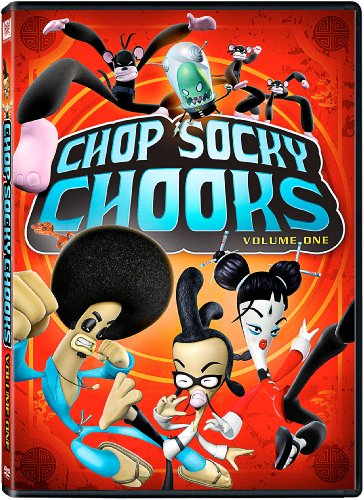
If you were to take the movie Kill Bill, mix it with the Karate Kid, and then put it into animation form, the end result would be Chop Socky Chooks.

The film is a nightmare. The good kind of nightmare, the one where you're breathing increases and there seems to be no escape. The kind of nightmare where you wake up and you need several minutes to catch your breath. I may be slightly embellishing, but there are moments that catch you off guard. The film works quite well at establishing tempo and uses its handheld camera very efficiently from start to finish. I have not had an opportunity to see the American remake Quarantine. However, I can only speculate that the spirit of the original is painfully lost.

 To some, the beginning of the film may seem like a lost cause. There are moments that can feel meaningless. However, the viewer's emotions are being played with in order to satisfy the director's vision. The opening sequence of viewing the Firehouse and meeting the staff is not integral in the plot. However, it does allow the viewer to identify with the female lead. Her performance is good and believable. Lately, some of the more recent horror efforts out there, the acting seems to be less of a focal point. This is not the case with this film. Viewers actually care about the characters, even if they are only on the screen for a little over 70 minutes. The directors establish this with the profound use of the handheld camera.

I guess they didn’t tell the producer and director of Wrong Turn that an official remake of the Texas Chainsaw Massacre would be gracing the screens in October of 2003. This movie borrows very heavily from the horror classic in terms of the setup, the killers, and the level of gore. Now that being said, this is an above average horror film with excellent makeup and special effects delivered by one of Hollywood’s greatest – Stan Winston, and a good performance by Buffy and Angel regular Eliza Dushku (although it is kind of weird seeing her scream and run away from villains that would be considered lightweights in the Buffy and Angel universe).

The film follows the ill-fated decision by the main characters to drive on a seldom used dirt road to avoid a lengthy delay on the interstate. Once they discover that a barbed wire trap laid in the middle of the deserted road has incapacitated their cars, four of the group of six leave the vehicles to find help. Well, you don’t have to think too hard to guess what happens next – our two remaining young people are the first to encounter the chromosomally challenged inbred hillbilly cannibal killers. Enter the first of many Hollywood horror clichés that are used in this film. The second cliché happens upon the viewer quickly thereafter as our remaining four young people come across the dilapidated home of the aforementioned chromosomally challenged inbred hillbilly cannibal killers. They first investigate the shack only to find a collection of various items that have been left by the previous victims of the inbred family, and upon further searching then find the remains of the victims on plates, in jars, and of course in the refrigerator. As this grisly find is made, the hillbilly three return home for an early lunch, while our heroes scramble to hide and not become dessert. Of course they are discovered as they make their escape (cliché #3) and spend the rest of the movie being chased, culminating in a showdown back at hillbilly central.

Written by Adrienne Ambush

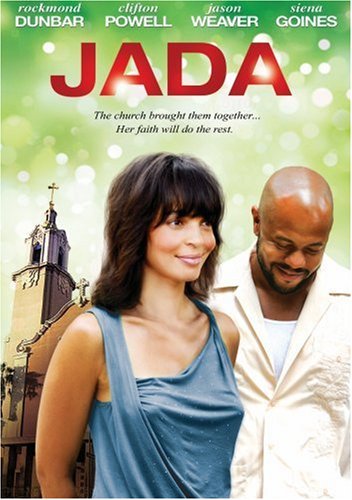
Romance. Drama. Tragedy and more tragedy. These four words sum up the entire storyline of Jada in a nutshell.

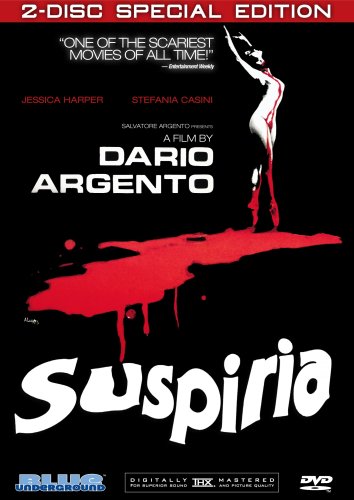
Dario Argento’s film Suspiria is a pillar in the horror film genre.   Argento has crafted an aesthetically disturbing film with his use of color and violence.  What separates Argento’s body of work from other directors is his disregard for the normal conventions of narrative cinema.  By constantly disorienting the audience with unmotivated long shots and graphic violence, Argento never lets the viewer get comfortable. 

The violence that Argento uses frequently in his career makes his films stand out.  In Suspiria, the score during the credits exemplifies the agitation that the viewer will endure throughout the film. This is why Argento comes back to the score over and over again.  After the first murder, the audience is now cognizant of the brutality that Argento is famous for. In the book Mirrors/Broken Minds: The Dark Dreams of Dario Argento Maitland McDonagh discusses Argento’s infatuation with violence: “Argento murders and maims and splatters blood with abstract abandon, reveling in the mayhem with glorious unselfconsciousness; he is a hedonist who finds his pleasures in unacceptable places and has no compunction about letting everyone in on the fun.” What McDonagh is establishing is Argento’s awareness of the violence in his films and even though it may be construed as a crutch in the over used sense, Argento could care less. In Suspiria, each incident of violence plays an essential role in Argento’s vision.  An example of this is when Sarah (Stefania Casini) is being chased throughout the dance studio and the audience gets an opportunity to see all of the lush colors and skewed camera angles that Argento uses. Once Sara has served her purpose, Argento disposes of her with a graphic zoom in of a throat being gouged open.  Most directors would cut away; however, Argento zooms in and disrupts the viewer with the grotesque image.  In all of Dario Argento’s works, the constant reoccurring trait is violence.

Written by Adrienne Ambush

Imagination is better than knowledge – Albert Einstein

Written by Adrienne Ambush

Imagination is better than knowledge – Albert Einstein

Written by Alexis Quinn

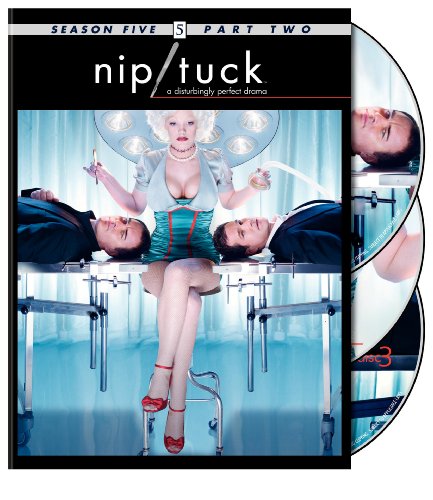
If Nip/Tuck were in the dictionary, chances are you’d find the word “controversy” somewhere close by.

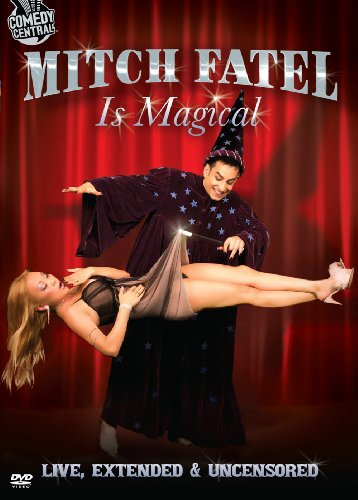
Mitch Fatel gained a lot of his credentials in stand up comedy by touring clubs around New York City since he was 15.  His genre of perverted sexual comedy is a guilty pleasure of the late night hosts: Jay Leno, David Letterman and Conan O'Brien have him on regularly to perform and act as a correspondent.  Mitch has released two comedy CD's (Miniskirts and Muffins and Super Retardo) that were very successful prior to this Comedy Central special.  To say that his style of comedy is low-brow is the understatement of the year. However, I found myself laughing at some of his material and needing some time to reflect on myself shortly thereafter.


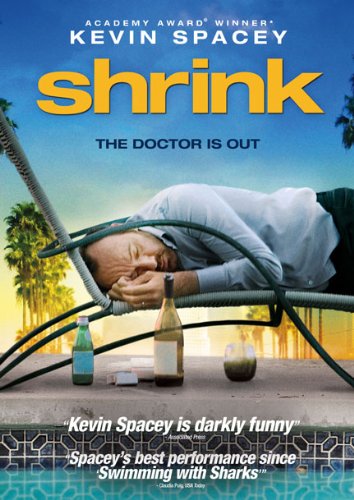
Shrink is an exploration of loss.  Henry Carter (Kevin Spacey) is a celebrity psychiatrist with an A-list clientele.  Henry attempts to juggle his career with his ongoing personal battles and he begins to breakdown.  The loss of his wife to suicide sends him into a downward spiral of alcohol and substance abuse.  It is not until he agrees to his first pro bono case with a young girl (Keke Palmer) that Henry attempts to rebuild his life. 

 Kevin Spacey is a brilliant actor.  His performances are usually always strong and he chooses roles that challenge his acting ability.  However, with this film, he seems to have chosen poorly. There are good moments in his performance that do showcase his range. For example, his monologue at the intervention is very strong. Unfortunately, even Spacey cannot carry the entire workload for this film.  The supporting cast is weak.  Dallas Roberts is not believable as the Entourage inspired super agent and Mark Webber is flat as the struggling writer. However, Keke Palmer shines as the conflicted teenager.  Her performance is understated and audiences will admire her strength.