Posts by David Annandale

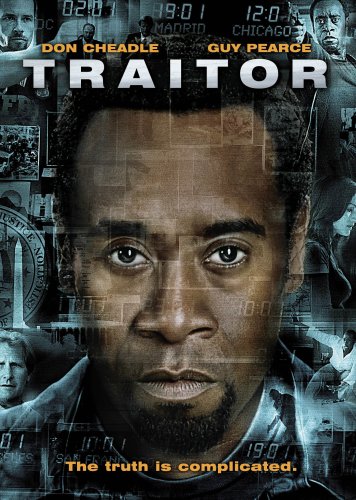
Some thirty years after seeing his father killed by a car bomb, Samir Horn (Don Cheadle) is a dealer in explosives. When he is imprisoned in Yemen along with members of a militant group he was about to make a sale to, he is drawn in and becomes an integral part of the group's terrorist activities. But wait – is he in fact an intelligence agent who has infiltrated the group in order to bring down their leader? Meanwhile, FBI agent Guy Pearce is hot on Samir's trail, but if he catches up, will that be a good thing or a bad one?

Given that we are, after all, talking about the lead in a mainstream Hollywood release, it should come as no surprise that the answer to the question of Samir's ultimate loyalty comes as no surprise. Fortunately, the question mark is dispensed with about an hour into the film, and the real suspense shifts to more urgent concerns, such as whether a ghastly bombing plot can be averted. Without venturing into spoiler territory, I must say that the climax leads to as clever a bit of cinematic prestidigitation as I have seen in quite some time, so kudos. Though the film is, first and last, a suspense thriller, and quite the effective one at that, it also makes a few telling points. Though the villains are suitably dastardly, a number of the characters on that side are also humanized – Sarmir's best friend (Saïd Taghmaoui) may be a terrorist, but he is also a man whose motivations are entirely understandable, and he is clearly acting out of genuine conviction. By contrast, intelligence operative Jeff Daniels is willing to go to such lengths to stop the terrorists that he becomes morally indistinguishable from them. And when was the last time that Hollywood had a devout Muslim as the protagonist of an action film? Rank this, then, with The International and The Kingdom as another satisfying exercise in suspense that leaves its audience with plenty to talk about after the closing credits roll.

The title pretty much speaks for itself. Here are four episodes of the sequel that surpassed its inspiration in television longevity. They are as follows: “Relics” (which sees Scotty revived in this brave new world, and finding himself redundant), “The Inner Light” (an amnesiac Picard lives out an entire lifetime on a strange planet), “Cause and Effect” (the Enterprise and crew wind up stuck in a time loop, and must struggle to escape their repeated collisions with another ship) and “Tapestry” (where Picard winds up in the afterlife, which is certainly more than Kirk could say). It's a bit trickier yanking episodes of ST:TNG out of their season contexts than with the original show, given the former's greater emphasis on continuity, but these stories here are all good standalone adventures.

An odd thing is happening here. Because the original show has been so thoroughly remastered, ST:TNG is now the one that looks dated. The CGI is prone to aliasing and a lack of definition, and the image is rather soft. The colours are decent, but though I know there aren't many opportunities to get a tan in space, the flesh tones are sometimes a bit too far on the pale side of things. All of this said, the transfer is still perfectly watchable. The aspect ratio is the original 1.33:1 -- the show is still old enough that widescreen wasn't the standard yet.

Here is a rather strange fish. Imagine a series of very economical Blair Witch-style mockumentaries, featuring a different creature each week (giant lizards, giant snakes, werewolves, you name it). The “found footage” is interrupted every few minutes by actual footage of real animals related to the supposed monster while factoids parade on the screen. Most peculiar. Individual episodes have a certain ripe-cheese entertainment value, but you'll want to watch them in widely separated screenings, as the mockumentary approach feels repetitious and tiresome quite quickly. Viewers expecting to get their monster fix in will also likely be disappointed by the brief and unconvincing FX.

Hard to give a rating on this, since the footage is supposed to look raw (this is supposedly taped by the unfortunates who conveniently leave the camera running even as they are about to be swallowed up by the fearsome whatsit). The simulation is fairly effective, with all sorts of convincing grain and camera shake. The less frantic scenes are prone to a certain degree of aliasing, though that too is hard to blame on the transfer.

For those Star Trek fans who can't afford the complete season box sets, here's an economical alternative: a single-disc collection of four popular episodes from various seasons. Present here are “Where No Man Has Gone Before” (a propulsion expert's change to the Enterprise's engines propels the crew to the edge of the universe), “Space Seed” (the episode, it need hardly be said, that brought us Khan), “A Piece of the Action” (wherein our gang gets to dress up like 20s gangsters) and “Journey to Babel” (a diplomatic mission turns into a disaster when, among other things, Kirk is stabbed and Spock's father has a heart attack). Strong episodes from a strong series.

The show looks terrific. In fact – purists take note – it looks better than it should. Yes, these are the same remastered prints as the last set of complete season releases, complete with enhanced special effects. So the show not only looks better than it did when first broadcast, it is sharper and has better FX than its Next Generation counterpart. The viewing pleasure is high, then, just not historically accurate.

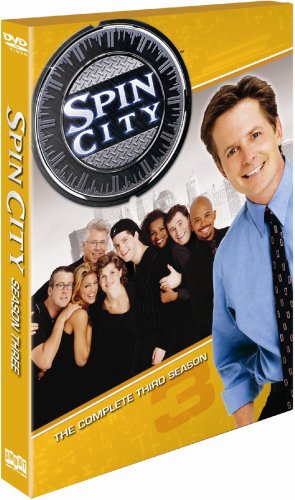
So here we are for the third season of the farcical political adventures of NYC Deputy Mayor Mike Flaherty (Michael J. Fox) and his crew. We follow them work to keep the buffoonish mayor (Barry Bostwick) in power and out of trouble, while finding plenty of time to get themselves into all sorts of predicaments. This is one of those shows that, back when it aired, struck me as clever, but not as clever as it could be, and that impression remains. The cast is a crack team of wits, and they bounce off each other with great energy and snap. There are numerous situations and plenty of lines that are funny indeed. And yet, there is a certain laziness to the humour, too. This is a comedy set in a the world of politicos and spin doctors, for crying out loud. The terrain is rich, so why do so many episodes revolve around time-worn sitcom scenarios (office hijinks, romantic pratfalls, punctured pride) that could show up in any context, and make little use of the show's particular world. There's a certain smugness to the sexual humour as well, like that of a seventh-grader who has just discovered the joys of talking dirty. Still, the show is fun, simply too easily satisfied with itself.

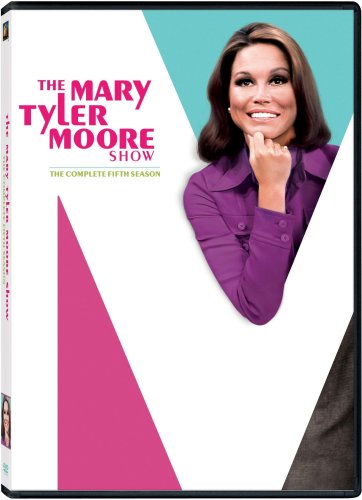
This is the fifth of seven seasons, so we are well into the series. Its groundbreaking nature (an unmarried, professional woman as a central character) has obviously long since ceased to be a novelty, and the show is, by this point in its existence, what one might call a fixture. This is merely by way of observation, and not a criticism, because the writing remains as strong as ever, and the show has stood up well to the test of time. Not every joke is a winner, of course, and there are plenty of situations whose outcomes are visible a mile off. So name the sitcom for which this isn't true. But it was the characters more than anything else that won audiences over, and the terrific chemistry of eccentricity and camaraderie is very much in evidence here. A good example of that camaraderie is in “The Outsider,” where a consultant is brought in to boost the ratings, and disrupts the easy functioning of the newsroom by imposing all sorts of unpopular changes. The wrap-up, which emphasizes humanity over ratings, is typical of the show's philosophy and spirit.


Though there is nothing wrong, as such, with the picture on display here, let's just say that this isn't a set to haul out in order to show off the capabilities of your big-screen TV. The picture quality is that of the original broadcast, essentially. So there's some flicker, some grain, and the image is a bit soft. The colours are decent, if tending a bit towards an overall tinge of brown.

Jeff Daniels plays Arlen Faber, author of the mega-bestselling Me and God, a book of self-help spirituality that comes across as an aphoristic mix of Zen and the Art of Motorcycle Maintenance and The Purpose-Driven Life. The book is coming up for its twentieth anniversary, and Arlen hasn't written anything since. He is now a cynical recluse, but begins crawling out of his shell when he encounters a struggling single-mother chiropractor (Lauren Graham) and an alcoholic used bookstore owner (Lou Taylor Pucci). They are looking to him for wisdom, though he doesn't really believe he has any to give. In turn, they are teaching him how to live again.

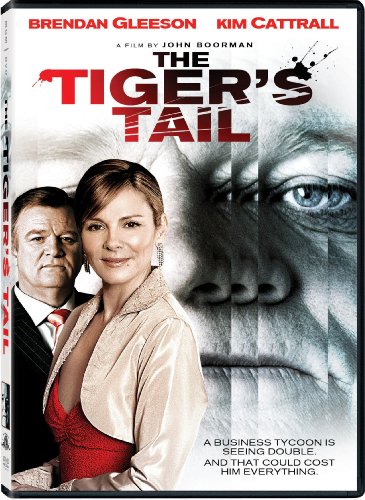
Liam O'Leary (Brendan Gleeson) has done very well in the booming Irish economy. A successful developer, he is in the process of trying to get a massive project approved, one that the future of his firm is riding on. So things are actually rather tough for him right now at work. At home, meanwhile, he and his wife (Kim Cattrall) have reached a rather chilly stage of their marriage, and his son (Briain Gleeson, and yes, Brendan's actual son) is feeling quite alienated, not to mention disgusted with the capitalist excesses that surround him. Stressful as all of this is, things are about to get much worse, as he starts seeing his double (Gleeson again). Is he hallucinating? Is it a supernatural visitation? The answer is both more earth-bound and wild, and before he knows it, his entire existence is turned upside down.

Director John Boorman has given us some pretty memorable films over the years (Deliverance and Excalibur to name but two). He is also drawn to the idea of filming parables (Zardoz being the most bizarre example). He's back in parable area here, crafting a thriller that is in fact a meditation on the human costs of Ireland's rapid economic development. The film's heart is in the right place, the performances (especially Gleeson's) are strong, and there are some nice twists. But the “author's message” neon sign is flashing rather brightly – one is rather more conscious than one should be of hearing a sermon, and the sudden shift from realist thriller to something altogether more outrageous and fantastic can be a bit jarring, if one doesn't see the film in metaphoric terms from the start.

John Krasinski and Maya Rudolph are a pair of 30-somethings who are expecting their first child. They have been counting on Krasinski's parents to step in and help, but when these two suddenly announce that they're moving to Belgium, our “heroic” couple embarks on a road trip to find the perfect place to settle down and have their baby. Numerous encounters with eccentric characters is the order of the day.

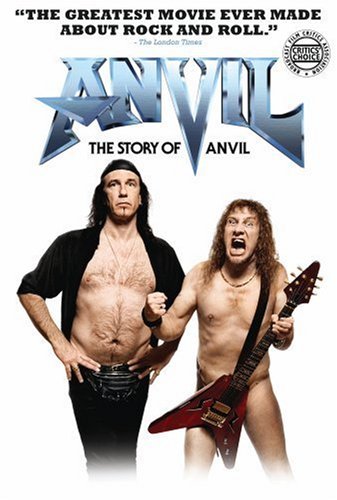
Decades after their moment in the sun in 1984, Canadian heavy metal band Anvil plugs along, playing bars and releasing CDs that barely sell, still hoping for that break that bypassed them while landing on their festival cohorts Whitesnake, Bon Jovi and the Scorpions. The documentary charts their new European tour that starts off promisingly but disintegrates into a disaster of Spinal Tap proportions, their struggle to produce and promote another new album, and a climactic return to the site of their past glory. While the opening minutes might engage laughter as one expects a real-life version of This Is Spinal Tap, the laughter is choked off almost immediately and replace by sympathy and real hope that these guys catch a break. They are not clowns – they have real talent – and the beyond-all-measure optimism of lead singer “Lips” is heartbreaking. A rock documentary to rank with the best of them, and one that proves that the absence of fame can be as compelling as its presence.