Posts by David Annandale

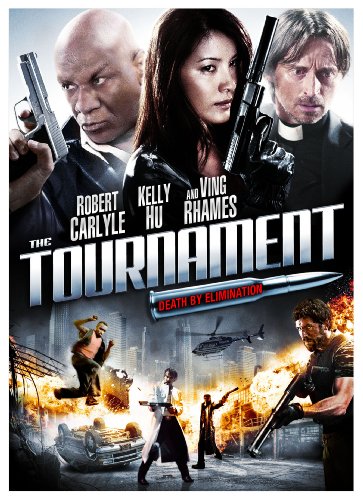
Every seven years, thirty assassins descend on an unsuspecting city and slaughter each other, all the while being observed by hijacked security cameras for the benefit of the high rollers who are betting on the outcome. The previous winner was Ving Rhames, and he thought he had walked away from the life after that tournament. But then his wife was murdered, and he learns that the killer is in the new contest (taking place this time in England). Also taking part is the fatalistic Kelly Hu, who winds up being the reluctant protector of drunken priest Robert Carlyle, who even more reluctantly has become a long-shot competitor in the tournament after accidentally swallowing a tracking device that paints him as a legitimate target.

This sounds a bit more complex than the film really is, as the plot is primarily there just to facilitate the spectacular butchery that follows. The action is fast and furious, and the blood is as copious as you're going to get this side of Hostel. All of which is more than passably entertaining, and there are also some surprisingly witty moments, usually courtesy of Carlyle. In its enthusiasm to go over the top, however, the film does dip its toe into some of the same ugly misogyny that so pollutes the Crank films. Still and all, bloodthirsty action fans could do worse than spend 95 minutes in The Tournament's company.

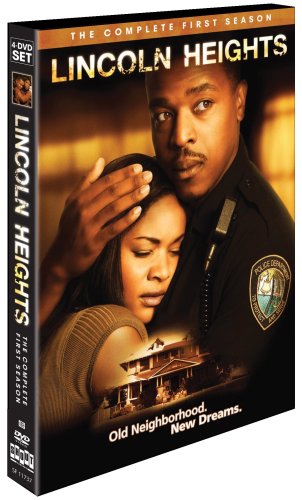
Eddie Sutton (Russell Hornsby) is an idealistic police officer, dreaming of making a real difference. His family (nurse wife and three kids) is currently living in a too-small apartment. The chance to kill two birds with one stone comes up with a program that encourages officers to buy homes in depressed neighbourhoods, and so Eddie moves his family into a spacious former crack house in the titular LA district. Things, as one might expect, are not easy. Eddie discovers (to his unaccountable surprise) that his new neighbours are suspicious of the police. His son is bullied in school. The girls have their own problems fitting in. And crime keeps rearing its ugly head. But as the series progresses, Eddie and his family make of their new house, and its neighbourhood, a real home.

Back in 2007, Variety reviewed this series, and compared it unfavorably to The Wire. Given that show's status as one of the best series EVER to grace American television, just about anything would look back in comparison. But Lincoln Heights doesn't do itself any favours by yoking together (with violence) gritty urban drama and Hallmark-style sentimentality. The latter makes the former hollow, while the former shows up the latter for the lie that it is. The show has stars in its eyes, and its heart may perhaps be in the right place, but that does, unfortunately, make it good, despite the best efforts of its able cast. The characters remain familiar mainstream TV types, and so when Eddie warns that their new neighbourhood “isn't Disneyland,” he is, in fact, wrong. He simply moves his family from one area of the amusement park to the other, from Cosbyland to Gangstaland, and there is no more authenticity than at Disneyland. I won't even get started on the action scenes, which feature the most gratuitous use of splitscreen this side of CSI: Miami.

Brian Clough (Michael Sheen) is the manager for the Leeds United soccer team, brought in to replace Don Revie (Colm Meaney), who is off to manage the England team. Clough is young, charismatic, brash, arrogant and opinionated, and has some pretty unflattering (and publicly aired) views about his predecessor and the thuggish style of play he fostered. So begin his 44 catastrophic days in 1974 as the unwelcome manager of United, and the film flashes back to the meteoric rise that brought him to this crucial pass.

This must surely be one of the best sports-related movies I have ever seen. Every conceivable sports movie cliché goes out the window. There are no extended sequences showing the games, just some quick, impressionistic shots that tell you all you need to know. This is not the inevitable story of the Underdog Making Good. It is the reverse: a rising star who takes over the most successful team in the country and becomes a legendary disaster. And yet the film is oddly triumphant. It is very much about Clough's relationships with two men: his obsessive rivalry with Revie, who isn't even aware of him, and his deep friendship with partner Peter Taylor (Timothy Spall), a friendship that might save him from himself, did he but realize it. The performances are superb, with Meaney looking uncannily like Revie (seen in footage at the end of the film), and Sheen astounding yet again, in the wake of his performances as Tony Blair and David Frost, cementing his position as one of the great actors of this generation.

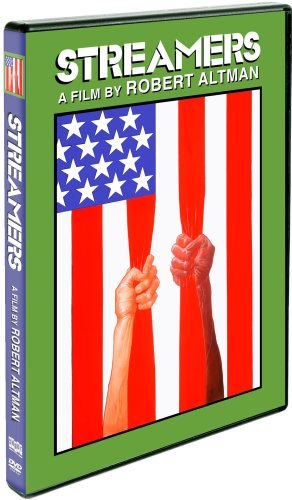
Director Robert Altman here adapts David Rabe's play about a small group of recruits on the verge of being shipped off to Vietnam. The action takes place entirely in the barracks, and here we get to know African-American Roger (David Alan Grier), fitting in as best he can in a white man's army; sensitive and gay Richie (Mitchell Lichtenstein); and possibly-closeted Billy (Matthew Modine). They talk about and dance around their various fears and anxieties, and then into the mix comes the explosive Carlyle (Michael Wright), whose life on the streets and experience with racism have turned him into someone who talks and acts long before he thinks...

Moving from stage to screen is always a tricky business. Some plays open up to the cinematic world quite easily, while others remain stubbornly stagebound. Altman's decision to restrict the film to a single set is a risky one, but it is testament to his skill as a filmmaker that it works. He preserves the claustrophobic, hothouse environment of the play, but keeps his camera and editing so active that the work remains visually interesting and properly cinematic. That said, there is no disguising the fact that Streamers is designed for the stage. The script, with its long, anecdotal monologues, could only be that of a play. What would no doubt be incredibly powerful on stage becomes, well, stagey on the screen, and though it is impossible to remain unmoved by the events in the plot, neither can one ever forget the artificiality of the enterprise, and the suspension of disbelief that would come naturally while watching a liver performance is much more difficult here. The result, then, is ultimately more interesting than powerful.

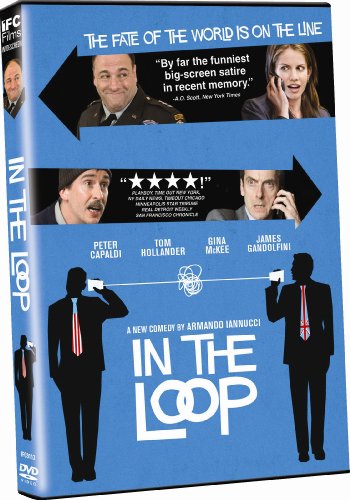
When the UK minister for International Development (Tom Hollander) has the nerve (not to mention lack of political acumen) to opine that war in the Middle-East is “unforeseeable,” all hell breaks loose. The pro- and anti-war bureaucrats in Washington see him as useful to their cause, and descend, talons outstretched. Meanwhile, the Prime Minister's Director of Communications (Peter Capaldi), a Scot who makes Don King look even-tempered and restrained, goes into apoplectic overdrive in his attempts to keep everything on-message.

Though this blistering satire leaves the precise nature, or even location, of the war-to-be is unspecified, it's pretty clear that what the film has in its sights is the collection of mangled information, doublespeak and unstoppable political agendas that led to all the fun and games in Iraq. Filled with sharply drawn characters, wonderfully creative profanity, and a bracingly cynical worldview. Not a film for the optimistic (or naïve, depending on your perspective), but the kind of black political farce that the British excel at – think Yes, Minister and House of Cards and you begin to have the idea.

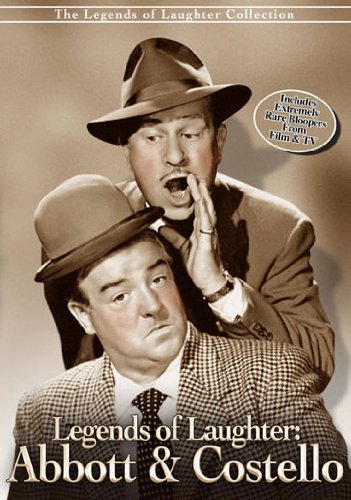
What we have here is, essentially, a great, heaping collection of public domain material from the classic comedy duo. The menu is as follows:

17 episodes of their radio show: The Abbott & Costello Show (1942-1949);

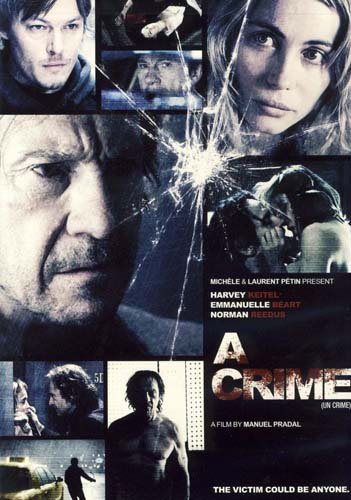
Years after his wife's unsolved murder, Norman Reedus has retreated within himself, carrying on a morose existence in a low-end apartment, gloomily taking part in unofficial greyhound racing. His neighbour, Emmanuelle Béart, is in love with him. Since Reedus is obsessed with solving the murder to the exclusion of any other human interaction, Béart decides to present him a solution. Based on the tiny bits of information Reedus has on the suspect, Béart picks cabbie Harvey Keitel as matching the profile well enough to make for a good target. She begins a relationship with him in order to put him in the frame and give Reedus, though murder, the catharsis he needs.

So goes the setup of this interesting but flawed neo-noir. As one would expect in a noir, the plan does not go exactly as foreseen, and everything becomes increasingly complex and deadly. This is to the good, and there is some nice suspense that builds up, as one is worried first about one character, and then another. Reedus doesn't have too much to do, and is too cold for audience sympathy to really develop, but Béart and Keitel's walking wounded are compelling. But if twists and contrivances are all well and good in the genre, utterly insane coincidences are harder to take, there's finally such a doozy in here that the story's credibility is torpedoed. Along the way, though, the pic makes for gripping viewing.

Before SpongeBob SquarePants, before The Family Guy, before South Park, before even The Simpsons, there was Mighty Mouse. This revival of the Terrytoons character was a short-lived, but creatively vital series that ran in 1987-88. It wasn't an adult show, like many of its spiritual successors would be, but it was something that hadn't been seen in the world of television animation in a long, long time: it was witty, smart, and expected its audience to be smart, too (and that includes smart kids, at whom the series was ostensibly aimed). However G-rated the show was, it also featured just the kind of manic humour and inventiveness you might expect from a collaboration between the man who brought Fritz the Cat to the screen (Ralph Bakshi) and (among others) the man who would shortly give us Ren and Stimpy (John Kricfalusi). If some of the look of the series is by now familiar (half of the offerings on Nickelodeon share its background design), this is, as Kricfalusi points out on one of the commentary tracks, where that look begins. The show might not have survived long, but creatively it cast a long shadow indeed, and having the entire wonderful series in one spot is a terrific treat. As far as the creative possibilities for TV animation are concerned, Mighty Mouse surely did save the day.

The menu features some pretty ferocious aliasing, which had me worried about the cartoons themselves. Fortunately, that concern was misplaced. The shows looks great, with only the occasional, very minor grain to deal with. The image is very sharp, and the colours equally strong. The series looks as good as, if not better than, it did on the day of its broadcast.

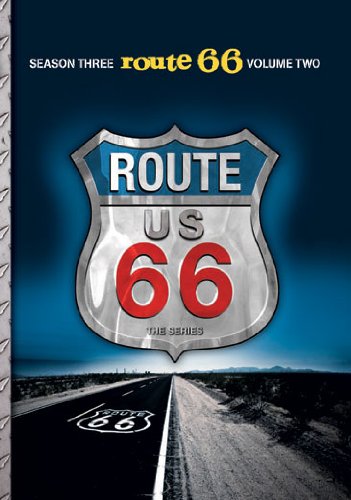
Sterling Silliphant, in the latter days of his career, gifted the world with the deliriously schlocky screenplays to the likes of The Poseidon Adventure, The Towering Inferno, and that apotheosis of the Expensive Badfilm, The Swarm. So it is sometimes hard to remember that he also penned the script of In the Heat of the Night and some 74 episodes of Route 66. I confess to a being a complete newcomer to the series, and though I was rather baffled at first, I was also struck by the quite beautiful prose being spoken. Anyone who thinks highly literate scripts are impossible (or just about) on network TV should cock an ear (and an eye) in the direction of this series.

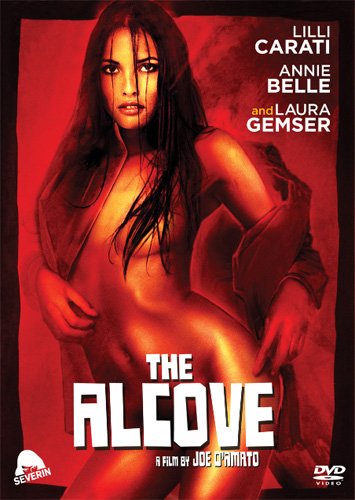
The time is the 1930s, the setting Africa, as Mussolini attempts to recreate an Empire through the colonization of Abyssinia. An officer and poet Elio (Al Cliver) returns from the campaign with the spoils of conquest, one of which is Abyssinian princess Zerbal (Laura Gemser, of D'Amato's Black Emanuelle films). The erotic heat in his home is already pretty torrid, what with wife Alessandra (Lilli Carati) carrying on with secretary Virma (Annie Belle). Zerbal's arrival upsets the emotional apple cart, passions flare, and the supposed slave starts to exert more and more influence over the putative masters.