Posts by David Annandale

Today's musing involves two recent films experiences. The movies could hardly be more different, but they have made me think again about the wonderful flexibility of my beloved horror genre, a flexibility that extends to swallowing up films that don't, in theory, even belong to it. Allow me now to elucidate that rather cryptic remark.

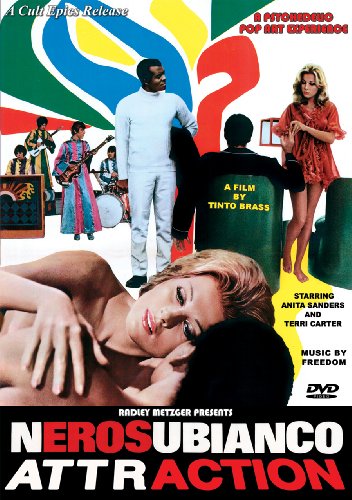
Only the most foolhardy of mortals would attempt a plot summary of this film, and I'm not quite that crazy. This is Tinto Brass's 1969 effort, coming between 1967's Deadly Sweet and 1970's The Howl. The former is a mad, pop-culture collage of noir elements, while the latter is a hallucinatory picaresque. This one is the most plot-free of the the lot. The original title is Nerosubianco, an untranslatable pun that combines “black on white” with the word “eros” (Attraction – note the word contains “action” – is an honorable attempt, and better than the theatrical title of “The Artful Penetration of Barbara,” which is what appears on the screen here, with the new name showing up as a subtitle), and that's about as much as can be summarized: this is an interracial romance. Beyond that, we have an exercise in pure formalism, an eye-popping collection of images and incidents as abstract as they are psychedelic.

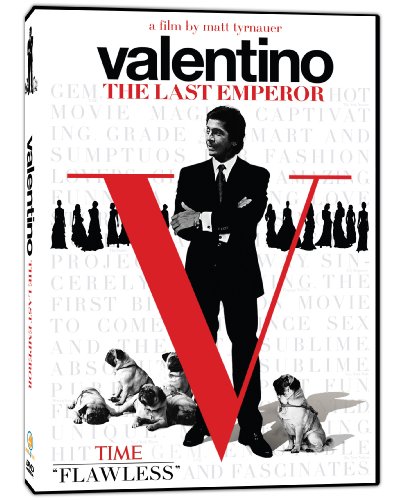
No one who knows me will find it terribly surprising to hear me admit that I know very little about the fashion industry, nor do I have a particular interest in it. Having said that, I was, to my pleasant surprise, gripped by this documentary. It tracks the final year of legendary designer Valentino's career as he prepares his new line and the big celebration of his 45 years in the business. But there are clouds on the horizon, too. He and his partner Giancarlo Giammetti are no longer the owners of the Valentino company, and the pressures of the new corporate world are bearing down. The films is thus a fascinating look behind the scenes of numerous facets of the Valentino's world: his life, how he works, his explosive temper, and the sad fact that the world of design is changing in ways that are forcing individual creative artists to the margins. Well worth watching.

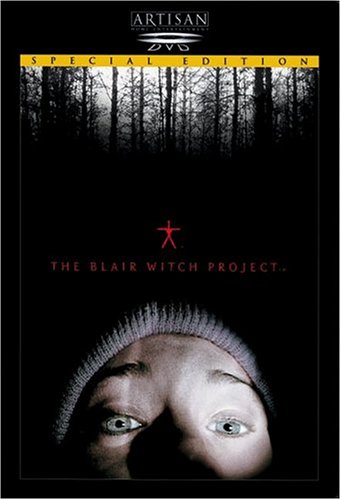
Ten years ago, a micro-budgeted, mockumentary horror film found a special alchemy of filmmaking and marketing, and became a box office sensation. That movie, of course, was The Blair Witch Project. In the long run, it divided audiences sharply, between those frightened speechless and those bored stiff. The case can certainly be made that the film was hyped outside of its natural cult environment, and hence some inevitable mainstream backlash. But one of my treasured memories is attending opening night with a packed crowd, and witnessing more than a few primal traumas. That's a rarity, these days.

Enzo Castellari, Tarantino fave and director of the original Inglorious Bastards, here gives us a tale of wartime intrigue that sweeps from the retreat of Dunkirk to the Battle of Britain. During the Dunkirk evacuation, a team of Nazi saboteurs don English uniforms and mingle with the embarking troops. Captain Paul Stevens (Frederick Stafford) finds evidence that this has occurred, but no clues to the identities of the saboteurs. Indeed, the second-in-command of the group, Martin (Francisco Rabal) has become his close friend and roommate. The saboteurs target Britain's radar system, a critical part of the island's defense against the Luftwaffe. It's up to Stevens and his specially assigned team to stop the saboteurs before the Battle of Britain is lost.

It's amusing, of course, to watch a film all about England's fate hanging in the balance with not a single English actor in the mix. But the story is a good one, and the action is relentless, ranging from the epic scale (the Dunkirk scenes are quite spectacular) to the more personal (plenty of exciting gunfights around the radar installations). The dogfights are a somewhat less satisfying combination of rather obvious models and stock footage, but Castellari's inventive use of split screen keeps the visual interest high.

A mysterious figure digs up the shattered remains of an android in the desert wastes of a very grim, polluted future. The man brings the head and hand in for barter, and they are picked by Hard Moe Baxter (Dylan McDermott, in a role that nicely deconstructs Mad Max). Moe takes the hardware back to the flat of his artist girlfriend (Stacey Travis), who incorporates the pieces into a sculpture. Unfortunately, these remains are part of the M.A.R.K. 13 military droid, and when Moe absents himself, the robot reactivates and goes on the rampage.

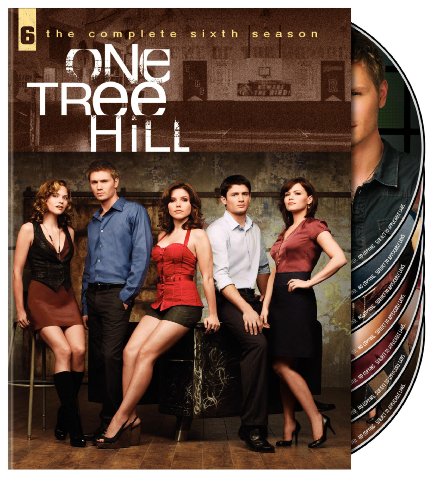
This season finds the protagonists well beyond high school, now having adventures in the adult world. So writer Lucas, in the midst of promoting his book, proposes to Peyton. Brooke fights to save her clothing business from the clutches of her mother From Hell. Piece of work Dan is flattened by a car and then finds himself in the hospital, helpless, badly injured, and at the mercy of a sadistic nurse out for revenge. Basketball player Nathan doesn't know that his mother is having an affair with one of his friends. And on we go, and I haven't even mentioned the episode that's a fantasy construction of Lucas', relocating the entire cast and setting to the 1940s.

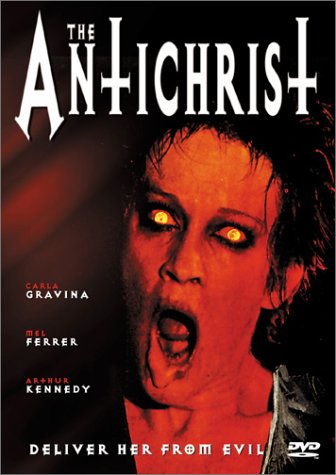
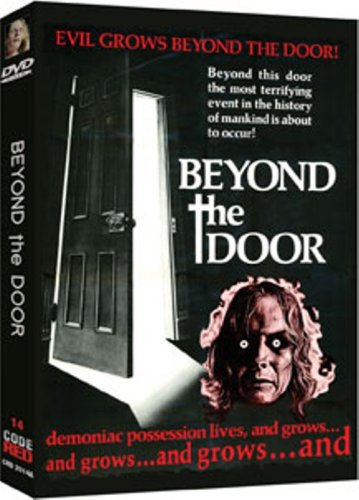
When The Exorcist was first released, Pauline Kael opined, in her New Yorker review, that the film was the best recruiting poster for the Jesuit order since Going My Way. There is more than a grain of truth to her statement, given how cool all the priests are in the film, but there is more. As many critics have pointed out, the film has a rather reactionary streak: after all, it isn't hard to see the film as a nightmare depiction of female sexuality, presenting it as something monstrous that must be contained at all costs. And after all, what parent hasn't, at some point, envisioned the teenage years as a form of demonic possession, with their sweet little angel transformed by evil forces. So here's a film that confirms to them that, yep, the offspring's misbehaviour isn't normal, but evil. It is this side of The Exorcist that is, perhaps, being parodied by Beyond the Door. It is certainly being exploited by today's entry in the demonic possession sweepstakes, The Antichrist (1974).


So I guess this column should join in with the Halloween fun. I'll be popping in and out with various short film musings and recommendations, some of which might run the risk of being rehashes. If so, I apologize, but my reasoning is that the film deserves to be fresh in your mind for the season. First up: Beyond the Door (1974).

All right, so I'm a bit late to the party on this one, but I wanted to toss in my two-bits anyway.