Posts by David Annandale

I, of all people, should know that one person's cultural detritus is another's fond nostalgia, and what better example of that can there be than this release. A strange mix of athletic contest, pro-wrestling posturing and silly gimmick game show, this series (which has recently been reborn) pitted hard-bodied contestants against the even-more-hard-bodied (at least in appearance) Gladiators of the title. Some contests involve knocking each off a beam, or dodging tennis balls fired from a gun while trying to get in a shot of one's own. Or then there's swinging in on a rope in the attempt to knock the Gladiator off a pedestal. It's all pretty silly, made even more so by the straight-faced colour commentary. If the intent was to satirize sports broadcast generally, then this is quite brilliantly funny, at least at first, but the joke can't sustain itself over multiple seasons. Basically, it is what it is. If you enjoyed the show when it first ran, then perhaps you'll enjoy it again (but is there anything less intended for multiple viewings than a game show?). If you are unfamiliar with the concept, probably best to stay that way. For the benefit of the completists out there, it should be noted that this set begins halfway through Season 1.

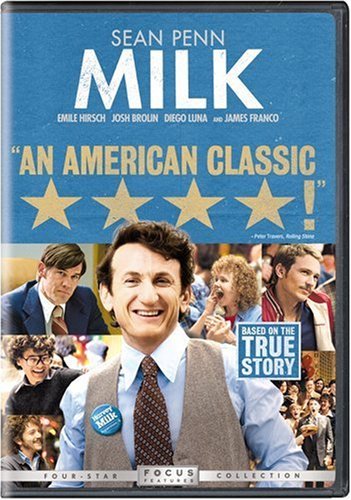
Foreseeing his own assassination, Harvey Milk (Sean Penn), America's first openly gay elected politician, records his memoirs. The film flashes back to follow his narration, tracking his transformation from don't-make-waves semi-closeted New Yorker to activist San Franciscan. In his new home, he decides to run for City Supervisor, and after numerous failed attempts, which take a toll on his personal relationships, he finally wins. The battles are only just beginning, however, as he must now wage war against the intolerant laws being pushed by California Governor Briggs and anti-gay crusader Anita Bryant. Meanwhile, a prickly professional relationship with fellow Supervisor Dan White (Josh Brolin) is sowing the seeds of tragedy.

Running for a single season in 2008, this ABC Family production is a humorous pastiche of superheroics and Avengers-style adventure. Natalie Morales plays Wendy Watson, a struggling artist making ends meet as a temp. When she demonstrates incredible unflappability when a monster is unleashed at her current job, straight-arrow superhero the Middleman (Matt Keeslar) recruits her to join him in the fight against all sorts of bizarre menaces. A sampling of titles gives the flavour of the series: “The Boy-Band Superfan Interrogation,” “The Palindrome Reversal Palindrome,” “The Flying Fish Zombification.”

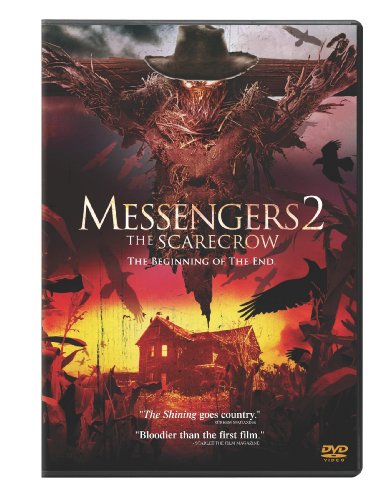
In 2007, the Pang Brothers, whose The Eye was one of the spookiest ghost stories of recent memory, made their North American debut with The Messengers, a disappointingly ordinary tale of a haunted farm. Nobody asked for a sequel, to my knowledge, but here it is, apparently closer to writer Todd Farmer's original story than the first film.

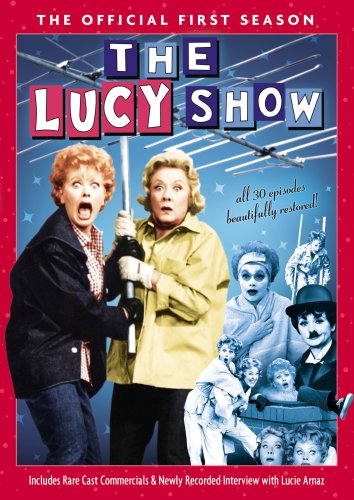
This was Lucille Ball's follow-up to I Love Lucy, and the first season is, apparently, the most highly regarded one. Here Ball is a widowed mother of two, sharing her home with best friend Vivian Vance, who is a divorced mother of one. All the other members of household are, of course, faced with the disasters triggered by Lucy. I screened this set immediately after viewing its close contemporary, Petticoat Junction, and the difference between the two was instructive. There are plenty of hoary gags and situations on The Lucy Show, but there is an enormous difference between the shows thanks to the comic genius of Lucille Ball. Her energy fills each episode, her timing is spot-on, but there is also her commitment to a type of physical comedy that to this day remains pretty much the exclusive domain of male performers. Not only does she make this style her own, she grounds it in a female reality. There is a reason she was so beloved a performer, and why her work still stands up today.


Though the image is a bit soft, with features losing definition in long shots, the picture is still looking remarkably good for television from 1962-63. The black-and-white tones are very warm, and the grain, though present, is minor. There is no edge enhancement to deal with. It is, frankly, very unlikely that these episodes have ever looked better.

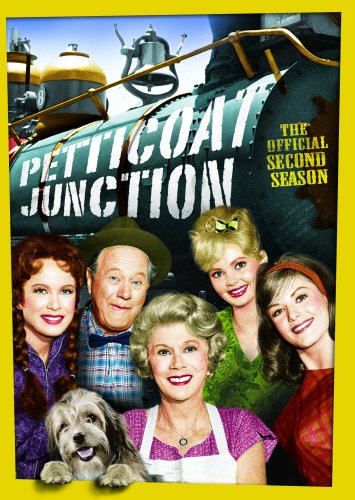
Once upon a time, there was an age of TV where hit shows where women in their 20s played high school students, and an entire episode could revolve around the burning crisis of whether the dog that followed one daughter home could stay. It is from this era that Petticoat Junction hails. This series about a widowed mother and her three daughters tending the Shady Rest Hotel ran for seven years, and begat both Green Acres and The Beverly Hillbillies, in that characters from all three series would interact with each other.

So our principle cast here consists of mother Kate Bradley (Bea Benaderet), daughters Billie Jo (the flirt, played by Jeannine Riley), Bobbie Jo (the bookworm, played by Pat Woodell, who would leave after this season), and Betty Jo (the tomboy, played by Linda Kaye Henning, daughter of series creator Paul Henning). Throwing in his two bits is lazy Uncle Joe (Edgar Buchanan). Joining the cast this season is Higgins the dog, who would subsequently star as Benji, and thus eclipse his human co-stars.

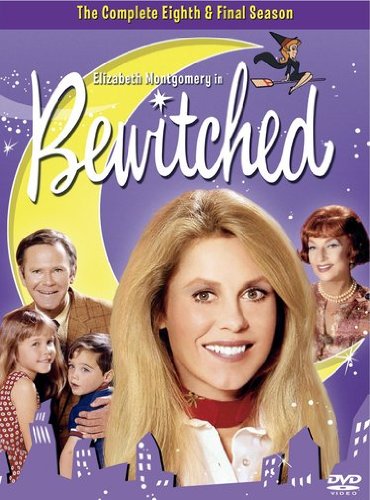
This, the final season of the series, opens with Samantha (Elizabeth Montgomery) and Darrin (Dick Sargent) on a European tour. This means stock shots of various European landmarks before we return to rather unconvincingly dressed-up studio backlots. There are a few two-parters in the mix, including the opening episodes, where Samantha is zapped back to the court of Henry VIII, and a late-season adventure where the time travel goes the other way, and George Washington is brought forward to the present. Special note should be made of Episode 3, where the Loch Ness Monster shows up, in all his googly-eyed, man-in-a-costume glory.

There's a certain brazenness, it seems to me, for any show, even a budget-conscious one in 1972, to limit itself to the special effects technology of 1896. Indeed, there is nary a moment that couldn't have been accomplished by Georges Méliès. As for the humour, well, it's very much of its period – in other words, it creaks very badly, with the laugh track kicking in at every single line. I remember watching this show as a kid, and getting some fun out of it, though preferring the identically themed I Dream of Jeannie (for reasons now that I cannot recall). Basically, this is mildly entertaining for the nostalgic, but not much more.

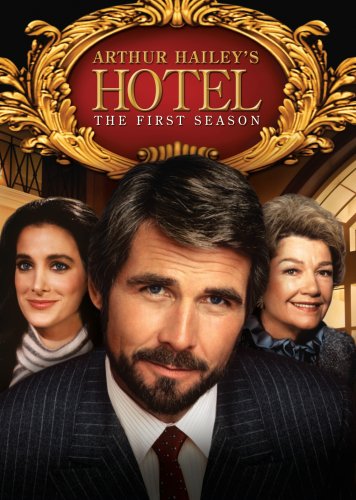
As a Henry Mancini score swells with unapologetic cheese, we are swept into the world of the luxurious St. Gregory Hotel in San Francisco. Owned by aging matriarch Bette Davis (replaced, when she had to pull out due to illness, by Anne Baxter, as her sister-in-law), the Hotel's General Manager is James Brolin, who has lots of time to wander around the lobby greeting the various guest stars. In other words, he's Mr. Roarke to the St. Gregory's Fantasy Island. What follows is pure fromage of the Aaron Spelling variety, with every other guest star a fading Familiar Face, no end of improbable crises, painful comic relief, unintentional comedy gold in the dramatic moments, and much of the feel of a 1970s disaster movie minus, sadly, the disaster itself (but you can always re-watch The Towering Inferno to make yourself feel better).

The colours are strong, and the picture quality is generally what one would expect for a mid-80s television program. The grain is minimal, but the image is a bit soft – features and details tend to bleach out and disappear when in the middle distance. That said, the transfer gets the job done, and looks true to original broadcast quality.

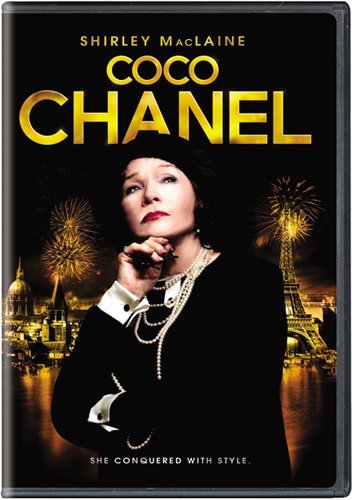
In 1954, Coco Chanel (Shirley MacLaine) unveils her first collection in 15 years. The reception is disastrous. As she struggles to bounce back from the fiasco, she flashes back over her life. The bulk of the film then follows the young Chanel (Barbora Bobulova) and her love affairs, first with a callow playboy (Sagamore Stévenin), then with the Englishman (Olivier Sitruk) who will be the great love of her life. Along the way, we see a little bit of her development as a fashion designer.

If you're sitting down for a soap opera in period dress, then you could certainly do worse. As silly as it often is, Coco Chanel is consistently entertaining. Its desire to worship its subject does mean for some unfortunate choices, however. Setting aside the fact that there is too little time spent on what made her one of the world's most famous designers, the film decides to pretend that nothing much happened to her between 1925 and 1954, when the most cursory Wikipeida search reveals all kinds of juicy incident (shacking up with a Nazi officer during occupation, espionage games, post-WWII arrest) that would have made for wonderful storytelling. Oh well. Malcolm McDowell is rather oddly cast as the older Chanel's confidant, and perhaps the fact that he has nothing much to do is the reason why he can't seem to get rid of that sneer of contempt, even when he supposed to be genuinely moved. Still, suds and all, its 139 minutes clips by quite efficiently.

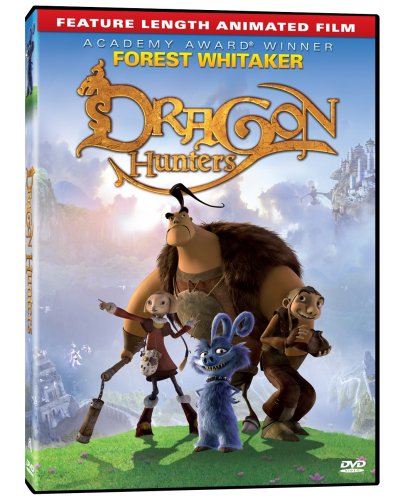
In a mythical world, a series of apocalyptic prophecies are coming true. These events presage the awakening of a world-devouring dragon. Dragon hunters are needed more than ever, but all of the knights of yore are dead or insane. The only game in town is a couple of misfits: Lian-Chu, who still bears the trauma of the night his village was destroyed by the dragon, and his friend Gwizdo, a two-bit con artist. They are accompanied by Hector, a strange little scene-stealer who might be a rabbit or a dog. Zoe, the excitable niece of the decrepit and blind king, recruits the motley crew to defeat the evil, and off they go, journeying to the end of the world to face terrible danger.

This computer-animated effort is French, but only the English language track has been provided, and I can't help but wonder if something was lost in the translation. Forest Whitaker is top-billed as Lian-Chu, but the character has very few lines, and even less expression. Zoe and Gwizdo have the lion's share of the dialogue, and these two are overly familiar figures. The dialogue moves the story along, but doesn't particularly sparkle. What does shine, however, is the look of the film. The world is a stunningly beautiful universe of floating platforms, and the detail work is tremendous. If the story isn't anything to write home about, the eye candy most certainly is.