Posts by David Annandale

Clowns have been a recurring obsession for Fellini, by the director's own admission, and after having been memorable presences in his films (perhaps most notably in La Strada), here they have an entire film devoted to them. Fellini here offers a mixture of biography, documentary and comedy. The film opens with a young boy (meant to be Fellini) first encountering (and being frightened by) clowns at the circus. Fellini's narration recounts how the clowns reminded him of real characters from the village of his youth, which cues recreations of those people, their actions essentially circus clown routines transposed to world outside the circus tent. Fellini then heads off to Paris in search of clowns and their history.

Fellini incorporates many clowning routines, and how well the gags work will, of course, depend on the individual viewer. But the value here is less that gags than the history and broader meaning of the circus itself. What clowns mean, what we take from them, what the different figures represent – these are the kinds of meditations the film engages in, and there is a great deal of melancholy and poignancy to go along with the broad slapstick. A fascinating piece then, originally done for Italian television.

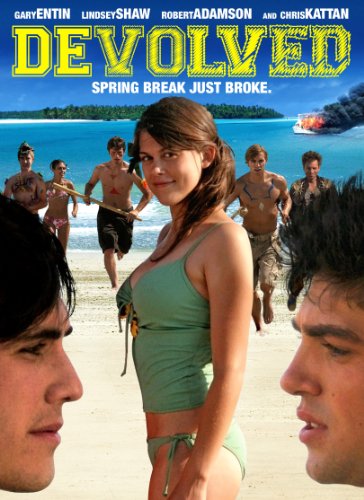
A Spring Break whale-watching cruise goes off-course and then blows up, thanks to the stupidity of the popular kids, and two groups of high schoolers find themselves washed up on a deserted island. The aforementioned populars, led by the egomaniacle The Rog (Robert Adamson) immediately establish their dominance, squandering supplies and tormenting the unpopulars. These unfortunates turn to reluctant leader Flynn (Gary Entin), who begins planning a revolution. Pulled between the two groups is Peggy (Lindsey Shaw), cheerleader and girlfriend to Rog who nonetheless has too much intelligence and self-respect to remain satisfied with either role.

The feature-length directorial debut of Severin's own John Cregan sheds new light on that company's interest in 80s teen comedies. But Cregan's touchstones go deeper than that. Obviously, the proceedings are very Lord of the Flies, but there is also a hint of Massacre at Central High (1976) with the idea that deposing one tyrant might simply lead to the rise of another. Devolved doesn't go all the way in plumbing those depths of darkness, though. It is, first and foremost, a comedic satire, and its touch is quite assured. The writing is sharp, and the action is frequently interrupted by a reality-TV-style narrator who portentously comments on the events, occasionally providing helpful animated diagrams.

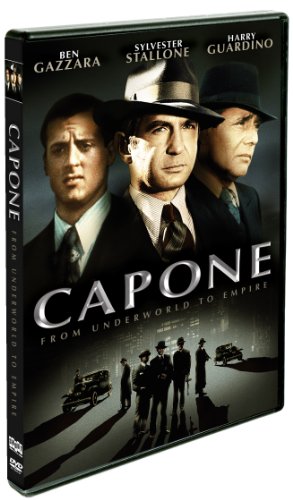
Roger Corman has never let an exploitable opportunity slip by. A case in point is what we have here. In the wake of the first two Godfather films came this rise-and-fall tale. And because the Godfather movies were handsome, expensive and classy, then this Corman-produced effort is also a nice-looking piece of cinema, even if the budget-conscious element shows through with the use of leftover footage from The St. Valentine's Day Massacre.

Ben Gazzara plays Al Capone, moving up from street-smart hood to mob kingpin through cunning and violence. His mentor is Johnn Torrio (Harry Guardino), who works to unite the various ethnic Chicago gangs, but lacks the bloodthirstiness necessary to impose his will. Capone has the right ruthlessness, and betrays Torrio, taking his place. But Capone has his own right-hand man with high ambitions: Frank Nitti (Sylvester Stallone).

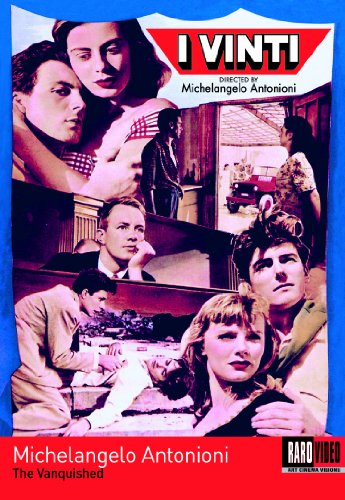
A stern, hectoring narrator laments the state of the Young People of Today's Modern World, and ascribes their terminal amorality to their having come of age during the World War Two. Having set the stage, he then withdraws until the end, that we might draw the proper moral conclusions from a trio of tales (inspired, loosely, by actual cases) that show the terrible depths to which the Young People of Today's Modern World have plunged.

The first is set in France, where a group of teens head off for a day in the countryside. Their goal is to murder one of their own, believing that a) he is about to betray them by taking off to Canada; and b) that all his fanciful tales are true, and that he is fabulously rich. In the second story, a young man from a good home in Rome is involved, for no very good reason beyond selfishness, with cigarette smugglers. Barely escaping from a police raid, he guns one man down and is badly injured himself. We then follow him through the day as he slowly stumbles toward his destiny. The last story takes us to England, where a fellow, utterly convinced of his own superiority, courts a newspaper's interest first by letting a reporter know about a body he has found, and later by boasting he killed the woman himself, believing that his crime is so perfect that he can confess to the police and then recant without suffering any particular inconvenience.

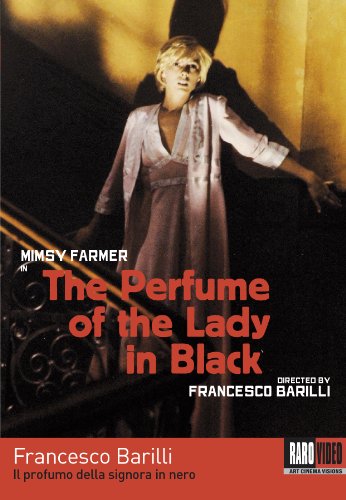
Three years after her unsettling turn in Dario Argento's Four Flies on Grey Velvet (1971), Mimsy Farmer headlined this giallo-related effort by director/co-writer Francesco Barilli. She plays a successful chemist on the verge of a psychotic break. She has been haunted since her childhood by the death of her father, and she has recurring memories (or are they fantasies?) of her mother in the arms of a sinister man. Her sense of reality crumbles as objects and people from her past appear and vanish. She retreats deeper and deeper into a paranoid shell. But just because you're paranoid doesn't mean they aren't out to get you, and there are signs that she may be the victim of a sinister conspiracy.

By the time Barilli's film reaches its admittedly chilling finale, it has ceased to make a lick of sense. This isn't necessarily a bad thing: many gialli (and related Italian horror films) follow a logic that belongs to dreams rather than the real world. But even as Barilli adopts a stately pace (all of the violence in the film is reserved for the last fifteen minutes), he also tries to do too much, as if he were trying to fuse Repulsion with The Wicker Man. The film's head-scratching aspects get in the way of the fist-in-the-gut denouement, or at least prevent it from having quite the impact it deserves. However, the film is handsomely shot, and the ending is sufficiently powerful that it will linger in the mind.

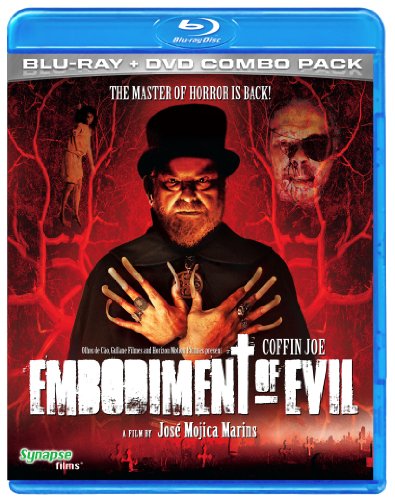
One of the (many) reasons that Scream 3 was such a weak entry is that it tried to riff on the rules of trilogies, when, at the time of its release, there really weren't any horror film trilogies, with notable exception of the Omen series (and the not-so-notable exception of the trio kicked off by Captive Wild Woman in 1943). But the last few years have seen the completion of two horror trilogies, whose third parts were a very long time in coming. Dario Argento wrapped up his Three Mothers trilogy with the disappointing Mother of Tears in 2007. And now, hitting home video, is a primal roar that also happens to be José Mojica Marins' 2008 conclusion to his Coffin Joe saga.

Despite his enormous list of crimes and his total lack of repentance, Coffin Joe (Marins) is released from prison after serving a mere 40 years. Administrative bungling appears to lie behind his freedom – a hint of the vein of mordant humour that runs through the film. Met outside prison by his hunchbacked assistant Bruno (Rui Rezende), Joe is at first thrown by the 21st-Century metropolis he finds himself in, and Marins has some fun with the Gothic and wildly out-of-place Joe and Bruno stumbling along through the traffic. But things take a darker turn very quickly, once Joe is back in the slums, and embarks once more on his quest for the superior woman who will bear his son, and ensure the immortal continuity of his blood.

A sure sign that Easter is just around the corner is yet another home video release of perennial seasonal favorite The Ten Commandments. In years past, we got the multi-disc edition, complete with original silent version of the film. This particular version is rather more stripped down, as far as features go, but it does mark the film's extremely welcome arrival on Blu-ray.

The first act of Cecil B. DeMille's epic is as much a tale of Egyptian power politics as it is the story of a man coming to terms with his identity and destiny. We follow Moses (Charlton Heston) as, rising from triumph to triumph, he has the throne of Egypt within his grasp (much to the displeasure of Yul Brynner, the Pharaoh's actual son and rival for the affections of the sinuous Anne Baxter), only to lose all worldly power when he realizes he is actually the son of Hebrew slaves. Cast out of Egypt, he returns to demand the liberty of his people, and comes clutching a fistful of plagues to make sure his former brother pays heed.

The more famous a star, the more curious their early, pre-icon efforts become. Thus, we watch agog as Humphrey Bogart plays a murderous, blood-thirsty zombie in The Return of Doctor X (1939). And here, a 16-year-old Nicole Kidman makes her debut as a BMX-obsessed teen who runs afoul of a group of not-very-competent gangsters. Once again, one watches agog.

Kidman, Angelo D'Angelo and James Lugton are the trio of teens who need to raise funds to buy new bikes. They happen across a cache of walkie-talkies that are supposed to allow a gang of bank robbers to hear the police while being unheard themselves (though, as matters develop, the opposite is true), and sell them. Understandably irked, the thieves pursue our heroes, and all sorts of car vs BMX chase scenes ensue.

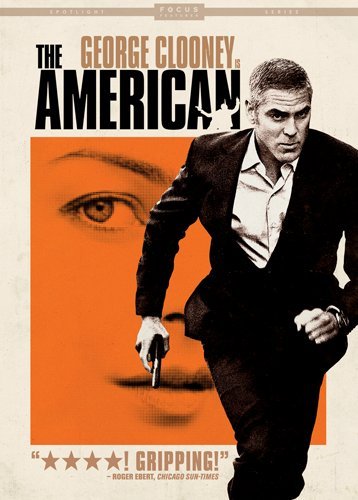
The cover of this DVD is, depending on which signals you pick up on, either misleading or perfectly accurate. If all you see is George Clooney running with a gun, and you therefore come to the conclusion that this is going to be some action-packed thriller, and that is what you're hoping for, then you're going to be disappointed. If, on the other hand, the orange colour and the rather retro look to Cloney's image, not to mention the rather uninformative title, makes you think of the 1970s, then you're on the right track.


Clooney plays the titular American, an intelligence operative whose last job results in rather more bloodshed than it should, and people are clearly after him. Nonetheless, he is given a new assignment, and he takes it. He is to craft a specialized assassination rifle, and he does so while holed up in a hillside Italian village. There he meets a priest and a prostitute, encounters that will alter the course of his life.

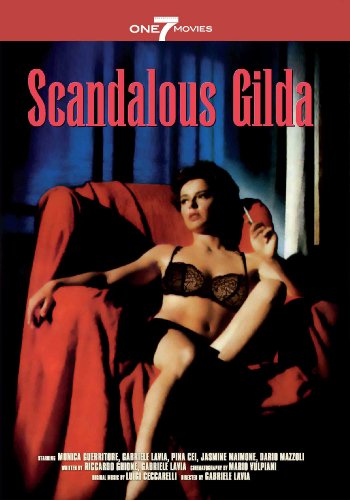
Monica Guerritore is an unnamed wealthy socialite (all of the characters in the film are unnamed) who catches her husband in flagrante with another woman. To add insult to injury this woman is a TV personality of a sort unknown in North America, but common in France and Italy – an attractive woman whose only job is to let you know what's coming up next – and, rightly or wrongly, can represent, as is the case here, a certain form of empty glamour.

At any rate, Guerritore, sexually humiliated, heads off on the road with no particular destination in mind. She encounters exuberant cartoonist Gabriele Lavia (also the director of the film, but best known on these shores for his roles in Beyond the Door and Dario Argento's Deep Red and Inferno). The two begin an affair that rapidly spirals out of control, crossing all the boundaries of passion (that's the idea anyway) and veering rapidly towards self-destruction. All in about twelve hours!