Posted in: Disc Reviews by David Annandale on July 31st, 2007
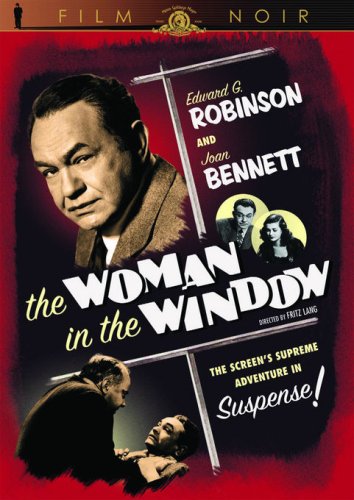
Left alone when his family leaves town to visit relatives, professor Edward G. Robinson hangs out at his club with his two cronies, one of whom is DA Raymond Massey. He is fascinated by a striking portrait of a young woman, and one night, leaving the club late and alone, he runs into the portrait’s model (Joan Bennett). Though he knows better, he accompanies her back to her apartment. A jealous lover bursts in and attacks Robinson, who murders him in self-defense. Panicked by the situation, Bennett and Robinson cover up the event, but both the authorities and a blackmailer circle closer and closer.
Robinson is magnificent as a basically decent man whose one lapse in judgment leads him to catastrophe. His eyes radiate a desperate desire to turn back the clock, and the audience squirms along with him. Bennett’s character is interesting as the unintentional femme fatale: she never has any desire to cause trouble for Robinson. Director Fritz Lang holds the audience in a lethal grasp, which never loosens in the slightest until the unfortunate cop-out ending.
Posted in: Brain Blasters, Regular Columns by David Annandale on July 27th, 2007
A little theory, which is mine, regarding film. This theory, at its simplest, holds that the following is a self-evident truth: that the film has not been made that cannot be improved by the addition of dinosaurs. The corollary is that there are strict limits to how bad any film with dinosaurs can be. by extension, the replacement of dinosaurs with a monster of some sort of description is acceptable. I can tell by the skeptical rise of your eyebrow that you don’t believe me.
I invite you to put the theory to the test. Let’s use Steven Spielberg as a case study. A great many people have found flaws of one sort or another with Jurassic Park. Fair enough. But if you are one of those not overly fond of the film, consider how much more you would dislike it if there were no dinosaurs at all in it. See? It would completely suck. On the other hand, let’s think about Schindler’s List. Sure, great movie and all, moving, powerful, yadda yadda yadda, but what if the climax had seen a T-Rex show up to stomp that nasty death camp flat. Now that movie would have rocked.
Posted in: Disc Reviews by David Annandale on July 26th, 2007
Preston Foster is a bitter ex-cop who masterminds a gigantic robbery. Hiding behind a mask, he forces three cons to work with him, and makes sure they too wear masks, so only he knows everyone’s identity. The heist also involves framing an innocent flower delivery-man (Joe Rolfe), who unfortunately has done his own stint in jail, and so is put through the brutal wringer by the police. Freed but understandably ticked off, Payne sets off on the trail of the men who framed him. Tracking one to Tijuana, Payne adopts his identity and arrives at the resort where Foster and others have gathered. Foster’s master plan is complicated by the arrival of his daughter, who develops an interest in Payne.My summary likely makes the film sound hellishly convoluted. Though it does indeed have a plethora of twists and turns, the storytelling remains crystal-clear throughout, and it is astonishing how many issues and incidents it packs into 99 minutes. The near torture that Payne suffers at the hands of the police is wince-inducing, and Neville Brand and a young Lee Van Cleef are memorably sleazy cons. Marvellous fun.
Audio
Posted in: Disc Reviews by David Annandale on July 22nd, 2007
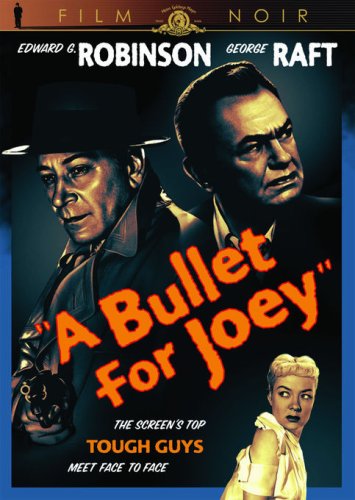
George Dolenz is the Montreal scientist working on an atomic something-or-other. Foreign spies (could they be.... Communists??!!) hire exiled American gangster George Raft to get Dolenz and his secret into their clutches. His secret weapon for this project is the seductive power of Audrey Totter. Working for the angels is RCMP detective Edward G. Robinson. The expected race against time ensues.The Montreal setting is unusual, as is the idea of Robinson as a Mountie, so that's fun. Rraft is very much the aging gangster by this point, but still rasps it out with the best, and the film is really about his redemption. Not only is Dolenz' research a pure McGuffin, so is he, his character nothing more than the means to have Robinson and Raft play cat and mouse. This isn't in the top rank of films noir, but it is still a lesson in how to pack a lot of entertainment into an economical 87 minutes.
Audio
Posted in: Disc Reviews by David Annandale on July 20th, 2007
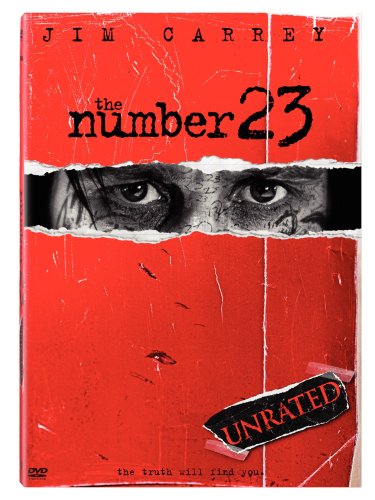
Jim Carrey is an animal control officer whose wife (Virginia Madsen) gives him an odd crime novel for his birthday. The book is narrated by a police detective who becomes violently obsessed with the recurrence of the number 23 in all aspects of life. The book has plenty of strange similarities with Carrey's life, and he becomes consumed with finding the author and knowing what it's all about, not to mention descending into the 23 obsession himself.As with so many Joel Schumacher films, there is less here than meets the eye. The film is pretty, slick, and superficially interesting, but ultimately rather empty. The whole 23 thing has been kicking around in popular culture for a while, and there is something neat that could be done with it, but most of the notions of mystery or conspiracy evaporate as the film reaches its climax, and everything disintegrates into a muddle of endless expository voice-over and platitudinous moralizing. The unrated version of the film runs three minutes longer than the theatrical version (also present).
Audio
Posted in: Brain Blasters, News and Opinions by David Annandale on July 20th, 2007
It’s been a fairly commonplace activity over the last few years to compare our current troubled era with that of the late-sixties/early-seventies, with special attention paid to discussion of parallels (and to what degree they are or are not justified) between the Iraq and Vietnam wars. In that context, it is interesting to consider the way popular culture has dealt with those conflicts, with particular reference to genre offerings.
This is by way of making a bit of a case study of Deathdream (AKA , The Night Andy Came Home,Dead of Night and The Veteran), a 1972 horror film directed by the late, lamented Bob Clark. The film was a bit of a first in a couple of respects. From a genre perspective, it marks the beginning of Tom Savini’s make-up career. But it was also, it seems, the first film to directly deal with the domestic cost of the Vietnam war. It tells the story of a young solider killed overseas, but who nevertheless comes home, thanks to his mother’s intense desire for him to do so. She refuses to recognize anything is wrong with her son, and at first, things seem relatively okay. But decay gradually sets in, as do murderous impulses. You see, he must drink blood in order to avoid disintegration. His father realizes what’s up, but is too weak to do anything about it, and his mother is in total denial. Much has been written about the film’s critique of the patriarchal nuclear family, but of more interest here is the movie’s depiction of the costs of untenable beliefs, and of the damage war does to the home front. 1972 was pretty early for such subject matter. The mainstream of Hollywood wouldn’t really deal with these issues until some years after the war, and so here is another prime example (among so many) of a low-budget horror picture blazing the controversial trail.
Posted in: Disc Reviews by David Annandale on July 20th, 2007
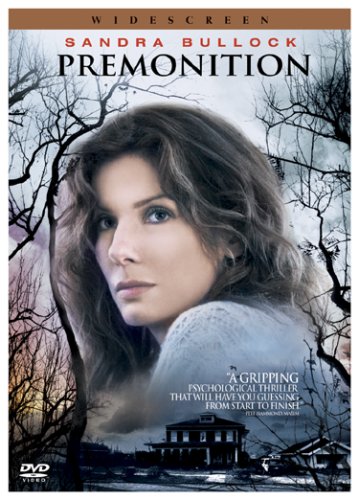
While expecting her husband home from a business trip, Sandra Bullock receives word that he has died. But the next morning, when she wakes up, he is still alive, and hasn't even left yet on the trip. Next morning, he's dead again, and it's the day of the funeral. Understandably, our poor heroine is a might discombobluated as she deals with having become unmoored in time, struggling to save her sanity, her husband, and her marriage.This film was thoroughly trashed at the time of its theatrical release, and there are, it must be said, plenty of things wrong with it. Some temporal elements are inconsistent as the days move around (why, for instance, does Bullock's older daughter not show, on the day the news of the husband's death is received, the facial injuries that she received a few days prior?), the pace flags after a fairly taut first half-hour, a theme of incarceration mysteriously disappears, and the explanation for why this is all happening is weak, not to mention that the purpose for it all is rather pointless. So yeah, all of that is wrong. As a supernatural thriller, the film doesn't work. But as an old fashioned weepy melodrama, it has a certain daffy power. Bullock gets to chew up the scenery in some wonderfully OTT moments of Grand Guignol soap opera. The film also stays true to the weepie form with its heroic/tragic conclusion. As a piece of whacked entertainment, engaging in no small part because of all the things it does wrong, but also because it takes itself so seriously and plays the emotional heartstings for all they're worth, this isn't on part with such classic weepies as Now, Voyager, Stella Dallas or Mildred Pierce, but it could hold its head up alongside the likes of The Other Side of Midnight.
Audio
Posted in: Disc Reviews by David Annandale on July 18th, 2007
Synopsis
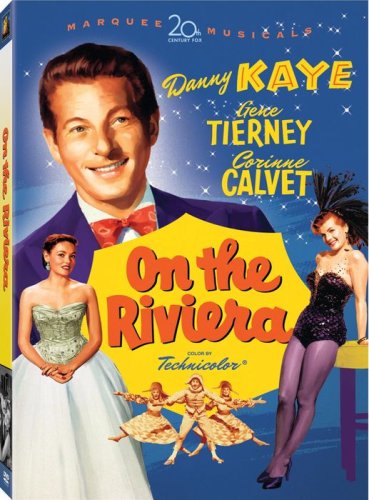
Danny Kaye plays Jack Martin, entertainer in a Riviera nightclub, as well as Henri Duran, philandering aviator. Duran is being driven to the edge of bankruptcy by a man with which he is forced to do business. Desperate to raise cash, he leaves town, but then his rival is invited to a dinner party. If Duran is not present at the party he is supposed to be hosting, disaster will ensue. So his partners conscript Martin, who has done a pitch-perfect impersonation of Duran at the club, to act as ...im for the evening. Cue all sorts of mistaken identities and romantic entanglements, particularly involving Duran’s neglected wife (Gene Tierney).
Posted in: Disc Reviews by David Annandale on July 17th, 2007
Synopsis
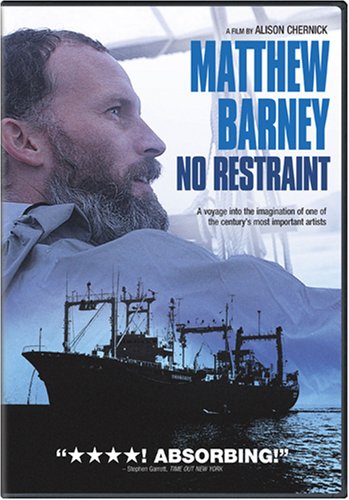
Famed for his obsessive love of petroleum jelly as a medium for sculpture, Matthew Barney uses 45 000 pounds of the stuff in the creation of Drawing Restraint 9. This film documents the making of that piece, which is both sculpture and film, done aboard a Japanese whaling vessel. Intimately involved in the production is Barney’s collaborator and partner Björk.
Posted in: Disc Reviews by David Annandale on July 16th, 2007
Synopsis
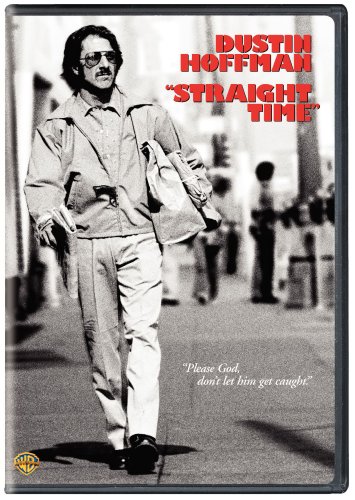
Dustin Hoffman plays Max Dembo, a burglar out on parole after serving six years. He initially makes a committed effort to reintegrate into society, getting a nowhere job in a can factory and dating placement agent Theresa Russell. But when parole officer M. Emmet Walsh unfairly targets him, Hoffman gives it up and returns to a life of crime, his violent and self-destructive urges making a bad situation that much worse.