Posts by David Annandale

I’m going to run the horrible risk of coming across as the worst sort of “in my day” fuddy duddy this week. Oh well, he said, with a philosophical shrug of the shoulders.

So we’re a mere matter of weeks away from the release of Hostel: Part II, and no doubt another round of handwringing and analysis in the mainstream media about the popularity of the torture film (if the movie does well) or a celebration and analysis of its demise (if the flick bombs). Now, let’s be clear, I had a hoot at the first f...lm (laughing rather more than my companions were entirely comfortable with), and I’m cautiously looking forward to the second (Eli Roth is a talented filmmaker, but I’m not yet convinced he has sound judgment in all things, and his treatment of female characters in the new film will be something of an acid test).

Synopsis

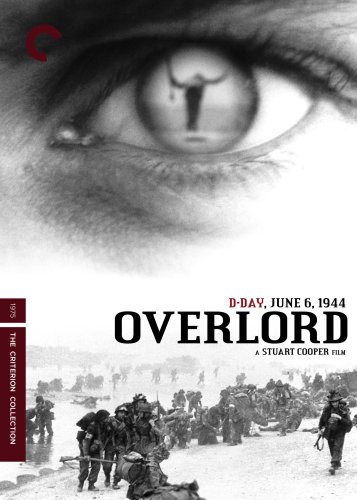
Produced under the auspices of the Imperial War Museum, Stuart Cooper’s unusual film tells the story of a young private (Brian Stirner) undergoing basic training and experiencing premonitions of his death in the days and weeks leading up to the D-Day invasion. This narrative is intercut with extensive archival war footage.

Synopsis

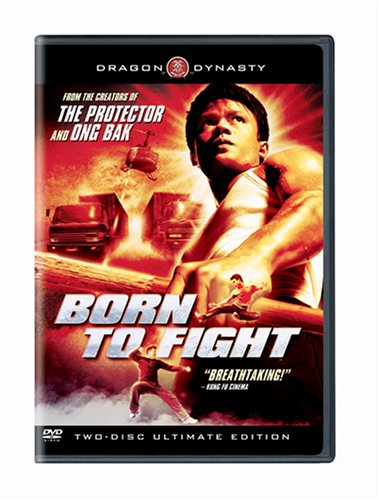
After the apprehension of a rogue general results in the death of his mentor, officer Dan Chupong accompanies his sister and her team of athletes on a charity visit to a rural village. As luck would have it, the general’s forces attack this very village, threatening to slaughter all the villagers is the general is not released. What these villains fail to mention is that they have a nuclear missile which they plan to fire at Bangkok no matter what happens. Chupong leads the villagers and ath...etes in a desperate resistance.

Synopsis

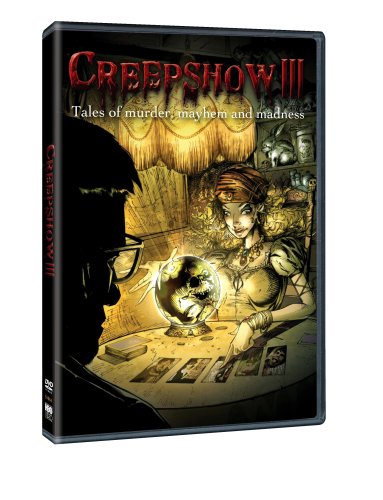
Five different horror stories play out in this film, though they are all loosely interconnected, in that main characters in one story put in cameos in another, and the same locations are revisited. A sullen teenage girl comes home to her fractious family to see her father struggle with a newfangled remote. It doesn’t change the TV channel, but does zap her through alternate universes. A young man living in a dilapidated building starts taking orders from his possessed radio. A serial killer ...all girl encounters a vampire. And so it goes.

When Just Jaeckin's glossy exercise in softcore, Emmanuelle, earned boffo box office in 1974, imitators piled on, and no imitators anywhere were as shameless as the Italians, who began the Black Emanuelle series (note the missing "m"). Laura Gemser starred, and Joe D'Amato directed many of the entries (though not the first). This set offers three.Both the double-"m" and single-"m" series were characterized by the heroine having sex in exotic locales, and the travelogue aspect is most dominant in Emanuelle in Bangkok (1977). Plot here is almost nonexistent. Photojournalist Emanuelle begins to run afoul of political skullduggery in Thailand, but before anything really develops there, she leaves town. The film is little more than pretty landscapes interrupted by frequent nudity.

Emanuelle Around the World (1977) has a bit more of a storyline, though it is still very picaresque in nature. Picturesque as well. Our heroine becomes outraged by the sex traffic of women, and so travels from location to location, exposing the evildoers. D'Amato (who also directed the previous entry) here rather unconvincingly dons a pseudo-feminist stance, but there are moments actually approaching suspense. The sex scenes of both these films are, for the most part, laughable, though occasionally well shot. Any sense of eroticism is thanks to Laura Gemser, whose ethereal beauty and grace are such that she moves through the films as an almost divine presence, above and untouched by the events around her.

Synopsis

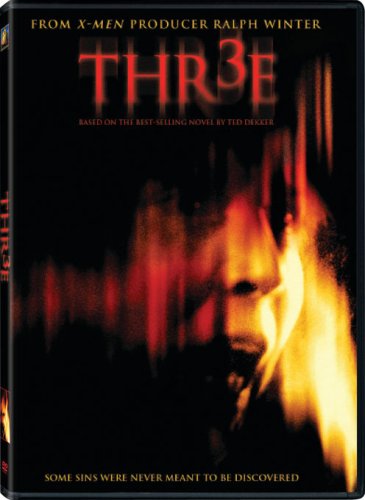
A serial killer who sounds just like Jigsaw (only rather less interesting) and kills exclusively using explosives (!) blows up the brother of a criminal psychologist, then turns his unwanted attentions to seminary student Marc Blucas, taking his life apart one explosion at a time. Blucas is convinced that the killer is a dark figure from his past, and turns amateur sleuth even as he is consumed by guilt. Most of his time, however, he puts his energy into being one of the whiniest protagonist... ever.

Personal confession time, though I doubt I am entirely alone in experiencing the following. One of the odd side-effects of the fact that, sooner or later, EVERYTHING is making its way to DVD, is that some of that some of the more deliciously sordid mysteries of one’s youth are fading in the harsh light of day. Nowhere is this more the case than in the realm of the exploitation film.

As I’ve mentioned in the past, I’m of an age that places me between two stools. I’m old enough to remember the grindhouses her... in Winnipeg, and the ads for the movies that played there (not to mention the disreputable efforts that screened in the more mainstream venues as well). But I’m young enough that there was no way I could see those films when they first appeared. Heck, I was in elementary school for the 70s. But the ads that appeared in the papers haunt me still. Now, many of those alluring/terrifying/both films are easy to watch, and in nice prints at that. While I appreciate the opportunity, I also regret discovering the disappointing reality of so many of these movies.

Synopsis

The Ant and the Aardvark were regulars on the old Pink Panther show. They were the DePatie-Freeling equivalent of the Roadrunner and Wile E. Coyote. Every episode would see the Aardvark deploy one strategy after another to catch that Ant, and every attempt would blow up in his face (often quite literally). The animation, the invention and the energy are a long way from being up to the level of the Warner team. What is fun, though, is that both antagonists here are very loquacious (voiced by ...ohn Byner). Not all the lines are funny, but the characterizations are good fun, and all 17 of their adventures are present.

Synopsis

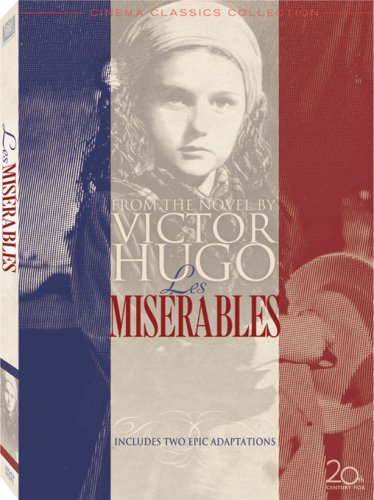
After serving ten years as a galley slave for having stolen a loaf of bread, Jean Valjean returns to the outside world a bitter man. He is transformed by the saintliness of a bishop who gives him shelter and the gift of the very items he was trying to steal. Starting his life over again, he becomes Mr. Madeleine, highly respected pottery plant owner and eventually mayor. He even adopts young Cosette, whose mother is dying. But the relentless Inspector Javert feels he recognizes Madeleine as ...he parole-evading Valjean, and so begins a pursuit that will take all three characters to a Paris about to erupt in an uprising.

Complaining about remakes is a lazy, fish-in-the-barrel sport. Any scribe can and has done it, especially, one suspects, when ideas are otherwise running low. But remakes are on my mind thanks to a recent encounter with a particularly bad one, so screw it, I'm ruminating.

Received wisdom posits that remakes are inherently a bad thing, on a par with sequels (but even more morally suspect, depending on the quality of the original film), and a sign of creative stagnation in the film industry. This is true as f...r as it goes, but there are a couple of factors we should bear in mind. Remakes of a kind have been around almost as long as there have been movies. There were, for example, multiple versions of Dr. Jekyll and Mr. Hyde at the beginning of the 20th Century. And remakes do not have to be artistically bankrupt exercises. The Thing, Invasion of the Body Snatchers and The Fly are perfect examples of films where their directors have taken good (or classic) films and gone in an entirely new, fresh direction, creating works that are, in point of fact, new originals in their own right.