Posted in: Disc Reviews by David Annandale on April 2nd, 2007
A ferocious typhoon washes up a giant egg on Japan's coast. Unscrupulous entrepreneurs lay claim to it, planning to exploit it as a tourist attraction. The egg in fact belongs to Mothra, now nearing the end of her life cycle, and the twin fairies from Infant Island come to Japan in the hopes of having the egg returned. No such luck, but when Godzilla returns and begins another rampage, this time it is the inhabitants of Infant Island who are turned to for help in the hopes that Mothra will come to Japan's aid.
This was one of the Godzilla films that was least hacked about for its American release (the running times between the two versions here differ by less than 30 seconds), and of the first series of Godzilla films (running from the 1954 original to 1975's Terror of Mechagodzilla, this is arguably the best after the first. Colourful and exciting, with lively monster battles that never undermine the dignity of the creatures, this is Toho at the top of its game.
Posted in: Disc Reviews by David Annandale on April 2nd, 2007
Godzilla and Anguirus are discovered duking it out on a deserted island by two pilots working for a fishing fleet. Before long, the brawl makes its way to Osaka, devastating the city.
And that, as they say, is just about that, as far as plot goes. There's a fair bit of business about our heroes' friendship, and references to their private lives, but nothing that really has much of an impact on the plot, which remains one of the most basic in the entire Godzilla series. Lacking all of the first film's tragic grandeur and emotional punch, this film stands or falls on the strength of the monster scenes, and these, it must be said, are pretty damn good. The fight in Osaka is especially satisfying, and there is none of the horsing around that would show up in the later movies. The climax is overlong and rather static, a real disappointment after the spectacular second act. Still and all, for too long the film has been available only in the butchered US version, and on an VHS recorded in LP mode, so for Godzilla fans, this is an exciting release.

Posted in: Brain Blasters, News and Opinions by David Annandale on March 30th, 2007
In theatres now (and no doubt hitting DVD before long) is the Korean film The Host. It’s been a long time since we’ve had a monster movie this good, and even longer since we’ve had one with this much depth.
Any text, of course, has its subtext, and this is as true of giant monster movies as any other work of art. But some films are much more a much richer subtext than others, partly because the filmmakers were quite deliberate in seeing their monsters in a metaphorical or symbolic light. Though the e...d results are very different, this level of depth is most clearly visible in the likes of King Kong (1933), Godzilla (1954) and Them! (1954).
Posted in: Brain Blasters, News and Opinions by David Annandale on March 23rd, 2007
A tale of three films. One is original. One is its remake. One is a cash-in. And the latter is the one that became a classic.
In 1975, a big-budget SF effort by Norman Jewison hit the theatres with much publicity. This was Rollerball. In a future world with no wars, and everything is controlled by corporations, human aggression is channeled through the titular, extremely violent game. The game has been designed to be such that becoming good at it is impossible, and thus there are no heroes, and the f...tility of human endeavour is underlined. But then James Caan, as Jonathan E., becomes that impossible thing: a champion, and thus a hero. He refuses to retire, and so the powers that be keep changing the rules, making the game more and more lethal, in an effort to bring him down.
Posted in: Disc Reviews by David Annandale on March 22nd, 2007
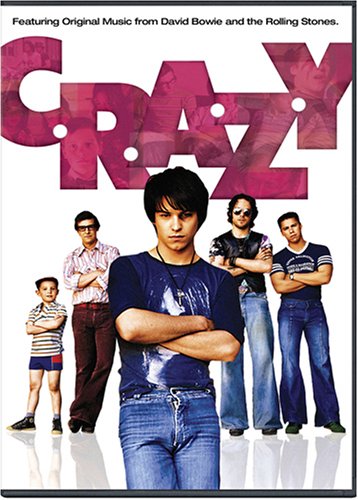
Zac is the fourth of five sons in a Montreal family, growing up in the 60s and 70s. He’s sensitive, and rather more in touch with his feminine qualities than his father (very macho, though a huge fan of Patsy Cline) would like. The film then tracks Zac’s struggle to accept the direction his sexuality takes, to accept himself, and to once again find his father’s acceptance.
Lord knows that rock music is more than the soundtrack of our teenage years; it’s the narration. And so it is here for Zac, with the Rolling Stones (“Sympathy for the Devil”), David Bowie (“Space Oddity”) and Pink Floyd (“Shine On You Crazy Diamond”) taking pride of place, setting up a dialogue with Zac’s father’s own life soundtrack (Patsy Cline and Charles Aznavour). By turns moving and funny, but always ringing true, this is a quietly remarkable film.
Posted in: Disc Reviews by David Annandale on March 19th, 2007
Cupt Epics here presents five films identified as "underground" (a fluid term at the best of times). Certainly, they are all deliberately transgressive, though not all are equally successful. Two are by Nico B. - the perviously released "Pig" and "Hollywood Babylon." The former has been reviewed here before, but briefly, its catalogue of murder and S&M horrors, working out a killer's fantasies, is rather too self-conscious about its own transgression. The latter is a 4-minute tribute to Kenneth Anger, taking in exhibits at the Museum of Death. It's not a bad little piece, but it is interesting to note that its existence confirms once and for all that now even the underground film community has an established history to look back on. "Dislandia" is a half-hour, plotless portrayal of a little girl (whose face is covered in a mask) doing odd things and moving through a gritty, disconnected landscape. Interesting visually, the film is sufficiently obscure in its goals that one's mind does begin to wander. "Adoration," on the other hand, is gruelling, brutal, intelligent and effective. Based on an actual case, we see a young man invite a woman to his apartment, record her reading poetry, then kill and eat her. All of this is seen through the eyes of a camera he has place on a wall. The unblinking gaze is explicitly equated with the audience's own, and many uneasy questions about art and voyeurism are thus raised. Finally, "Le poéme" is the one that most viewers will find hardest to deal with: we watch an actual autopsy while listening to the poem "Le bateau ivre" by Arthur Rimbaud. Difficult though the film is, it is also, like "Adoration," quite beautiful.Audio
The sound is 2.0, and the actual sound quality depends primarily on the source material. In fact, "Adoration" is largely silent. But at any rate, the overall audio quality is perfectly satisfactory. There isn't too much by way of surround, and what emerges from the rear speakers isn't always perfectly placed, but the job is generally quite effectively done.
Posted in: Disc Reviews by David Annandale on March 18th, 2007
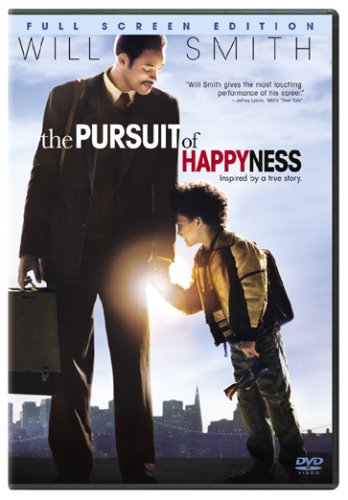
The Pursuit of Happyness is inspired by the true story of Chris Gardner, who wrote a biography of the same name, from which the movie is based. Will Smith plays Gardner who is a salesman of medical equipment, who actually only manages to sell the odd unit. Because of his poor sales, his family is struggling making it from bill to bill, until finally his wife becomes so fed up she packs up and leaves for New York. Gardner is now left by his request, with his five-year-old son Christopher. With the untimely loss...of their apartment, Chris has to make a hard decision; pursue the career path of a stock broker which requires six months training with no pay and no employment guarantee, or continue the life as a salesman in hope of earning enough to put food on the table. After a short time of deliberation Chris chooses to go after the internship, but endures some real hardships along the way including going hungry and homelessness.
This film is really inspirational, it proves that no matter where you’re from and no matter the circumstances that you face if you want something you can have it. The acting was impressive by Will Smith, but I was more impressed with the ability of young Jaden Smith who will obliviously be following in his father’s footsteps. Aside from the great cast and intense realism of the life on the streets this movie provides a good plot, and sends out a good message. This movie ultimately has a positive vibe to it and it beings such a touching story I have a hard time saying this, but it wasn’t awfully engaging. I felt for the characters, but the story dragged on a bit and didn’t always keep me interested, it’s the sort of movie that is going to be hit and miss. Some people will love it and call it inspirational, will others will simply shrug and say it was like any other underdog movie. For me personally I thought it was better than I anticipated, but wasn’t a perfect movie, but definitely worth checking out.
Posted in: Disc Reviews by David Annandale on March 17th, 2007
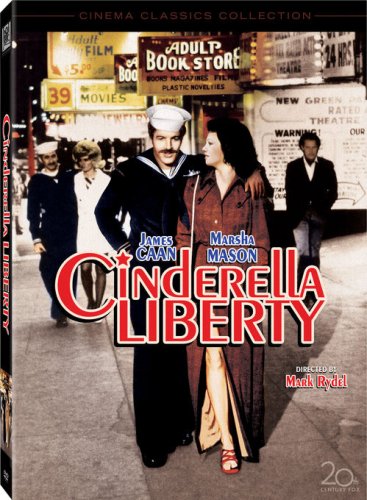
James Caan is a sailor whose stopover in Seattle becomes much longer than he expects, as first he has to wait for new orders when a medical exam forces him to miss shipping out with his crewmates, and then his records disappear. During this time, he meets Marsha Mason, a prostitute with an 11-year-old son. Caan falls for both of them, and a finely developed sense of responsibility sees him moving heaven and earth to make life good for all three. His task won’t be an easy one.
On the one hand, the film has the quality common in films of this era (it’s from 1973) to take its time and soak the audience in a convincingly quirky ambiance. Screenwriter Darryl Ponicsan (adapting his own novel) and director Mark Rydell have fun bouncing the various characters off each other, and we have fun as they do so. But the further into the film we go, the more predictable everything becomes, until there is a generalized collapse into hackneyed melodrama. Ponicsan also wrote the book that The Last Detail was based on, and here, as there, he seems incapable of conceiving of female characters who are not prostitutes (that is, when they are not needy, self-absorbed, neurotic, self-destructive prostitutes). The film has fine performances, is crafted well, but is also badly flawed at its core.
Posted in: Brain Blasters, News and Opinions by David Annandale on March 16th, 2007
Gosh, I don’t know if today’s subject counts as cult movies. These are genre films, though. And they’re old.
Really old.
Posted in: Disc Reviews by David Annandale on March 15th, 2007
Long the bad boy of French novelists, Jean Genet directed this 25-minute short in 1950. Borderline pornographic, it is a silent portrayal of (literally) imprisoned desire. Two prisoners convey their longing for one another through the prison walls, while a voyeuristic guard watches, becoming aroused and frustrated to the point of violence. Poetic, fetishistic, and intensely personal, it is a startling and historic piece of underground cinema.Audio
Consider the rating a place-holder, because we don't have a star equivalent for "Not Applicable." This is a completely silent film. Not even a score. As for the extras, they are clear enough.