Posted in: Disc Reviews by William O'Donnell on April 29th, 2011
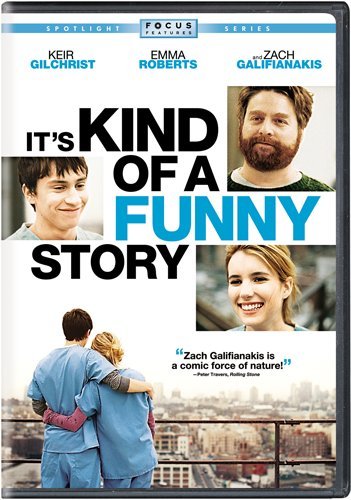
Craig, played by Keor Gilchrist, is facing a lot of stress in his sixteenth year on this planet and he becomes convinced that he wants to kill himself and checks himself into a psych ward. During his mandatory 5 day trial stay he undergoes a less-than common journey of self-discovery with the aid of his fellow patients.
What could have easily been a very contrived teen comedy turns out to be a refreshing coming-of-age tale that does not need to pander to the audience with an over-abundance of lowbrow humour and/or romance drama. Mind you, it is not that this film is lacking in either of those departments completely as we do get a couple naughty jokes snuck in, and our protagonist does find himself in a “girl trouble” dilemma that motivated his self-institutionalizing. Thankfully the focus continuously draws back to Craig and his attempts to heal, making him the ever present nucleus of the film for interesting character subplots to float around him.
Posted in: Disc Reviews by William O'Donnell on April 25th, 2011
(What follows is my cohort Gino Sassani's review, as it was written for the Blu Ray release of this same film. I have only added changes for the Video and Audio sections as DVD is naturally different than Blu Ray).
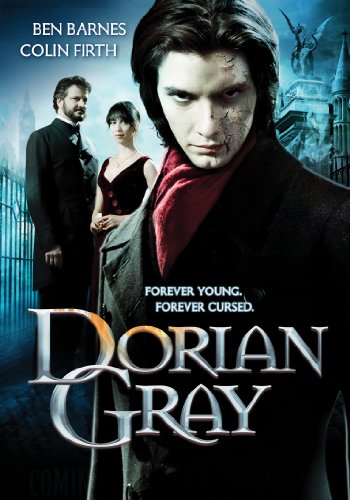
The Picture Of Dorian Gray was actually Oscar Wilde’s only full-length novel. It was quite a controversial subject when it first arrived on the scene in 1890, but not because of the horror element. The book is often sexually explicit and contains more than a flirtation with homosexuality. The main themes have survived, but much of the work itself has been forgotten. We know the work almost exclusively from the classic film from 1945 where Hurd Hatfield played the title character. The more notable members of that cast included Peter Lawford, Donna Reed, and Angela Lansbury. That film downplayed the debauchery elements and focused on the one element that appears to remain strongest in our collective memories, that of the picture aging instead of the man. It’s that deal with the devil that most of us think about when we hear the name Dorian Gray, or Dick Clark for that matter.
Posted in: Disc Reviews by William O'Donnell on April 25th, 2011
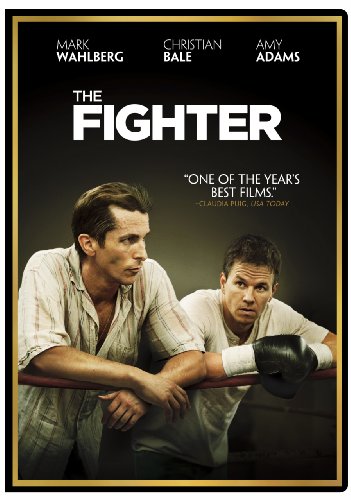
Dicky Eklund was the pride of Lowell, Massachusetts. While he constantly reminds the neighbourhood of his glorious fight against Sugar Ray Leonard, he has descended into a crack addiction that is breaking his family apart, and hindering the training of his up-and-coming brother, Mickey. As Micky inches closer to big opportunities in the fighting world, he must also battle the demons his family place upon him.
Part sports movie, and part character drama, this film's story is the sort of underdog tale that will be familiar to Rocky fans, and being a boxing film, it is readily susceptible to being compared to that series. If I may start with a focus on the sports movie angle, it diverges from the Rocky series most obviously by having less focus on the training (no big musical montages here) and the 'big' fights. Another divergence involving the fights this film has, one that is even more important to me,is a difference in how the actual fights were choreographed. I have never cared for the simplistic trading of head-shots, with little blocking, in the Rocky films. The Fighter has blood and blocking the way a true fight would have. The camera quality changes to something hand held looking when inside the ring with Micky and Dicky, and there are frequent flashes to the real life fight of Eklund vs Leonard, both of which help to make it seem like Mark Walhberg (who plays Mickey) is in an actual bout.
Posted in: Disc Reviews by William O'Donnell on April 22nd, 2011
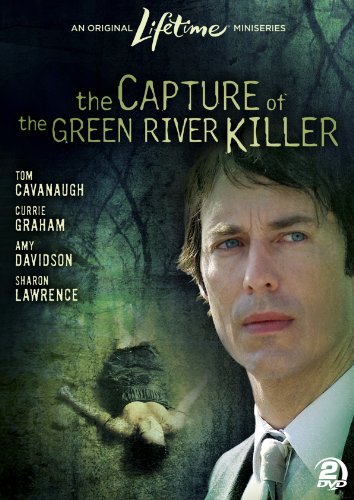
The Green River Killer was responsible for the deaths and disappearance of dozens of young girls during the 1980s. This two part miniseries, originally airing on the Lifetime network, chronicles the two decade long investigation made by Sheriff David Reichart.
Spread out over two episodes. The mystery plot can wear a bit thin at points and start to resemble a watered down TV police drama, but credit must be given for how the director recreated both the era it took place in, as well as the sense of sickening frustration the police felt for having spent so many years chasing one person. The grim realization these investigators have is that the only way they can gather more useful evidence is by having more bodies emerge in their search. The higher the body count, the greater their chances are that the killer will leave behind a piece of evidence they can use, taking into consideration that this was a time before our modern understanding and use of DNA evidence (a point that become the linchpin to the eventual apprehension the title of the film promises).
Posted in: Disc Reviews by William O'Donnell on April 14th, 2011
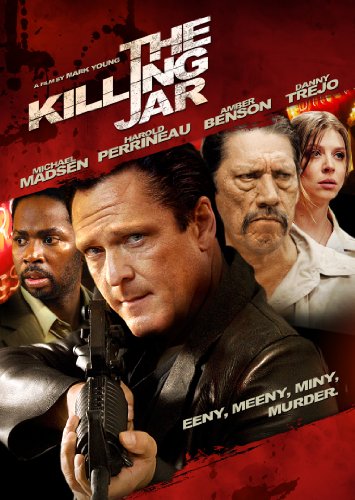
(checks calender) “my goodness its been a few days...time to review another Michael Madsen film”
Michael Madsen goes WAY outside of his normal acting niche and plays a badass killer. Really different from his previous roles (please refer to my two month old review of Madsen's Brazen Bull to reveal just how sarcastic this opening paragraph is https://upcomingdiscs.com/2011/02/23/the-brazen-bull/#more-15588).
Posted in: Disc Reviews by William O'Donnell on April 12th, 2011
Dennis Mitchell always means well when he wants to help out his parents, or good ol' Mr. Wilson, but he also just wants to have a good time. ¼ helpful young lad but ¾ mischief, Dennis made the leap from the beloved comic strip by Hank Ketchum to the small screen for four seasons.
Compensating for when ABC took over Leave it to Beaver from CBS, Dennis the Menace was the attempt to grab some audience back for CBS. Jay North is the titular Dennis, and does well to carry the spark of this character's “menacing” namesake. Each episode sees Dennis with the best of intentions, but always managing to create more damage than his help is worth. Along for the ride are his best friends Tommy and Joey (the latter seeming to be a strange mute boy), his rival Margaret, his parents played by Herbert Anderson and Gloria (who could not look closer to the original characters) and Joseph Kearns as the ever-frustrated Mr. Wilson.
Posted in: Disc Reviews by William O'Donnell on April 8th, 2011
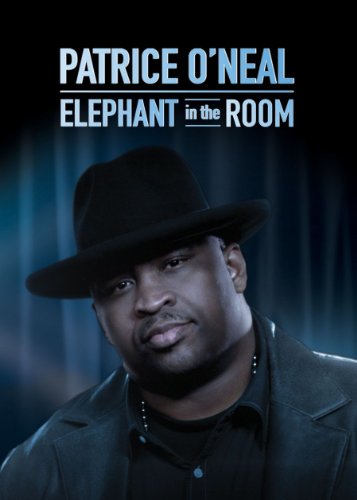
Saying there is an “elephant in the room” often means someone is ignoring some enormously obvious truth. To say that Patrice O'Neal can be ignored is foolish...and to say that he speaks the truth...well, you'd have to be pretty jaded to take this man seriously when he flips one PC view of the relationships between men and women on their heads.
The less enlightened viewers might write off O'Neal as misogynist as he explains “mooshing” and his advocacy for a “Harassment Day” (where office workers can make sexual passes at their female coworkers without fear of reprimand) but that would be like dismissing Lenny Bruce as racist for telling jokes about races. Of course, O'Neal is no Lenny Bruce, but the point stands that everything he says is done so with tongue firmly placed in his cheek, or purely as satire.
Posted in: Disc Reviews by William O'Donnell on April 1st, 2011
Our Planet is a merging of a large handful of documentaries that originally aired on the History Channel. Here they are packaged together to thematically display the “Past, Present, and Future of Earth.”
HOW THE EARTH WAS MADE
Posted in: Disc Reviews by William O'Donnell on March 30th, 2011
The Nazis have been the subject of countless documentaries and films. On this occasion, The History Channel has decided to place the focus on the people of Germany, with a time line that starts at approximetaly the First World War and leads to the end of the Second World War. With the aid of newly discovered home videos gathered from Germany & Russia, we see a combination of German life during this time, as well as public and private views of Nazi discourse and planning.
There is one film hobbyist in particular who's home movies become the basis for a story within the story. This one family are typical of the German people, and their lives are documented as they, like many others, go from joy, to desperation, to a sense of empowerment, to denial, to horror as their nation is seized by Hitler and his enforcers. There have been many written accounts of what the people felt and experienced, in fact many biographies are quoted and/or use as narration script in this film, but it is all the more rare to have visual records outside of propaganda films or some news reels, especially of Nazi Germany. It is such rare glimpses that makes this film so special to behold and the history of it feel all the more real.
Posted in: Disc Reviews by William O'Donnell on March 5th, 2011
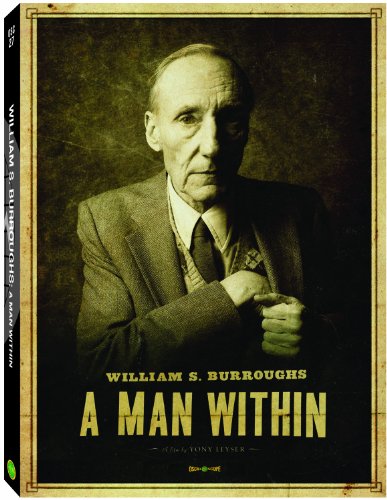
William S Burroughs was the third hit of the 1-2-3 combo of Alan Ginsberg's Howl, Jack Kerouac's On the Road, and Burroughs' Naked Lunch which closed out the 50s and defined the so-called “beat generation.” This film documents the significance of Burroughs work as a part of this scene, and the influence he had on artists, musicians, filmmakers, and countless others.

Ranging from his birth to his death, this film sets out to simultaneously ask questions and answer them with regards to the arguments about what made Burroughs who he was. It asks if he transgressed sexuality, whether we deserved the mantle of “Godfather of Punk,” would he be the sort of writer he is if he was not a drug addict or if he had not shot his wife dead? To answer, director Yony Leyser interviews his closest companions and sincerest fans.