Dolby Digital 2.0 (English)

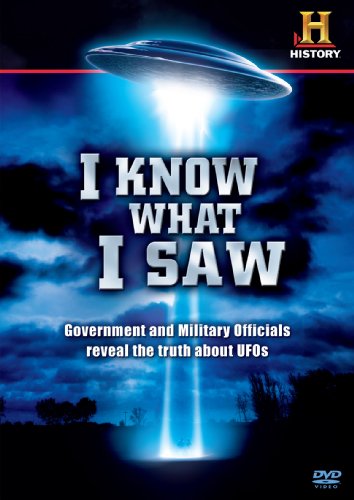
In June of 1982 I was fishing in a secluded mountaintop lake with my friend Willie Nelson. No, he wasn't the country singer. He was a State College, Pennsylvania DJ. He is a giant kind of fella who stands about 11 feet tall in his socks. It was a Sunday night, June 20th, the night before my birthday, and we decided to spend an all-nighter at the lake fishing. The place was in the middle of a wooded area, and there was nothing around for miles. Just before midnight and my birthday, we both saw something I'm sure we will never forget. I've since lost track of Willie. Last I heard he was living on a boat in L.A. So if you're out there, buddy, drop me a line. What we saw was a series of bright lights in the sky. They were flying extraordinarily close to the ground and moving quite slowly across the sky. What impressed both of us most of all was that they never made a sound. At first we suspected they were individual objects. I remember thinking they might be missiles of some kind. But as they flew overhead, the space between them blocked out the stars. It was a solid object. We went immediately back to the radio station and phoned the FAA, local airport, and whomever else we could think of. It was a hell of a thing. I still don't know what we saw that night, but it still appears vividly to me if I close my eyes. I wrote down the experience as a song for my Invented Memories album, which I will include at the end of the review should you be interested in hearing it.

We're not alone. I don't mean in an extraterrestrial sense. I mean as witnesses to an unidentified flying objects. There have been millions of such reports over the decades. Often these sightings are dismissed as coming from crackpots or just someone desperate for attention. The government has waged a long campaign to discount these sightings as either unreliable or something more explainable like weather balloons or flares. But there have been some very credible witnesses over the years, people you would be hard-pressed to lump into any of the categories I've named. We're talking trained observers with sterling reputations. Together many of us reject these government claims of what we might have witnessed. To those claims we join in unanimously: I Know What I Saw.

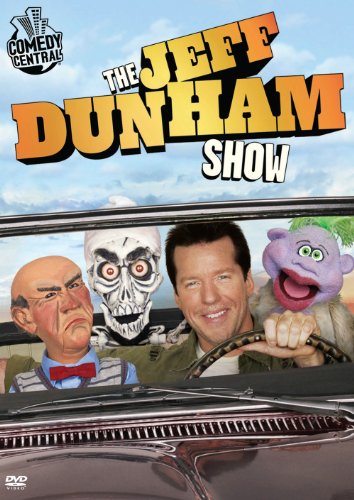
I've seen a lot of shows come and go on Comedy Central over the years. The network really found gold when it began to air the crude animated adventures of Eric Cartman and his pals of South Park. It appears that ever since that day, the network has been searching high and low, mostly low, to catch that kind of lightening in a bottle again. Let's face it. The South Park boys aren't going to last forever. Comedy Central must certainly understand that someday they'll need another solid anchor for their network. One of the most recent attempts has been the Jeff Dunham Show. From what I've seen of this release, Comedy Central had best keep on looking. Of course, the ratings and the audience have already convinced them of that fact. The show is already gone after only 7 episodes. You can find them all on this single disc release.

From the description, it actually sounded like a pretty good idea. It's certainly an original one. The idea of having a ventriloquist act as the centerpiece for a comedy show really sounded like a great idea. I hadn't really heard of Jeff Dunham before this, so I had no idea what kind of show to expect. I only know I expected to laugh. After the first couple of episodes, I hadn't laughed yet. That's okay. I just have to warm up to the unique series. Give the guy time to settle into the format. Now I've watched all 7 episodes, and I'm still waiting.

In this line of work, you have a tendency to see a lot of copycat television shows. These shows emulate a popular type or specific series and are usually content with mediocre ratings. However, out of the fire of the various copycat shows, we sometimes get a diamond in the rough. This is a diamond that people will shrug off and proclaim as anything but worthwhile television viewing. But once they actually sit down and watch a few episodes, they’ll be hooked for good.

When we left season one of Flashpoint, the Strategic Response Unit wasn’t one hundred percent. Jules (played by Amy Jo Johnson) had been shot and her secret boyfriend, Sam Braddock (played by David Paetkau) realizes that Jules might break up with him. The reason for this is that she thinks the relationship is putting a strain on the team which she has put first.

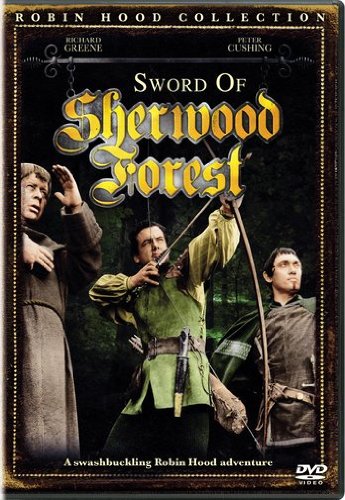
"Comrades, I've called you together again because the people of England face a grave crisis. Many years ago as Robin Hood, I led you as an outlaw band. Here in Sherwood Forest, together we resisted the tyrant King John. When he died, we dispersed because we believed that tyranny had died with him. But tyranny did not die. It merely slept. And now it has awakened again."

Speak the name Robin Hood and one immediately conjures images of the swashbuckling hero of medieval England. The character's origins go back as far as 15th century ballads that herald the daring deeds of an outlaw who fought against tyranny and injustice. In some texts the man is given a dual identity as one of the very noblemen that he had most of his fame defending the people against. The most popular modern notions have the figure in tights with a bow and arrow, equally talented with his sword. He robs from the rich to give to the poor. Such populist notions have been a part of the legends in whatever forms they have taken over the centuries. While the early legends and ballads place him at several locations in England, it is the famed Sherwood Forest dwelling that survives the telling to this day. Believe it or not, one of the earliest mentions of the character, Robin Hood And The Monk from around 1450, is actually a story of Little John as the prominent one, and Robin is merely a fanciful supporting character. He was considerably more religious during those days, dedicated to the visage of The Holy Blessed Mother. By the 16th century Robin Hood was the subject of a series of plays written by Anthony Munday. Here Robin's nobility origins are made clear, as is his hatred of tyranny. The character we know today, however, didn't begin to take shape until the 17th century and Martin Parker's The True Tale Of Robin Hood. Still, with all of this rich literary history, Robin Hood's iconic image owes much to the introduction of the motion picture. It is here that the flights of fancy were given free rein, and Robin Hood became one of the world's first superheroes.

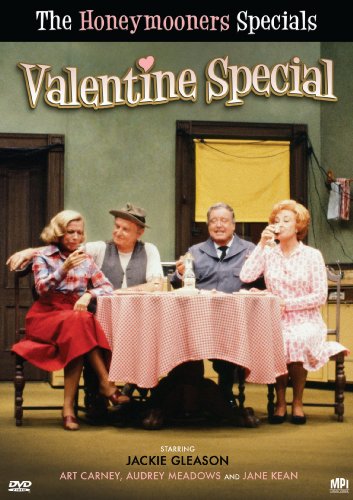
It's hard to believe that one of the most popular comedy shows of the 1950's was not really a show at all, at least not in the way that we think of a television series today. The show began its life in 1951 as a segment on the popular Cavalcade of Stars. At that time only Jackie Gleason and Art Carney starred in their familiar roles. Alice was played by Pert Kelton.  The series took its more recognizable look when it became part of The Jackie Gleason Show in 1955. That's also when Joyce Randolph joined the series as Trixie Norton. The series would take up a half hour of the slot. The second half was taken up by a larger variety of pieces, usually a series called Stage Show. The show would come and go, with other cast members coming and going over time. Even Art Carney had left The Jackie Gleason Show at one time, only to return in 1957 to the role. The show's history is a complicated one to which entire books have been devoted over the years. It wasn't until syndication that the series was really a show unto itself. The original 39 episodes were joined with nearly 70 re-edited versions of the other various incarnations of the show have made up what most of us today think of as The Honeymooners. The final original versions of the show ended in 1971; both Audrey Meadows and Joyce Randolph were gone by then, replaced by Sheila MacRae and Jane Kean respectively.

But this show that wasn't really a show had legs. The syndicated versions became hugely popular, and new generations of fans were being indoctrinated with each new package. The show even survived on pay television at Showtime for a while in the 1990's when the 70 newly-formed "Lost Episodes" first aired. But the fever just never died. The show would influence a large number of series that would follow. Even the animated world of cartoons wasn't safe. The Flintstones would come along and become a prehistoric cartoon show that was basically the same down to the characters. Fred and Barney couldn't have been closer to Ralph and Norton if their names had been the same. Today, comedians constantly recall The Honeymooners and Jackie Gleason as their inspiration. To more than one generation of television viewers, Gleason really was "The Great One".

In September of 1993, an animated series using the wonders of stop-motion animation was broadcast on ABC. The name of the series was called Bump in the Night. It would run for twenty six episodes, spanning over two seasons. It was created and directed by Ken Pontac and David Bleiman. It also featured the vocal stylings of Jim Cummings, a man perhaps most famous for his Winnie the Pooh performance.

Mr. Bumpy (for his warts) is a small, green and purple monster who lives under the bed of a ten year old boy. He loves to eat socks, dust bunnies, snot filled tissues and other assorted things most people would consider disgusting. His disposition can be easily described as vile but yet easy going. Oh yeah, if you haven’t figured it out yet, he doesn’t brush his teeth.

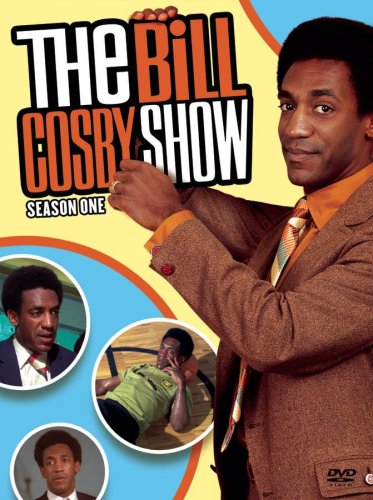
I grew up on Bill Cosby. He was everywhere when I was a kid. Fat Albert And The Cosby Kids were on my television every Saturday morning. My parents had all of his records, and I can remember borrowing them when I finally got a player of my own. I played Chicken Heart so often I think I wore away the grooves on the track. Of course, you youngsters out there have no idea what I'm talking about when I mention grooves and wearing them out. That also means that you remember a very different Bill Cosby show. Most of us think about that huge hit in the 80's. Cosby played a doctor, and he was married to a lawyer and this wealthy family had a ton of kids. The show was an instant hit. But it wasn't the first attempt at situation comedy from Bill Cosby. Back in 1968 he was the star of a very different comedy series on television. It was The Bill Cosby Show.

In this series Cos played Chet Kincaid, a high school gym teacher and athletic coach. It wasn't really a stretch, you see, because The Cos actually studied PE at Temple University with his eye toward just such a possible career. Of course, stardom interfered with those plans, and I don't think anyone has been complaining too much. The series is too eclectic for its own good. While Chet's career should be the focus, many of the episode take him out of the school and place him in oddball situations. Episodes deal with his aunt's will and a missing Abe Lincoln letter, a flood while Chet deals with a neighbor in labor, and Chet leading a group of inner-city kids on a failed attempt to get out and camp in nature. From the start, you can see that Cos is trying to bring a more intimate approach to his comedy, but it usually misses the mark completely. His natural charm and demeanor carry the day, but there's a reason why the series only lasted three seasons. He would hone those skills later to deliver one of the biggest shows in television history.

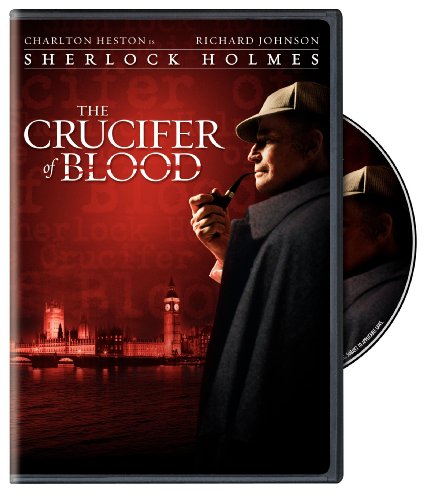
During the chaos of a mutiny, three British officers in India get their hands on a great treasure. They do not do so honorably, however, and, mistrustful of each other, make a blood pact, which cannot be broken without suffering a terrible curse. Decades later, the three have experienced very different fortunes, and vengeance has come to call. Irene (Susannah Harker), the daughter of one of these men, seeks the help of Sherlock Holmes (Charlton Heston!) and Dr. Watson (Richard Johnson). There are many dark deeds to unravel, and along the way, Watson and Irene fall in love.


The reason for this obscurity's arrival on home video is obvious, what with the Guy Ritchie movie doing the same. While this effort is far less problematically revisionist than Ritchie's, it still presents much for the Holmes fan to struggle past. Apart from the squirm-inducing age difference between Johnson and Harker, there is, of course, the supremely odd casting of Heston as Holmes. In fact, Heston had played the part in the stage version of this story, and to his credit, he does have a solid grasp on the character, and his English accent is serviceable. His angular features are also right for the part, though there is also a muscular physicality to Heston that makes his Holmes seem just as likely to punch through a wall as solve a mystery. And Heston is one of those stars who never disappears into a role, and so one is always conscious of watching Heston, not Holmes, on the screen. As for the film itself, its stage origins remain obvious, despite the many locations. This is an entertaining enough oddity, but no more.

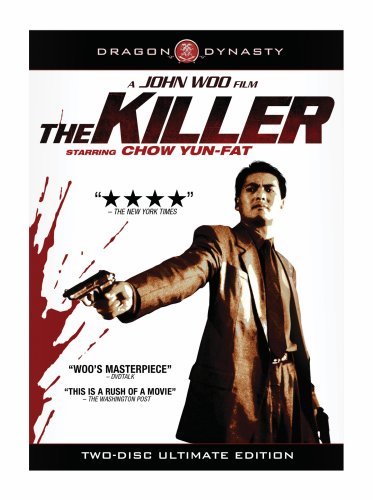
Having accidentally blinded a singer during a contract killing, hit man extraordinaire Chow Yun-Fat, consumed with guilt, becomes the woman's protector, and seeks redemption by finding some way to restore her sight. Meanwhile, Danny Lee is the plays-by-his-own-rules cop on his trail, and inevitably the two men will find themselves as unlikely allies in gigantically operatic gunfights.

I can remember when John Woo was still a name whispered with reverence by cult film fans, and his films were only available on grey market VHS or import laser disc. In fact, I first saw The Killer on one such disc, in Cantonese with Mandarin subtitles, reading a transcription of a translation, desperately trying to grasp the gist of the action. It was worth the effort, though, for I had never seen action sequences like these. Today, of course, the situation is very different. Woo's films are readily available, Hard-Boiled's sequel is a video game (Stranglehold), and his stylistic characteristics have become clichés. The passage of time and over-familiarity have arguably robbed the film of some of its power, while making the OTT sentimentality harder to take, but the fact remains that this is still a seminal moment in action filmmaking.

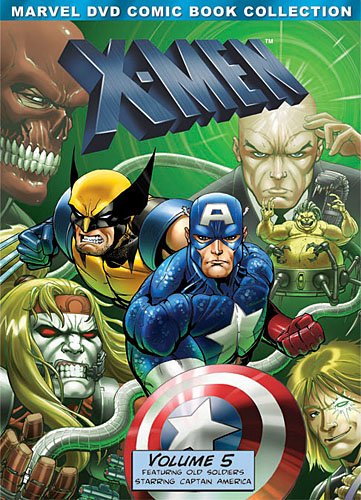
Volume Five of the Animated Series known as X-Men is now upon us. Included here are the last fourteen episodes that haven't been put on disc for the masses. There is a lot going on in these twenty one minute chunks. There are some good things, bad things, funny things and more confusing things than probably should be in a children's animated show. So let us spend some time, the final time with our beloved mutant friendly superhero group.

The fourth season had left us on a climatic showdown. The four parter: Beyond Good and Evil had showed us some strange alliances as well as X-Men fighting together to save the day. Apocalypse was put away for another day as he could not defeat the mutant superheroes. Peace had come to the planet Earth even though we all the knew that it could not last. So we dive right into the final Volume of the X-Men.