Dolby Digital 5.1 (English)

Ken Burns has achieved a rare feat in the world of filmmaking: he makes clean, concise, uncontroversial documentaries and yet has somehow become a household name, or as close as any documentarian can get in this society. It also depends, I suppose, on the ratio your household's television is tuned in to PBS compared to, say, Spike TV. Burns has made his name making huge, sweeping films that take in gigantic aspects of American history and culture, like The Civil War, Jazz, and my personal favourite, Baseball. His latest documentary, which he co-directed with Lynn Novick, ranks right up there with his best work. Prohibition is vast, covering a huge time period in American history, contains tons of detail, and still manages to be focussed, concise, and tremendously entertaining.

The first part, A Nation of Drunkards, starts its story before the Civil War. It sets the scene by painting a picture of a nation obsessed with alcohol. Saloons are such an integral part of the landscape that huge numbers of the working class and immigrant labourers were giving up most of their pay buying liquor. Spousal and child abuse was rampant, and Temperance Unions grew out of the need to protect and shelter women and children from abuse and neglect as much (or more) than they did out of religious zealotry.

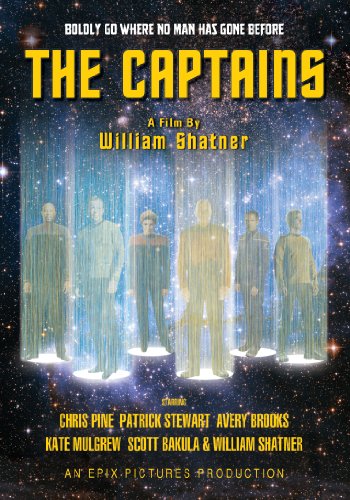
"Boldly go where no man has gone before."

Is there anyone out there who hasn't noticed that William Shatner the actor has become William Shatner the character over the years?  Give the man some credit for finding ways to reinvent himself. After Star Trek he was the only actor to find himself another regular television character and shakes the typecasting that most actors in the franchise have been victimized by. When TJ Hooker was gone he found a few other shows and ways to take advantage of what could have been fleeting fame. By the time he did Boston Legal he had completely reinvented himself as a somewhat humorous character and wonderful mate for James Spader. But all along there was and always will be more than a little Captain Kirk in the actor. And over time the two began to meld into a being that has been the fodder for jokes for most of the world. Shatner's laughing, too, but not in the way you might think. Shatner's been laughing all the way to the bank.

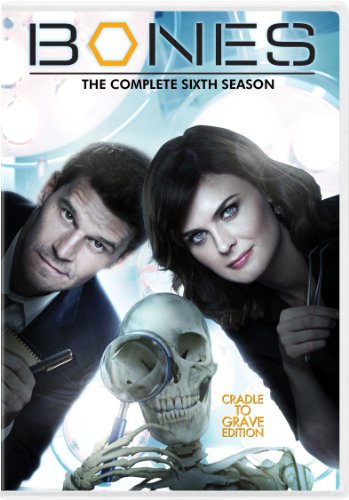
I can't help it. Whenever I see David Boreanaz I can't stop seeing the brooding vampire Angel. It's not really his fault. This character couldn't be farther from the Angel character, but that's what I see. It's also true that Bones, now entering its sixth season, has been around longer than Angel. It's also very likely that he now has fans that aren't even aware of that previous character. It has been quite a few years. I'm usually better at letting go of a character once the show has ended and the actor has moved on. But there it is. Agent Booth ends up doing something silly, and it throws me for a bit of a loop. It's probably a testament to how good an actor Boreanaz actually is, that he's ingrained himself so fully in my brain. And, I haven't watched near as many episodes of Bones, to transfer that identification. But it's Bones that's here now, and based on its current popularity, it's likely to be here for a while longer yet.

Dr. Temperance Brennan, or Bones (Deschanel) is the world's leading bone specialist. She works in Washington, D.C. for the famous Jeffersonian (I assume it's intended to be the Smithsonian). Her talents have proven themselves very helpful in solving crimes where skeletal remains are all that there is to go on from the victim. Her FBI agent/liaison is Seeley Booth (Boreanaz). Together they have an uneasy relationship that grows into a kind of friendship. The problem is that Bones doesn't have a ton of social skills. She relies on Booth to guide their social interactions. More on that later. The lab is run by Dr. Camille Saroyan (Taylor) who has become a bit of a guiding mother to the team. Dr. Hodges (Thyne) is the trace-elements expert and tries very hard to be cool and hip. He's generally the opposite of Bones. He says pretty much what comes into his head and is a bit of a science-fiction geek. Angela (Conlin) is an artist who uses her skills to reconstruct facial details from the skulls. She also works on enhancing images and restructuring evidence. She's a bit of a romantic and has probably slept with every male in the lab. Dr. Sweets (Daley) is a young FBI agent and psychologist. He profiles victims and suspects as well as serves as a counselor to the team. He's a bit over-eager at times, looking up to Booth as a mentor, of sorts. The lab also has a few interns that show up from week to week, likely depending on actor availability.

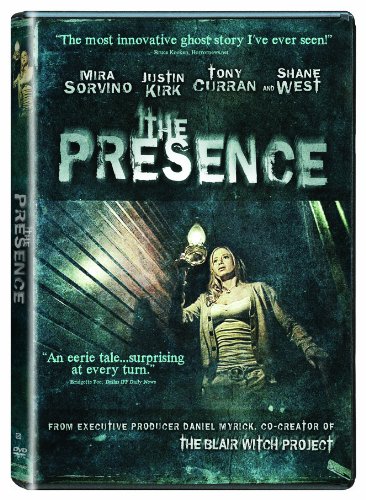
“l know, it must seem like an eternity, but your eternity is only just beginning. Do you really want to spend it trapped here?”

The woman (Mira Sorvino) arrives at a cabin on a remote island in Oregon. At the cabin waits the ghost (Shane West) standing and staring at the woman as she goes about her daily tasks. She can’t see him, but he subtly makes his presence known. When her boyfriend (Justin Kirk) makes a surprise visit to the island, both the ghost and the woman are put out by his presence. Soon the woman begins behaving irrationally and showing the signs of spiritual oppression and possession. Is this because of the ghost or is there a darker presence in the cabin?

It’s willing suspension of disbelief time, folks, as this reality show chronicles the soap-operatic lives of a group of young lesbians. Cari and Kacy want a baby – will they find the appropriate sperm donor? Romi and Kelsey are are having trouble with their sex life. Whitney is having all sorts of girl trouble, while Sajdah (whose name oddly does not end with “y” or “i”) is seeking her first relationship.

And on and on and on we go. Can eyes glaze and roll at the same time? You’ll find out before too many minutes of this season have passed. Who the hell is this show aimed at? The flashes of nudity and coupling, not to mention the box cover art and uniformly attractive cast (I’m sorry, subjects) smack of catering to male fantasies, but is that audience going to sit through the oversharing psychodramas? Is anyone? (Apparently, I guess, since this is the second season.) Years ago, there was a moment in House where the titular doctor announces that he’s off to his office “to watch The L Word with the sound off.” I keep thinking of that line in connection with this show. It feels like nothing more than comic fodder for another program’s punchlines.

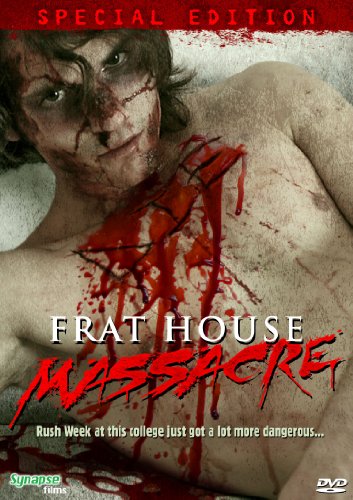
“Rush Week just became Death Week!”

Let me say first off that director Alex Pucci knows something about production values. For a film shot on Super 16mm for a reported budget of around $1 million, Pucci delivered a film that looks and sounds far more expensive. Reportedly attempting to be a homage to the seventies grindhouse slasher/revenge flicks, Pucci’s focus on detail is amazing, even if his seventies period piece comes with a few anachronisms.

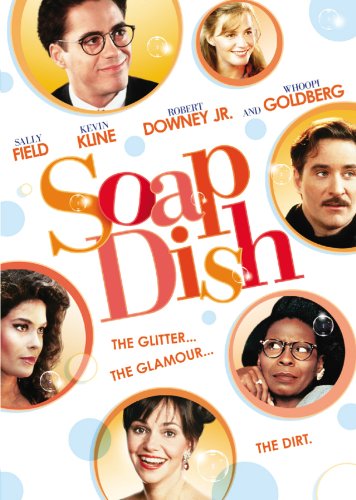
An aging soap opera starred, played by Sally Field, is the target of a jealous supporting cast and a conniving producer (Robert Downey Jr.). The head writer of her show (Whoopi Goldberg) seems to be the only ally she has as a former love's character (Kevin Kline) is recast to throw her off her game, along with a mysterious family member barging into her world and work life.

Soapdish relishes in Soap Opera story tactics just as much as it wishes to lampoon them. Twists, secrets, romance, backstabbing, tears, sex changes, melodramatic speeches...all of these elements are parodied in the show within the film, but also work their way into the real-life drama of these characters. The success of this film relies on being able to display how ridiculous soap operas can be while still selling the audience a complete (and often over-the-top) soap opera tale. This is truly a soap opera world as nothing is grounded in reality (Abandon all hope, Vittorio De Sica fans who enter here). The plot twists are painted in broad strokes and the physical comedy bits are motivated by pure nonsense. That considered, it is a truly funny journey peppered with some outstanding yet subtle visual gags (constantly panning past beefcake actors in the production hallways for example).

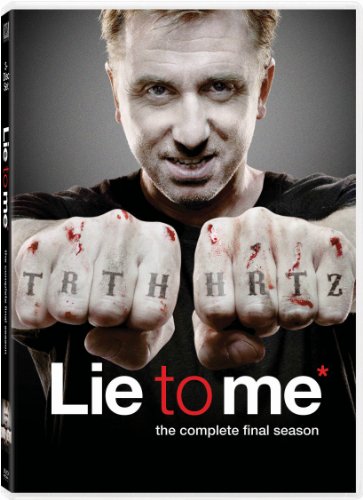
"Cal Lightman sees the truth. It's written all over your face. It's also in your voice, your posture, the words you choose. Give him five minutes and 20 questions and he'll know whether you went off to Argentina to cheat on your wife, lied about a well-timed stock sale, or murdered a one-night stand."

I spent quite a few years as a detective. My specialty turned out to be in the interview room. When some of my fellow detectives had a suspect they couldn't break, they often called me in. It was my job to get the person talking. You see, the company’s insurance recovery from the theft was based on how much I could get the thief to admit they had taken over and above whatever they just got busted for. I have to admit that I rather enjoyed the job. I was able to read the person's emotions well enough to gauge how my approaches were making the suspect feel. The key was to be able to separate the truth from the deception. Well, it turns out there's a science behind what I just took as instinct. Apparently, our faces and body language are almost impossible to control, and anyone who could read and translate that language would be nearly impossible to deceive. I don't recall consciously looking for any of these things. I could just tell. After watching a season of Lie To Me, I'm not so sure that there wasn't more to it than just instinct.

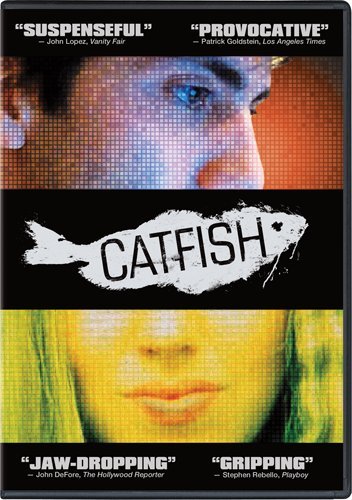
Two young filmmakers from New York city, Ariel Schulman and Henry Joost, start documenting the burgeoning relationship between their roommate (and brother in the case of Ariel) Nev and a family from Michigan. Said relationship exists only through online correspondence and phone calls. As a romance seems to be arising between Nev and Meghan, who is oldest daughter in the family, the filmmakers decide to make a trip to meet the family in person.

As the months pass, the story becomes so elaborate and strange that many critics have questioned the authenticity of this film as a documentary. I personally find it is worth looking past any doubt or beliefs and simply enjoy the mystery bubbling under the surface of the romance plot, as well as surprising level of pathos and intriguing character drama one receives from this story.

A few years back, Paramount released all eight of the studio’s Friday the 13th films in a so-called “Ultimate Edition.” With cut versions of the films and no 3D, it wasn’t really that ultimate. So here we are again, with another Ultimate Edition (also Limited!) and this time, the package is much more worthy of the name, bringing together all the deluxe versions of the series.

As those deluxe editions have previously been reviewed on this site, I am now going to surrender the floor for a while. The comments below on Part 1 are by Aric Mitchell, and on Parts 2-6 are by Gino Sassani. I’ll come back for 7 and 8.