Dolby Digital 5.1 (English)

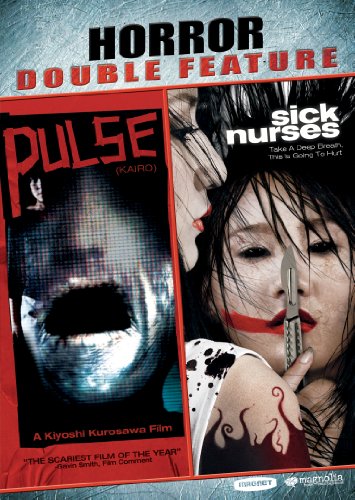
Pulse:

Plenty of Japanese horror films have storylines that vary from the oblique to the opaque. Pulse is no exception, so forgive me if this synopsis is a bit confusing (or confused). An internet website offers visitors the chance to see actual ghosts. Viewing the footage seems to make one vulnerable to an actual visitation, and when someone encounters a ghost, that person withdraws from others, shunning all society, and becomes consumed by loneliness to the point of suicide or something even more bizarre. All of this is slowly being uncovered by two groups of friends, even as the plague of ghostly encounters spreads far and wide.

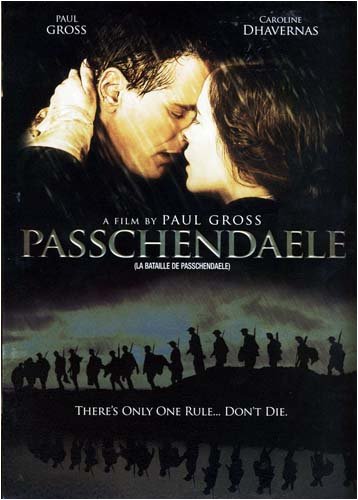
We are in the midst of the Great War. Michael Dunne (Paul Gross) is a Canadian solider recovering from physical and psychological wounds. He falls in love with his nurse (Carline Dhavernas), and when her asthmatic brother enlists, Dunne heads back to the trenches to protect him, and the two men wind up at the gigantic, murderous battle that gives the film its name.

Writer/director/star Gross has an almost messianic commitment to Canadian film and Canadian history, and here he combines his obsessions in a 20-million-dollar effort that is, by the standards of the Canadian film industry, nothing short of gargantuan. And to his credit, the battle scenes are impressive. The editing is frequently startling and brutal, in keeping with the events themselves. On the other hand, the romance is painfully hackneyed, and the naked appeals to national pride can be rather wince-inducing.

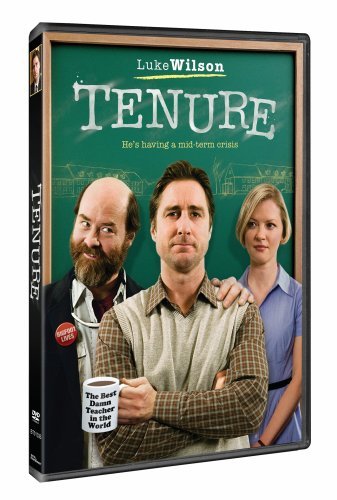
Tenure revolves around Charlie Thurber (Luke Wilson) an insecure college professor who is up for a tenure position in his English department. Charlie has an ongoing problem getting his work published and to add a further complication, the university decides to hire another applicant, Elaine Grasso (Gretchen Mol) for the position.  Through the competing for the job, Charlie begins to have feelings for Elaine.  As their relationship emerges, Charlie needs to make a decision about what his passions are.  

The film blends comedy and drama fairly efficiently.  The comedy is hammered home with Charlie’s friend Jay (David Koechner).  Whether its herbal enhancements or a fruitless pursuit of Bigfoot, no comedic stone is left unturned. The drama is left for the dark and charming Charlie Thurber.  Luke Wilson’s performance is bland.  He doesn’t showcase much of a range.  Even after his deciding moment in the film, audiences are left feeling shortchanged.  However, his comedic moments in the film are timed well and his chemistry with Koechner is undeniable.  

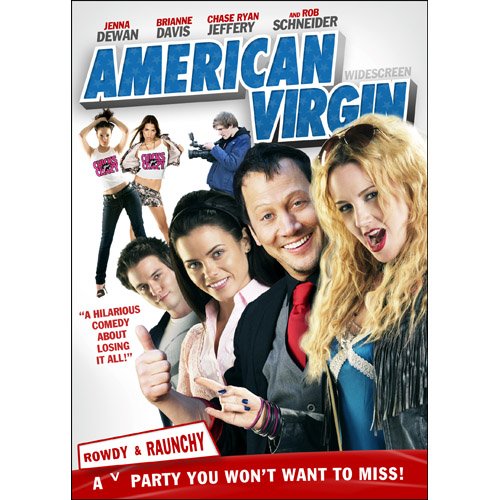
A young girl, who is obsessed with purity, appears on a “Chicks Go Crazy” video (a parody of Girls Gone Wild) and gets a group of rowdy (by comparison to her) friends to go on a road trip to track down the dvd and its maker (played by an easy paycheck receiving Rob Schneider), all the while resisting the temptations of drinking and sex.

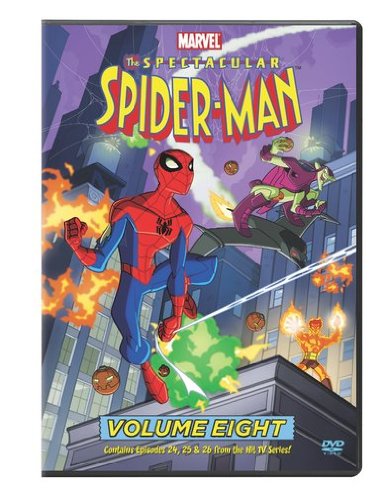
Spectacular Spider-Man is back with his eighth volume and the final one for the 2nd season. As we saw in the last few episodes, it appears that Green Goblin is again rearing his ugly head and looking to get rid of your friendly neighborhood Spider-Man. Furthermore, there are other super villains chomping at the bit to get back at Spider-Man for being put behind bars. Can Spidey survive this onslaught? Let’s find out.

Episode 24 opens up with Spider-Man in a battle with Molten Man at a local pool hall while Liz Allan (Peter Parker’s girlfriend at this point) and Mary Jane Watson are trapped behind the bar. We later find out that Molten Man is Liz’s brother: Mark who has a severe gambling problem. Somehow you know that Green Goblin is the cause of what is going on. Is Spiderman all-in or will he bust?

A time of change is descending on the America and the men and women of the Sterling Cooper ad agency. The civil rights movement is underway, and (at the end of the season), President Kennedy is assassinated. Personal lives are also undergoing upheaval. Peggy is learning to express her sexuality, while the closeted Stan wrestles with some painful reckonings involving his own. And Don's marriage hits a crisis thanks to his serial philandering and a huge secret from his past.

Easily one of the most acclaimed shows of recent memory, Mad Men hardly needs me to point out how strong its performances are, how intelligent its scripting is, and how beautifully it's shot. But at the risk of being branded a heretic, I would point out a few gaps in the emperor's clothes. The series is highly inaccessible to new viewers, assuming as it seems to that everyone watching has been doing so from the first. I had only seen a couple of episodes prior to plunging into this set, and was often frustrated by the plethora of significant glances between characters that clearly spoke volumes about past events. Not only did I have trouble figuring out what was going on, I wasn't always certain that anything was. Yes, the writing is very smart, but it can, at times, wear that intelligence a little too ostentatiously – little bits of business involving a child reading Gibbons' Decline and Fall of the Roman Empire to her grandfather, or executives trading quips about Balzac feel show-offy to me. (And while we're on the topic, be wary of the knowledge you're going to parade. At one point in Episode 1, we are informed that London no longer has fogs. That is true now, but is a very anachronistic statement to be making in 1963, as my parents can attest to.) Finally, there is a certain coldness to the affair that I found made it hard to particularly care about any of the characters. Again, none of this is to deny the program's manifold and great qualities, but for my money, it isn't quite in the same stratospheric heights as something like The Wire.

An extremely talented young break-dancer from New York, who goes by “Angel,” and her best friend are attacked in an alley. Both are stabbed and only Angel survives. She moves with her mother to Los Angeles and begins a quest to return to Brooklyn on her own. In the meantime, she is rehabilitating from her stabbing injury and is prompted to rekindle her love of dance. Before long she finds a crew and is set to find a new life in LA and display her talents once more.

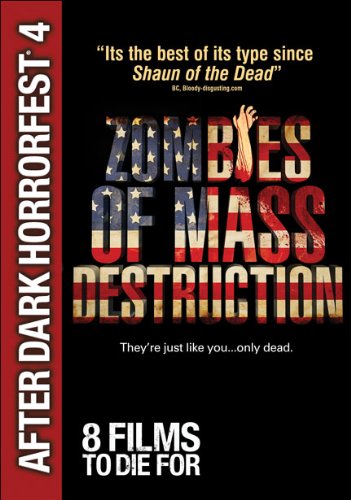
The year is 2003. The War in Iraq is just underway, and its ripples are felt even in the small town of Port Gamble, Washington. Take, for instance, Frida (Janette Armand). Her father is Iranian, which is the same thing as Iraqi as far as everyone else is concerned, and furthermore her skin tone and ethnic background mean she is not a “real American” (to quote her numbskulled boyfriend) even though she was born in Port Gamble. Tom (Doug Fahl), meanwhile, has concerns less related to world affairs: he has returned to his home town, in the company of his boyfriend Lance (Cooper Hopkins), to come out to his mother, a prospect that fills him with dread. Then, just to complicate everybody's life, a zombie plague breaks out, bringing out the best and worst of everyone in town.

Zombies have been fodder for socio-political allegory all the way back to their first cinematic appearance (in their pre-flesh-eating days) in White Zombie (1932), where they were the exploited workers of Bela Lugosi's sugar cane mill. Director Kevin Hamedani and his co-writer Ramon Isao go into satirical overdrive with this effort. There is some very funny stuff here, along with plenty of over-the-top gore FX and likable protagonists. Unlike Dawn of the Dead and Shaun of the Dead, however, whose commentary emerges naturally from the story and characters, here the personalities and story have clearly been designed to fit the political points being made. Thus, though Frida, Tom and Lance are very engaging characters (if almost entirely defined by their ethnic or sexual minority identities), their non-zombified opponents are caricatures of conservatism, as hissable as they are stupid. Now, satire is, by its very nature, a savage art, and I'm all for both savagery and movies that aren't afraid to take a stand, but Hamedani and Isao run the risk of preaching to the choir here. With almost every line of dialogue slaved to the film's political points, we are entering the realm of the editorial cartoon. And though there's nothing wrong with that, it does mean that there isn't much to the film beyond those political points. Thus, one faction of the audience will simply have its views confirmed, while the other will be completely alienated, and it is doubtful that much thought will be provoked. As well, some of the gags are arguably a bit misjudged. The scene where Tom's mother eats her own eye owes its funny/nauseating vibe to Peter Jackson's Dead/Alive, and works well enough, but the moment where a little girl Frida is trying to help is splattered by a car is more problematic, depending on your tolerance for extreme splatstick. All that said, there's still plenty of sharp work from all concerned here.

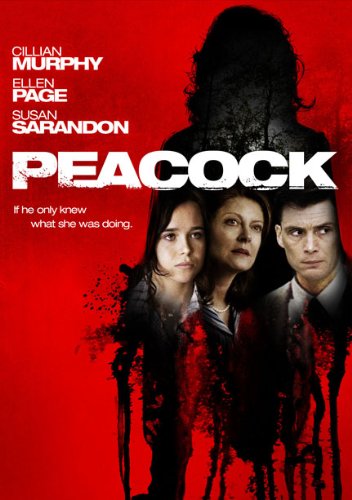
John Skillpa (Cillian Murphy) has been hopelessly damaged by the monstrous abuse his mother inflicted on him. As a result, he now has two separate personalities: John and Emma. John is a terminally shy bank clerk who exists as of 8:15 in the morning and for the duration of the work day. Emma takes care of the domestic chores and leave notes and meals for John. But one day, while Emma is doing the laundry, a derailed caboose blasts through the fence, revealing her existence to the town of Peacock. Everyone assumes she is John's wife. Coaxed out of her shell by Susan Sarandon, Emma gradually blossoms, much to the distress of John. When Ellen Page shows up with a young child and a dark revelation from John's past, the two personalities find themselves moving closer and closer towards a violent confrontation.

It is a testament to the work of director/co-writer Michael Lander and of Cillian Murphy (not for the first time making effective use of his androgynous looks) that one finds oneself increasingly viewing Skillpa as two entirely separate people as, bit by by, drop by drop, the suspense builds. Sympathy shifts back and forth between Emma and John, and by the end one can no more imagine Skillpa as a unified whole than one can decide which of the two halves is the “real” person. Touching and tense, this is a bizarre cross between Psycho and Our Town, and it somehow works very well indeed.

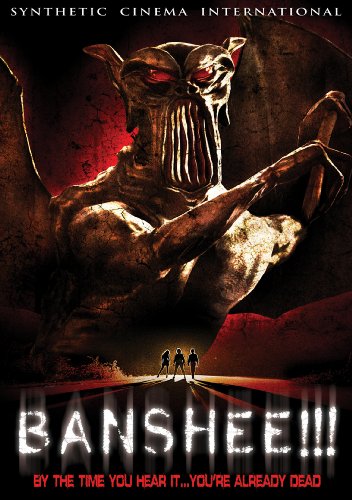
The title monster of Irish myth terrorizes people in the middle of the US for no good reason and with no explanation as to why its there, how it came to be or anything else aside from visually demonstrating that it uses sound to make its victims hallucinate. A group of teens on spring break encounter it and every single one of them survives after befriending the misunderstood beast. Of course that's a lie...they die...but doesn't the nice plot sound so much more interesting? It does to me when you've seen countless films about teenagers being ripped apart in the woods.