Dolby Digital Mono (English)

So there's this group of flight attendants, and we follow their swinging adventures and affairs on and off planes. One, for instance, hopes to be an actress, and hooks up with an advertising executive. And if you care what the plot of “the first 3D sex film” is, you need your head examined. Much of the what goes on  is mind-numbingly banal (SEE  Wine being poured  SEE  Drinks being mixed  HEAR  Dull conversations ), though the acid trip that leads one woman to make out with a lamp in the form of a greco-roman head is something you don't see every day.

The film is an object lesson on how far mere novelty can take a film – it was a huge success at the time, and 3D was, in 1969, a rarity again after its initial craze in the 50s. So there are numerous shots of legs and pool cues (and feet) jabbing at the camera, enough, presumably, to have kept audiences entertained while everything else remained mundane beyond words. Or, so the situation is for most of the running time. But the last act takes a sudden turn into the starkly dramatic, and becomes very dark indeed. It is also rather more imaginatively shot than most of the rest of the film. The ending is a vicious sucker punch that must be seen to be believed, and suggests that the filmmakers were storing all of their creative juices for the cruel finale. In fact, as the accompanying featurettes reveal, the dramatic plot was added to the film after the rest of it was completed, and indeed, after it had already been released in some markets. In the final analysis, this is a vital piece of low culture.

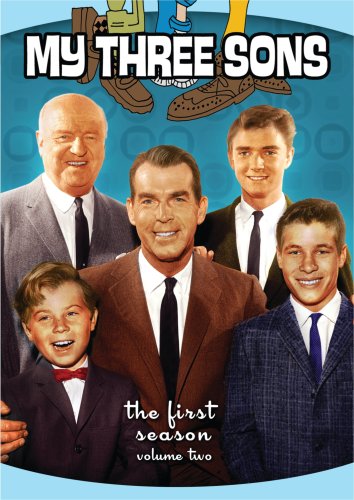
Just to look at it you would think that My 3 Sons was a Disney production. Its star Fred MacMurray had appeared in many Disney films of the 50’s and 60’s and is most likely recognizable from those appearances. Two of the three boys were also known for work with Disney. The eldest boy, Mike, was played by Tim Considine, who starred with MacMurray in Disney’s The Shaggy Dog. Middle son Robbie was played by a former Mickey Mouse Club Mouseketeer, Don Grady. The youngest son, Chip, was played by Stanley Livingston, the only non Disney alum in that group. Another reason for the confusion is the decidedly Disney-like material the series covered. Steve Douglas (MacMurray) was a widowed single parent who was trying to balance his job with that of raising his three sons. Most of the stories involved the warm and fuzzy heartwarming stuff that Disney had pretty much cornered the market on in the films. Whatever troubles arose, no problem was so bad that a heart to heart talk couldn’t fix it. The style would prosper and continue in the form of 70’s shows like The Brady Bunch. The four guys were also joined by Steve’s father-in-law, Bud, played by I Love Lucy favorite William Frawley. That was no surprise, since the show was actually produced, not by Disney, but the Desilu studios.

My 3 Sons was for some time the second longest running sit-com on television. It lasted from 1960 until 1972. The series would undergo major changes as the boys each grew older and eventually married and led their own lives. Frawley would also become very ill after 5 years and leave the show. His replacement, William Demarest as Uncle Charley, is likely better known in the show. The syndicated version of the show often ignored these early black and white versions of the series, opting for the later color ones that featured the Uncle Charley character. It’s very likely you’ve never seen these early episodes as they appeared infrequently in the syndicated markets. The theme from Frank DeVol became pretty popular in the mid 60’s and even entered the pop charts at one time. The show also originally ran on ABC, but moved to CBS in 1965, also accounting for the different syndication packages. It was during that move that many of these big changes occurred.

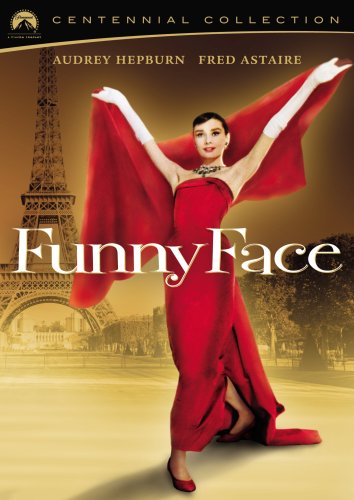
It’s hard being the bad guy, but sometimes you just don’t like a film that seemingly everyone else does. Such is the case for me with Funny Face, the classic Audrey Hepburn-Fred Astaire teaming that sees a bookish young lady go from the obscurity of her lonely library to the glitzy Paris lights as a high-profile fashion model. A little bit Cinderella and a whole lot of singing-and-dancing, Funny Face fails to engage with characters and story, relying solely on its lavish spectacle to do the trick. For legions of fans, it worked. For me, it didn’t. But like comedy, it’s all subjective, and if you’re in to fancy costumes, skilled choreography, arguably catchy music numbers, and healthy doses of nostalgia, then this one’s a no-brainer. But if story and deeply written characters are your things, sorry they don’t live here.

Astaire and Hepburn are a good pairing, and they work well together for each song-and-dance piece, but their love story gets very little chance to shine in between, and their normally solid acting abilities are buried in a heap of lifeless Broadway mini-productions that result, ultimately, in a showcase for all the wrong skills. When I watch a movie, I’ve got to be at the very least emotionally invested. If a film can engage my intelligence as well, that’s icing on the cake. Funny Face did neither. And as a fan of Ms. Hepburn’s work in Breakfast at Tiffany’s, believe me: no one’s more disappointed at that statement than me. The best thing about it is the overpowering, show-stealing performance of Kay Thompson as pushy magazine editor Maggie Preston. She dominates the camera whenever it’s on her. It’s just too bad our stars didn’t get that same chance to shine.

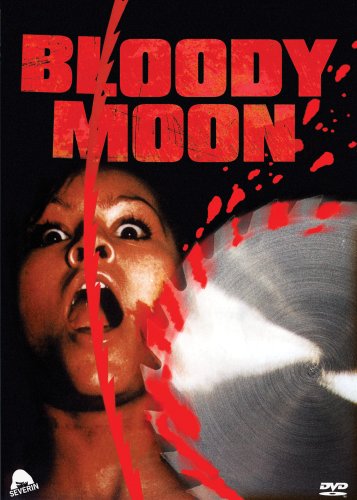
A disfigured young man with an unhealthy interest in his sister attacks and kills a woman. Five years later, he is released (by psychiatrist Jess Franco) into his sister’s care, who is helping organize a language school on property owned by her disagreeable, but very rich, aunt. In short order, the female students at the school (and there are ONLY female students, for reasons not explained) start being killed off. But no one other than heroine Olivia Pascal actually believes that anything is going on.

This was Jess Franco’s contribution to the slasher craze, though it demonstrates just how much that subgenre owes to the giallo by incorporating many of the elements of the latter (whodunit, unseen killer instead of hulking masked figure, etc). The production values are perhaps a bit higher than usual for Franco, and the gore effects are, all proportions maintained, quite good (and certainly very gruesome). But it’s obvious that this is work for hire, as the work lacks many of the more endearing eccentricities and personal obsessions that mark the films he’s more interested in. There is also some unnecessary animal cruelty involving the decapitation of a snake. The sharp-eyed will catch Lina Romay in the credits (as assistant director, under her real name of Rosa Amiral).

The giallo was never a genre that specialized in tight, coherent, logical storylines. But even by the bizarre standards of the form, In the Folds of the Flesh takes some kinda cake. Trying to summarize its plot is next to impossible, as the first two thirds of the plot are incomprehensible, and are cleared up only in the final third, which feels more like a play than a film, and where the revelations and twists pile up to such a degree that they don't induce whiplash – they torque your head clean off. So, for what it's worth, we have a castle (whose interiors look distinctly un-castle-like) where, thirteen years ago, a man was decapitated. His body was disposed of by the woman living there, and she and two children, now grown and thoroughly insane, dispose of anyone else foolish enough to come prying into their lives.


This is certainly no lost masterpiece. Its story is clumsily told, and would be offensive if it weren't so ridiculous. The murders vary from the delightfully cheesy (the decapitations) to the utterly WTF (death by cuckoo clock??  ). But the demented nature of the exercise makes it compelling in the nature of a train wreck (and speaking of trains, what's with the constant shots of one?). Lovers of the deranged will find much to feast upon here.

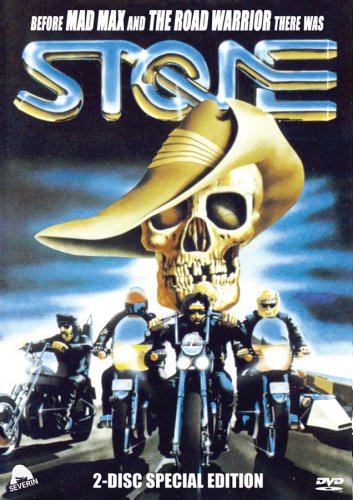
After having been present at a political assassination, the Grave Diggers biker gang starts being killed off one by one. Undercover cop Stone joins the gang (by basically saying, “Hi, I’m a cop. Can I hang out with you guys?”) in an effort to solve the murders. Plenty of shenanigans, riding around, and utterances of the word “man” ensue.

This 1974 Australian effort gets off to a bang of a start with the assassination, a scene that is largely witnessed through the eyes of a heavily stoned biker. The murders that follow are also nicely staged. But then we start getting many, many scenes of riding around and rather aimless hanging about. The eponymous hero doesn’t show up until a quarter of the way through the film, at which point he is able to find out, though his own experiences and the interviews he conducts, what a great bunch the bikers are. So there’s a fair bit of meandering about. But the action scenes are well done, and as a cultural artifact, the film is really quite fascinating.

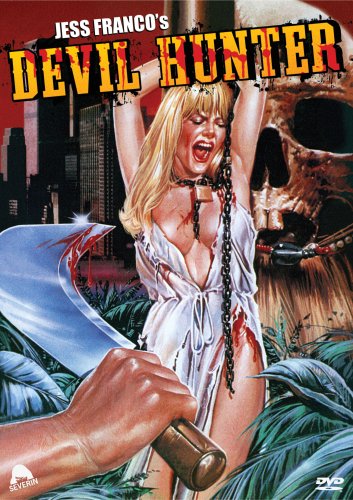
A group of low-life gangsters kidnap a starlet (Ursula Fellner) and hightail it off to a jungle island, where they subject their victim to endless indignities while waiting for the ransom money to arrive. Al Cliver is dispatched to rescue her, but his helicopter arrival draws the attention of a group of hostile natives and, more to the point, a red-eyed, cannibal zombie-god who holds them in a grip of fear.

It was 1980, and so the short-lived cannibal subgenre was in its heyday, so naturally Jess Franco was faced with directing his own contribution. Of course, he did so in his own peculiarly idiosyncratic way. Released the year prior to Severin's other recent cannibal release, Cannibal Terror, it shares that film's conceit of gangsters running afoul of dangerous locals. Also common to both films is some unintentional hilarity (“primitive” tribesmen sporting wedding rings and running shoes, a park bench visible in the background of the jungle around minute 93, or the hero climbing a “vertical” cliff face on his knees, thanks to the wonders of a tilted camera). The usual racism associated with the cannibal movie is somewhat problematized (deliberately or not) by the odd and obvious multiracial composition of the tribe. Where Franco's film steals the march on its poorer successor is a greater sense of expansiveness, even on what couldn't have been much greater means (we even get a helicopter crash), and a more lush, somewhat more convincing jungle (even though we are still pretty clearly in Spain). As well, Franco keeps the pace up with a wealth of incident, not to mention that strange mixture of elements (crime, action film, cannibal film, supernatural terror, even a little bit of King Kong). And the scenes of cannibalism, while far more simplistically mounted than in the likes of Cannibal Holocaust (an extreme close-up of a mouth showing meat and dribbling blood) are nonetheless suitably disgusting. The only shot of innards being yanked out is so brief, it feels like the contemptuous dismissal that it is. All in all, a sleazily entertaining mish-mash that could only have been made by one man, bless his twisted little heart.

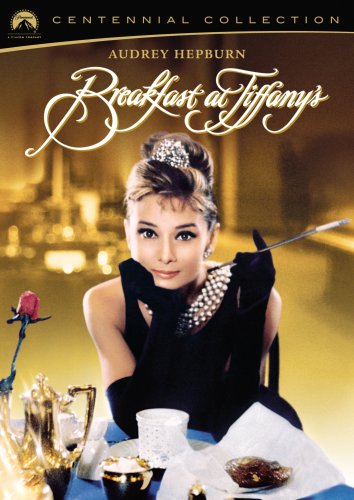
Holly Golightly is perhaps the most tragic, depressing character in all of literature and film, especially to those of us who know (or have known) people just like her. As an example to aspire to, Golightly fails miserably. She is internally and externally destructive, intentionally so. Truman Capote, author of Breakfast at Tiffany’s, the novella in which she was formed, has created in her a realistic portrait of people that fear happiness, and so imprison themselves to lives of restless and reckless abandon. She is just charming enough to make us pull for her, but equally cruel and uncaring once we’re suckered in. It’s hard to like Holly, and it’s almost impossible not to love her, if that makes any sense whatsoever. I’m sure it doesn’t. But neither does she, and so goes life.

On the other hand, the film version of Capote’s iconic work gets bogged down in insulting ethnic portrayals (Mickey Rooney as Mr. Yunioshi); studio sanitization (after all, Golightly is a call girl, but we get very little indication of that from the film); and a tacked-on happy ending that in no way fits with what’s come before it. Feel-good entertainment? Not when the audience knows better than to think things could turn out so neatly, so quickly. Still, Audrey Hepburn was a perfect choice for Golightly, and she heaps additional charm atop what was already on the page. George Peppard has very little to do as her does-she-love-him-does-she-not play-toy, but his final indictment of Holly is a stirring piece of writing, effectively delivered, that would have been a great place to end. It would have at least rung emotionally true. Unfortunately, the exchange is quickly swept under the rug by an ending that comes as close to Deus Ex Machina as one can get without actually achieving it.

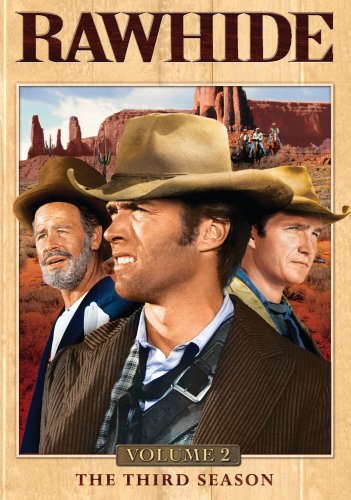
This is the second half of the third season of Rawhide. Among the better episodes found in this collection are: Incident On The Road Back. Favor is accused of horse rustling. That means hangin’ in those days. In Incident Of The Boomerang, some cattle are off to the Land Down Under, but one of the men may not be who he says he is. Rowdy is arrested for murder… again. This time he’s accused of killing a deputy who was on his way to warn of an attack in Incident Of The Running Man. A practical joke turns bad in Incident Of The Wager On Payday, which rounds out the collection.


The setting for Gunsmoke was the by now famous Dodge City, circa 1870’s. Phrases like “get out of Dodge” would enter the popular lexicon as a result of this resilient series. Marshall Dillon (Arness) was charged with keeping the peace in Dodge City. The only other character to see the entire 20 year run was kindly Doc Adams (Stone). Star Trek’s own Doc, Leonard McCoy, took many of his traits from Doc Adams. He was the humanitarian of the city, always looking to help someone. Like McCoy, he had a taste for bourbon and a soft heart underneath a rather gruff exterior and was always ready with free advice. Dillon’s love interest throughout most of the series was Miss Kitty Russell (Blake). While there were certainly a few romantic undercurrents, the romance never came to fruition. Miss Kitty was a prostitute on the radio and was likely one here as well, but CBS chose to underplay that aspect of her character as a “saloon girl”. Finally Dillon’s faithful sidekick deputy was Chester (Weaver). Chester often found himself in trouble and was the naïve son figure to Dillon.