Dolby Digital Mono (English)

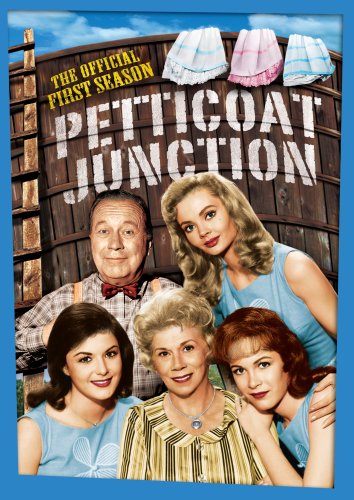
Come ride the little train that is on its way to the junction. Petticoat Junction. This forgotten show is a blast to behold at the junction. Petticoat Junction. Lots of curves for you to watch, much better than Who’s the Boss?, is the junction. Petticoat Junction – The Official First Season.


What do you get when you mix three juvenile delinquents, an enterprising police captain, and a load of social commentary mixed into the confines of an hour-long police drama? Why, TV’s “The Mod Squad,” of course; or, for the purpose of this review, The Mod Squad – Season 2, Volume 1. Yes, aggravating as it is, Paramount is still pushing their half-seasons on the public, but for a show like “The Mod Squad,” fans better eat it up. This is likely the best release the show will ever get. If you believe the packaging, “The Mod Squad” was a groundbreaking series that tackled major social issues from a predominantly youthful perspective, shooting for straight drama, and succeeding to the nines.


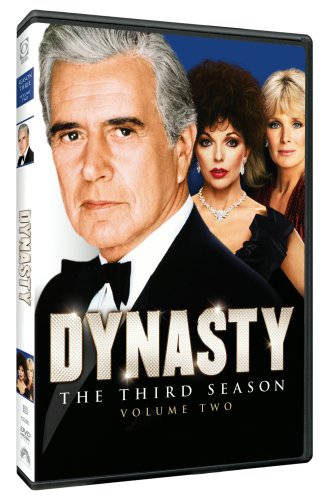
High art it isn’t, but one thing’s for sure: Dynasty is ass-in-seat television. Launched in 1981, the John Forsythe-Linda Evans-Joan Collins starring vehicle crossed lines and took chances few of its contemporaries were willing to take. For several years Dynasty defied conservative conventions with sordid tales of extramarital affairs, catfights, and the hot-button issue of homosexual parenting. It’s this last issue that is featured so prominently in Dynasty – The Third Season, Volume Two.

Those of you who are uninitiated to the Dynasty saga have nothing to fear, as each script is weighted heavily with expository dialogue sure to catch you up in no time. (“If Blake loves you, Krystle, then why did he humiliate you by castigating you that day we fought in the lily pond” – Alexis Colby) Of course, the show’s quality suffers as a result, offering ridiculous conversations involving participants who should damn well know exactly what just happened to them, especially considering the weight of their experiences, without the need of another character explaining things. In fact, about 40-50% of every conversation is retread from a previous episode. Incidentally, the acting is terrible, but one must wonder if the actors could have done any better with the material they were given. While exposition can certainly be a necessity, especially in an hour-long ongoing series, the convention is best used in very small doses at the beginning of a story, not throughout every segment between the commercial breaks.

No, this isn't the Patrick Swayze vehicle. Instead, it's another golden opportunity for Richard Widmark to unleash his patented psycho act. Here he plays Jefty, playboy owner of the titular establishment. His right-hand man is Pete (Cornel Wilde), who is the serious-minded half of the partnership. Said partnership is strained when Jefty brings back the latest singer for the club, one Lily (Ida Lupino, in superb hard-boiled form). Pete thinks she's bad news, and she is, only not in the way any of the three suspect. Jefty decides he's in love with her, but she only has eyes for Pete, and he, despite misgivings, reciprocates. Jefty doesn't take rejection well. Not well at all...


The cast is terrific, bouncing cynical zingers off each other with aplomb. Wilde does well as the world-weary Pete, but Lupino and Widmark own the field, and their final confrontation is one for the books. Enormous fun for noir fans, and especially for lovers of Widmark as a terrifying nutjob.

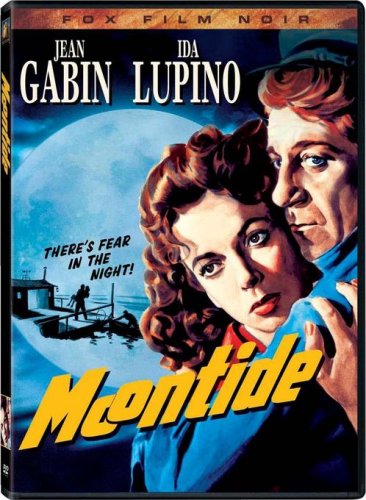
Jean Gabin, in his American debut, plays Bobo, a French sailor who has been knocking around the States for quite some time in the company of Tiny (Thomas Mitchell). Their wandering comes to a stop when, the day after a night of drunken excess that he cannot remember, Bobo sees Anna (Ida Lupino) wading into the waves to commit suicide. He rescues her, and before long the two are living together on the bait barge where he is working, and fall in love. Dark clouds are on the horizon, however. A local man was murdered, and Tiny, resentful that his meal ticket has been taken from him, darkly hints to Anna that Bobo might be responsible, even though he doesn't know it himself.

Moontide was originally a Fritz Lang project, and as the accompanying documentary demonstrates, his influence is still felt in the finished project, notably during the climactic stalking sequence. Gabin, though a masterful presence, nonetheless seems almost as much a fish out of water as his character, and it doesn't really come as a surprise that neither he nor Hollywood wound up caring much for the other, and he would return to the greener pastures of France. Claude Rains is on hand as a wisdom-dispensing night watchman – hardly a stretch for him, but it's always a pleasure to hear his mellifluous tones. The real stretch, and indeed revelation here, is Thomas Mitchell – the man whose speciality was the cuddly, avuncular Irishman here becomes a twisted monster of childish, violent rage, giving us a real nail-biter of a denouement.

Small town Connecticut. A beloved priest is gunned down in the middle of a busy street, and the pressure is on for the police to find the killer. The new regime at city hall needs a conviction, and doesn't care too much about the niceties. When a suspect (Arthur Kennedy) is at last found, police chief Lee J. Cobb isn't entirely happy with the case, but he passes it on to DA Dana Andrews, who is under even more political pressure. At first pleased with the case, Andrews becomes uncertain the more he looks into it, and startles everyone (not least the defence attorney) by entering a plea of innocent at the beginning of the trial. Politicians and lynch mobs are soon baying at his door.

Elia Kazan's 1947 thriller is, as commentators Alain Silver and James Ursini point out, very much in the vein of the docu-noir. There is lots of procedural action going on here, and the voice-of-god narrator is frequently on hand to explain things to us. What is perhaps most interesting about the film, though, is that the case itself becomes of secondary importance to the political machinations. This isn't so much about the possible conviction of an innocent man, so much as it is about the mechanisms that make such a thing possible in the first place. Given what the future would hold for Kazan and his involvement with the HUAC hearings, the witch hunt scenes here take on additional, troubling, resonance.

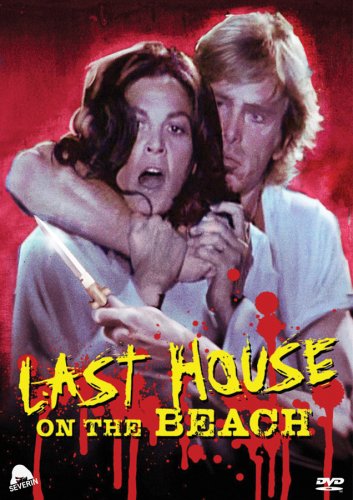
After a violent bank robbery, a trio of criminals descend upon the beach house retreat of a nun and her students. The bad guys take the women hostage, and make themselves at home, tormenting, raping and abusing to their hearts’ content, pushing their victims ever further over the edge.

At the level of plot, not a lot goes on here. The villains are ensconced at the beach house within the first ten minutes, and then story does little more than go through variations of torment until the inevitable retaliation. Nonetheless, there is a fair bit of interest here. The assaults, though very unpleasant and extremely nasty in their content, are, however, filmed with a certain restraint, with the camera concentrating on the faces of attackers and victims rather than on their bodies. Ray Lovelock’s gang leader is a deceptively pleasant pretty boy, and his character arc consistently plays out against expectations. And then there’s the climax, which turns up again almost beat for beat at the end of Quentin Tarantino’s Death Proof.

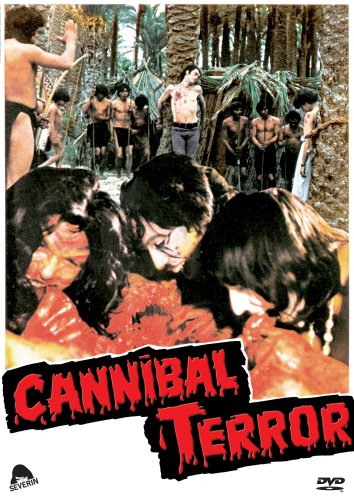
Two inept thieves and their prostitute girlfriend decide to hit the big time, crime-wise, by kidnapping the little girl (clearly and disturbingly dubbed by an adult) of an automobile tycoon. When their contact manages to get himself run over by a car while crossing the street, they have to hightail it out of town until the heat cools (or something like that – don't press me too hard for clear logic in this film). So off they head to what I suppose is the South American jungle, by my goodness there seem to be a lot of pine trees in the jungle. There they hole up at the home of a friend-of-a-friend, a middle-aged man who has the role Jess Franco would be playing if this were a Jess Franco film. He has a beautiful wife, and one of the thieves takes it in his head to rape her. So their host now has vengeance on his mind, and there are cannibals (you were wondering when I was going to get to them, weren't you?) lurking in the woods.

This is the sort of movie that makes life worth living. Sure, you could throw away your 90 minutes on something that is actually good, but in that case you would miss the following: cannibalism sequences where, once the victim has been killed, the carcass being gutted is very, very obviously that of a pig; the most pasty-skinned, European looking cannibals on record, complete with gruesome 70s hairstyles (I swear Sonny Bono is among their number); characters trudging through the brush, ignoring the road visible not three yards from them; and of course, the truck that cruises by in the background of the cannibal village, supposedly deep in the heart of darkness, but clearly a stone's throw from a highway and a beach (look for this wonderful moment at the 92 minute mark). And I haven't even said a word about the hilariously chipper, gratingly hummable Euro soundtrack.

Come and listen to my story about a man named Jed. Poor mountaineer barely kept his family fed. Then one day he was shootin’ at some food and up from the ground comes a bubblin’ crude. Oil that is… Black Gold…Texas Tea…”

Who doesn’t remember the Clampetts, those lovable Beverly Hillbillies? The show has been revived in a film, rap songs, and a Weird Al parody of Dire Straits’ Money For Nothing. Terms like cement pond have lingered in our pop culture. The song was a genuine Billboard hit at the time and is still instantly recognizable some 40 plus years after the show aired.

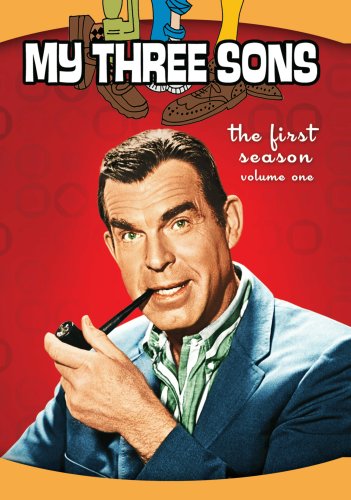
Just to look at it you would think that My 3 Sons was a Disney production. Its star Fred MacMurray had appeared in many Disney films of the 50’s and 60’s and is most likely recognizable from those appearances. Two of the three boys were also known for work with Disney. The eldest boy, Mike, was played by Tim Considine, who starred with MacMurray in Disney’s The Shaggy Dog. Middle son Robbie was played by a former Mickey Mouse Club Mouseketeer, Don Grady. The youngest son, Chip, was played by Stanley Livingston, the only non Disney alum in that group. Another reason for the confusion is the decidedly Disney-like material the series covered. Steve Douglas (MacMurray) was a widowed single parent who was trying to balance his job with that of raising his three sons. Most of the stories involved the warm and fuzzy heartwarming stuff that Disney had pretty much cornered the market on in the films. Whatever troubles arose, no problem was so bad that a heart to heart talk couldn’t fix it. The style would prosper and continue in the form of 70’s shows like The Brady Bunch. The four guys were also joined by Steve’s father-in-law, Bud, played by I Love Lucy favorite William Frawley. That was no surprise since the show was actually produced, not by Disney, but the Desilu studios.