Posted in: Disc Reviews by Gino Sassani on August 19th, 2008
Gary Gilmore is most known not for the people he killed so much as for the way that he died. As killers go, Gilmore wasn’t even a serial killer by definition. He was responsible for two deaths, both in the commission of a crime. We remember Gilmore mostly because he fought to be executed at a time the United States Supreme Court had stricken down our nation’s death penalty laws in a landmark decision, Furman vs. Georgia. Most people think that decision declared capital punishment as cruel and unusual. What it actually did was declare the procedures for assigning the death penalty as “fundamentally unfair”. At the time Gilmore was apprehended, death penalty laws had been rewritten to comply with the Supreme Court’s concerns and capital punishment was already well on its way to returning to the American justice landscape. States were being cautious and moving slowly. No one wanted to be that first test case so, while the penalty was back on the books, no state was yet willing to wade into the murky waters of actual executions. Then along came Gary Gilmore, who decided he wanted to be executed. His legal maneuverings and successful bid to be executed tolled an ominous sound on death rows across the country. Executions were back in form, and everybody knew who to blame: Gary Gilmore.
Posted in: Disc Reviews by David Annandale on July 29th, 2008
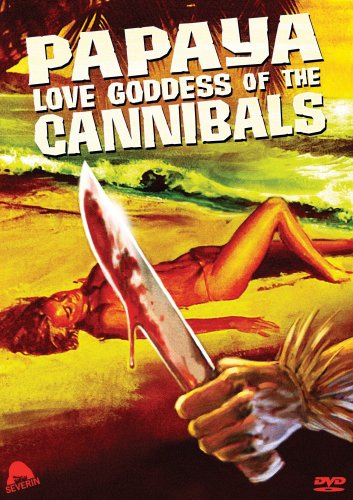
Severin continues their serious play to be the go-to company for Eurosleaze with this, one of Joe D’Amato’s better efforts. We first meet Papaya (Melissa Chimenti) as she luxuriates on the beach, makes love with a fellow in a cabana – and then orally castrates him, whereupon she walks away as two minions torch the cabana. Fantasy Island, this ain’t. The action then shifts to Sara (Sirpa Lane of The Beast fame), a journalist we first see revelling in a cock fight. She hooks up with Vincent (Maurice Poli), a nuclear power executive with whom she has had a casual fling before. The two of them are drawn into Papaya’s web of sex and blood ritual. She is, in fact, part of a political group fighting back against the power company’s expropriations and pollution by any means necessary.

Obviously, not your usual softcore romp, and a rather more interesting storyline than most of D’Amato’s Black Emanuelle series. The characters are still utterly without affect, which casts a vaguely surreal miasma over the proceedings. The sex scenes are pretty risible, but the film actually becomes quite watchable despite these scenes being its primary reason for being. D’Amato’s heightened interest turns up in the editing, in the careful creation of atmosphere, and most of all in the no-punches-pulled working out of the film’s ideas. Papaya raises, if rather clumsily, some hard questions about the nature of exoticism and the justifications for violence. Believe it or not, this is one to think about and discuss.
Posted in: Disc Reviews by Gino Sassani on June 11th, 2008
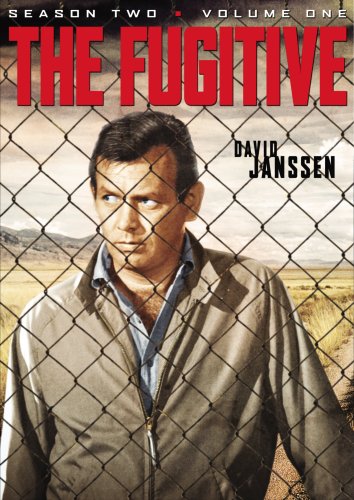
“The man is Richard Kimble and, not surprisingly, the man is tired. Tired of looking over his shoulder, the ready lie of the buses and freight trains. Richard Kimble is tired of running…”
The elusive “one armed man” is one of the best known television icons of all time. The plight of Dr. Richard Kimball has been the subject of numerous imitations and even a feature film staring Harrison Ford as Kimball and Tommy Lee Jones as his pursuer. Tim Daly left the ranks of comedy to fill the shoes of Kimball in a very short lived revival series. While some of these efforts managed to capture the essence of The Fugitive, none can truly compare to the real thing.
Posted in: Disc Reviews by Gino Sassani on June 10th, 2008
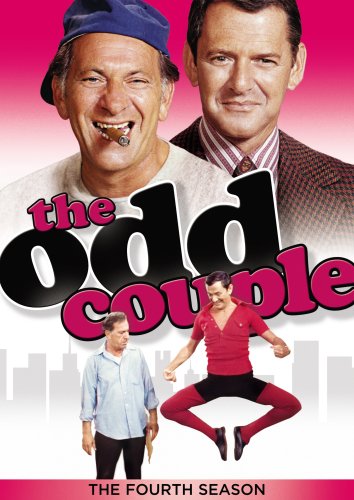
Felix and Oscar return for a fourth year of laughs in The Odd Couple. Not much has changed in the world of Oscar and Felix, but isn’t that what you were hoping to hear? What I found interesting in this somewhat weaker season is that even when the actors were beginning to realize that the show was slipping, the pair never missed a beat in their own chemistry. Often it seems they lacked interest in the material when their characters were apart, but something always happened when they were together. I get the impression they genuinely enjoyed each other’s company. It’s the saving grace in season four.
Posted in: Disc Reviews by Gino Sassani on May 22nd, 2008
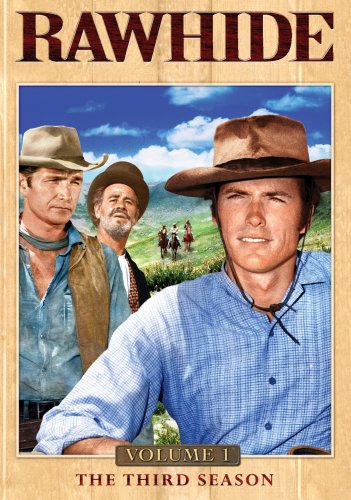
This is the first half of the third season of Rawhide. Long before Clint Eastwood was making our day as Dirty Harry or even roaming the badlands without a name for Sergio Leone, he was working the cattle drive on Rawhide. Rawhide was created to take advantage of the huge Western film and television wave that
Posted in: Disc Reviews by Gino Sassani on May 22nd, 2008
The set comprises the second half of the second season of Gunsmoke. The show was still in black and white and in the half hour format. Some of the best episodes of the set included Bloody Hands. For once a western dealt with conscience. When Dillon begins to have haunting dreams and pangs of guilt over killing three bad guys, he tries to back down from a fight. Has Dillon gone yellow? Arness does a better than average job on this rather thought provoking episode. When a man comes from
Posted in: Disc Reviews by Gino Sassani on May 15th, 2008
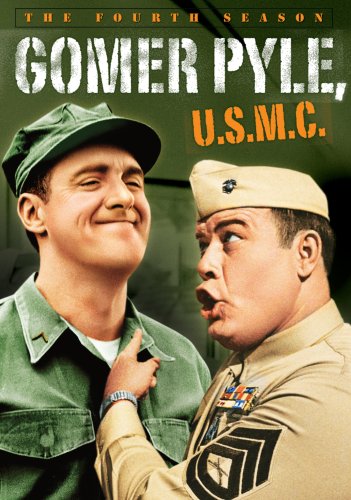
We’re in the US Marines, boys and who could have guessed that it would be so much fun? I often wondered how the real life members of The Corp think about Gomer Pyle. It would have made a great extra. I remember one of the F Troop sets offered a look at members of the real unit. With only another season to go I hope
Posted in: Disc Reviews by Gino Sassani on May 13th, 2008
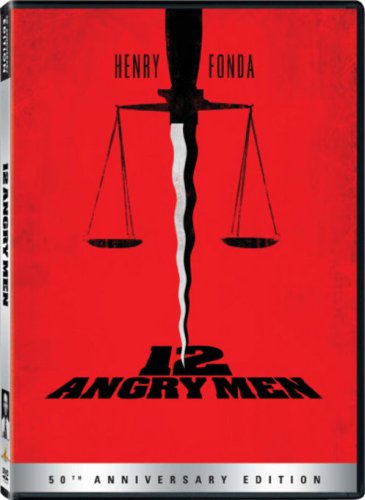
12 Angry Men is one of those rare films that appears to defy all the
Posted in: Disc Reviews by David Annandale on March 8th, 2008
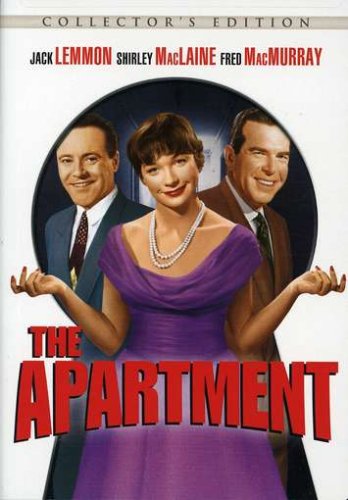
Jack Lemmon is a rather meek insurance company employee who is slowly working his way up the corporate ladder by lending his apartment to married executives looking for a place to take their girlfriends. Life is rather inconvenient, as he is locked out of his home at all hours, but things become even more complicated when the big boss (Fred McMurray) takes an interest. The good news is that Lemmon gets another promotion. The bad news is that McMurray’s affair is with Shirley MacLaine, the elevator girl for whom Lemmon is carrying a torch.
Billy Wilder’s follow-up to Some Like It Hot certainly has plenty of funny moments, most involving Lemmon’s doctor neighbour (Jack Kuschen). But the film doesn’t shy away from the darker implications of its storyline (up to and including a suicide attempt). The result is a romantic comedy-drama that is sweet without being sentimental, and hard-nosed without being cynical. And the audience’s emotions are thus sincerely earned.
Posted in: Disc Reviews by David Annandale on February 22nd, 2008
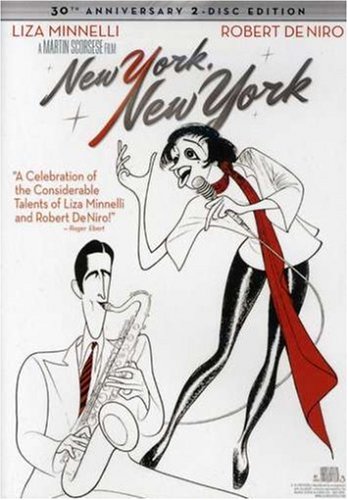
World War II has just ended, and the recently discharged Robert De Niro hits New York on the prowl for sex. He runs up against WAC Liza Minnelli, and the more she resists his advances, the more determined he becomes. There is more: he is a saxophonist, and she (of course) is a singer). So begins a tempestuous relationship between two artists whose enormous talents and equally enormous personalities mean they can neither live with nor without each other.
The idea of Martin Scorsese taking on the form of the classic musical is so bizarre that it had to happen, and here it is. Scorsese’s conceit is ingenious: all the conventions are there (the meet cute, the songs, the artificial sets and colours), but they collide with the naturalism of the performances and the emotions. A perfect case in point: wandering the streets at night, De Niro sees a sailor and his girl perform a dance together. It is a classic musical moment, but the only sound is that of a train passing. It is a scene of extraordinary beauty, grit, and cinematic truth. And it belongs in an extraordinary film.