Dolby Digital Mono (English)

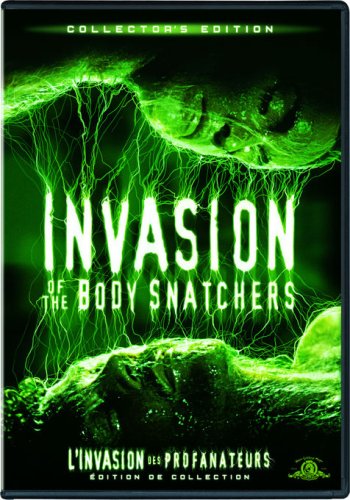
Every so often, a remake comes along that does the original proud. David Cronenberg’s The Fly is one. Philip Kaufman’s reworking of Don Siegel’s 1955 classic is another. For the three people out there who aren’t familiar with the plot, pods from outer space are replacing people with soulless duplicates. Donald Sutherland is the health inspector whose friend (Brooke Adams) is one of the early people to believe that someone close to her is no longer who he appears to be. Before long, Sutherland, Adams, Jeff Goldblum and Veronica Cartwright are running for their lives.

The story of perfect paranoia is infinitely flexible, adapting itself perfectly to the tenor of the times (assuming, of course, the filmmakers are halfway competent). Kaufman’s film distinguishes itself from its predecessor by playing on our worst fears concerning big city anonymity and alienation, and by introducing the infamous pod scream, which leads to one of the most chilling final frames in film history.

Written by Evan Braun

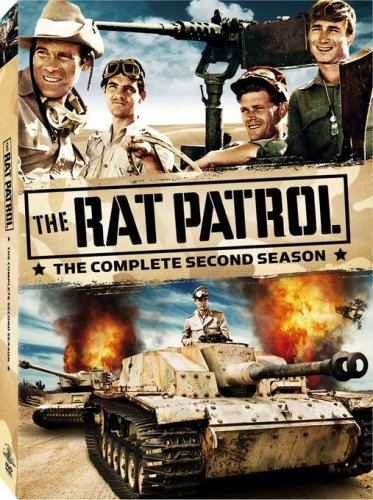
The Rat Patrol completely took me by surprise, mostly by virtue of the fact that I had no idea what I was in for. Before watching even one episode, I was already underestimating it in my head, imagining a program only slightly more serious than Hogan's Heroes and confusing the title with the stupendously unrelated Rat Pack.

Volume 4 of Warner’s Film Noir Classic Collection series raises the bar over its wonderful predecessors by doubling the number of movies on offer: ten this time around.

Very briefly:

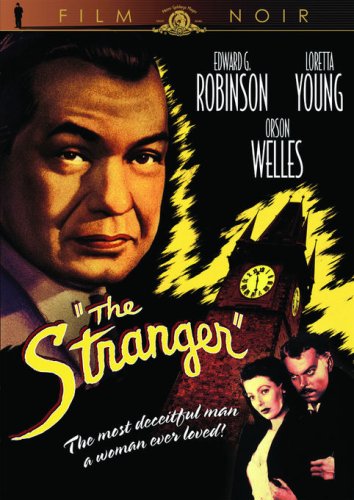
Edward G. Robinson is the war crimes investigator on the relentless hunt for the fugitive Nazi who masterminded the Final Solution. He arranges for the one man who knows his face to escape imprisonment, and follows him to a small Connecticut town. There he loses his quarry, but evidence soon points to Orson Welles, who, under the identity of Charles Rankin, is now a college professor and new husband to Loretta Young. Welles stops at nothing, including murder, to protect his secret, but little by little Young is forced to realize who her husband really is.

Welles’ third film as a director is far more conventional than Citizen Kane or The Magnificent Ambersons, and it isn’t quite up to its predecessors. Robinson is terrific as a detective who must become almost as cold-blooded as his prey, but Welles’ performance is too big: his character might as well be wearing a “NOT A NAZI WAR CRIMINAL” name tag. That said, the suspense is powerful, and the cinematography pure, gorgeous noir.

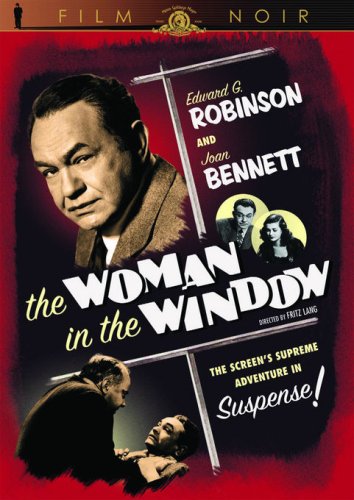
Left alone when his family leaves town to visit relatives, professor Edward G. Robinson hangs out at his club with his two cronies, one of whom is DA Raymond Massey. He is fascinated by a striking portrait of a young woman, and one night, leaving the club late and alone, he runs into the portrait’s model (Joan Bennett). Though he knows better, he accompanies her back to her apartment. A jealous lover bursts in and attacks Robinson, who murders him in self-defense. Panicked by the situation, Bennett and Robinson cover up the event, but both the authorities and a blackmailer circle closer and closer.

Robinson is magnificent as a basically decent man whose one lapse in judgment leads him to catastrophe. His eyes radiate a desperate desire to turn back the clock, and the audience squirms along with him. Bennett’s character is interesting as the unintentional femme fatale: she never has any desire to cause trouble for Robinson. Director Fritz Lang holds the audience in a lethal grasp, which never loosens in the slightest until the unfortunate cop-out ending.

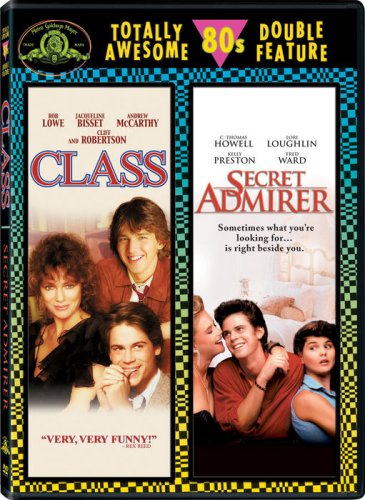
I have to say right off the get go, these are two movies I’ve never heard of and I’m guessing it would have probably been better kept that way. Still I’m going into this review completely unbiased but rather just with the expectations of horrendously typical 80’s comedy. At least there are a few recognizable actors including Rob Lowe, John Cusack, and Virginia Madsen in Class and Kelly Preston, Lori Loughlin, and Fred Ward in Secret Admirer. At any rate lets see how these dubbed 80’s classics turn out.

I’ll start off with Class which has a better cast and was easily the better of the two, which isn’t saying much for either. Jonathon (Andrew McCarthy, Pretty in Pink) is a country boy who gets a scholarship to a posh school where he’s roomed up with his Skip (Rob Lowe, Tommy Boy), who pretty much his opposite. But despite their different backgrounds Skip takes it upon him to see that naïve Jonathon looses his virginity. He sends him off to Chicago where Jonathon meets an older woman with whom he shares an affair, only ending once she realizes he’s underage. But things get complicated one day when Skip takes Jonathon home and finds out the woman from Chicago is Skip’s mom, and Skip finds out about the affair and that’s when things get messy.

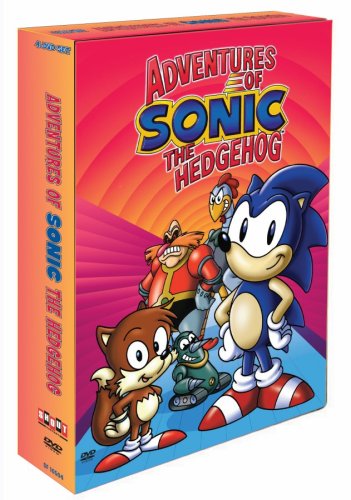
Video games (especially those with platformer elements) were easy fits for syndicated cartoons. I spent a lot of time watching the Super Mario Super Show despite the show's silliness and use of Captain Lou Albano. Another show I naturally watched in the same vain was the Adventures of Sonic the Hedgehog. Featuring Sonic, the speedy blue hedgehog and his sidekick Tails (something resembling a fox but with two tails) would face off against Dr. Robotnik and a legion of robots that wanted to take over the planet Mobius. These robots included Scratch (a chicken), Grounder (the gadgets robot) and a less used Coconuts (monkey bot regulated to sanitation duty). The original series would run 65 episodes and a special before spinning off into a somewhat darker show dubbed just Sonic the Hedgehog.

The Adventures of Sonic the Hedgehog worked in a lot of areas. It was entertaining, using its slapstick humor to keep the plot moving for the entire 22 minutes. Sonic might have been an ego-maniac but it wasn't so overbearing that it took away from the cartoon (except the phrase "I'm waiting"). The villains were extremely entertaining as Dr. Robotnik came to life better than expected since the video game series was fairly new and it didn't really have much to draw from. Even the main robots were fun to watch, well with the exception of Scratch who to be honest was just plain annoying. The show also served to create many sub-villains and sub-heroes that held interest and were sometimes multi-dimensional. In fact, they even created a few characters that switched sides and did so in a way that made sense.

Synopsis

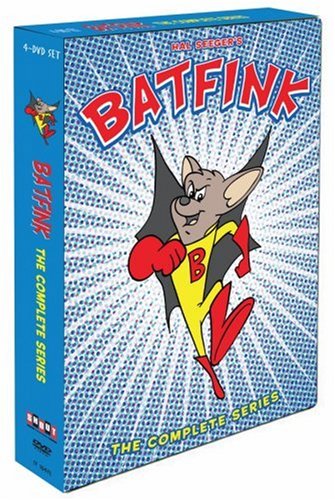
I started watching cartoons in the 80's growing up and remembering most fondly cartoons like Transformers, Batman, Thundercats, TMNT and so forth. Oh I've had my fill of Looney Tunes and appreciate them greatly. But once you go past Looney Tunes a lot of the older cartoons escape me (with the exception of Droopy and Scooby Doo). Good examples are the Flintstones and almost anything out of the Hanna-Barbara lineup like Yogi Bear and Huckleberry Hound. So imagine my ...confusion when I received Batfink - The Complete Series across my reviewer table. Batfink was a cartoon series that originally ran in the late 1960's with influences like the Green Hornet and Batman which also ran at this time. The series was created by Hal Seeger and basically featured three main characters; Batfink, Karate and the Chief.

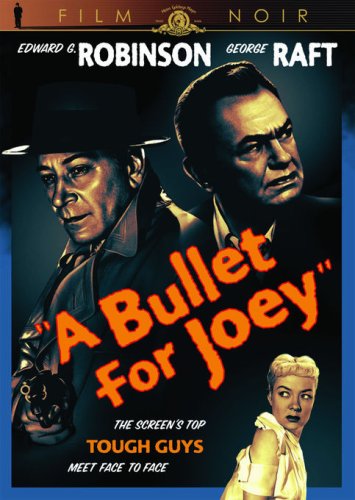
George Dolenz is the Montreal scientist working on an atomic something-or-other. Foreign spies (could they be.... Communists??!!) hire exiled American gangster George Raft to get Dolenz and his secret into their clutches. His secret weapon for this project is the seductive power of Audrey Totter. Working for the angels is RCMP detective Edward G. Robinson. The expected race against time ensues.The Montreal setting is unusual, as is the idea of Robinson as a Mountie, so that's fun. Rraft is very much the aging gangster by this point, but still rasps it out with the best, and the film is really about his redemption. Not only is Dolenz' research a pure McGuffin, so is he, his character nothing more than the means to have Robinson and Raft play cat and mouse. This isn't in the top rank of films noir, but it is still a lesson in how to pack a lot of entertainment into an economical 87 minutes.

Audio

Synopsis

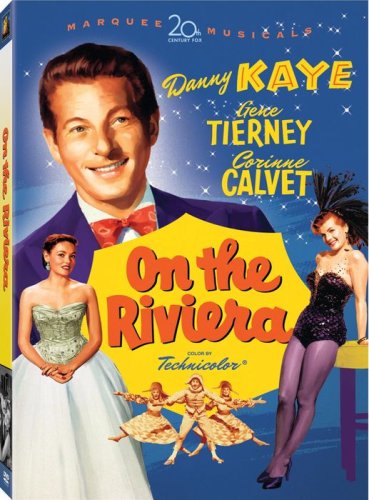
Danny Kaye plays Jack Martin, entertainer in a Riviera nightclub, as well as Henri Duran, philandering aviator. Duran is being driven to the edge of bankruptcy by a man with which he is forced to do business. Desperate to raise cash, he leaves town, but then his rival is invited to a dinner party. If Duran is not present at the party he is supposed to be hosting, disaster will ensue. So his partners conscript Martin, who has done a pitch-perfect impersonation of Duran at the club, to act as ...im for the evening. Cue all sorts of mistaken identities and romantic entanglements, particularly involving Duran’s neglected wife (Gene Tierney).