Posted in: Disc Reviews by Gino Sassani on April 21st, 2010
“Man lives in the sunlit world of what he believes to be reality. But there is, unseen by most, an underworld, a place that is just as real, but not so brightly lit, a darkside.”
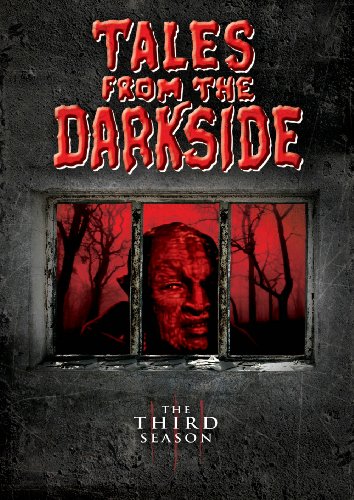
Not since the likes of Rod Serling’s Twilight Zone or The Outer Limits has there been a really good sci-fi/horror anthology until 1984’s Tales. Not to say that each episode was a winner. In fact, most were pretty weak and relatively lame, but when this show was good, it was very good. These tales weren’t any ordinary specter spectaculars, but were told by spectacular story writers, directors, and producers. Look at just this first season, and you’ll find some of the top names in the field involved in one way or another. You’ll see the likes of Stephen King, Tom Savini, George Romero, Robert Bloch, Frank De Palma, and Harlan Ellison. The tales often came with a twist, or at least a big finale in the end. Much like a train’s headlight in a long tunnel, you might have seen it coming from a mile away, but it’s hard to avoid the impact.

Posted in: Disc Reviews by Michael Durr on April 16th, 2010
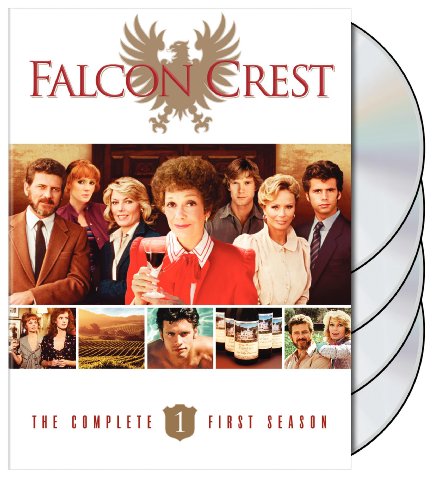
The Falcon Crest series ran 227 episodes from December of 1981 to May of 1990. The show’s creator, Earl Hamner actually worked on the Waltons and wanted to make a show about a family in the wine industry. However, when CBS got a hold of the series they wanted to make it more like rival show, Dallas. Translation: we want more smut and backstabbing. The show, Falcon Crest was born. I think John Boy would have been shot in the first season had he lived in Tuscany Valley. Good night indeed.
Emma Channing (played by Margaret Ladd) and her boyfriend, Turner Bates (played by Robert F. Lyons) are fooling around in the Falcon Crest winery. Apparently, Emma has never been with a man before, so there is much laughter and screaming. Her Uncle Jason (played by Harry Townes) overhears the racket and comes to investigate what is going on.
Posted in: Disc Reviews by Gino Sassani on April 15th, 2010
Bud Abbott and Lou Costello began their career completely by accident. Bud Abbott had tried his hand at doing the straight man bit with limited success. One night in 1931 he was working as a cashier for a vaudeville company when Lou Costello's partner came down with an illness. The performer needed a stand-in, and Bud Abbott filled in for the night. It was a temporary gig, to be sure. A temporary gig that happened to last 25 years. The two continued to work together on stage. While the team certainly reused a ton of the classic routines of the era, there was something unique and clever about the duo. The natural way in which they fell into each other's lines was a rare sight, indeed. They eventually stood out for their ingenious word play, culminating in one of the most famous comic routines in history, Who's On First.
The pair next took their act to the airwaves -- radio airwaves, that is. They became a staple in the medium and eventually the highest paid performers in that industry. Films weren't really much of an option at first. They were still mostly silent, and while comedy thrived in that era, Abbott and Costello's brand of humor just would not have worked. But when sound became more economical and standard, the boys were thrown into the pictures. In 1940 they would star in a film called One Night In The Tropics. They would continue to make films for the next 14 years at an incredible pace. They made several films a year and were soon financing Universal studios with their output and box office income. Perhaps their most famous films were the monsters movies where Universal teamed their new moneymaker with the one before. In Abbott And Costello Meet Frankenstein, Bela Lugosi and Lon Chaney, Jr. would both reprise their famous Dracula and Wolf Man characters to the delight of fans of both franchises. Boris Karloff considered himself too old to don the heavy boots of the titular monster, which was played by Glenn Strange, who had performed the role in both House films. So he was still a legitimate part of the horror film cycle. The boys would get their chance to face Karloff later, not once, but twice.
Posted in: Disc Reviews by Gino Sassani on April 12th, 2010
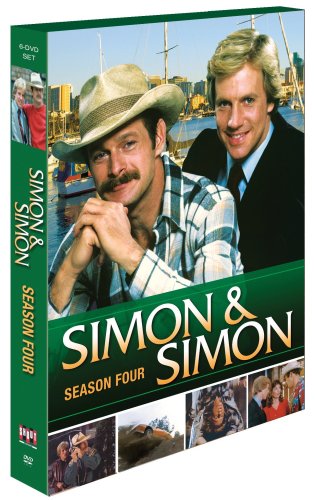
Think of it as The Odd Couple Private Investigation Agency. These guys might be brothers, but they have only one thing in common, and that’s their skills as private investigators. Otherwise they are as far apart as night and day. A.J.’s (Parker) the clean cut, nearly anal member of the sibling pair. He sees the detective game more in the mainstream world and tries to play things straight and by the book. Rick (McRaney), on the other hand, is a slob of a guy. He’s the kick back let life come to him sort of chap. He doesn’t pick up very much after himself. He lives a Bohemian lifestyle complete with houseboat and Sanford and Son beat up pick ‘em up truck. Neither of them are pulling in very much money and have to deal with Mom’s (Carver) disapproval of their chosen profession. The two treat everything like a competition and take sibling rivalry to new heights. They were also in heated competition with the detective agency on the same block, run by crotchety old Myron Fowler (Barth) and his daughter Janet (Wilson). Janet eventually becomes a district attorney and really gets under the brothers’ skin. Unfortunately she’s absent on all but a couple of the third season’s cases. The pair worked with rather off-the-wall detective Downtown Brown played by WKRP’s own Venus Flytrap, Tim Reid. He was one of those “end justifies the means” kind of a guy.
The cases were always just a little over their heads and often led them into various traps, gunfights, and car chases. The real charm of the show was watching the brothers working together. They would fight and argue about pretty much everything. Still, when the chips were down, they could always each depend on the other to have his back. They weren’t the brightest of detectives and fell into as many clues by dumb luck as through good investigation technique. It was most definitely a lighter show than most of the detective shows of the 80’s. Miami Vice this was not. The pair went against the mold in almost every aspect. They were not very good with the ladies. They didn’t drive hot fast cars. They were almost always out of money. And they carried themselves as immature frat boys most of the time. The appeal was their Joe Public image. It must have worked, because the show ran for nearly a decade.
Posted in: Disc Reviews by David Annandale on March 20th, 2010
Cult Epics here presents us with their second box set of films by ex-pat Spanish surrealist/'pataphysician/provocateur Fernando Arrabal. These are more recent works, and are, arguably, even more of an acquired taste than the earlier set, though not necessarily for the reasons one might think.
Car Cemetery is the 1983 TV version of his 1958 play. In a dystopian future, the punk/S&M/whatnot inhabitants of the titular setting live through a rock-n-roll version of the Passion. What would have been a hell of a taboo-buster in 1958 hasn't aged well. Quite apart from the very 1980s costume design of the film (in the most unfortunate ways), the religio-political points, clearly aimed at Franco's Spain, no longer have the same bite when re-staged in the post-Franco era, and today seem altogether precious and rather twee.
Posted in: Disc Reviews by Gino Sassani on March 17th, 2010
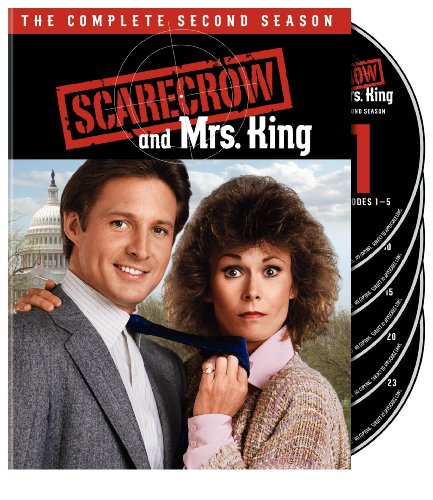
While Scarecrow And Mrs. King first aired in 1983, this show is really one of the last of the 1970's crime dramas. It was an early attempt to bring in more of the female audiences that seemed reluctant to join the popular detective shows of the era. While not really a "detective" show (they were spies), it employed a lot of the 1970's conventions. Even the film footage has that distinct style from those days and type of shows. The idea worked, and the series did bring in a sizeable female audience, but it never really caught on with the guy crowd who found it a bit too relationship-heavy. The two leads were chosen less for their character appeal than for their apparent "easy on the eyes" look. Again more fodder for the chick crowd. The show was always rather lighthearted, even if the material was somewhat serious cold war espionage. The two shared a banter that revealed a kind of love/hate relationship and the expected sexual tension that would eventually lead to the two getting hitched. And while the series only lasted four seasons, the formula would end up being tweaked to bring us the more successful Moonlighting with Bruce Willis and Cybill Shepherd, which took the idea more into the 80's with slicker production values but still a mainly female appeal.
Amanda King (Jackson) was a recent divorcée with two sons and a nosy mother (Garland) who lived with her. She has a boyfriend named Dean who works as a meteorologist at a local Washington DC television station, whom you never actually get to see. While at the train station, she suddenly finds herself embroiled in an espionage plot when a package is handed to her on the platform. Then she meets government agent Lee Stetson (Boxleitner) who works under the codename: Scarecrow. She's intrigued by Scarecrow and agrees to help him in his current case. Of course, she ends up in a more permanent role with "The Agency", taking a job at their cover corporation The International Federal Film Company. Every week we find Amanda trying to balance her new role as a spy with trying to raise her kids, have a normal dating relationship, and keep her cover safe from her particularly prying mother. The results are often quite funny. There is also Scarecrow's partner, Francine (Smith) who is somewhat jealous of Amanda and Lee.
Posted in: Disc Reviews by Gino Sassani on February 23rd, 2010
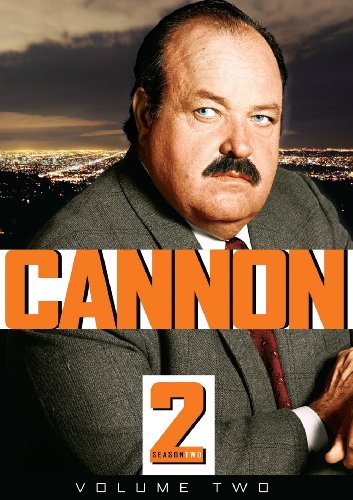
William Conrad was no stranger to audiences when Cannon joined the Quinn Martin stable of television dramas. In fact, most folks knew his voice before they got to know his trademark girth. Conrad was the original Matt Dillon when Gunsmoke was a radio drama. When the drama entered the visual medium of television, even Conrad admitted later that the audience, who thought of him as tall and handsome, would have been disappointed. His voice lent authority to any role he played, and on radio his size was never an issue. He was famous as the voice of the stern narrator in the Rocky and Bullwinkle cartoons who often crossed the laws of the trade and interacted with the title characters. He was also the voice that narrated the struggles of Dr. Richard Kimble on The Fugitive, another Quinn Martin production. He continued to narrate series intros even after his own success. He gave us the informative opening dialog in Buck Rogers In The 25th Century. As a voice, Conrad was one of the best, but when CBS approached Quinn Martin asking for a television vehicle for Conrad, it was a huge gamble. The gamble, of course, paid off… well… huge, and Cannon became an iconic figure in television. Cannon was so popular he was showing up on other shows as well. He appeared on the pilot for Barnaby Jones. The show ran 5 seasons and returned with appropriately enough The Return Of Frank Cannon tele-film in 1980. It is also interesting to note that Conrad, while greatly overweight, lived to be 74.
Frank Cannon was unlike any detective we’d ever seen on television before, or since. He was known as a high priced PI with a taste for the finer things in life, particularly fine food. His appearance was counter to all of the rules about rock-jawed handsome detectives who ran around shooting it out and beating up the bad guys. Cannon was a big man and wasn’t about to do much running and fighting. He wasn’t totally different, however. Cannon had a lead foot and could run a car chase with the best of them. He was smart and often a bit flashy in his technique, if not in his appearance. It was also rare for a series to have a lone regular to carry the … um… weight. Conrad was up to the task and made the show and the character a permanent part of our pop culture.
Posted in: Disc Reviews by Gino Sassani on February 23rd, 2010
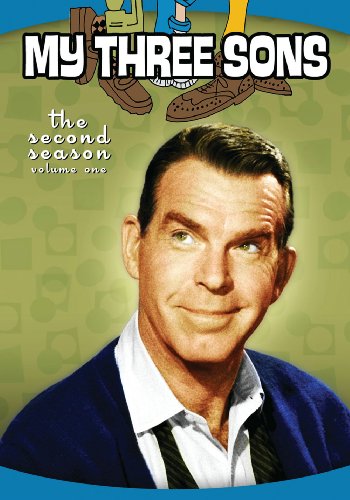
Just to look at it you would think that My 3 Sons was a Disney production. Its star Fred MacMurray had appeared in many Disney films of the 50’s and 60’s and is most likely recognizable from those appearances. Two of the three boys were also known for work with Disney. The eldest boy, Mike, was played by Tim Considine, who starred with MacMurray in Disney’s The Shaggy Dog. Middle son Robbie was played by a former Mickey Mouse Club Mouseketeer, Don Grady. The youngest son, Chip, was played by Stanley Livingston, the only non Disney alum in that group. Another reason for the confusion is the decidedly Disney-like material the series covered. Steve Douglas (MacMurray) was a widowed single parent who was trying to balance his job with that of raising his three sons. Most of the stories involved the warm and fuzzy heartwarming stuff that Disney had pretty much cornered the market on in the films. Whatever troubles arose, no problem was so bad that a heart to heart talk couldn’t fix it. The style would prosper and continue in the form of 70’s shows like The Brady Bunch. The four guys were also joined by Steve’s father-in-law, Bud, played by I Love Lucy favorite William Frawley. That was no surprise, since the show was actually produced, not by Disney, but the Desilu studios.
My 3 Sons was for some time the second longest running sit-com on television. It lasted from 1960 until 1972. The series would undergo major changes as the boys each grew older and eventually married and led their own lives. Frawley would also become very ill after 5 years and leave the show. His replacement, William Demarest as Uncle Charley, is likely better known in the show. The syndicated version of the show often ignored these early black and white versions of the series, opting for the later color ones that featured the Uncle Charley character. It’s very likely you’ve never seen these early episodes as they appeared infrequently in the syndicated markets. The theme from Frank DeVol became pretty popular in the mid 60’s and even entered the pop charts at one time. The show also originally ran on ABC, but moved to CBS in 1965, also accounting for the different syndication packages. It was during that move that many of these big changes occurred.
Posted in: Disc Reviews by Gino Sassani on February 9th, 2010
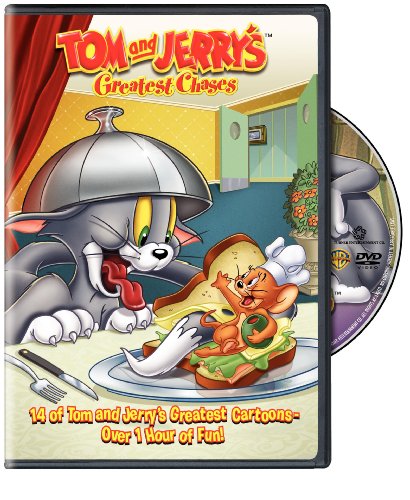
In the 1930’s and 40’s MGM was trying to get in on the lucrative animation game. The field was dominated at the time by Warner Brothers with their Loony Tunes shorts, and of course, the iconic cast of animated characters coming out of the Walt Disney Studio. For years they had failed to find the right property to take advantage of the market. It wasn’t until the team of William Hanna and Joseph Barbera approached the studio with their first project that the times did change, at least a little, for the fledgling animation department at MGM. The project was far from an original one even for the time. It was a very basic cat and mouse adventure featuring a cat named Tom and a mouse named Jerry. There would be almost no dialog on the shorts. It certainly didn’t look like much of a hit to the studio brass, but with no better ideas on the way, they went ahead with the new shorts of Tom And Jerry. There’s a reason why the cat and mouse pair is such a classic. It’s because it works. If you can make your characters entertaining and endearing enough, you can have a hit. MGM finally entered the major leagues, and the team of Hanna and Barbera would become one of the most successful animation teams in history. They would go on to create such cherished characters as The Flintstones, Yogi Bear, The Jetsons, and, of course, Scooby Doo.
These were the days of the Golden Age in Hollywood. These shorts were not being produced for television, which hadn’t been invented when they began; rather, they were intended for theater goers. In those days going to the movies was much more of an inclusive experience. You always got a cartoon short along with an adventure serial, the likes of Buck Rogers, Flash Gordon, and The Lone Ranger. These multi-chaptered serials were the forerunners to the modern television series. It kept you coming back to the movies to see what would happen next. Each chapter ended in a cliffhanger. These early serials were the inspiration for such film franchises as Star Wars and Indiana Jones. Finally you got one, sometimes two movies, all for the price of a single admission.
Posted in: Disc Reviews by Gino Sassani on February 3rd, 2010
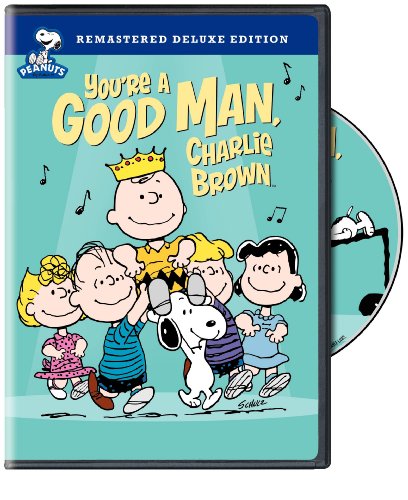
I grew up on the Peanuts creations of Charles M. Schulz. Most of us have, in one way or another. His newspaper comic strip is one of the longest running and most successful strips of all time. The work has been translated into every language currently spoken on the planet. The images of Charlie Brown, Snoopy, Linus, and the rest of the Peanuts gang have appeared on just about any kind of product imaginable. Our pop culture contains too many references to the strip to mention briefly. For me, it was the television specials starting in the mid 1960’s that brought the gang into my life. The classics are running annually, still after nearly 50 years. A Charlie Brown Christmas and It’s The Great Pumpkin, Charlie Brown are the most mentioned and certainly beloved by generations of children and adults. I thought I never missed an airing.
I'd like to be able to say that I'm a fan of all of the cartoons, but that wouldn't exactly be very honest. At some point they lost their innocence and eventually lost their charm. I never did see the live musical production of You're A Good Man Charlie Brown. This is actually the first time that I saw the animated version. I'm going to go out on a limb here and say that this animated cartoon is nothing like the production, at least I hope so. The play appears to be universally beloved. I often hear only the fondest recollections from those who have seen it. That's not the case with this particular version of the material. In cartoon form it plays out quite awkwardly. None of the numbers really combine into anything resembling a plot or story. They are all basically short vignettes with each of the major characters getting at least one moment to themselves. I can see this having far more impact on a stage with actors and sets. The traditional cartoon characters just aren't animated enough, excuse the pun, to pull this kind of thing off.