Dolby Digital Mono (English)

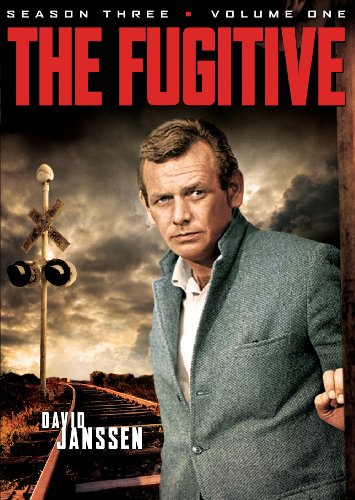
“The man is Richard Kimble and, not surprisingly, the man is tired. Tired of looking over his shoulder, the ready lie of the buses and freight trains. Richard Kimble is tired of running…”

The elusive “one armed man” is one of the best known television icons of all time. The plight of Dr. Richard Kimball has been the subject of numerous imitations and even a feature film staring Harrison Ford as Kimball and Tommy Lee Jones as his pursuer. Tim Daly left the ranks of comedy to fill the shoes of Kimball in a very short lived revival series. While some of these efforts managed to capture the essence of The Fugitive, none can truly compare to the real thing.


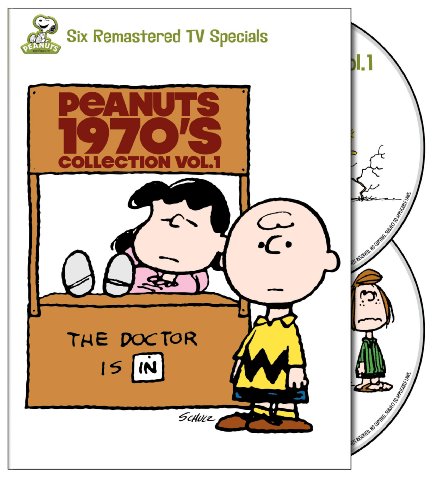
I grew up on the Peanuts creations of Charles M. Schulz. Most of us have, in some way or another. His newspaper comic strip is one of the longest running and most successful strips of all time. The work has been translated into every language currently spoken on the planet. The images of Charlie Brown, Snoopy, Linus, and the rest of the Peanuts gang have appeared on just about any kind of product imaginable. Our pop culture contains too many references to the strip to mention briefly. For me, it was the television specials starting in the mid 1960’s that brought the gang into my life. The classics are running annually, still after nearly 50 years. A Charlie Brown Christmas and It’s The Great Pumpkin, Charlie Brown are the most mentioned and certainly beloved by generations of children and adults. I thought I never missed an airing.

Now Warner Home Video has brought together a special collection of the cartoon specials that started it all. It includes those annual greats and a few that I don’t really remember so much. Now we get into the first volume of the 1970’s specials. The two discs include the following Peanuts specials:

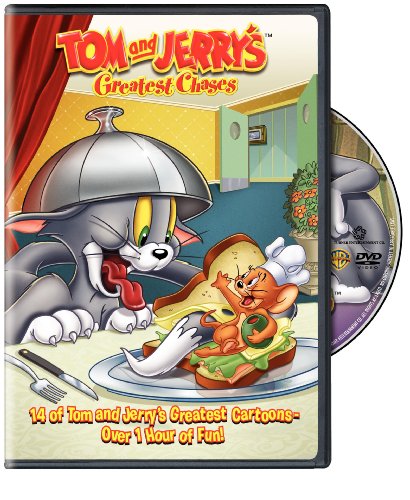
In the 1930’s and 40’s MGM was trying to get in on the lucrative animation game. The field was dominated at the time by Warner Brothers with their Loony Tunes shorts, and of course, the iconic cast of animated characters coming out of the Walt Disney Studio. For years they had failed to find the right property to take advantage of the market. It wasn’t until the team of William Hanna and Joseph Barbera approached the studio with their first project that the times did change, at least a little, for the fledgling animation department at MGM. The project was far from an original one even for the time. It was a very basic cat and mouse adventure featuring a cat named Tom and a mouse named Jerry. There would be almost no dialog on the shorts. It certainly didn’t look like much of a hit to the studio brass, but with no better ideas on the way, they went ahead with the new shorts of Tom And Jerry. There’s a reason why the cat and mouse pair is such a classic. It’s because it works. If you can make your characters entertaining and endearing enough, you can have a hit. MGM finally entered the major leagues, and the team of Hanna and Barbera would become one of the most successful animation teams in history. They would go on to create such cherished characters as The Flintstones, Yogi Bear, The Jetsons, and, of course, Scooby Doo.

These were the days of the Golden Age in Hollywood. These shorts were not being produced for television, which hadn’t been invented when they began; rather, they were intended for theater goers. In those days going to the movies was much more of an inclusive experience. You always got a cartoon short along with an adventure serial, the likes of Buck Rogers, Flash Gordon, and The Lone Ranger. These multi-chaptered serials were the forerunners to the modern television series. It kept you coming back to the movies to see what would happen next. Each chapter ended in a cliffhanger. These early serials were the inspiration for such film franchises as Star Wars and Indiana Jones. Finally you got one, sometimes two movies, all for the price of a single admission.

The people at Warner Bros recently decided to adopt a new strategy when dealing with some of their back catalog. They would propose a printing on demand option or what they would dub the “Archive Collection”. This would allow collectors to own classics of long forgotten films and keep costs at a minimal to Warner Bros. One such movie was named Lightning Strikes Twice which came out in 1951 with Ruth Roman. Hopefully this one was a gem and not something that should be long forgotten back in the vault.

Richard Trevelyan (played by Richard Todd) has been convicted for murder of his wife. He is about to be executed when the jury becomes dead-locked and no decision can be made. He is then released where he decides to hide out at a Texas ranch where nobody can find him. Everybody is convinced that he did it and nobody seems that willing to stand by his side.

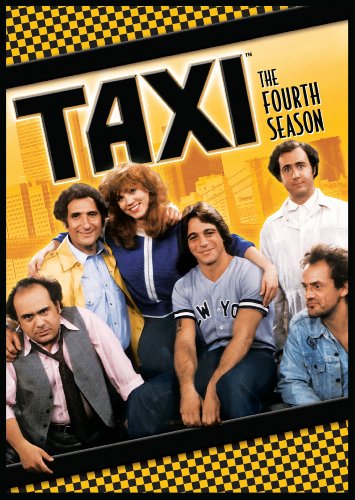
Few television situational comedies have produced the stable of A-list stars that this one did. Every one of these cast members were relatively unknown at the time that Taxi was taking fares on our television sets each week. Not so today. The cast was so remarkable that it is here that I decided to spend much of my review. The episodes were often funny, even more often hilarious. But after all of these years, it is the characters that are most remembered by the fans. Yeah, we all have our favorite moments. Many of them in this release. And, I’ll get to those moments, but first:

Playing the hard-nosed and lecherous dispatcher for The Sunshine Cab Company was Danny DeVito. He spent most of his Taxi days sitting in a cage barking orders and insults with equal frequencies to the crew of drivers in the garage. Each of them had dreams beyond the yellow sedans, and Louie took great pleasure in watching them try and ultimately fail to achieve their dreams. Of course, DeVito went on to star in a boatload of feature films and never looked back.

When the later cartoon series ran starting in 1983, the show from time to time spoofed many of the popular films of the time. Over the years everything from Star Trek to Star Wars received the Chipmunk treatment. Collectively these episodes have often been released under the title Chipmunks Go To The Movies and have even appeared with Roger Ebert. One of the best of these spoofs is the hilarious Star Wreck. Actually, the disc comes with three episodes, each spoofing a different film.

“This is the Alvin Show, you’re positively gonna love the Alvin Show.
There's Dave Seville, and what is more here's the boy who giggles known as Theodore.
Now you see, on camera three, the brother known as Simon on the family tree.
And here's the star of the show… Alvin”

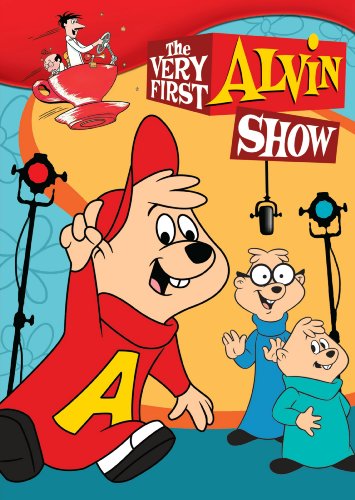
The hilarity continues with a second release: The Very First Alvin Show. This disc also contains three episodes. The spotlight piece here is the very first Chipmunk adventure ever from the 1961 series The Alvin Show. You’ll be amazed at just how little these guys have changed over the years. The three shows are:

“One part sex. One part rebellion.”

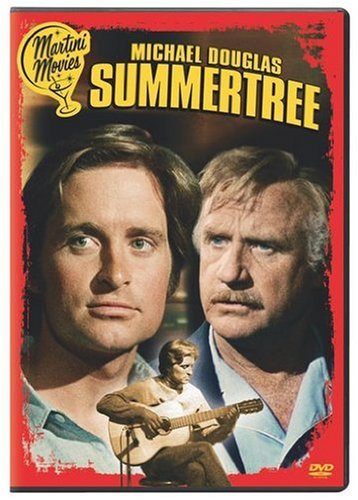
That’s how Sony describes their Martini Movies. The films come from that time in the 1960’s and 1970’s when there was a lot of unrest in the country. It was a time of protests and questioning of authority. It was the time of free love and a socialism experiment in communes all across America. Now, what exactly all of this has to do with martinis, I’m not exactly sure. In fact, there’s not a lot of drinking in most of these films. It’s more likely just a blanket way to release some obscure films in their catalog.

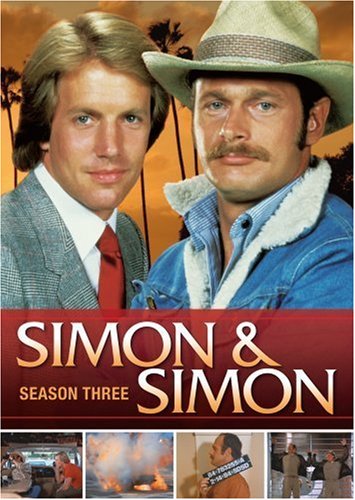
Think of it as The Odd Couple Private Investigation Agency. These guys might be brothers, but they have only one thing in common, and that’s their skills as private investigators. Otherwise they are as far apart as night and day. A.J.’s (Parker) the clean cut, nearly anal member of the sibling pair. He sees the detective game more in the mainstream world and tries to play things straight and by the book. Rick (McRaney), on the other hand, is a slob of a guy. He’s the kicked back let life come to him sort of chap. He doesn’t pick up very much after himself. He lives a Bohemian lifestyle complete with houseboat and Sanford and Son beat up pick ‘em up truck. Neither of them are pulling in very much money and have to deal with Mom’s (Carver) disapproval of their chosen profession. The two treat everything like a competition and take sibling rivalry to new heights. They were also in heated competition with the detective agency on the same block, run by crotchety old Myron Fowler (Barth) and his daughter Janet (Wilson). Janet eventually becomes a district attorney and really gets under the brothers’ skin. Unfortunately she’s absent on all but a couple of the third season’s cases. The pair worked with rather off the wall detective Downtown Brown played by WKRP’s own Venus Flytrap, Tim Reid. He was one of those end justifies the means kind of a guy.

The cases were always just a little over their heads and often led them into various traps, gunfights, and car chases. The real charm of the show was watching the brothers working together. They would fight and argue about pretty much everything. Still, when the chips were down, they could always each depend on the other to have his back. They weren’t the brightest of detectives and fell into as many clues by dumb luck as through good investigation technique. It was most definitely a lighter show than most of the detective shows of the 80’s. Miami Vice this was not. The pair went against the mold in almost every aspect. They were not very good with the ladies. They didn’t drive hot fast cars. They were almost always out of money. And, they carried themselves as immature frat boys most of the time. The appeal was their Joe Public image. It must have worked, because the show ran for nearly a decade.

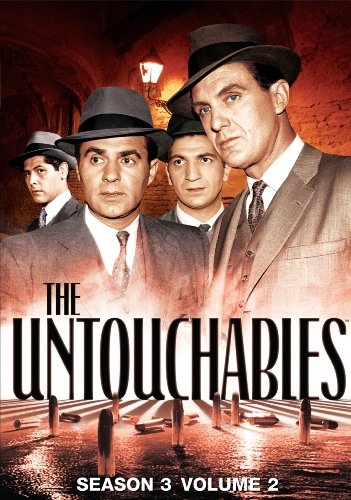
The Untouchables took on a perhaps too convincing appearance of reality. Remember that the audience was made up of folks who grew up getting their news from newsreels at the local theater. It was a stroke of genius to have real life news reporter Walter Winchell narrate the series. Everything from that narration to the gritty dark photography carried a documentary style feel to every minute of the action. You can only imagine why too many Americans thought it was too violent. The show wasn’t too violent. It looked and felt too realistic. Robert Stack literally becomes the persona of Elliot Ness. The show was also based on a book that was co-written by Ness himself but was highly fictionalized by the time it reached millions of homes each week. In truth, Ness’s team didn’t exist long after bringing down Capone for tax evasion. In the series the team becomes a strike force of sorts against an entire mug book of criminals real and imagined.